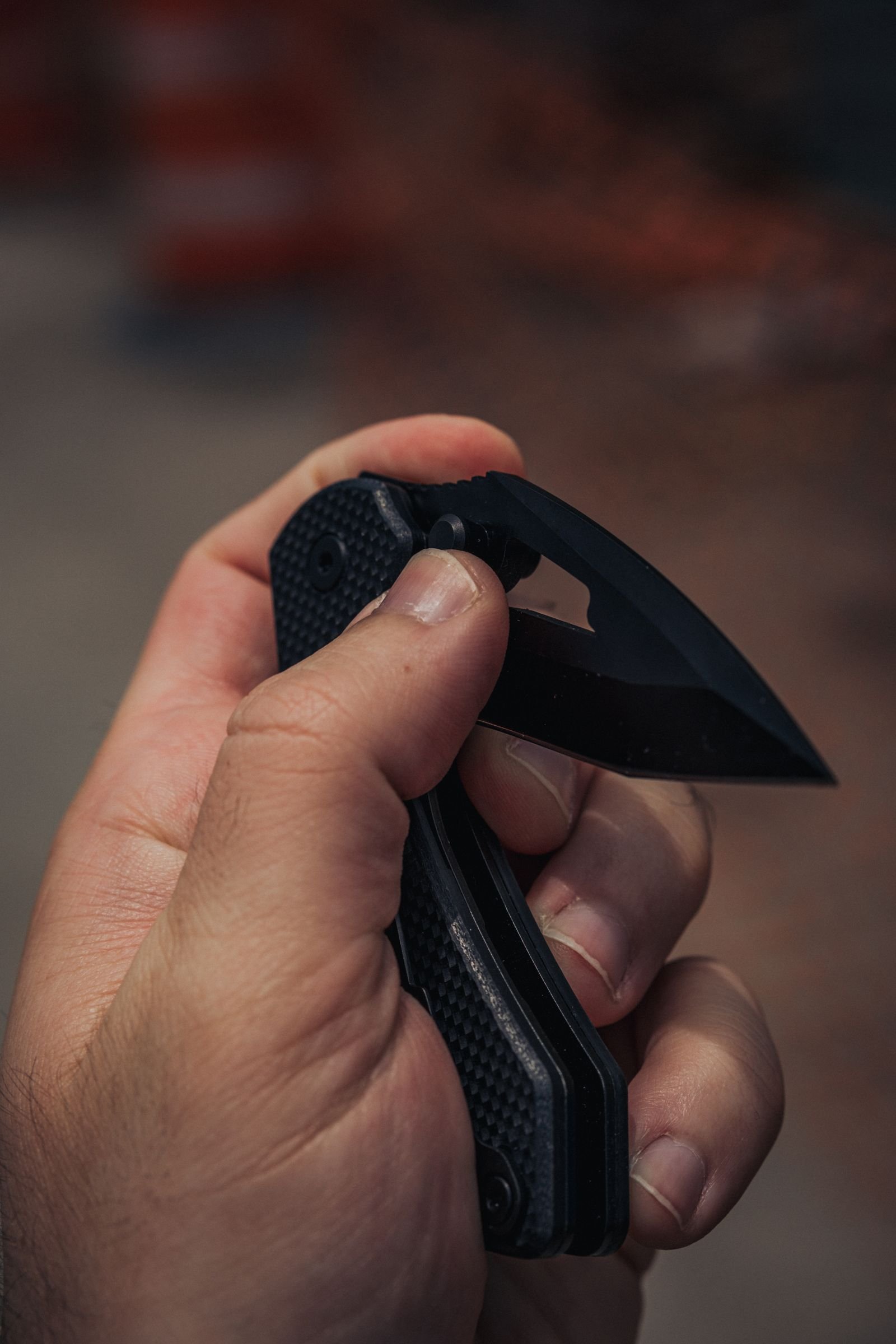
An edge that powers through a carton may leave cord looking chewed rather than cleanly cut.
A stockroom knife might open double-wall boxes in the morning, trim nylon cord after lunch, and still need to make controlled cuts near packaged goods. Serrations can keep biting as the edge wears, especially in abrasive cardboard or tough, fibrous cord, but they may snag strands and require more involved sharpening.
A plain edge generally offers smoother finishes, easier touch-ups, and more predictable control. Cardboard can dull its fine apex quickly, however, while slick or tensioned cord may demand careful technique. The practical choice depends on the materials, the required finish, daily cutting volume, available maintenance, and whether precise control matters more than prolonged aggressive cutting.
- Frequent cardboard work may favor partial serrations; clean cord ends and easy sharpening may favor a plain edge.
What the edge labels actually mean
- Plain edge
A continuous cutting line generally supports controlled push cuts and cleaner cardboard edges. Results still depend on apex sharpness, bevel angle, and thickness behind the edge.
- Fully serrated edge
Scallops and pointed teeth cover most of the usable edge. Points can start cuts in cord or fibrous cardboard, while tooth spacing and depth affect snagging and cut roughness.
- Combination edge
A partially serrated blade typically places teeth near the handle and a plain section toward the tip. It covers mixed tasks, but each section offers less working length and requires a different sharpening method.
- Geometry and profile
Two identically labeled edges may cut very differently. Blade stock, behind-edge thickness, tooth pattern, sharpness, and blade shapes suited to boxes and package work influence resistance, steering, and durability.
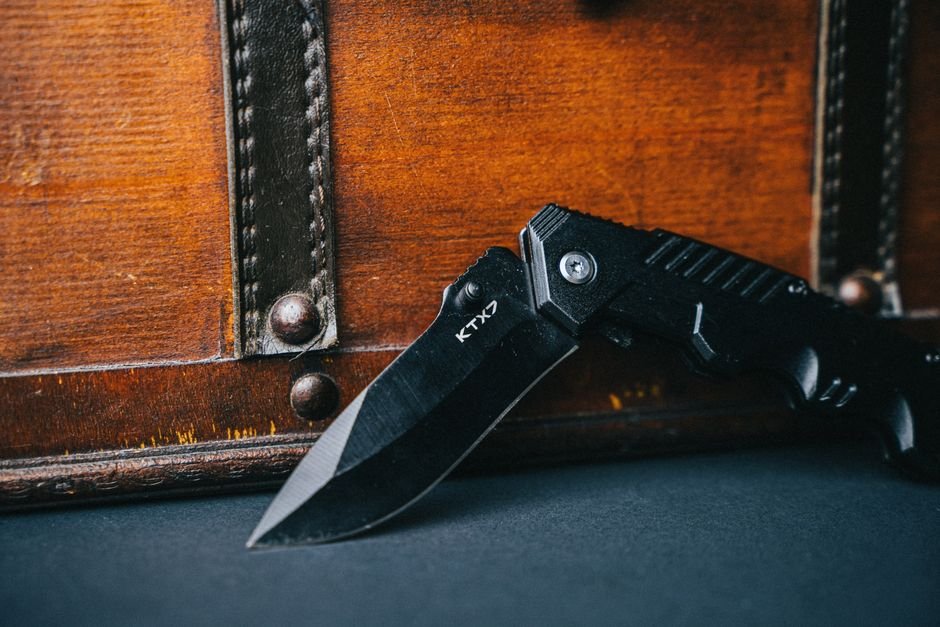
How each edge delivers force
A plain edge presents one continuous cutting line. With a sharp blade and a drawing motion, force moves progressively through the material, usually producing a controlled, relatively clean cut.
Serration tips contact a smaller area first, creating high local pressure. The points can penetrate a resistant surface while the recessed scallops slice behind them; Spyderco’s edge guidance also notes that those recesses receive some protection from direct contact. The trade-off is a greater tendency to catch, tear, or wander.
Cardboard
Corrugated board repeatedly exposes an edge to liners, fluting, adhesive joints, and possible grit. CATRA’s ISO 8442-5 edge-retention method uses abrasive, silica-loaded paper specifically to accelerate this kind of wear. Ordinary cardboard varies, but prolonged cutting can still round a fine plain edge; serration scallops may remain useful after their points begin to dull.
Cord
Cordage construction changes the result. The Cordage Institute distinguishes laid, braided, and parallel-core structures, while Samson Rope’s technical manuals show how differently strands are arranged in common ropes. Serrations can bite into taut, slick, or densely braided cord, but may snag loose fibers. A sharp plain edge generally leaves a cleaner end on soft cord and webbing.
For mixed work, edge condition matters more than the label: use controlled slicing strokes and replace or sharpen an edge that requires excessive force.
Which edge suits cardboard work?
For opening taped cartons, a sharp plain edge generally offers the more predictable cut. It slices tape cleanly and is less likely than pronounced teeth to catch a loose flap or jump deeper into the box. Cutting depth still depends primarily on blade exposure and technique: use the shortest exposed blade that reaches the tape, keep the free hand out of the cutting path, and cut away from the body.
Plain edges also suit trimming cardboard where a straight, clean line matters. A steel rule and several light passes provide more control than one forceful stroke. Serrations can tear the liner or leave a ragged edge, especially on thin board, although they may bite more readily when cardboard is damp, crushed, or layered.
Repeated box breakdown changes the calculation. Cardboard contains abrasive fibers, coatings, adhesives, and sometimes grit, so a fine plain edge can lose slicing performance quickly. Serrations may continue cutting after exposed points have worn because recessed sections receive less direct contact, but they can snag corrugations and are slower to sharpen consistently.
For high-volume warehouse or stockroom work, a retractable utility knife with replaceable blades is often more practical than maintaining either edge style. Blade changes restore predictable performance with little downtime. A purpose-built safety cutter with limited blade exposure may further reduce the chance of damaging packaged goods. Blades should be replaced when extra force becomes necessary, then discarded in an approved sharps container rather than a waste bin.
Which edge handles different cord?
Cord does not behave like a flat sheet. Fibers roll, compress, separate, or glaze under the blade, so edge choice depends on both construction and how securely the line is held.
- Cotton twine: A sharp plain edge generally produces a tidy cut with little fraying. Serrations can pull loose fibers apart, especially when the twine is slack.
- Thin, untensioned cord: It often deflects before the edge bites. Light tension against a stable cutting surface improves control; wrapping cord around a hand to create tension risks injury.
- Braided synthetics: Dense braid may resist a push cut. Fine serrations can initiate the cut with short, controlled strokes, while a keen plain edge may leave a cleaner end.
- Slick accessory cord: A narrow blade with moderate tooth depth is less likely to skid than broad, aggressive scallops. Secure the cord first rather than increasing force.
- Weathered line: Embedded grit and hardened outer fibers accelerate edge wear. Serrations may keep cutting after exposed sections dull, though damaged teeth are harder to restore in the field.
Geometry and wet conditions
Diameter alone is a weak predictor. A thick, loosely laid rope may cut more readily than a thin, tightly braided line. Blade thickness, edge angle, tooth spacing, cord tension, and slicing motion all influence whether fibers shear cleanly or bunch in front of the edge.
For damp line, knives suited to wet cord and utility work should pair corrosion-resistant materials with a textured grip and drainage around the handle or sheath. Afterward, rinse away salt or grit, dry the knife, and inspect recesses where moisture can remain.
Match the edge to the workload
The useful question is not which edge is superior, but which tradeoff matters during the repeated task. This comparison assumes similar blade geometry and a properly maintained edge.
| Typical workload | Qualified preference | Why it fits | Main caveat |
|---|---|---|---|
| Opening a few clean cartons | Plain edge | Produces controlled, tidy cuts with relatively low force when sharp | Abrasive cardboard can dull the edge quickly |
| Breaking down many dirty or double-wall boxes | Serrated or replaceable plain blade | Serrations may keep biting after exposed points lose sharpness; replaceable blades reduce sharpening downtime | Teeth can tear, snag, or leave ragged edges |
| Cutting taut, smooth cord | Sharp plain edge | Offers a clean finish and predictable slicing under tension | Performance falls noticeably as the edge dulls |
| Cutting loose, fibrous, or weathered rope | Serrated edge | Teeth can catch fibers with less initial slipping | Sharpening usually requires a rod matched to the serration profile |
| Mixed light-duty cutting with limited blade space | Combination edge | Provides two cutting behaviors on one blade | Each section is short, and the transition can interfere with long strokes |
Combination edges are therefore a space-limited compromise, not an automatic upgrade. They make more sense when both edge types are regularly needed and carrying a second knife is impractical. For mostly cardboard or mostly cord, a full-length edge generally provides more usable stroke and simpler maintenance.
Whichever edge is selected, rising force is a maintenance warning rather than a reason to push harder. Retire damaged blades, stabilize the material, keep the free hand outside the cutting path, and follow the tool maker’s sharpening method. This reflects OSHA’s general guidance that hand-tool hazards often stem from misuse and improper maintenance.
Control the work before making the cut
-
Stabilize the material
Flatten cardboard on a cutting mat or other surface that will not shift or be damaged. Secure cord without wrapping it around a hand, limb, or body.
-
Clear the cutting path
Keep fingers, legs, bystanders, and breakable objects beyond the blade’s likely travel. Plan for where the edge will go if it slips or suddenly breaks through.
-
Use a secure grip
Dry hands and a stable grip help limit rotation. Avoid awkward reaches and reposition the work rather than cutting toward the supporting hand.
-
Check folding-knife locks
Confirm that the blade is fully open and the lock engages dependably. A lock reduces accidental closure risk but does not replace safe everyday cutting practices.
-
Stop when force rises
Snagging, crushing, or repeated slipping signals a dull, damaged, or unsuitable edge. Set the knife down and correct the setup instead of adding force; close or sheath it immediately afterward.
Taut cord may recoil, whip, or pull the blade off line when fibers separate. Reduce tension where practical, keep the body outside the release path, and avoid holding the cut section by hand.
Sharpening is the key trade-off
A plain edge is comparatively simple to maintain. A bench stone, guided system, or suitable sharpener can work along the continuous bevel, provided the original angle is followed. Small rolls and dull spots can usually be addressed without treating each section separately.
Serrations require more precision. Their recessed scallops are partly protected because the projecting teeth take much of the initial contact and abrasion. Those scallops may therefore keep cutting cord after the exposed points feel dull, although the cut can become rougher or require more force.
For sharpening a serrated pocket knife, each scallop generally needs a tapered rod sized to its curve. The rod should follow the existing bevel rather than create a new one; only a light pass is typically used to remove the burr from the flat side. Manufacturer guidance should take priority because serration shapes and bevels vary.
A mismatched rod can widen narrow gullets, flatten their arcs, or round off pointed teeth. Repeated errors gradually change the serration pattern, making later restoration difficult without removing substantial metal.
Before sharpening, inspect the edge under bright light:
- Dull but intact scallops: maintain the existing profile with a correctly sized tool.
- Bent, chipped, or missing teeth: consider professional service or manufacturer repair.
- Unknown serration geometry: avoid aggressive powered sharpeners and confirm the intended method first.
- Start with the dominant material
For mostly cardboard, a sharp plain edge commonly offers cleaner, more controlled slicing. For frequent cuts through tough, fibrous cord, serrations may maintain useful bite longer.
- Choose finish or fiber engagement
Favor a plain edge when neat carton cuts and minimal tearing matter. Favor serrations when catching and separating stubborn fibers matters more than a smooth cut face.
- Account for sharpening
A plain edge is generally easier to maintain with common stones or guided systems. Serrations require correctly sized rods and more care; limited sharpening access may outweigh their wear advantage.
- Confirm handling and carry needs
Blade control, a dependable lock, and cutting away from the body matter more than edge style. A practical pocket-knife selection guide can help compare these features alongside blade geometry.
A combination edge is reasonable only when both materials are routine and the shorter plain and serrated sections will not hinder sharpening or long slicing cuts.
- Test the choice on representative scrap before committing to repetitive work.
- Replace or sharpen an edge when extra force becomes necessary; increased pressure reduces control.
Cardboard-led work generally points toward a plain edge; tougher cord-led work may justify serrations. The decision changes when cut appearance, maintenance tools, or safe blade control becomes the limiting factor.
Combination blades offer versatility, but only when their divided cutting length and more complicated upkeep are acceptable.