Lock confidence matters most when resistance disappears without warning.
A blade bites into a thick zip tie, stalls, then breaks through suddenly. The hand keeps moving, the grip shifts, and fingers can enter the blade’s closing path. Although an open folder may feel fixed, its liner lock is still a moving mechanical interface.
Before a forceful cut, confirm that the blade is fully open and the liner sits securely behind the tang. Check for lint or debris, avoid twisting the blade, and keep every finger clear of the closing arc. Any slipping, unexpected movement, or uncertain engagement is a reason to stop. A fixed blade or purpose-built cutter may be more appropriate for heavy, binding, or awkward material.
Safe—with clear limits
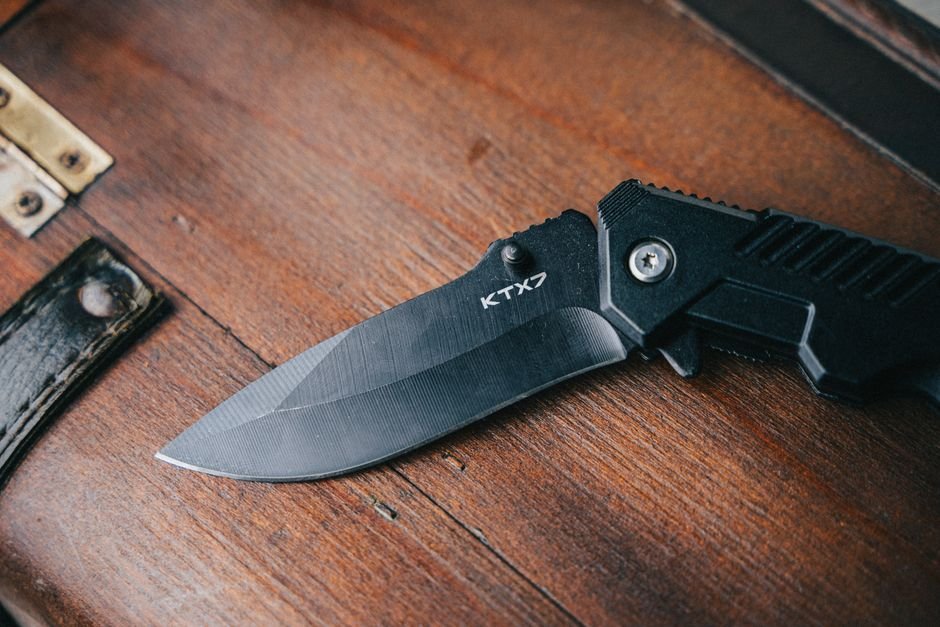
A sound liner lock that opens fully and remains engaged can suit routine, controlled cutting such as opening packages or slicing cord. Here, safe means reducing the likelihood of accidental blade closure during intended use—not making closure impossible. A folder is not equivalent to a fixed blade under heavy force, twisting, prying, or impact.
This qualified view follows broader hand-tool guidance. OSHA emphasizes using tools in proper condition and guarding against hazards created by misuse. The Canadian Centre for Occupational Health and Safety advises inspecting cutting tools, using the correct tool, cutting away from the body, and keeping the free hand out of the cutting path.
Before each use:
- Open the blade completely and confirm visible lock engagement.
- Check for debris, damage, looseness, or unexpected blade movement.
- Keep fingers away from the blade’s closing path.
- Stop if the task requires lateral force or substantial pressure.
For chopping, prying, or forceful repeated work, a suitable fixed blade is generally the safer choice. The lock should be treated as a backup, not as permission to use poor cutting technique.
How a liner lock holds the blade
When the blade reaches the open position, a spring-like section of the handle liner moves sideways into the space behind the blade tang. The liner’s leading edge then bears against the tang, resisting rotation toward the closed position. Pressing the liner away from the tang releases the blade.
Engagement must be visible
An audible click suggests that parts moved, but it does not confirm secure contact. With fingers kept clear of the blade path, inspection should show the liner overlapping the tang rather than barely touching its corner. Extremely shallow contact may slip; travel so far across that release becomes difficult can indicate wear, poor adjustment, or mismatched surfaces.
Retention also depends on several interacting details:
- Tang geometry: The angle and finish of the mating surfaces influence whether pressure keeps the liner seated or encourages it to slide.
- Pivot condition: A loose pivot, debris, corrosion, or excessive blade play can alter alignment and engagement.
- Handle pressure: Twisting the knife or squeezing near the release may shift the liner, particularly with an unstable grip.
The lock should not be confused with the opening method. Thumb studs, holes, flippers, and assisted mechanisms describe how the blade opens; the liner describes how it remains open. Different opener styles can be paired with everyday knife locks, so each mechanism should be evaluated separately.
A click is not a safety guarantee
Check that the liner visibly overlaps the blade tang as intended and does not stop at its edge.
Lint, grit, dried residue, or incomplete opening can produce a click even when engagement is shallow. Clean the pivot and lock area according to the maker’s instructions; do not probe it with fingers.
Keep cutting pressure controlled and aligned with the blade; avoid twisting, prying, and abrupt side loads.
Grip shifts can place unintended pressure on an exposed lock bar or move fingers into the blade’s closing path. Fingers should remain clear of that path during use and closing.
Inspect for pivot looseness, blade play, worn or chipped contact surfaces, and engagement that has changed over time.
Loose hardware and damaged lock faces can alter how the liner meets the tang. A knife with inconsistent engagement, unexpected movement, or visible damage should be taken out of service.
Striking the blade or forcing the lock can damage parts and still provide little insight into ordinary cutting safety. If cleaning and manufacturer-approved adjustment do not restore firm, repeatable engagement, stop using the knife and seek qualified service or replacement.
Check the lock before relying on it
-
Open it normally
In a clear area, point the edge away and keep fingers outside the blade’s closing path. Open the blade fully without snapping or forcing it.
-
Confirm visible engagement
Under good light, verify that the liner rests firmly against the blade tang rather than barely catching its edge. Acceptable engagement position varies by design, so consult the manufacturer’s instructions when uncertain.
-
Check for blade movement
Holding the handle securely, apply only light side-to-side and up-and-down pressure to the blade spine. Clicking, rocking, pivot movement, or a shifting lock bar warrants stopping use.
-
Watch the lock during a normal grip
With the edge directed safely away, apply ordinary cutting-grip pressure without touching the release. The liner should remain engaged rather than creeping aside or releasing.
-
Inspect the knife closely
Look for lint or grit around the tang and pivot, corrosion, loose screws, cracked liners or scales, and bent components. Follow the maker’s cleaning guidance; tightening, disassembly, or lubrication can affect lock geometry if done incorrectly.
-
Check for consistent behavior
Open and close the knife several times, keeping fingers clear of the blade path. Engagement should occur predictably; intermittent, shallow, sticky, or changing lockup should be evaluated through manufacturer-guided service.
Avoid impact-based “spine-whack” tests or deliberate overloading; they can damage the knife and do not represent ordinary cutting.
Control the blade from opening to closing
Safe handling starts before the blade moves. Establish a stable grip, check that no person or object is within the opening arc, and use the knife’s intended deployment mechanism. These controlled opening methods for safer knife use matter more than whether deployment takes one hand or two.
A thumb stud or flipper may permit one-handed opening, but convenience does not make that method suitable in every situation. Gloves, fatigue, poor balance, limited visibility, or a crowded workspace can reduce control. When the design allows, two-handed opening may provide more deliberate handling; otherwise, the safer choice is to pause and improve the setup.
Cut with force behind the edge
- Keep the free hand and other people outside the blade’s path, including the area beyond the material where the edge may travel after breaking through.
- Cut away from the body and maintain a grip that does not shift toward the edge.
- Use straight, controlled strokes. Twisting, prying, or lateral loading can stress the pivot and lock in ways ordinary slicing does not.
- Reposition the material rather than forcing an awkward cutting angle.
Close only after the task stops
Before folding, stop cutting and establish secure footing. Move every finger out of the blade channel, then disengage the liner deliberately. Begin folding under control, reposition the lock-operating finger before the edge enters the handle, and keep the other hand clear of the closing arc. Follow the manufacturer’s closing instructions for the specific model rather than relying on a fast, habitual motion.
Keep the job within the knife’s limits
A liner-lock folder is suited to controlled slicing, such as opening packaging, trimming cord, or cutting cardboard. Prying, chopping, batoning, digging, and twisting in a cut are misuse. These actions apply sideways, impact, or closing forces that the edge, pivot, and lock may not tolerate reliably.
If the blade binds, stop and withdraw it along the cut rather than forcing it forward or rocking it sideways. A pry bar, chisel, hatchet, shovel, or fixed-blade knife designed for impact is the safer choice when the task requires leverage, repeated blows, or deep penetration.
Sharpness also affects control. A sharp edge generally cuts with less pressure, reducing the chance of a sudden breakthrough; however, contact with that edge can cause a more severe injury. Matching the edge to routine cutting helps: a plain edge supports clean, precise slices, while a serrated section can reduce effort on fibrous rope or webbing.
Replace, sharpen, or change tools when:
- pressure must increase noticeably;
- the material pinches or traps the blade;
- the cut requires twisting or levering;
- the task calls for striking the blade or spine.
What makes a folder trustworthy
- Repeatable lock engagement
Confidence starts with the lock meeting the blade tang consistently after repeated openings. Side-to-side play, vertical movement, or engagement that changes with opening force warrants inspection or service.
Look forConsistent, visible engagement with minimal blade movementAvoidShallow, shifting, or intermittent lockup - Protected access and secure traction
The release should remain reachable without being so exposed that a tight grip can move it unintentionally. Handle texture and shape should resist the hand sliding toward the edge during a sudden breakthrough.
Look forDeliberate release access and traction in expected conditionsAvoidProminent controls, slick scales, or a grip that crowds the lock - Sound pivot construction
A stable pivot helps the blade and lock meet in the intended position. Fasteners that repeatedly loosen, rough movement, or misalignment can undermine otherwise reassuring lock engagement.
Look forCentered travel, stable adjustment, and suitable hardwareAvoidRecurring looseness, binding, or obvious misalignment - Credible documentation and support
Technical or performance claims should trace to the manufacturer or a named test source. Clear maintenance guidance, replacement-part policies, and accessible warranty service matter when wear appears.
Look forAttributed claims and a practical service routeAvoidUnverified strength claims or unclear repair options
Liner locks permit direct visual inspection but usually place a finger in the blade’s closing path during release. Frame locks use part of the handle as the locking member; lockbacks relocate the release; crossbar and button mechanisms change access, grip interaction, and maintenance needs.
None of those layouts creates an automatic safety ranking. A useful comparison of pocket-knife locks and carry tradeoffs considers engagement consistency, play, accidental-release exposure, traction, pivot stability, and manufacturer support. Any advertised load rating or durability result should identify its source and test method.
The three-part rule for safer use
Safe everyday use comes down to a repeatable routine: inspect the lock, keep the cut within the knife’s intended role, and keep every finger outside the blade’s closing path. Before work, open the blade fully and check that engagement looks consistent, the blade has no unexpected play, and the pivot and handle hardware remain secure.
Stop using the knife if engagement shifts, play appears, screws loosen, or opening and closing no longer feel consistent. Cleaning or proper service should come before another cut. Likewise, switch tools when a job requires prying, twisting, impact, or enough force that control could be lost. A liner lock is most dependable when treated as a cutting mechanism—not as a substitute for a pry bar or fixed blade.
Lock safety and blade play are closely related; why a folding knife rattles covers the pivot and lock-face wear that turn a dependable liner lock into an unpredictable one.