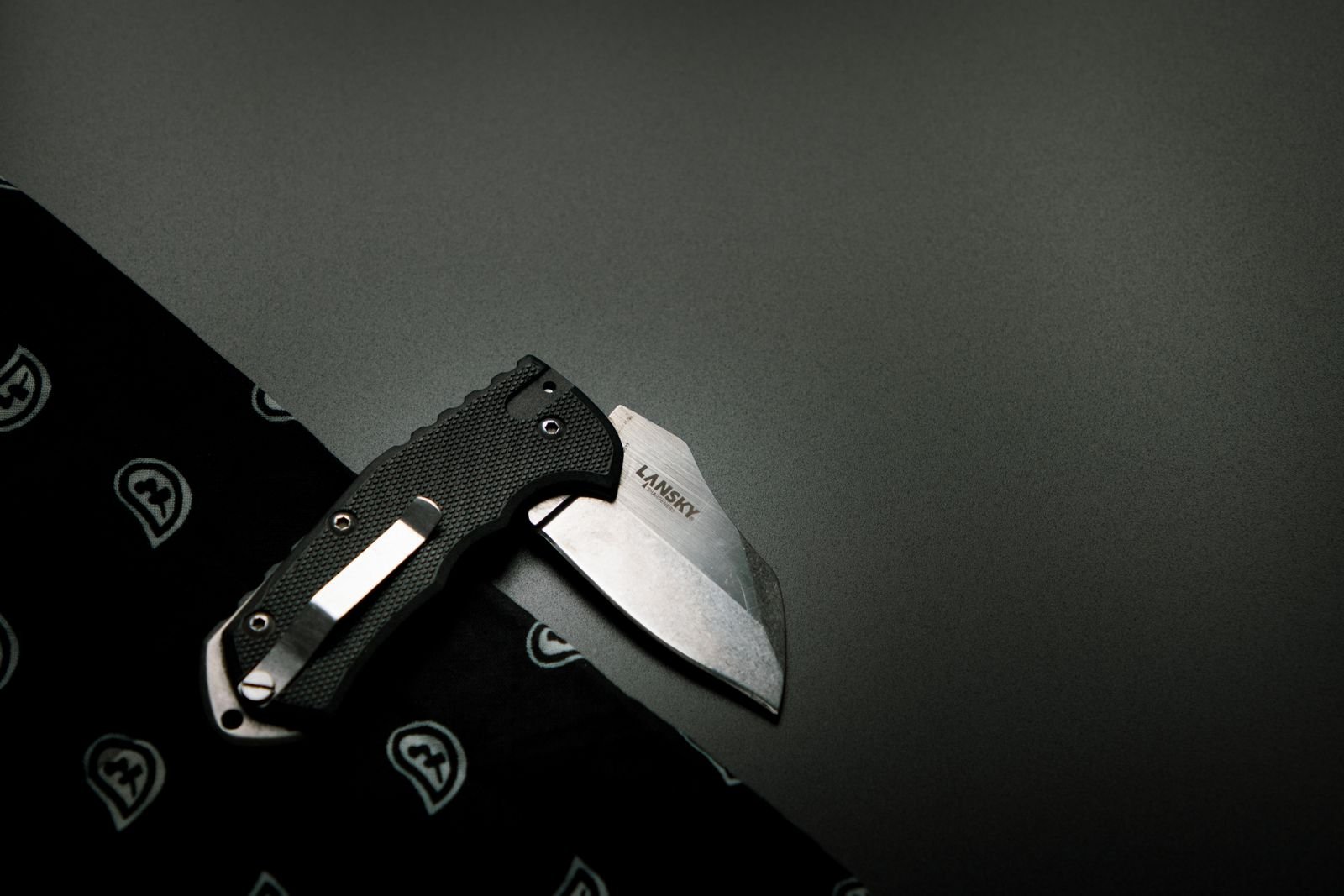
Pocket comfort is a design constraint, not a luxury.
A knife can look compact on a product page yet tug at lightweight pants, swing against the thigh during a brisk walk, or create a hard pressure point in a car seat. Closed length tells only part of the story: handle material, blade thickness, clip position, and weight distribution all affect how a knife carries.
The practical limit is not the heaviest knife a pocket can technically hold. It is the heaviest one that stays unobtrusive through a normal day. A useful check is to load the intended pocket with an object of similar weight, then walk, climb stairs, and sit for 20 minutes. If the pocket sags, the weight swings, or pressure causes constant readjustment, a lighter model—or one with a slimmer profile and better clip placement—will probably be carried more often. Capability matters only if the tool leaves home.
A practical weight range for pocket carry
- Comfort range A folding knife around 2–4 ounces (57–113 grams) suits many everyday pockets without creating excessive drag or bounce.
- Lighter carry Knives under 3 ounces (85 grams) often feel relatively unobtrusive, especially in structured pants with secure pockets.
- Added presence Above 4 ounces (113 grams), a knife may become increasingly noticeable when walking, sitting, or carrying other pocket items.
- Clothing matters Sturdy denim can support more weight than dress pants, lightweight shorts, or loose athletic clothing. Pocket depth and construction can shift the comfortable range substantially.
Scale weight is only a starting point. A useful check is to carry the knife in the intended pocket while walking, climbing stairs, and sitting.
Watch for fabric sag, swinging, pressure against the leg, clip movement, or restricted access to keys and a phone. If these appear, a lighter knife—or a different pocket and clip position—may be more comfortable.
What knife weight feels like in a pocket
One ounce equals approximately 28.35 grams. These ranges describe likely carry feel rather than fixed comfort limits; pocket depth, fabric, clip design, and other carried items can shift the experience considerably.
| Listed weight | Likely carry feel and suitable clothing |
|---|---|
| Under 2 oz (under 57 g) | Ultralight. Often unobtrusive in running shorts, lightweight pants, or a shirt pocket, provided the pocket securely retains the knife. |
| 2–3 oz (57–85 g) | Light. Generally compatible with chinos, hiking pants, and everyday jeans without pronounced sagging. |
| 3–4 oz (85–113 g) | Moderate. Commonly noticeable but manageable in structured front pockets; thin athletic fabric may bounce or pull. |
| 4–5 oz (113–142 g) | Substantial. Better supported by denim, work pants, or reinforced pockets. Loose shorts may allow excessive movement. |
| Over 5 oz (over 142 g) | Heavy for routine pocket carry. Often more practical in sturdy workwear, a dedicated pocket, or a properly fitted belt pouch. |
For scale, Benchmade lists the 535 Bugout at 1.85 ounces (52.45 grams), placing it in the ultralight range. Buck lists the 110 Folding Hunter at 7.2 ounces (204 grams), making it a comparatively heavy pocket load.
Body size alone does not determine comfort. A five-ounce knife may ride securely in reinforced work pants yet feel cumbersome in soft lounge shorts. When uncertain, placing an equivalent weight in the intended pocket for an hour can reveal sagging, swinging, or pressure points before purchase.
Why equal-weight knives carry differently
Two knives with the same scale weight can feel unrelated in a pocket. Thickness and width determine how much space a knife occupies and whether it presses against the thigh. Closed length matters too: a longer handle may bridge the pocket smoothly when standing, yet create a pressure point near the hip or leg when seated.
Balance and weight concentration affect movement. A knife with more mass away from the clip can swing as the wearer walks, particularly in loose or shallow pockets. A compact knife with dense handle materials may weigh the same but feel more planted because its mass is concentrated in a smaller area.
The clip changes the load
Clip tension must be strong enough to retain the knife without making removal awkward or bunching thin fabric. Carry depth also changes leverage: deep-carry clips conceal more of the handle and may reduce snagging, while a knife sitting higher can shift or tilt more readily.
Opening hardware deserves attention when comparing how opener choice affects pocket carry. Tall thumb studs, large flipper tabs, and prominent opening holes can add pocket bulk, rub the hand during access, or catch a seam. Rounded handles and low-profile hardware generally present fewer contact points.
Treat weight as the first fit filter, then check:
- closed dimensions and handle contours;
- clip position, tension, and edge clearance;
- balance while walking;
- pressure against the leg when seated;
- snagging during normal pocket access.
Match knife weight to clothing
Different clothes support the same knife very differently. A useful limit is therefore the heaviest knife that stays controlled through a normal day—not a single number for every pocket.
Gym shorts and light fabrics
Stretchy waistbands and shallow, unreinforced pockets magnify sagging and swinging. Compact knives suited to gym shorts generally carry more securely when they are slim and light, with a clip that grips thin fabric without damaging it. If the waistband shifts while walking or the knife strikes the leg on stairs, a lighter model or another carry method is warranted.
Jeans and chinos
Denim and sturdy cotton twill usually control moderate weight better, particularly when the pocket opening is reinforced. Pocket depth still matters: a short, wide knife may rotate, while a long handle can press into the hip when driving. Keys, coins, or a phone can also make an otherwise comfortable knife feel crowded and may scratch either item.
Office pants
Fine wool, dress fabrics, and loose pocket linings tend to show outlines and pull downward more readily. A slim profile, low overall weight, and discreet clip usually matter more here than maximum blade size. Comfort should be checked while seated, since the pocket angle can force the handle into the thigh or chair.
Structured workwear
Heavy canvas and reinforced pockets can manage greater loads, but capacity is not the same as comfort. Tools already sharing the pocket add bulk and can interfere with access. A practical check includes brisk walking, climbing stairs, entering a vehicle, driving, and prolonged sitting; persistent bouncing, sagging, pressure, or clip movement signals that the setup is too heavy or poorly positioned.
Where the extra ounces come from
Extra weight rarely comes from a single part. Thicker blade stock adds steel and may resist bending better, but it can also increase drag through cardboard or food. For opening packages, cutting cord, and other light utility, a thinner blade and modest structure may be sufficient.
Full steel liners reinforce scales and support pivots or locks, while partial or skeletonized liners reduce material. Robust lock bars, lock inserts, oversized pivots, and additional hardware can also raise weight. These features may be worthwhile for repetitive cutting or work performed with gloves, but no lock turns a folding knife into a safe pry bar.
Handle construction matters as well. Steel, brass, and copper components are generally heavier than comparable aluminum or fiber-reinforced polymer parts; titanium and carbon fiber may reduce weight depending on thickness and design. Solid backspacers add more mass than open standoffs, while glass breakers, bit drivers, scissors, and other tools each impose a carry penalty.
A useful comparison is task gained per ounce:
- Light daily cutting favors efficient blade geometry and comfortable carry.
- Demanding, repetitive work may justify stronger liners, locks, and thicker components.
- Added tools earn their weight only when used regularly.
Price is a poor shortcut for predicting mass. A premium knife may be exceptionally light, while a simpler model may use heavy steel construction. The same distinction shapes budget pocketknife carry tradeoffs: construction, materials, and intended work matter more than the price tier alone.
Build a like-for-like shortlist
Start with the maker’s product page or manual, then place candidates in a simple table. Compare similar blade lengths and the same tool type—a multitool and a single-blade folder are not equivalent.
-
Record carry-critical measurements
Capture listed weight, closed length, handle thickness, and clip orientation. Note whether weight includes removable accessories and whether thickness excludes the pocket clip.
-
Control the comparison
Keep blade length, lock style, and tool count reasonably close. Otherwise, apparent weight savings may simply reflect a smaller blade or fewer functions.
-
Check pocket compatibility
Confirm tip-up or tip-down carry, left- or right-side mounting, and whether the clip is reversible. Orientation can rule out a model before weight matters.
Save the source URL and access date; manufacturers can revise specifications.
When retailer figures disagree, prioritize the manufacturer’s current documentation. If it is missing or internally inconsistent, use a named independent test source that identifies the exact model and reports a measured weight or dimension. Treat unexplained retailer numbers as unverified, especially when variants use different handle materials or blade sizes.
Run a 15–30 minute pocket-weight simulation
-
Make a safe weight proxy
Use a smooth household object close to the candidate knife’s listed mass, confirmed on a kitchen or postal scale. Wrap it securely or seal it in a small pouch so no hard edge, loose part, or adhesive can scratch skin or escape into the pocket.
-
Recreate the actual pocket load
Wear the pants or shorts intended for carry and add the usual phone, wallet, keys, or other contents. Position the proxy where the knife would sit; if evaluating a clip, secure the pouch to approximate its height and side rather than clipping a bare object.
-
Move normally for 15–30 minutes
Walk indoors, sit in a typical chair, climb stairs while using the handrail, and bend to pick up a light item. Stop if the proxy causes pain, numbness, restricted movement, or an unsafe distraction on the stairs.
-
Check sag, swing, and pressure
Note whether the pocket mouth droops, the object strikes the thigh, or a concentrated pressure point appears when seated. Repeated swinging suggests that pocket depth, object shape, or clip position may matter as much as total weight.
-
Test access and retention
Confirm that the object stays put when sitting and bending, while the hand can still reach past it without snagging on other contents. Repeat on the intended carry side; clip orientation and pocket layout are especially relevant to comfortable lightweight left-handed carry.
-
Choose the lowest range that passes
A 2–3 ounce knife is a sensible starting range for routine cutting. Move toward 3–4 ounces when stronger construction, a larger working blade, or sustained use has a defined purpose; exceed 4 ounces only when the clothing controls the load and the task clearly benefits from the added build.
A proxy can screen for weight-related discomfort, but it cannot reproduce a knife’s exact thickness, balance, clip tension, or opening hardware.
- Retest any finalist in each garment used regularly; a passing result in jeans may not transfer to lightweight shorts.
- Failure caused by swing or blocked hand access may call for a different shape or clip position, not merely fewer ounces.
The practical target is the lightest weight range that performs the real cutting task without sagging, shifting, creating pressure, or obstructing the pocket. Begin around 2–3 ounces, consider 3–4 ounces for purposeful added capability, and treat anything heavier as a clothing-and-task-dependent choice.
After narrowing the range, compare actual knife dimensions, balance, and clip configuration before buying; the home simulation establishes a useful weight ceiling, not a complete fit assessment.
Weight is one of the few specifications that reliably predicts whether a knife is carried daily, which is why how to choose an EDC knife treats it alongside blade length and lock type.