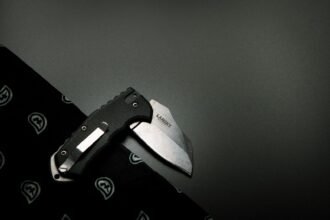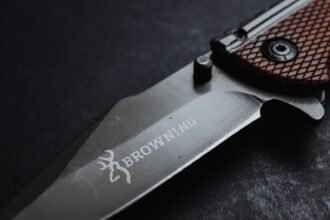
A respectable alloy cannot rescue a poorly built pocketknife.
A pocket knife may spend all day beside sweat, pocket lint, and the occasional splash—then be expected to open packages without constant sharpening. 9Cr18MoV can suit that routine well, offering useful corrosion resistance, serviceable edge retention, and generally manageable sharpening for an affordable stainless steel.
The qualification matters: a blade stamp reveals little about heat treatment, edge geometry, grinding quality, or consistency. A competently made 9Cr18MoV blade may outperform a poorly executed knife carrying a more prestigious alloy. Overall value therefore depends on the complete package, including the lock, pivot, handle construction, factory edge, quality control, and warranty support—not just the steel name.
What matters in practice
- Qualified yes It is a credible budget EDC choice when backed by competent heat treatment and manufacturing.
- Basic care Stainless does not mean maintenance-free. Salt, sweat, moisture, and acidic residue should still be wiped away.
- Blade geometry Thinner, even edge geometry can improve cutting performance more noticeably than a modest upgrade in alloy.
- Whole-knife value Check lock operation, centering, pivot stability, grind symmetry, and the maker’s return policy before focusing on steel marketing.
What the 9Cr18MoV designation means
9Cr18MoV
Under the Chinese GB/T 1220 naming convention, “9” indicates roughly 0.9% carbon and “Cr18” indicates roughly 18% chromium; Mo and V identify molybdenum and vanadium additions. Published compositions can vary by standard edition and manufacturer datasheet.
Carbon
Carbon enables the steel to harden and supports edge retention. Its practical effect depends heavily on heat treatment, carbide structure, and edge geometry.
Chromium
Chromium provides stainless behavior by helping form a protective oxide layer, while also contributing to wear-resistant carbides. Stainless does not mean immune to staining or corrosion.
Molybdenum
Molybdenum generally improves hardenability and can strengthen corrosion and wear performance. The actual benefit depends on its measured content and the maker’s processing.
Vanadium
Vanadium can refine grain and form hard carbides, potentially supporting wear resistance and edge stability. A small addition does not guarantee high performance by itself.
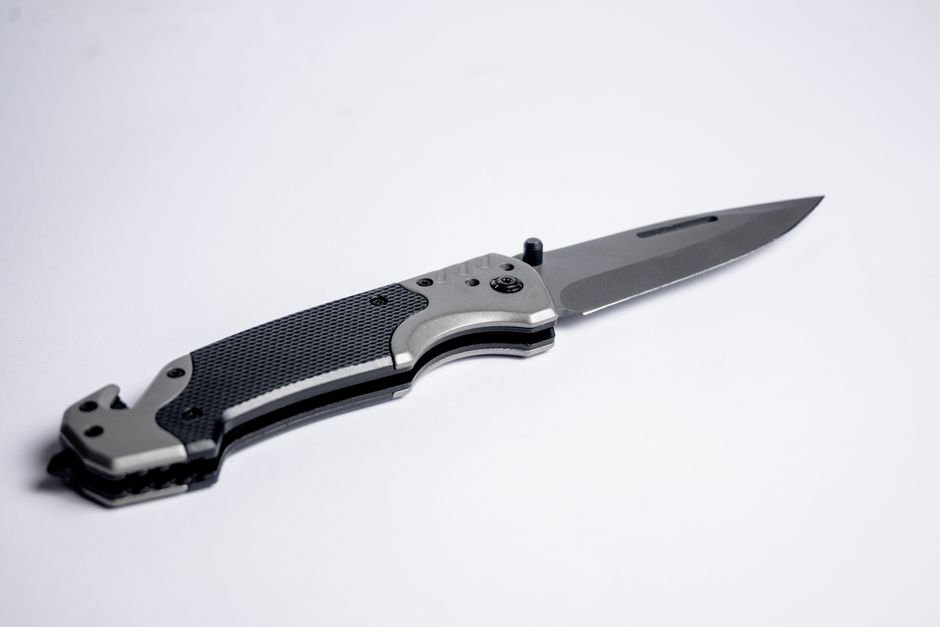
How 9Cr18MoV behaves in daily use
Moisture and neglected residue
9Cr18MoV is generally considered stainless, not rust-proof. A humid pocket, perspiration, coastal air, or damp storage can still produce spotting—especially around the pivot, thumb studs, jimping, and a poorly finished edge. The broader discussion of steel behavior in sweat and humidity helps explain why prolonged exposure matters more than brief contact.
Food residue adds another risk. Acids and salt from fruit, sauces, or cured foods should be wiped away promptly rather than left on a folded blade. After wet use, the knife should be rinsed when appropriate, dried completely, and given a light coat of food-safe protectant if it regularly contacts food.
Cutting and maintenance
For routine packaging, tape, and occasional cardboard, a competently heat-treated 9Cr18MoV blade should offer useful edge life without being unusually difficult to sharpen. Cardboard remains abrasive, however, and repeated cuts can round the apex sooner than light tasks such as opening envelopes or trimming cord. Touching up the edge before it becomes fully dull usually requires less metal removal.
Toughness is adequate for normal slicing, but the steel should not be treated like a pry bar. Staples hidden in cartons, twisting through thick plastic, or levering with the tip can chip or deform an edge depending on hardness and grind.
Blade design may matter more than a modest steel-ranking advantage. A thin blade behind the edge with an appropriate sharpening angle often slices cardboard and clamshell packaging more easily than thicker premium steel. For an affordable EDC knife, grind consistency, edge angle, and heat treatment are therefore worth weighing alongside the alloy name.
Where its cutting limits appear
9Cr18MoV is generally better suited to ordinary slicing than long sessions involving abrasive media. Rope, dirty carpet, insulation, and cardboard contaminated with grit can wear the apex relatively quickly. Extended box breakdown also makes its moderate wear resistance more apparent, especially when tape adhesive and mineral particles accumulate at the edge.
That dulling is normal wear, not necessarily blade failure. Cutting on glass, ceramic, concrete, or metal—or hitting staples hidden in packaging—can cause localized rolling or chipping. The outcome depends heavily on edge angle, thickness behind the edge, hardness, and heat treatment: a thin, hard edge may chip, while a softer or more obtuse edge may roll.
For cutting-heavy days, performance can be preserved by:
- using a wood or plastic cutting surface;
- checking cardboard for staples and debris;
- wiping adhesive from the blade;
- touching up the edge before it becomes fully blunt.
A small sharpener may be more useful than expecting this steel to stay keen through uninterrupted abrasive work.
Opening packages, trimming cord, and slicing food are legitimate knife tasks. Prying, twisting in a cut, striking the spine, or using the tip as a screwdriver applies sideways or impact loads that folding EDC blades are not designed to handle.
Heat treatment and design decide the outcome
Controlled heat treatment determines the steel’s hardness, carbide distribution, retained austenite, and toughness. As explained in Knife Steel Nerds’ published metallurgy research, austenitizing, quenching, and tempering affect how much carbon and chromium remain in solution versus forming carbides. Poor control can produce a blade that chips, rolls, sharpens unevenly, or resists corrosion less effectively—even when the alloy label is correct.
Hardness still needs context. A harder blade may hold its apex longer but can be less tolerant of impact or a very thin edge. A softer treatment may sharpen easily yet lose crispness sooner. Buyers should treat any Rockwell hardness figure as meaningful only when it comes from the knife manufacturer or an identified independent test—not an unsourced retailer listing.
Geometry can outweigh small metallurgical differences during ordinary cutting. Before buying, inspect:
- Blade thickness and grind: A thin, full-height grind usually slices better than a thick blade with abrupt shoulders.
- Edge angle and consistency: Uneven bevels suggest hurried finishing and complicate sharpening.
- Construction: Check centering, lock engagement, fasteners, liners, and whether maintenance is practical.
- Ergonomics: Look for a secure grip, sensible jimping, and no sharp handle edges.
- Pivot quality: Reviews should report smooth travel without side-to-side play.
- Quality control: Favor sellers with straightforward exchanges and brands that publish warranty terms.
Model-specific reviews are more useful when they discuss these details rather than merely praising sharpness out of the box.
Compare heat-treatment transparency, edge geometry, assembly quality, and warranty support. A hardness number cannot reveal uneven grinding, pivot play, or inconsistent production.
9Cr18MoV vs. 8Cr13MoV and D2
No alloy wins every category. Published Knife Steel Nerds testing shows that edge retention and toughness shift with hardness and heat treatment, while blade thickness and edge angle further affect real-world durability. The following is a practical baseline for comparing 9Cr18MoV with D2 and 8Cr13MoV, not a guarantee for every knife.
| Trait | 8Cr13MoV | 9Cr18MoV | D2 |
|---|---|---|---|
| Corrosion resistance | Generally good | Often the strongest of these three | Usually the most stain-prone |
| Edge retention | Commonly lower | Moderate to good | Often higher in abrasive cutting |
| Toughness | Often relatively forgiving | Moderate; geometry matters | Can be less tolerant of thin edges or impacts |
| Sharpening | Usually easiest | Manageable with common abrasives | Commonly slower, especially after heavy dulling |
For humid or sweaty carry, 9Cr18MoV is often the safer compromise, although salt, moisture, and pocket debris still call for cleaning and drying. D2 can work in damp climates, but it generally benefits from more deliberate rust prevention.
For frequent cardboard cutting, D2 may hold a working edge longer because its carbide-rich structure favors wear resistance. A well-treated 9Cr18MoV blade remains a balanced alternative when corrosion resistance matters nearly as much.
For easy field maintenance, 8Cr13MoV usually responds fastest to simple stones or compact sharpeners. Final selection should still consider the maker’s heat treatment, edge geometry, and quality control; a well-executed 8Cr blade can outperform a poorly treated D2 or 9Cr blade.
How to judge the knife, not just the steel
-
Confirm the steel claim
Look for “9Cr18MoV” on the maker’s product page, packaging, or specification sheet. Treat “surgical steel” and unsupported performance superlatives as warning signs.
-
Check heat-treatment disclosure
A manufacturer-published hardness range or heat-treatment description adds credibility. Missing information does not prove poor quality, but it leaves blade performance less predictable.
-
Match geometry to the work
Thin stock and a sensible edge favor slicing; thicker tips tolerate rougher use but cut less efficiently. Compare with other budget pocket-knife options built for the same tasks.
-
Assess the mechanism
The lock or slip-joint should suit the intended use. Check reputable reports for blade play, poor centering, unreliable engagement, or inconsistent opening action.
-
Review grip and carry
Handle dimensions, contours, texture, and clip position affect comfort and pocket access. Buyers unable to handle the knife first should favor a practical return policy.
-
Investigate support and consistency
Read the warranty terms and look for recurring quality-control complaints across multiple retailers or established reviewers. Repeated reports of uneven grinds, loose hardware, or failed locks deserve attention.
Blade-length limits, locking mechanisms, assisted or automatic opening, and concealed carry may be regulated differently by jurisdiction. Check current state, provincial, municipal, workplace, and venue rules before ordering or carrying; retailer availability does not establish legality.
A practical EDC choice—with clear limits
9Cr18MoV is a reasonable candidate for affordable EDC knives used in humid climates, around food, for opening packages, and for other light cutting. Its stainless character reduces maintenance pressure, but it is not rustproof; knife design, heat treatment, and finish still determine how well a particular model performs.
It becomes less appealing for prolonged cardboard, dirty rope, carpet, or other abrasive work, where edge retention may matter more, and it should not be treated as a prying or chopping steel. Owners can keep maintenance simple: wipe the blade after use, dry it before storage, apply a food-safe protectant when exposure warrants it, and touch up the edge before it becomes heavily dull. Shoppers who prioritize minimal corrosion risk can compare other corrosion-resistant budget knife options, while recognizing that geometry, construction, and quality control may outweigh the alloy name.
This steel turns up repeatedly at the budget end, and the roundup of EDC knives under $50 covers how it performs in finished knives alongside the alternatives at the same price.