Mostly rust‑resistant stainless, not invincible.
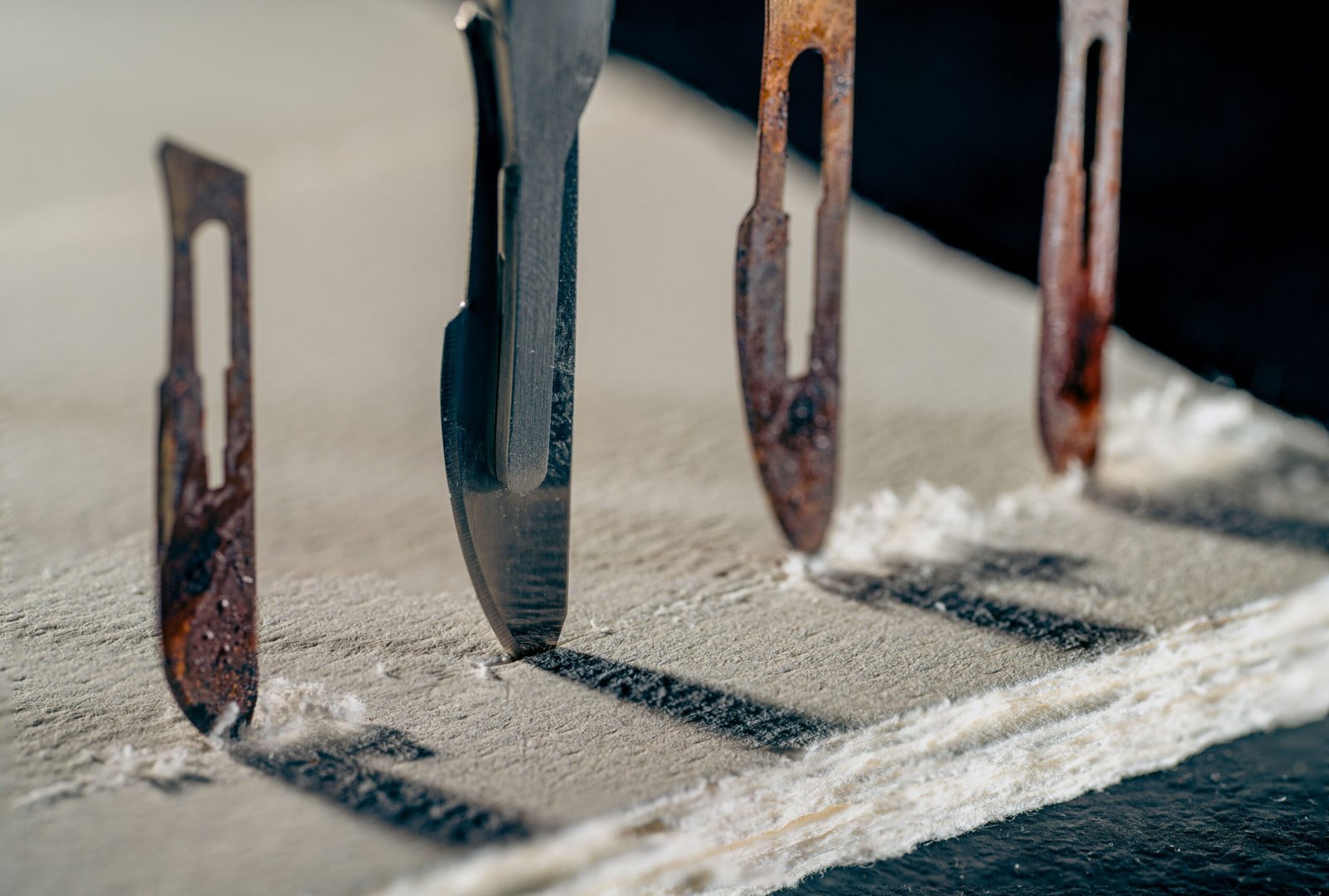
After a rainy commute, pulling a pocketed blade with a dark spot is a familiar worry. S30V is a premium stainless with excellent edge retention and good corrosion resistance, but no steel is fully immune. In routine urban carry it typically resists staining if wiped and dried; however prolonged saltwater, heavy sweat, or acidic residues can cause surface staining or micro‑pitting. Maintenance—wiping, drying, occasional light oiling—turns potential problems into minor blemishes rather than rusted ruins.
- Chemistry: ~1.45% C, ~14% Cr, ~2.75% V, ~0.5% Mo.
- Hardness: commonly HRC 58–61.
- Best use: durable for daily carry; avoid sustained saltwater exposure.
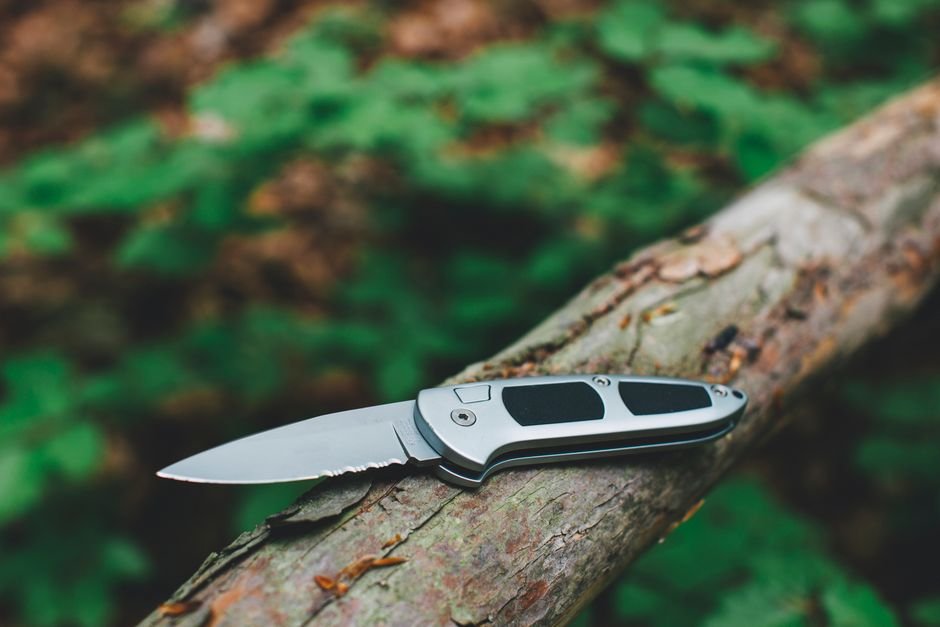
Why S30V is stainless and wear‑first
S30V stainless steel earns its stainless label because of chromium. Moreover, chromium in steel forms an ultra-thin, self-healing oxide layer (a passive film) that slows corrosion. That passive film is the foundational reason S30V resists rust under normal exposures.
What vanadium carbides do
Vanadium is added to form vanadium carbides—very hard, stable particles dispersed throughout the steel. Those carbides are significantly harder than the surrounding matrix and than common chromium carbides, so they dominate wear behavior: the cutting edge wears the matrix around these carbides rather than the carbides themselves, producing excellent edge retention.
Implications for corrosion behavior
- Vanadium carbides preferentially bind carbon, reducing the tendency for chromium to form chromium carbides that can deplete chromium at grain boundaries. That helps preserve the continuous passive film.
- Powder metallurgy (CPM) processing yields very fine, evenly distributed carbides, which improves toughness and helps avoid large carbide clusters that could create localized corrosion sites.
In short, chromium provides the passive barrier against rust, while vanadium carbides deliver wear resistance without substantially undermining stainless behavior—though extreme environments can still challenge the passive film.
How passivation works at the surface
Passivation in stainless steels is a surface phenomenon: a very thin, adherent layer of chromium oxide (Cr2O3)—a few nanometers thick—forms spontaneously in the presence of oxygen and dramatically reduces metal dissolution. That film is not an inert coating but a dynamic, self‑healing barrier. If the oxide is scratched or locally dissolved, chromium in the alloy migrates to rebuild the film, provided oxygen and chromium are available.
Several factors control whether the passive film survives or fails:
- Chloride ions (Cl–): Chlorides promote localized breakdown (pitting) by adsorbing at defects and stabilizing metal cations, which prevents film reformation. Small pits can propagate rapidly even when the bulk remains passive.
- Abrasion and wear: Mechanical removal exposes fresh metal. Repassivation rate depends on oxygen access and surface chemistry; repeated or rapid abrasion can outpace film repair and lead to uniform or fatigue‑assisted corrosion.
- Carbides and microstructure: Hard carbides (vanadium carbides in S30V) provide wear resistance but create microstructural heterogeneity. Carbides themselves are inert, but chromium depletion near certain carbides (or secondary carbide networks) can produce locally weaker passive behavior and act as initiation sites for corrosion.
Understanding corrosion requires viewing it as the interaction of a nanometer‑scale film, local chemistry (chlorides), mechanical action, and microstructure rather than a single alloy property.
Passivation is a tiny, regenerative chromium‑oxide film. Chlorides, abrasion, and local chromium depletion control whether that film protects or fails.
Lab results and field experience
S30V’s real-world story is consistent. However, it has excellent wear resistance with S30V stainless steel behavior, but is not invulnerable to chloride-driven local attack. In the field, production knives often hold a keen edge through heavy cutting while showing light staining if cleaned occasionally.
How it compares, qualitatively
- Compared with 440C and AUS‑8: superior edge retention and comparable or better corrosion resistance. Those older grades stain more readily.
- Compared with VG‑10 and 154CM: similar corrosion resistance; S30V trades marginal toughness for superior wear.
- Compared with powder steels like S35VN: very similar corrosion performance; S35VN is slightly easier to grind and can feel a touch tougher in abuse.
- Compared with semi‑stainless D2: S30V resists rust much better because of higher chromium and true stainless metallurgy.
What common corrosion tests actually show
Salt‑spray tests (ASTM B117) accelerate pitting tendencies; S30V performs well in these but tests omit mechanical wear. Electrochemical/potentiodynamic tests measure passivation behavior and generally place S30V near other high‑Cr martensitics. In short, lab tests predict good stainless performance — the deciding factors in the field are chloride exposure, mechanical wear, and maintenance.
Many production makers use S30V (for example Chris Reeve and Spyderco); for a broader list see which brands use S30V stainless steel.
Why heat treat and carbides change S30V's behavior
S30V’s performance is a competition between hard, vanadium‑rich carbides and the chromium‑rich martensitic matrix that provides corrosion resistance. Vanadium carbides (very hard and wear-resistant) improve edge life but reduce the fraction of ductile matrix available to blunt impacts. Carbide size, volume fraction, and distribution are set by alloy chemistry plus austenitizing and temper cycles—and those microstructural details drive the tradeoffs.
The practical tradeoffs
- Edge life vs toughness: Higher hardness and more carbide volume increase abrasion resistance and edge retention but raise brittleness and chipping risk. Finer, evenly distributed carbides give a better toughness/edge balance than coarse, blocky carbides.
- Chromium availability vs wear phase stability: Vanadium preferentially forms VC over chromium carbides, preserving chromium in the matrix for passivity. However, excessive carbide content or coarse carbides can create local chromium depletion pockets that increase localized corrosion susceptibility.
- Heat treat levers: Higher austenitizing temperatures and controlled cooling can dissolve undesirable precipitates and produce fine carbides; tempering schedules (including multiple tempers or cryo treatments) tune retained austenite, hardness, and carbide precipitation.
Desirable indicators from makers: stated HRC range, tempering regimen (number/temperatures), and micrographs or metallurgical notes—these illuminate where on the wear/toughness/corrosion spectrum a given heat treat lands.
Step-by-step care after wet exposure and routine maintenance
-
1. Rinse promptly
Flush the blade and pivot with fresh water to remove salts, sand, and contaminants. Open folding knives and rinse inside pivot areas, then shake off excess water.
-
2. Dry and displace moisture
Pat dry with a lint-free cloth then use compressed air or a drop of isopropyl alcohol in the pivot to displace trapped water. Allow components to air-dry fully before lubrication.
-
3. Clean residues
Degrease with a mild dish soap solution and a soft brush for grime; for persistent spots, a paste of non-abrasive stainless cleaner (oxalic-acid based) applied along the grain will lift stains. Rinse and dry again.
-
4. Remove surface spots or minor corrosion
Light surface staining can be removed with 0000-grade steel wool or a non-scratch scouring pad used gently along the polish lines. For stubborn marks, progress with fine abrasives (800–1200 grit) to blend the finish, then re-clean and dry.
-
5. Finish and protect
Apply a thin lubricant to the pivot and a light corrosion-inhibiting oil to metal surfaces. Store the knife dry and periodically inspect for early signs of pitting.
-
6. When repair goes beyond maintenance
If pitting or carbide-exposed areas deepen, consider professional refinishing; for guidance on more extensive repairs and trade-offs, consult resources on addressing chips and corrosion.
• Avoid bleach and chlorinated cleaners — these attack the passive film and accelerate pitting.
• Don’t scrub across the edge — abrasive motion across the cutting edge removes geometry and weakens the blade.
• Don’t leave the knife wet or salt-exposed for long — localized corrosion begins quickly where the passive film is compromised.
• When uncertain, stop and evaluate — aggressive grinding or improper chemistry can worsen corrosion; seek professional restoration for deeper damage.
Why the same S30V can behave very differently
How heat treatment and cryogenic cycles change performance
Heat treatment controls the martensite/retained‑austenite balance and the way carbides form. Higher hardening and minimal tempering raise hardness and wear resistance but can increase carbide boundary depletion of chromium, increasing localized corrosion risk. Cryogenic treatment often reduces retained austenite and refines carbide distribution, which can boost wear life with little stainless loss — but benefits depend on alloy form (PM vs cast) and process control.
Tempering, finish and coatings
Tempering cycles trade hardness for toughness and stabilize the microstructure; multiple low‑temperature tempers reduce embrittlement without dramatically sacrificing wear. Surface finish matters: a fine polish reduces initiation sites for pitting, while bead‑blast or stonewashed surfaces can hide early pits. Coatings (PVD/DLC/nitride) add sacrificial corrosion/wear protection but will wear off; a coated blade with poor substrate passivation can still corrode under the film.
What to look for when evaluating a production knife
- specified Rockwell hardness and temper cycle
- mention of cryo or subzero treatment
- finish type (polished vs blasted) and post‑finish passivation
- coating type and whether edge/choil are coated
- independent corrosion/wear testing or maker transparency
Common Myths and Quick Decisions
Does S30V never rust?
No. S30V is stainless but can corrode locally when its chromium passive film is breached by chlorides, severe wear, or chromium‑depleting carbides. Pitting and surface rust are uncommon but possible under harsh conditions.
Is S30V maintenance‑free?
Not entirely. Regular drying, rinsing after salt or acidic exposure, and occasional oiling or stropping cut corrosion risk. Maintenance demands are lower than high‑carbon steels but meaningful for longevity.
Is S30V suitable for constant saltwater use?
Not ideal for continuous immersion. Short exposures are manageable if rinsed and dried promptly; continuous marine use favors steels with higher chromium, molybdenum, or active corrosion‑resistant alloys.
Will coatings make S30V impervious to rust?
No single coating makes it impervious. Coatings and finishes reduce exposure and slow corrosion, but scratches, wear, and trapped salts can still cause localized attack.
How to decide if S30V is right for EDC?
Pick S30V when edge retention and wear resistance are priorities and exposure to salt or heavy abrasion is limited. For heavy wet‑duty or unpredictable environments, select steels or treatments optimized for corrosion resistance.
Choosing S30V: quick if/then rules
- If constant saltwater and minimal cleaning → avoid S30V; use higher-corrosion stainless or coated blades.
- If heavy abrasive use and willingness to maintain → S30V for edge retention and wear resistance.
- If occasional wet exposure with routine drying/oiling → S30V balances performance and care well enough for EDC use.
S30V is a strong choice when edge retention and wear resistance matter and regular drying/oiling is acceptable. For constant salt, long wet storage, or true zero-maintenance needs, prefer superaustenitic or coated steels; see linked guides on knife selection and fixed‑blade steel comparisons for alternatives and deeper trade-offs.