
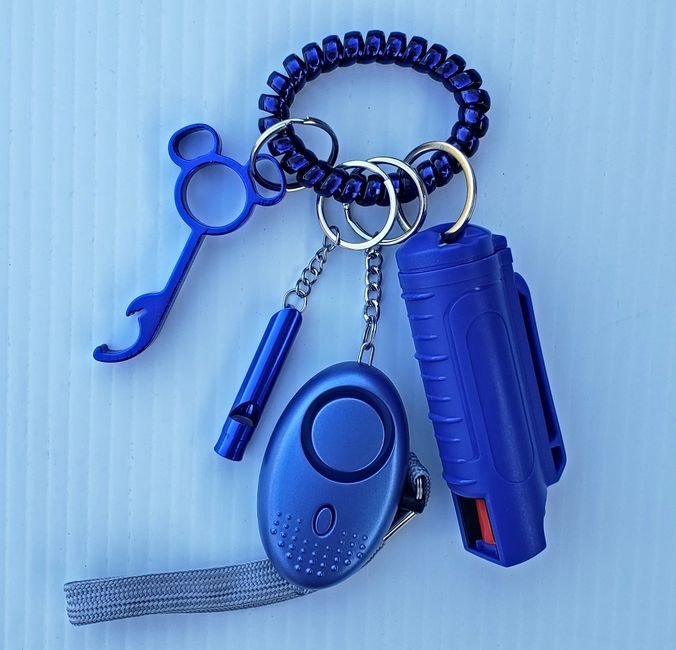
A can that merely still sprays is not the same as one that can be trusted.
A pepper spray can often looks fine long after it has lived on a keychain, sunk to the bottom of a bag, or baked in a glove box. That is exactly what makes the doubt difficult: there is rarely an obvious visual clue that performance has faded.
Under stress, dependability matters more than possession. The important question is not whether any liquid can come out, but whether the can will deliver the expected pressure, pattern, and burst length when seconds count.
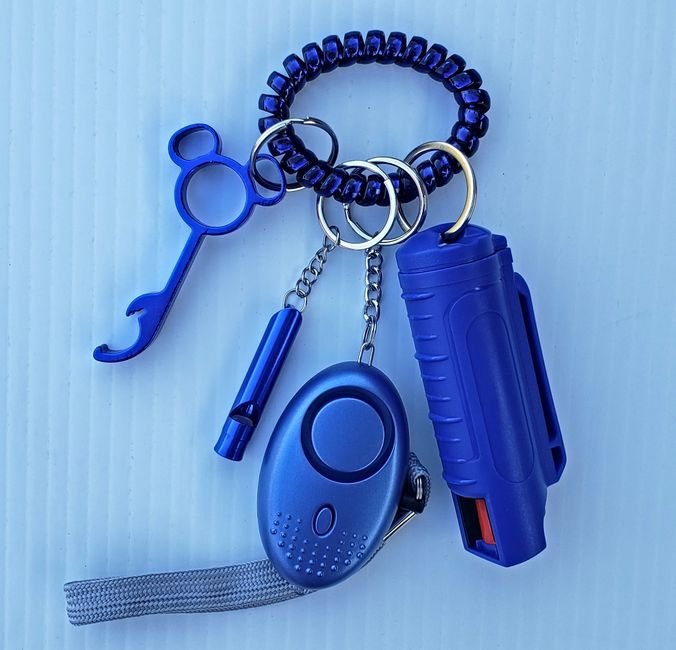
Pepper spray expiration is easy to overlook because a can can still hiss out liquid well past its useful life — the propellant, formula, and valve hardware all age gradually, so a can that sprays is not proof it will perform reliably when it matters.
Yes—Pepper Spray Does Expire
Does pepper spray expire in a real-world sense?
Yes. Most units age gradually rather than switching from usable to useless on a single date. The main change is reduced reliability under stress, especially in how far, how evenly, and how consistently the spray exits the canister.
What usually degrades first inside the can?
Propellant performance is often the first concern. As internal pressure drops, range shortens and the spray can become weak, sputtering, or uneven, which matters more than appearance alone.
Can the active formula go bad?
The irritant itself is generally stable for long periods, but the full mixture can still change over time. Separation, thickening, or settling can alter the pattern, turning a clean stream or cone into an inconsistent discharge.
Why does packaging matter as much as the formula?
Valves, seals, crimps, and actuator parts age too. Small leaks or corrosion can slowly bleed pressure, while damaged nozzles can distort the spray pattern even if liquid remains inside.
What does expiration really mean for performance?
It usually means less predictable output, not necessarily a totally empty can. An older unit may still fire, yet deliver shorter reach, fewer effective bursts, and less repeatable coverage from one press to the next.
A canister can look intact and still lose effectiveness through three separate paths:
pressure loss reduces reach and force formula drift changes thickness and spray shape hardware wear affects sealing and nozzle behaviorThat is why expiration is best understood as a decline in dependable output.
Where the date is found
Where is the expiration date usually printed?
Most cans place it on the base, crimped top, side label, or safety insert. Some mark it as “EXP” or “Best by,” while others use a simple month-and-year stamp near the barcode.
How is an expiration date different from a manufacture date?
An expiration date marks the end of the maker’s intended service life. A manufacture date only shows when the can was filled, so usable life must be calculated from the brand’s stated interval, which varies by formula and by spray pattern and shelf-life differences.
What is a lot code?
A lot or batch code is mainly for production tracking, quality control, and recalls. It often combines letters and numbers and usually cannot be translated into an end-of-life date without the manufacturer’s coding key.
What if the labeling is missing or hard to decode?
That usually means the can’s age cannot be verified from the container alone. Packaging, inserts, manuals, and manufacturer support records matter because shelf life differs across OC blends, propellants, valve designs, and can sizes.
If one mark shows a fill date and another shows an expiration date, the later date is not automatically the correct one. Brand documentation is the tie-breaker, because coding conventions differ between product lines.
Expired does not mean predictable
Most expired cans land in the middle: they may still fire, but with less pressure, a shorter burst, or a distorted spray pattern.
That gray zone is the problem. A quick hiss can create false confidence while delivering less range, less coverage, and less consistency than the label intended.
Aging can produce uneven failures such as sputtering, delayed discharge, dribbling, or a weak stream that collapses early.
Stored pressure, valve condition, and seal integrity can degrade separately. A can may appear functional yet fail in a specific, unpredictable way when performance matters most.
Some visible clues do matter: crust around the nozzle, oily residue, corrosion, dents near the valve, a loose actuator, or a can that hisses without being pressed.
Those signs can point to leakage, seal breakdown, or valve damage, all of which make output harder to predict even before the expiration date becomes an issue.
Residue or crystals around the nozzle
Rust, pitting, or dents near the top assembly
A loose cap, actuator, or safety mechanism
Faint hissing, chemical odor, or signs of seepage
Noticeably light weight compared with a new unit of the same model
A practical replacement checklist
-
Check the calendar age
If the can is at or beyond the maker’s date, replacement moves to the top of the list. Even unopened units lose reliability margin as propellant, seals, and valve parts age.
-
Review where it has been stored
Long periods in glove boxes, sheds, damp bags, or salty air can age a can faster than closet storage. Poor storage history can matter as much as the printed date.
-
Account for temperature abuse
Repeated freezing, summer-car heat, and rapid hot-cold cycling can affect pressure and valve behavior. A heavily heat-stressed can often deserves earlier replacement.
-
Treat any prior discharge seriously
Any burst, even a short one, reduces remaining propellant and can leave residue around the nozzle. A partially used defensive can is usually a stronger replacement candidate than an untouched one.
-
Inspect the hardware closely
Replace promptly if there is leakage, crusting, corrosion, denting, a cracked actuator, a damaged safety, or anything loose around the cap or nozzle.
Spraying an older live can once only shows what happened in that moment, under those conditions. It does not reliably confirm future pressure, burst length, or pattern.
For skill-building, training units and controlled drills are the safer practice option. They allow repeated draws, safety-tab manipulation, and aiming work without depending on an aging live can.
Final practical questions
When is replacement the smarter call than more testing?
Replacement makes more sense once the can is past its printed date, partly discharged, heat-stressed, or simply doubtful. Defensive sprays are low-margin reliability tools; uncertainty itself is a meaningful failure risk.
How should an old pepper spray can be disposed of?
Disposal depends on local household hazardous-waste rules and the can’s condition. Many makers and municipalities treat old or damaged units as hazardous waste rather than ordinary trash, especially if pressure remains.
How can the same uncertainty be avoided next time?
Fresh stock helps most when the manufacture or expiration date is clear at purchase. Recording the date in a phone note or calendar makes replacement routine instead of guesswork.
Does carry format affect replacement decisions?
Yes. A format that is actually carried consistently and protected from crushing, leaks, and accidental discharge usually ages more predictably in real use than one left loose in a hot bag or car.
A simple low-regret rule
If a pepper spray can is old, damaged, previously used, or hard to trust, replacement is usually the cleaner decision than hoping it still performs. Reliability matters more than squeezing extra life from a questionable can.
The easiest long-term fix is simple: buy clearly dated stock, note the replacement date, and carry a format that matches everyday habits. When confidence is shaky, the can already failed its most practical test.





16 Comments
I liked the checklist, but I still think manufacturers make date labels too hard to find. If the safety advice depends on knowing the date, why is it hidden in microscopic print on the bottom rim half the time?
Not really your fault obviously, just venting. Still, the reminder that old cans can fail unevenly was the part that stuck with me most.
That frustration is fair. Clear dating should be standard, especially for a product people may store for years and depend on under stress.
When the marking is vague or tiny, the best workaround is checking the brand documentation right away and recording the date yourself. It’s inconvenient, but it removes a lot of uncertainty later.
Question I never see answered clearly: does a very brief test spray take enough out of the can that you should replace it right after? Or is one tiny burst fine as long as it’s still within date?
I get why testing matters, but it also feels weird to reduce capacity on something that’s supposed to be for emergencies.
A very brief test burst does not automatically mean the can must be replaced, but it does count as prior discharge and should be taken seriously. Even a short test can slightly reduce total burst time and, depending on the design, affect confidence in what remains.
If you test it, keep the burst minimal, follow the manufacturer guidance, and note that it has been discharged. If the unit is older or already near its replacement window, that’s when many people choose to swap it out.
I appreciate that you said visible condition doesn’t tell the whole story. Mine looked totally fine from the outside, but when I tested an old can the stream was more like a sad little dribble than a spray.
After that I started writing purchase dates on the packaging with a marker. Low tech, but it works.
That’s a smart habit. Purchase date notes are especially helpful when the factory date is hard to read or the can gets separated from its original packaging.
And your test result is exactly why appearance alone can be misleading—pressure loss often shows up only when the can is actually discharged.
Same here. Mine looked perfect and then basically coughed once and quit. Ever since then I replace earlier instead of trying to squeeze every last month out of it.
I kinda wish the article talked more about humidity too. Heat gets all the attention, but I live near the coast and anything metal eventually starts acting weird.
No visible corrosion yet on mine, but now I’m side-eyeing the seams.
This was actually more useful than the usual “replace every X years” advice.
One thing I’m still unsure about: if a can has never been used but sat in a glove box through two summers and two winters, would you automatically replace it even if it’s technically still before the printed expiration date? The temperature stress part seems like the biggest wildcard.
Yes, repeated temperature extremes can justify replacing it early even before the printed date. A glove box can get far hotter than normal room storage, and freezing cycles can also affect pressure and the internal components over time.
If that exposure has been ongoing, I’d lean toward replacement rather than trusting the date alone. The printed date is a baseline, but storage history matters a lot.
This matches what a police instructor told our workplace years ago: expired doesn’t mean “empty,” it means “unreliable.” Big difference.
People treat the date like milk in the fridge, but with something pressure-based it’s more about not betting your safety on a maybe.
Good point about lot codes not being expiration dates. I learned that the hard way because I was staring at a stamped number like it was some secret military puzzle 😂
Would be nice if more brands just printed “EXP” in plain English instead of making people play detective.
The disposal part is where things get annoying. My county website is super vague about self-defense sprays and just dumps everything into a generic hazardous waste page.
I wish articles like this could include a few examples of how different cities classify them, because “check local rules” is correct but not always very practical when the local rules are written like they hate humans lol.
Do you think carrying size matters for shelf life, or just usability? You mentioned choosing a format that fits daily use, and I wondered if the tiny keychain ones lose pressure faster just because they’re smaller.
Could be a dumb question, but I’ve always suspected the mini cans are more finicky.
Not a dumb question at all. In general, the bigger issue with smaller formats is reduced total capacity and shorter burst duration, not necessarily that they always expire faster.
That said, smaller units can feel less forgiving because there’s less margin if pressure drops or if they’ve been partially discharged. So even if shelf-life ratings are similar, practical reliability can feel different.
I’ve had both and the little keychain ones always made me nervous for that exact reason. Even if they age the same on paper, the tiny amount in them leaves less room for error.