
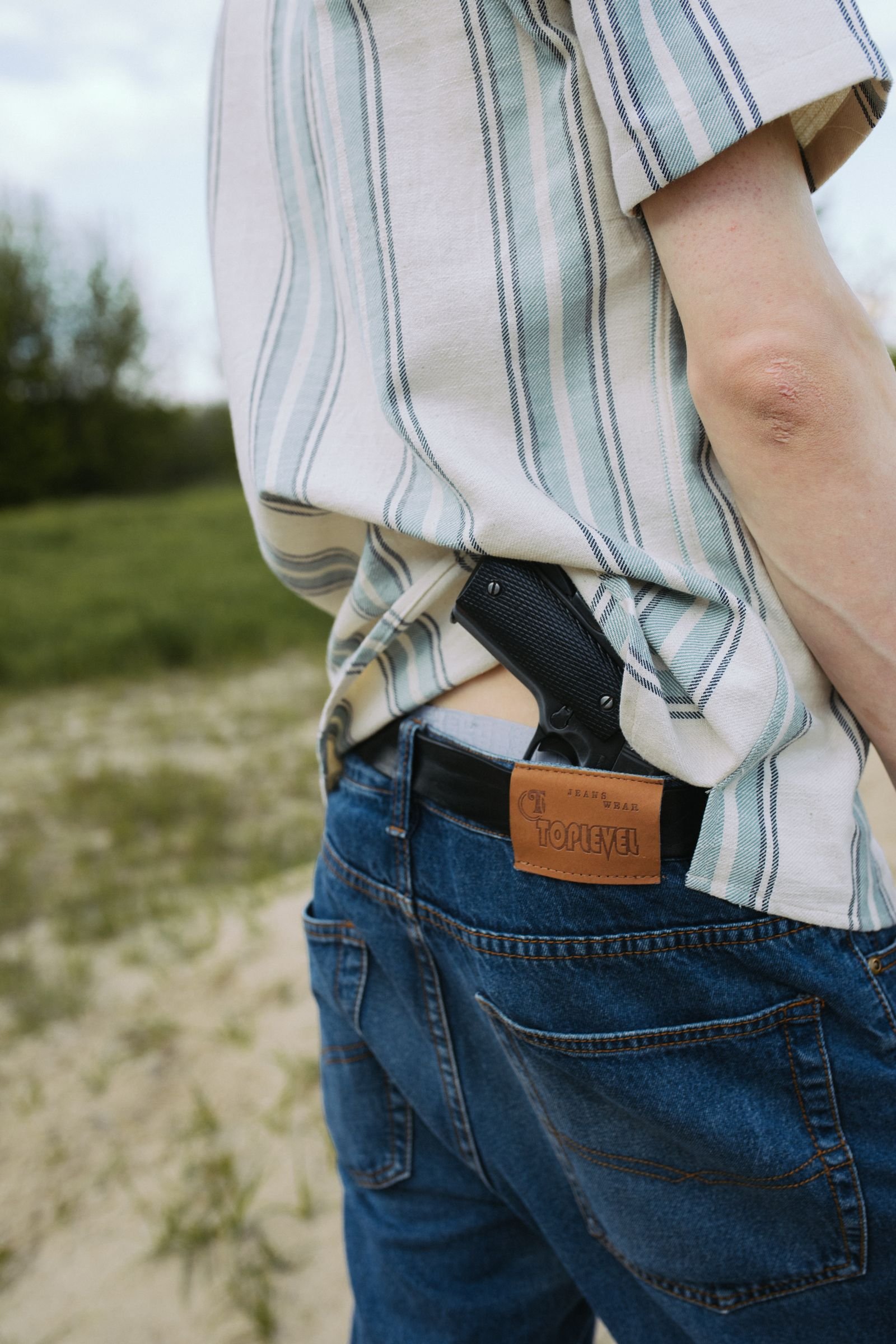
In summer, the bigger risk often starts before anyone notices a print.
By midafternoon, a damp shirt clings, the holster backing is slick with sweat, and the belt that felt secure at breakfast has softened. At that point, printing is only the visible symptom. The deeper issue is reliability under heat: shifting ride height, reduced grip traction, slower access, and more fidgeting as discomfort builds.
Hot weather also adds fatigue. When clothing feels miserable, people tend to loosen setups, skip supportive belts, or settle for unstable positions. That can make concealment less consistent, but it can also change draw angle, retention, and overall control. Summer carry usually works better when treated as an equipment-and-ergonomics problem, not just a wardrobe problem.
- Sweat can reduce friction at both the belt line and the firing grip, especially with smooth shirt fabrics.
- Minor comfort issues often become handling issues after hours of heat, movement, and repeated adjustment.
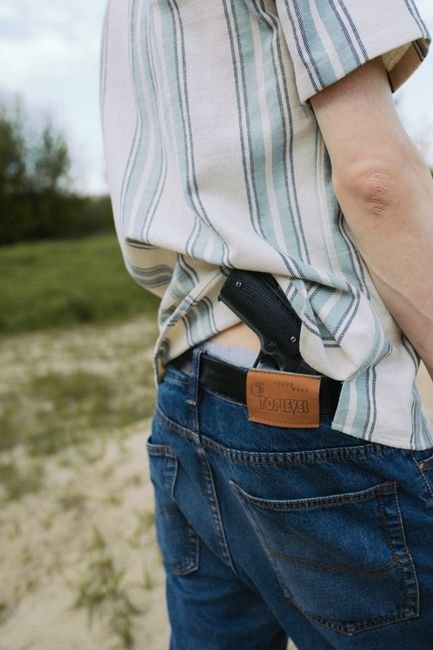
Start with safety, not comfort
Every warm-weather adjustment sits under three fixed requirements: lawful carry, complete trigger coverage, and retention that stays consistent while moving, sitting, and sweating. If any clothing trick weakens one of those, it stops being a useful tweak.
Local rules on placement, visibility, and prohibited locations vary by jurisdiction, so concealment choices still need to fit the governing carry framework. A setup that hides well but drifts into unlawful exposure or restricted carry is not an upgrade.
Holster selection matters more in summer because thin fabrics and extra movement expose bad gear quickly. The trigger guard needs firm, uninterrupted coverage, and the firearm should remain secure during bending, running, and restroom use.
Comfort changes can help only when they preserve safe handling. That usually means adjusting ride height, cant, belt tension, wedge size, or garment cut—not loosening retention, using soft trigger covers inconsistently, or relying on a pocket that lets the gun shift orientation.
If the setup becomes less secure when drenched with sweat, pressed by a seat belt, or jostled during normal movement, comfort has gone too far.
Find the failure before changing gear
-
Recreate the exact moment printing starts
Check standing, sitting, bending, and getting out of a car. Before adding items from a broader concealed-carry accessories list, identify the single position or motion that triggers the problem.
-
Separate moisture problems from movement problems
If the grip gets slick or the shirt sticks, but the holster stays planted, heat and sweat are the main issue. If the muzzle rotates, the grip tips outward, or clips migrate, the real problem is stability.
-
Read the evidence on skin and fabric
Chafing usually points to edge pressure, ride height, or a rough contact patch. Dark sweat zones or clingy fabric often indicate trapped moisture against the holster body rather than poor concealment alone.
-
Check the support chain below the holster
Weak support often starts with soft shorts, a rolling waistband, or a belt that sags once damp. In summer, printing can be the visible symptom of garment collapse, not holster shape.
-
Audit reholstering separately from the draw
Hesitation on the return usually means the holster shifted, the mouth partially collapsed, or the cover garment is fouling the path. If a safe, clear reholster disappears under heat and movement, the setup needs correction before comfort tweaks.
A visible grip is not always a concealment failure.
Sweat on the hands: traction issue Hotspot on skin: pressure or edge issue Grip leaning outward after walking: support or clip stability issue Waistband sinking: garment mismatch Rushed reholstering: obstruction or holster collapseTreating all five the same usually adds bulk without fixing the actual weak point.
Treat materials as part of concealment
Summer concealment often fails at the contact surfaces, not the cut of the shirt. Sweat changes how fabric drapes, how a holster shell moves against skin, and how clips hold under load. A breathable shirt can help, but fabric alone rarely fixes printing.
What changes in heat
Moisture-wicking base layers can reduce skin drag and hot spots, especially under rough-backed holsters or aggressive grip texture. Slick synthetic knits usually slide and dry faster than cotton, while cotton often stays damp, clings to pressure points, and makes outlines more obvious.
Hardware deserves the same attention as clothing:
- Closed-cell pads or wedges usually resist sweat better than open foams.
- Polymer, stainless, or coated clips and screws tend to tolerate perspiration better than untreated steel.
- Backer materials, sweat guards, and grip tape can either lower abrasion or trap moisture where it causes slip and irritation.
Corrosion control also affects concealment. Rust on screws, clips, or magazine bodies can increase friction, loosen adjustment points, and slowly change ride height or cant. In hot weather, a quick wipe-down, periodic screw check, and light inspection for finish wear can preserve both comfort and consistency.
After a sweaty day, the useful check is simple: look for damp spots, shifted hardware, and cling lines in the cover garment. Those clues usually reveal which material is actually causing the print.
A shirt that hides well can still fail if a rusty clip, waterlogged wedge, or loose screw changes how the holster sits.
Pick a holster that stays predictable
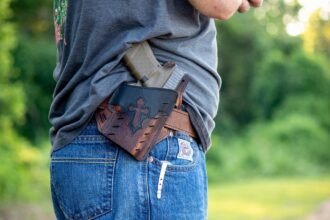
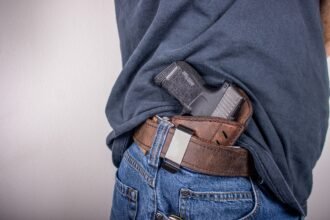
A hot-weather holster works when it stays secure, rigid, and repeatable after sweat softens clothing and reduces friction against the body. Ride height and cant matter less for trend or preference than for whether the grip stays accessible without the holster tipping outward. If the platform shifts during normal walking, sitting, or bending, concealment and handling both usually degrade.
- Retention should hold the pistol through movement without relying on body pressure alone.
- Trigger coverage needs to remain complete, with a mouth that does not collapse when the belt relaxes.
- A sweat guard can help keep salts off the slide and controls, but it works best when it does not crowd the grip or obstruct the draw.
- Rounded edges, polished corners, and recessed hardware reduce hot spots that cause constant fidgeting.
Backing material also changes stability. A full molded shell tends to keep the draw and reholster path more consistent, while soft-backed hybrids may feel gentler at first yet can trap moisture and vary under pressure. That tradeoff becomes more noticeable when carrying with a weapon light in warm weather, because extra bulk can lever the grip outward if the shell is not precisely formed.
A workable setup allows the same firing grip, the same clear draw stroke, and a cautious one-handed reholster without fishing for the opening. In summer, predictability usually conceals better than softness alone.
Build a three-layer concealment system
Concealment works better as a three-part system than as a single-garment fix. The base layer manages sweat and skin friction, the support layer controls load, and the outer garment disrupts outline while still moving air. When one layer fails, the other two usually start compensating, and printing often becomes more obvious by midday.
A thin synthetic or merino-blend base layer can reduce sticking and help the holster shift less during bending. Above it, the support layer matters more than many expect: firm waistband structure and appropriate belt stiffness help keep grip angle, ride height, and retention more consistent. For deeper comparisons, clothing and belt setups that cut printing often show that better support hides more effectively than a larger shirt alone.
Match fabric to movement
Outer garments conceal through drape, not just size. Midweight fabrics often hang farther from the body than ultralight knits, while controlled stretch can absorb reach and twist without sharply outlining the grip. By contrast, clingy stretch, soft waistbands, and thin ribbed knits tend to map edges during sitting, driving, or cross-body movement.
A steadier daily setup usually balances three jobs:
- Base layer: wicks moisture and reduces friction
- Support layer: resists sag and preserves position
- Outer garment: adds airflow, texture, and shadow
Convenient Summer Fixes That Backfire
Less rigidity often means more collapse, tilt, and inconsistent trigger coverage.
When sweat softens clothing and the waistband, flimsy gear moves with the body. That can increase printing during bending and complicate reholstering.
If waistband support is weak, the grip can sag, rotate, or bounce.
Extra fabric helps only when the platform stays fixed. Once the gun tips outward, drape stops hiding shape and motion exposes the outline.
Targeted spacing and moisture control often reduce both hotspots and printing.
A small wedge can tuck the grip inward, and a thin wicking layer can prevent sweat-driven shifting that leads to constant adjustment.
The shortcut is rarely the lighter item itself. The problem is what it removes: structure, friction control, or a stable draw path.
Run a two-minute summer check
-
Check drape
Make sure the shirt falls over the grip without catching on clips, sights, or controls.
-
Check support
Confirm belt tension, clip engagement, and holster screws; small ride-height or cant shifts can create hotspots fast.
-
Move through positions
Sit, bend, reach, and twist at a mirror; grip corners, muzzle lines, and magazine edges usually show first.
-
Verify reset
After a safe unloaded rehearsal, confirm the holster mouth stays clear and the rig settles back to the same spot.
Frequently Asked Questions
Why does hot weather make concealed carry harder to hide?
Sweat can reduce friction at both the belt line and the firing grip, and minor comfort issues often become handling issues after hours of heat, movement, and repeated adjustment.
What's the most common summer concealment failure?
A visible print is often the symptom of a stability or moisture problem—such as a shifting holster or a sagging waistband—rather than the shirt itself.
Does a softer, more flexible holster help in summer?
Usually not. Less rigidity often means more collapse, tilt, and inconsistent trigger coverage once sweat softens the clothing and waistband.
What is the three-layer system for summer carry?
A base layer manages sweat and skin friction, a support layer controls load and keeps ride height consistent, and an outer garment disrupts the outline while still moving air.
Will loose shorts and an oversized shirt fix printing on their own?
Only partially. If waistband support is weak, the grip can still sag, rotate, or bounce, so extra fabric helps only when the platform stays fixed.
Summer concealment usually fails by inches, not by gear category. A quick inspection and a few deliberate movements can catch printing, shifting, and cover-garment snags before they become comfort or handling problems.


2 Comments
The bit about finding the failure before changing gear was the most useful part for me. I kept blaming the holster, but it was actually sweat softening up my belt support by mid-afternoon and making the grip tip outward.
Swapped to a better waistband/belt combo and added a thin wicking layer, and yeah… way less printing in a light t-shirt. Annoying that the boring fix was the real fix 😂
Loose clothing alone absolutely backfired for me. Bigger shirt just meant more fabric catching and a weirder outline when I bent over.
The three-layer idea made more sense than just “go baggy.” I’m still not 100% sold on closed-cell pads in crazy humidity though, they help concealment but can feel like wearing a tiny oven lol.