
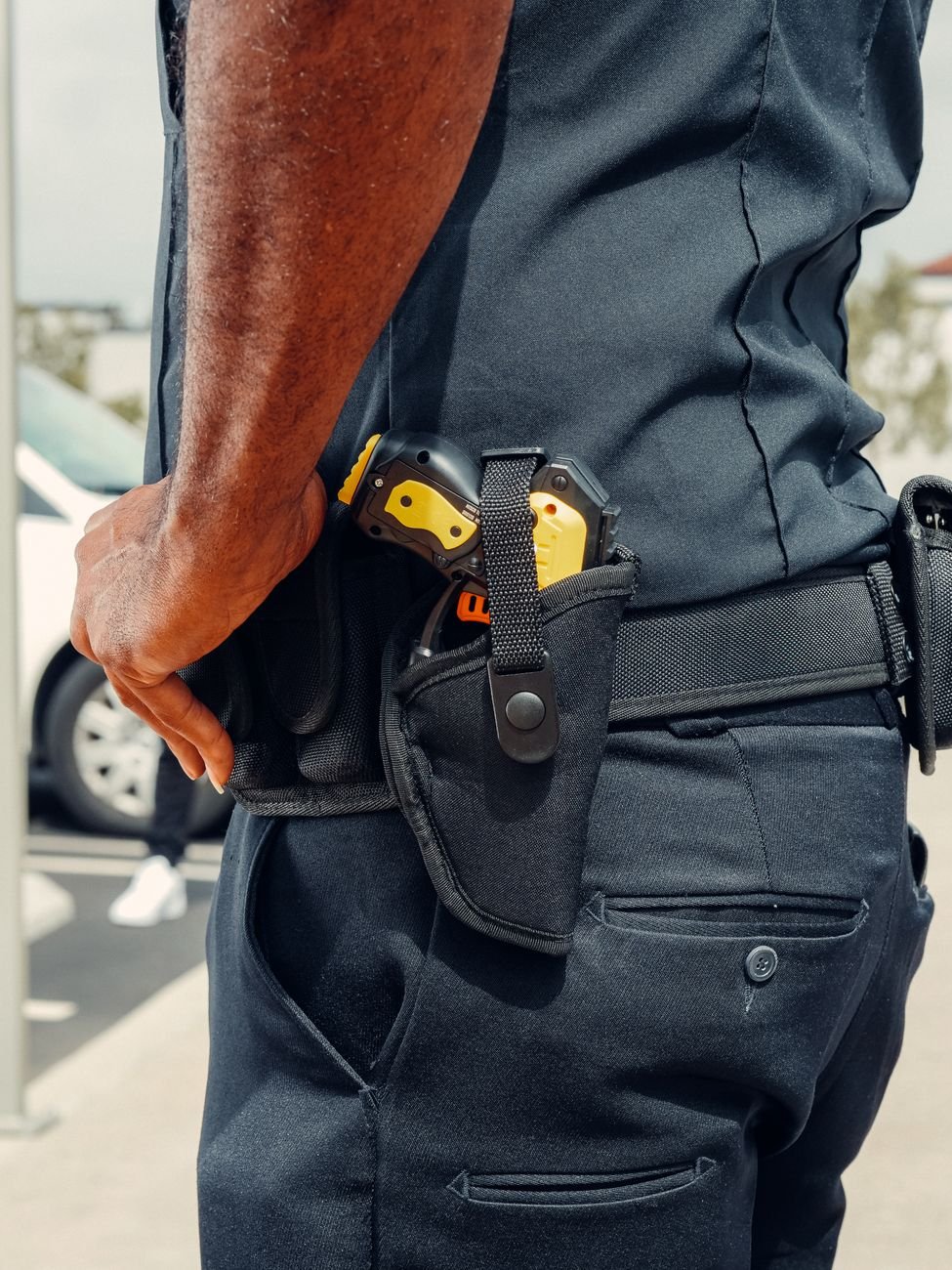
A stun gun can be lawfully owned at home and still become an airport problem within minutes.
At the screening checkpoint, a stun gun in a carry-on can mean confiscation, a delayed screening, and—in a tight connection—a missed flight. Moving it to checked baggage is not an automatic fix: the device’s battery chemistry, whether its contacts are protected from activation, the airline’s hazardous-material rules, and the laws at both ends of the trip can all matter.
The central distinction is not merely “Is this device legal?” Airport security rules govern screening; airlines set conditions of carriage; and state, national, or local authorities may restrict possession or import. A device that is accepted in checked baggage on one domestic route may be barred by a carrier, disallowed at the destination, or treated differently on an international itinerary. Baggage can also be rerouted, creating an additional compliance issue when it crosses jurisdictions.
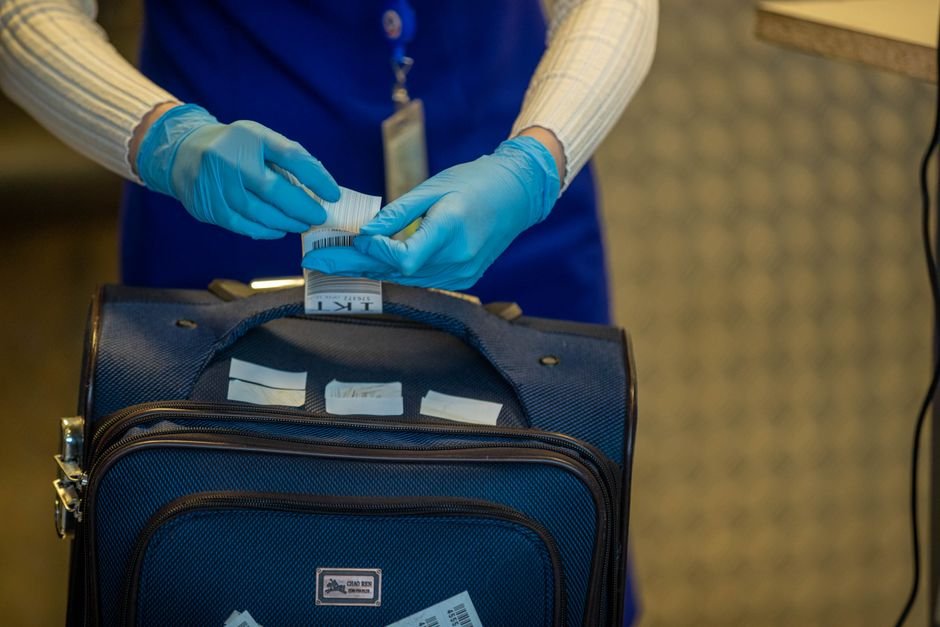
The U.S. rule in practice
A stun gun being allowed by TSA in checked baggage does not mean every carrier will accept it. Carrier dangerous-goods policies, battery type, and applicable weapon laws can independently block transport. Airline confirmation and the current TSA guidance are the controlling sources for a specific trip.
A “Stun Gun” Can Mean Several Different Devices
Contact stun gun
A handheld device that delivers an electrical shock only when its electrodes touch a person. It may use a rechargeable internal battery or replaceable cells; compact models, including smaller stun gun designs, are still contact devices rather than projectile weapons.
Electroshock baton
A contact stun gun built into a longer baton or flashlight-style body. Its size, exposed electrodes, and often larger battery pack can affect how an airline assesses it and how it must be packed.
Projectile conducted-energy device
Often called a TASER-type device, it fires probes attached by wires and delivers electrical current at a distance. Cartridges, compressed-gas components, and the launcher make its travel analysis materially different from a contact-only stun gun.
Power system
Rechargeable lithium-ion packs, removable lithium cells, and non-lithium batteries are not interchangeable for air travel. Battery chemistry and whether the battery can be removed may control the packing rules independently of the device itself.
TSA clearance is not airline acceptance
TSA controls what may pass through the security checkpoint and how prohibited items are handled at that point. Its official “What Can I Bring?” listing is therefore an essential starting point: for stun guns, it identifies the carry-on prohibition and may describe checked-baggage conditions. But that listing is not a promise that an airline will carry the device.
Airlines retain separate authority over items accepted in checked baggage under their contracts of carriage, security programs, and dangerous-goods procedures. A carrier may refuse a stun gun altogether, impose stricter packaging requirements, or apply limits driven by its battery configuration. This can matter especially when a device has a removable lithium-ion battery, an integrated rechargeable pack, or a probe-firing cartridge.
How the two decisions interact
In practice, the trip involves two distinct gates:
- TSA screening: Can the item enter the sterile area, or be placed in checked baggage under TSA guidance?
- Airline acceptance: Will the operating carrier accept it on that particular itinerary and under its battery and weapons policy?
A device can satisfy the first question yet fail the second. For example, TSA guidance may allow a properly secured item in checked baggage, while the airline’s restricted-items policy bars electroshock weapons or requires removable spare batteries to travel only in the cabin—where the device itself cannot go.
The relevant policy is the one for the operating airline, not necessarily the company that sold the ticket. On code share or multi-carrier trips, each carrier’s rules can affect the journey. Confirming airline acceptance before arriving at the airport helps avoid a counter-side refusal after the bag has already been packed.
The battery can change the answer
A stun gun that an airline accepts in checked baggage can still be refused because of its battery configuration. The critical distinction is often between a battery installed in protected equipment and a spare battery carried separately.
Installed, removable, and rechargeable batteries
A device with an installed lithium-ion battery may be eligible for checked transport only when it is completely switched off, protected from damage, and secured against accidental activation. A travel lock or safety switch can help, but it does not replace protective packing. Some carriers apply stricter limits or exclude certain powered weapons altogether.
A removable battery creates a more complicated case. Once detached, it is generally treated as a spare battery, and spare lithium batteries are ordinarily restricted to cabin baggage with protected terminals—not loose in checked luggage. Since stun guns themselves are generally barred from the cabin, separating the battery may not make the overall arrangement workable.
USB-rechargeable models commonly contain a built-in lithium-ion cell, even when no battery compartment is visible. Their label, manual, or manufacturer support page can identify the chemistry, watt-hour rating, shutdown method, and whether the battery is user-removable.
For loose batteries where carriage is allowed, exposed terminals need protection against contact with metal objects or other batteries. Original retail packaging, a dedicated battery case, or nonconductive terminal covers are commonly used. Packing must also prevent crushing or activation.
Airline rules can be narrower than general TSA guidance. Current carrier instructions and the manufacturer’s transport information may determine whether a particular battery-equipped model is accepted.
Pack a confirmed device so it cannot activate or break
-
Disable it beyond the power switch
Turn the device off, engage any safety lock, and remove or disconnect the battery only when the manufacturer’s design and the airline’s battery rules allow it. Do not improvise by opening a sealed housing or altering wiring.
-
Use every supplied restraint
Fit the original safety cap, trigger guard, holster, or retention sleeve. For probe-firing models, secure cartridges separately as directed by the manufacturer; a loaded cartridge can create different handling concerns.
-
Protect the trigger and contacts
Place the device in a rigid case or hard-sided compartment that prevents pressure on the activation control. Cover exposed charging ports or terminals so metal objects, keys, and loose hardware cannot contact them.
-
Immobilize it inside the suitcase
Pad the case with clothing or other nonconductive material and position it away from suitcase edges, wheels, and heavy items. The goal is to prevent repeated impacts, shifting, or a control being pressed during baggage handling.
-
Keep battery components correctly separated
A removed battery is not automatically suitable for checked baggage, particularly if it is lithium. Follow the carrier’s stated treatment for installed and spare batteries rather than placing a loose pack beside the device.
Packing reduces accidental activation and damage; it does not replace the airline’s acceptance conditions or any applicable local restrictions.
A luggage lock may deter access, but it does not stop a stun gun from shifting, being crushed, or activating under pressure. The device itself needs its safety mechanism engaged and a protective enclosure around it.
The same handling discipline appears in safe practices for stun guns and pepper spray: controls, exposed components, and the item’s position in the bag all matter. If any supplied safety part is missing, damaged, or does not stay engaged, the device may not be suitable to pack.
Screening approval does not settle local rules
A TSA or airline decision concerns transport through the flight system. It does not establish that a stun gun may be possessed, carried in a vehicle, or stored at the airport under the laws of the departure state, a connecting jurisdiction, or the destination.
The route creates separate questions
Restrictions can apply before the traveler reaches screening, including on airport-owned property, in terminal buildings, parking facilities, public transit links, and security-controlled areas. Separate rules may also cover sensitive places such as schools, government buildings, courthouses, licensed venues, or certain workplaces. A device lawfully owned at home can still be restricted in one of those locations.
Connections deserve particular care. A checked bag ordinarily stays in airline custody, but a missed connection, overnight diversion, customs process, or baggage recheck can put the traveler back in possession of the item. International travel adds national import controls that can be far stricter than U.S. screening rules.
For a current answer, consult the official statutes or government guidance for each jurisdiction, plus airport authority and operating-carrier policies. Do not infer stun-gun treatment from rules for another defensive device; for example, California pepper-spray legality is a separate question with its own limits and definitions.
A connection can create a separate weapons-law problem
- Start with every country on the itinerary
An electroshock device that is transportable under U.S. screening rules may be treated elsewhere as a prohibited weapon, restricted defensive device, or import-controlled item. The relevant list includes the departure country, each transit country, and the final destination—not only the country shown on the ticket.
- Check whether transit involves entering the country
A same-airside connection can differ sharply from a transfer requiring immigration clearance, an overnight stay, an airport change, or collection and re-checking of baggage. When a traveler reclaims a checked bag, possession of the device may become subject to the connecting country’s rules.
- Verify the operating carrier after route legality
For each flight segment, the operating airline can confirm whether it accepts the particular device in checked baggage and how its battery must be handled. A marketing airline’s policy may not control a codeshare flight operated by another carrier.
- Confirm border and import treatment next
Customs, police, border-force, or aviation-security guidance can distinguish simple possession from importation, transit, licensing, declaration, or seizure rules. A permitted domestic item is not necessarily permitted to cross a border.
- Keep the result specific to the device and route
Record the model type, battery configuration, flight numbers, connection airports, and dates used for each check. Rules can change, and an answer for a contact device may not cover a probe-firing model or a spare lithium battery.
Written confirmation from an airline addresses its carriage policy; it does not override a country’s weapons or customs restrictions.
An itinerary may look like a connection on paper but operate like temporary entry in practice. Baggage reclaim, missed connections, overnight accommodation, terminal changes, or rebooking can place a traveler and the device under local possession and import rules.
For international travel, the practical verification order is: countries and connection mechanics first; operating airlines second; battery handling third; packing last. A compliant package cannot cure a route where the device itself is prohibited.
A Five-Step Check Before Packing a Stun Gun
-
Identify the exact device and power source
Confirm whether it is a contact device, baton, or probe-firing model, and note whether its battery is installed, removable, spare, lithium-ion, or lithium-metal.
-
Check current TSA guidance
Use TSA’s current official guidance for the specific device category and baggage type. Search snippets, old forum threads, and generic “self-defense device” lists may be incomplete or outdated.
-
Confirm acceptance with the operating carrier
The airline flying each segment controls its own dangerous-goods and weapons acceptance rules. A ticketing airline’s policy may not govern a codeshare flight.
-
Clear every jurisdiction in the itinerary
Review origin, airport-property, connection, destination, and international transit rules. Possession, import, and carriage restrictions can apply even when checked baggage is accepted.
-
Keep the packing decision unchanged
A gate-side move from carry-on to checked baggage does not cure a prohibited battery, airline restriction, or local-law conflict. If any check fails, the device is not cleared for that itinerary.
Frequently Asked Questions
Can I bring a stun gun in my carry-on bag?
No. TSA screening rules treat stun guns, Tasers, and other shocking devices as prohibited in carry-on baggage, and a device found at the checkpoint can be denied entry regardless of whether it is switched off.
Can a stun gun go in checked baggage instead?
TSA may allow a shocking device in checked baggage, but that is not blanket permission. The device must be secured against accidental activation and packed so it cannot damage or injure baggage handlers, and TSA approval does not guarantee the airline will accept it.
Do spare lithium batteries change whether the device can be checked?
Yes. Spare lithium batteries generally cannot travel in checked baggage. A removed battery is typically treated as a spare, and since stun guns are generally barred from the cabin, separating the battery from the device may not make the overall arrangement workable.
If TSA allows it, will the airline definitely carry it?
Not necessarily. Airlines retain separate authority over checked baggage under their own contracts of carriage, security programs, and dangerous-goods procedures, and a carrier may refuse a stun gun altogether or apply stricter battery rules than TSA.
Are stun gun laws the same at every stop on a trip?
No. State, local, and international laws can restrict possession of a stun gun at the airport, during a connection, or at the destination, even when TSA and the airline both allow the device to be transported.
What should I do if I can't confirm every rule for my trip?
When any part of the transport chain cannot be confirmed, the lowest-risk option is to leave the stun gun behind, since a device lawful at home can still be refused by an airline, mishandled as a battery hazard, or create problems during a connection or at the destination.
When any part of the transport chain cannot be confirmed, the lowest-risk option is to leave the stun gun behind. A device that is lawful at home can still be refused by an airline, mishandled as a battery hazard, or create problems during a connection or at the destination.
Travel safety is broader than one device: situational awareness, itinerary planning, reliable communications, and choosing context-appropriate permitted tools can all reduce risk without adding a screening or legal uncertainty.




8 Comments
One thing I wish more travel articles emphasized: local airport-property rules can be stricter even before you reach TSA. A friend was told not to bring a self-defense device into a parking-area shuttle at a regional airport, which was a surprise.
So yes, “checked bag” does not mean “carry it through the terminal until check-in.” The origin-side logistics matter too.
I’m still a little confused about “secure packing.” Is putting it in a hard case with the safety switch on enough, or should the battery actually be removed where possible? I can picture baggage handlers giving my suitcase the Olympic shot-put treatment, so a suitcase lock clearly isn’t much protection.
Really useful distinction between TSA and the airline. People seem to assume getting past the checkpoint is the whole answer, when the gate agent/airline can still say no. Travel rules: because apparently one layer of bureaucracy wasn’t enough 😅
What about a device with removable lithium packs? The article says spare batteries generally need cabin handling, but carry-on stun guns are prohibited. That sounds like there may be no compliant way to take the device *or* its spare pack on the same flight. Am I reading that right?
That is a real potential conflict. A spare lithium battery may be required in the cabin under battery-safety rules, while the device itself may be barred from the cabin and may or may not be accepted in checked baggage. Do not assume separating the battery solves it; if the airline cannot accommodate both items under its policies, leaving the device behind is the practical answer.
How does this work on an international itinerary where checked bags are tagged through, but there is a long connection in another country? If I never physically reclaim the suitcase, am I still considered to be importing or possessing the device during the transfer?
I realize the safest answer is probably not to bring it, but airline websites rarely explain this part clearly. Some countries seem to have very broad definitions that could include even a contact stun device.
It can still be risky. Whether you technically possess or import it during an airside transfer depends on the transit country’s law, the airport process, and whether baggage remains sterile and checked through. If you must collect and recheck the bag, the risk is much clearer because you are taking possession locally. For an international route, confirm the rules for every jurisdiction involved, not just the final destination.
This is exactly why I wouldn’t chance it. I had a “through” international bag rerouted once and had to collect it unexpectedly. It was only a delayed-bag mess, but it showed how quickly a plan can change.