
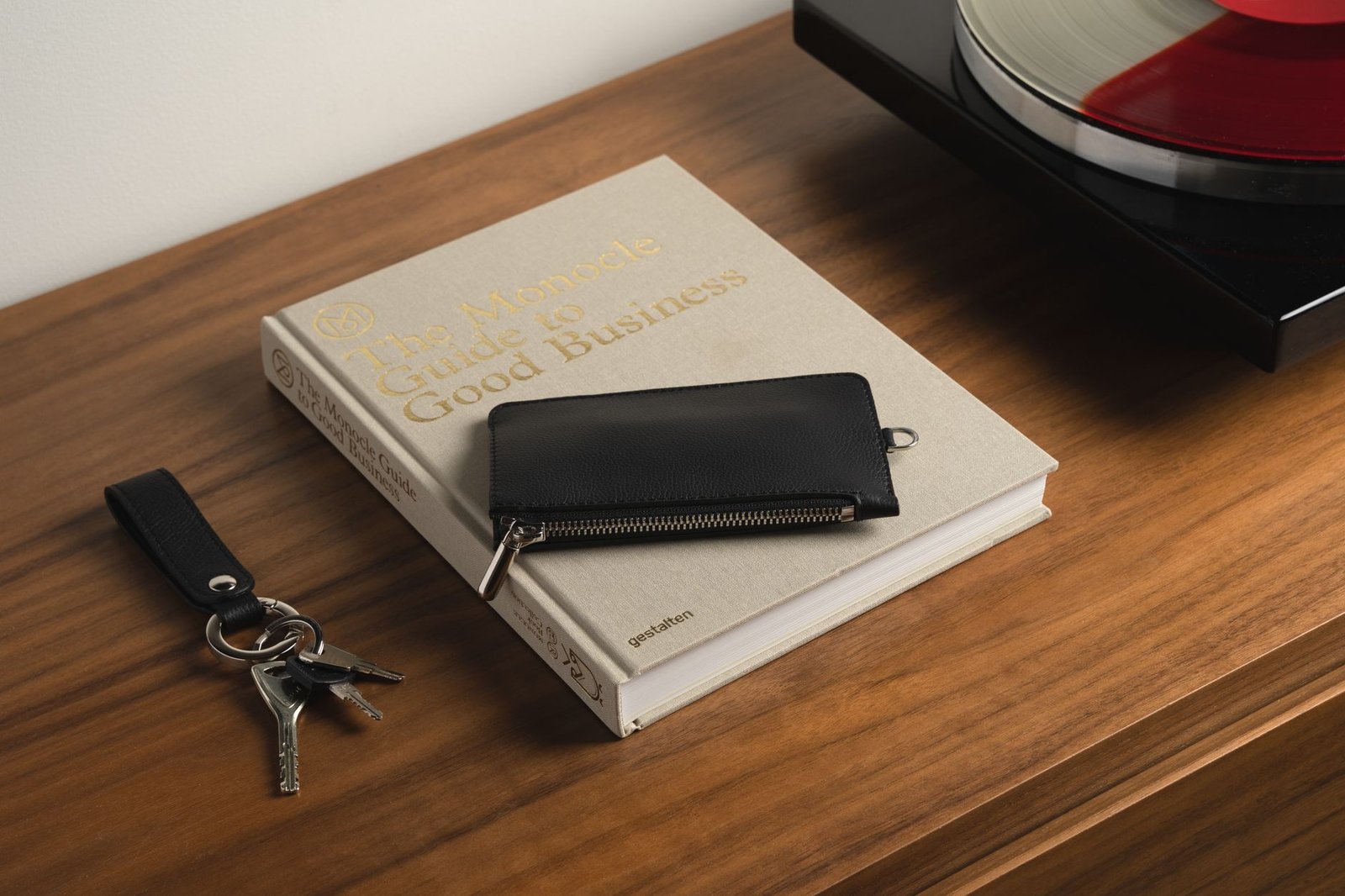
A key bundle can be perfectly functional and still be a nuisance every time it leaves the pocket.
A few loose keys work everywhere, open quickly, and require no learning curve. Then they clatter on a desk, jab through trouser fabric, and leave fine scratches on a phone, wallet, or sunglasses sharing the same pocket. Add a car fob, a building tag, or an oddly shaped mailbox key, and the bundle becomes awkward to carry and slower to sort by touch.
A key organizer earns its space only when it removes a recurring irritation: noise during commutes, pocket damage, keys snagging on fabric, or a crowded everyday-carry setup. Its value is not the clean, minimalist look alone. For someone who carries two flat keys on a separate ring, the added hardware may merely make a simple task less immediate. For a person managing several keys daily, controlled spacing and a quieter profile can materially improve the routine.

What the mechanism actually changes
Pivot-and-stack
Keys sit on a central axle between washers or spacers, then rotate out one at a time. The stack turns a noisy, loose bundle into a flatter hinged tool; how key organizers work depends largely on axle tension and stack order.
Compression tension
A screw, backplate, and friction washers hold each key at the chosen resistance. Too loose, keys fan out; too tight, one-handed selection becomes awkward. Periodic tightening is part of the design.
Split ring
A split ring gathers keys but leaves them free to swing, overlap, and rattle. It preserves rapid access to any key, whereas a pivot organizer trades that immediacy for controlled deployment and a slimmer profile.
Carabiner
A carabiner adds attachment: it clips a key bundle to a belt loop, bag, or lanyard. It may improve carry location, but it does not index keys or prevent key-on-key contact.
Key cover
A sleeve or sheath mainly shields key teeth and reduces scratching. Unless it includes a tensioned pivot, it does not create the ordered, individually deployable stack that defines an organizer.
Where the daily payoff shows up
A key organizer earns its space mainly by turning several loose, similar flat keys into a compact stack. Instead of fanning outward on a ring, the keys sit parallel to the pocket fabric. That flatter profile is especially noticeable with slim trousers, a front-pocket wallet, or a phone carried nearby.
The acoustic change is equally practical. Loose keys strike one another with every step; a tensioned stack keeps that movement contained. For anyone trying to quiet rattling keys in a pocket, the result is less about silence than removing a persistent, attention-grabbing noise.
Less incidental damage
With loose keys, sharp cuts and protruding heads repeatedly contact screens, coated tools, earbuds cases, and pocket linings. An organizer does not make keys harmless, but it limits their swing and reduces the number of hard edge-to-edge impacts. A cover or closed-sided design adds more separation when delicate items share the same pocket.
One key, on purpose
Ordered keys also reduce the familiar search through nearly identical blanks. A selected key pivots out while the rest remain retained, so a house key can be deployed without letting the whole bundle dangle. The benefit grows with three or more flat keys; with one or two, the added hardware may offer little advantage.
Organizers tend to suit carry that includes several conventional flat keys. They provide less value for a single key, bulky vehicle fobs, or large specialty keys that do not stack cleanly.
The trade-off: tidy carry, deliberate access
A pivot organizer makes keys quieter and more predictable, but it turns a loose bundle into a small mechanical system. Reaching for one key generally means identifying the correct edge, rotating it clear of the stack, then returning it afterward. That sequence is only marginally slower when the key’s shape is distinctive; it is more noticeable with several similar house or office keys, particularly in poor light or while carrying other items.
Tension is the crucial compromise. Too loose, and keys swing open, defeating the compact profile. Too tight, and deployment becomes stiff enough to encourage using two hands. Screws can gradually settle with repeated movement, so occasional adjustment is part of ownership; a small amount of thread-locking compound is sometimes used where the manufacturer permits it.
Fit matters more than key count
A stack can be deceptively thick. Broad-headed keys, plastic transponder heads, building fobs, and long automotive-style blades add width or create uneven pressure. Tips may also remain exposed at one or both ends, where they can still catch pocket fabric or mark a phone. An organizer works most cleanly with a modest set of conventional flat keys.
It is also less spontaneous when a key must be lent, copied, or handed to a visitor. Removing one often means loosening the axle and disturbing the stack. Loose keys win that moment: they can be separated and returned without changing anyone’s carry routine.
The practical choice is therefore not simply compact versus bulky. It is deliberate access versus immediate independence: a stable, curated key set on one side, and the flexibility of individual loose keys on the other.
Will the actual key set work in a pivot organizer?
- Flat, standard house keys
A small group of similarly shaped flat keys stacks cleanly, turns predictably, and stays slim when folded. This is the carry pattern pivot organizers handle most naturally.
Good candidatesThree to six conventional keys with aligned holes and similar outlines.Likely compromisesA bundle whose thickness comes mainly from non-key attachments. - A realistic closed-stack width
Count every item that must remain on the ring or axle, not only metal keys. Spacers can tame minor variation, but they cannot make a bulky item disappear.
Good candidatesA stack that remains comfortably narrower than the pocket’s usual contents.Likely compromisesAn organizer loaded to its hardware limit before any future key is added. - Separate electronic and access items
Car fobs, RFID badges, proximity tags, and remote controls are usually thicker, wider, and less cooperative than keys. Keeping them on a small companion clip or ring often preserves the organizer’s advantage.
Good candidatesElectronic items that can travel separately without disrupting access.Likely compromisesForcing a fob or badge into a flat stack simply to make everything one bundle. - Unusual key geometry
Long shanks, oversized heads, tubular keys, and irregular specialty hardware may protrude, bind, or rotate poorly. Their location and hole placement matter as much as their number.
Good candidatesKeys that fold without colliding and still present a usable grip.Likely compromisesAssuming every item with a hole is organizer-compatible.
Lay out the complete everyday set: house keys, mailbox key, work keys, fob, badge, tags, and any seldom-used specialty key. The widest and thickest item sets the closed bundle’s character.
A compact organizer can make several flat keys nearly silent; it cannot turn an electronic fob or awkward hardware into a flat key.
Choose for the friction that matters
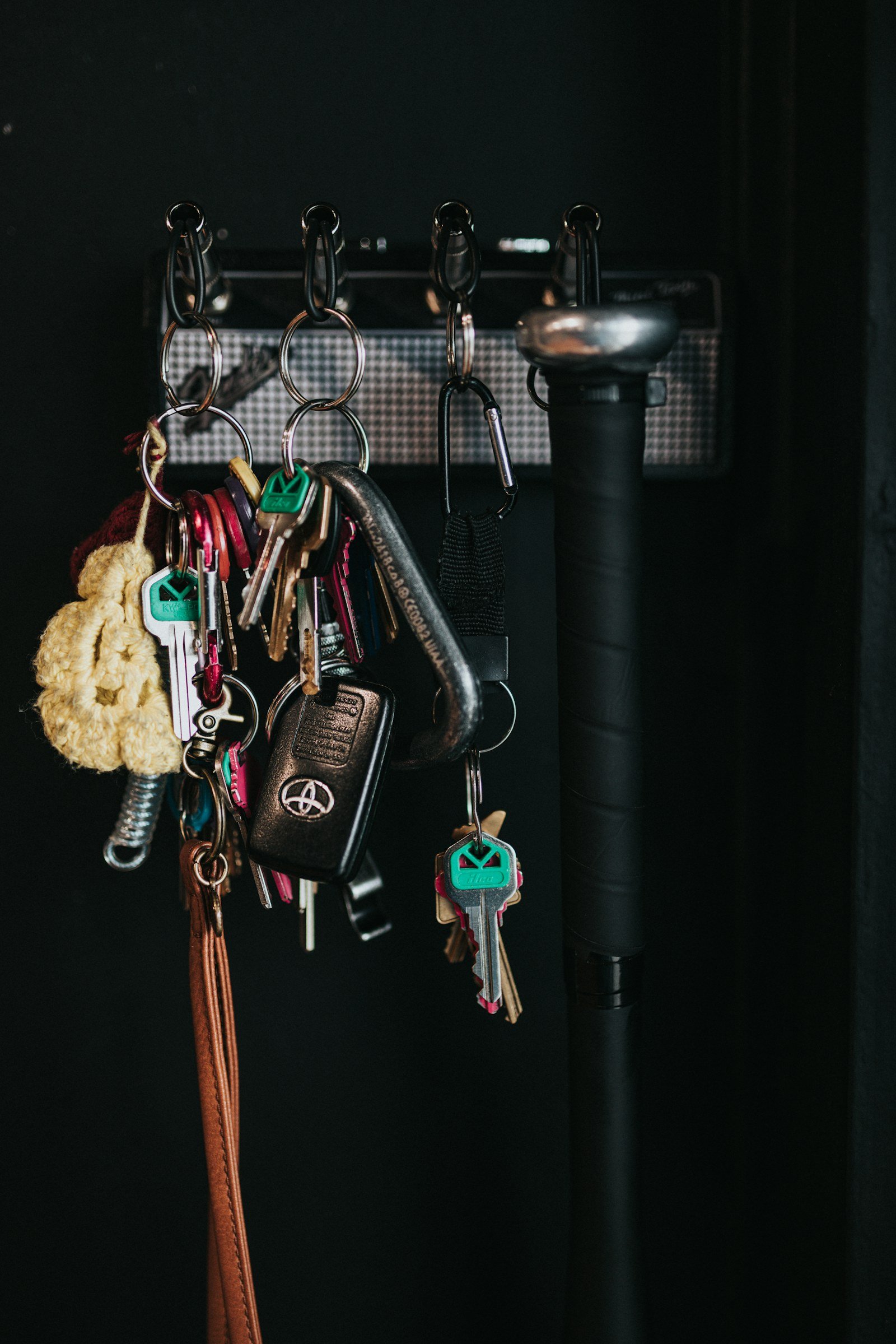
A pivot organizer earns its space when quiet, compact pocket carry matters more than instant handoff. It keeps compatible flat keys aligned, but makes a borrowed house key or a key needed by a valet less convenient to remove.
| Carry style | Strongest fit | Main compromise |
|---|---|---|
| Pivot organizer | Low rattle and reduced pocket scratching | Deliberate key selection; awkward for bulky fobs |
| Split ring | Fast addition, removal, and sharing | Noise, tangling, and loose keys against other items |
| Carabiner or quick-release clip | Detaching an entire key set from a bag, belt loop, or vehicle key | More external bulk; the keys themselves may still rattle |
| Leather wrap | Softens contact and protects a phone or pocket lining | Adds a flap or unfolding step; retains some ring clutter |
| Separate fob carry | Keeps electronic fobs, tags, and remotes usable | Creates a second item to track |
Use a mixed setup when the key set is mixed
A common practical arrangement is a small pivot stack for daily flat keys, with a quick-release fob for the car remote or access badge. That division preserves the organizer’s slim profile while allowing the item most often shared or left behind to detach quickly.
For people who regularly lend individual keys, a simple split ring—or a small secondary ring attached to a clip—can be more functional than forcing every key into a pivot. For pockets carrying a phone, a leather wrap can address scratching more directly than an organizer, even when noise remains acceptable.
The Small Details That Decide Whether It Lasts
Stainless hardware resists sweat and humidity better than untreated steel, while anodized aluminum, G-10, or tough engineering polymers generally outlast thin painted scales. Deep scratches are cosmetic; corrosion around screws and pivots eventually affects function.
A good organizer permits tension adjustment without relying on a fragile tiny screw or a pivot that loosens after a week. Washers and a properly seated barrel keep keys moving independently rather than binding as the stack wears.
Spacer sizing matters as much as the stated key count: keys, washers, and thickness variations must fit without crushing the stack or leaving it sloppy. Lower-cost key organizers can be useful trials of this format, but their advertised capacity often assumes very thin keys.
For committed daily carry, replaceable screws, washers, spacers, and scales matter more than elaborate styling. Budget models can reveal whether an organizer suits the routine; better hardware earns its place when a worn washer or lost screw does not end the product’s life.
Who benefits most—and who may not
A pivot organizer tends to earn its place when the set is small to medium, mostly flat, and personally owned: a few house, office, mailbox, or bike-lock keys carried in the same pocket every day. Its advantages are especially noticeable beside a phone, sunglasses case, or other scratch-prone item, where loose keys create both noise and contact damage.
It is less compelling when the set behaves more like shared equipment than personal carry. A household set passed between people, a work set with frequent additions, or a bundle dominated by vehicle fobs, access badges, utility keys, and tags loses much of the organizer’s neatness. Each handoff or change can mean repositioning hardware, checking pivot tension, and explaining the key order.
A useful middle ground
A hybrid setup often preserves the main benefit without forcing every item into the stack:
- Keep the regularly used flat keys in a compact organizer.
- Attach a car fob, badge, or bulky remote through a detachable quick-release or small secondary ring.
- Remove the accessory when carrying only the essentials; reconnect it when driving, working, or lending access.
That arrangement suits someone whose core keys are stable but whose accessories vary by day. The organizer then controls pocket noise and bulk, while the detachable piece retains the speed and shareability that a rigid stack can make awkward.
Run a pocket-carry trial with the current keys
-
Pull out only the daily set
Set aside spare, seasonal, work-specific, and rarely used keys. The relevant count is the keys carried on an ordinary week, not everything attached to the ring.
-
Measure the usable stack
Lay the flat keys together and check their hole positions, bow widths, thicknesses, and length. A pivot organizer works cleanly when the holes align around one axle; a bulky bow or thick key can distort the stack.
-
Separate non-key hardware
Car fobs, proximity badges, tile-style trackers, bottle openers, and chunky tokens often consume space without folding well. Keeping them on a small detachable loop preserves the organizer’s main benefit.
-
Name one repeated irritation
Rattle, pocket scratches, tangled retrieval, or a noisy desk drop are concrete problems. If no annoyance recurs, compactness alone may not justify a new mechanism.
-
Test the access compromise
Simulate selecting one key from a stacked bundle while carrying groceries, standing at a door, or handing a key to someone else. Deliberate deployment is acceptable only if it does not make frequent tasks noticeably slower.
Capacity figures matter less than the shape and thickness of the particular keys.
Key Organizers: Common Questions
Do key organizers actually reduce pocket noise?
Yes. Loose keys strike one another with every step; a tensioned pivot stack keeps that movement contained, which is the main acoustic benefit a key organizer provides.
Will a key organizer fit my car fob or access badge?
Usually not well. Car fobs, RFID badges, and other electronic items are typically thicker and less cooperative than flat keys, so they’re better carried on a small separate clip or ring instead of forced into the pivot stack.
How many keys make a key organizer worth it?
The benefit grows with three or more similarly shaped flat keys. With only one or two keys, the added hardware of a key organizer may offer little advantage over a simple ring.
Do key organizers make it harder to lend a key?
Yes, somewhat. Removing a single key from a pivot organizer generally means loosening the axle and disturbing the stack, so a loose ring stays more convenient for keys that are shared or handed off often.
What should I check before buying a key organizer?
Pull out only the keys you carry daily, check that their hole positions and thicknesses align around one axle, and separate any fobs or badges that won’t fold cleanly into the stack.
Worth it when order solves a real daily problem
- A stable group of flat keys is more important than a high key count.
- Detachable accessories often make a hybrid setup more workable than forcing everything onto one axle.
A key organizer can be a sensible upgrade for a small, stable key set that regularly rattles, scratches gear, or feels disorderly in a pocket. It is less compelling when access speed, key sharing, or oversized electronic accessories dominate the routine.
The deciding test is simple: if the remaining daily keys form a clean stack and the slower, more intentional selection still feels natural, the trade is likely favorable. If not, a ring, clip, or split carry arrangement may retain the useful convenience with fewer compromises.




14 Comments
The sharing issue is real. My partner and I occasionally trade cars, and handing over a conventional ring is effortless; handing over a carefully tensioned stack feels oddly personal and inconvenient.
Would a small quick-release on the organizer undermine the whole point, or is that the best answer for shared keys?
A quick-release can be a good answer if the shared item is a small, predictable subset—such as one car key or an office key. It does add a little bulk and potential rattle, but that may be a worthwhile trade when key sharing happens regularly.
I use a magnetic quick-release for my work key and it’s fine. The main stack stays quiet; the detachable bit is the only thing that moves. Just don’t buy the super-cheap ones—they can pop loose in a bag.
How often do the pivot screws actually need tightening? I like the quiet-pocket idea, but I don’t want another tiny maintenance task that I only notice when all my keys flop around at the worst possible moment.
I like covers more than pivot stacks for this reason: I can still flip through keys quickly, but they don’t stab the lining of my bag. Not as sleek, perhaps, but neither is replacing a bag because one key decided to become a tiny knife.
I’m mildly skeptical that the slower key selection is a minor trade-off for everyone. At my building entrance I’m usually carrying groceries and trying to find the correct key in bad lighting. A loose ring is noisy, yes, but I can identify the key by feel much faster.
Maybe organizers are better for people with a stable home/car set rather than several nearly identical facility keys?
That’s a fair distinction. If fast tactile identification matters more than quiet carry, a ring or a clipped subset of keys may be better. Pivot stacks work best when the order is familiar and the number of similar keys is low enough that deliberate selection does not become a nuisance.
The “flat, similarly sized keys” point should be printed on the packaging. My old apartment key, mailbox key, chunky building fob, and bottle-opener multitool made a pivot setup look like a tiny metal sandwich from hell 😂
What about corrosion from sweaty pockets or rainy bike commutes? I’ve had cheap split rings turn gross surprisingly fast. Is stainless hardware enough, or do the pivot washers matter too?
I switched to a pivot organizer mostly because my keys were chewing up my phone screen in the same pocket. It absolutely solved the scratching and the jingling, but I still keep my car fob on a small detachable clip. Trying to make one tidy stack hold every weird plastic thing was where it stopped being useful.
That’s a sensible hybrid. The organizer handles the flat metal keys well, while a clip preserves quick removal for the fob instead of forcing incompatible items into the stack.
The article makes a good case for choosing based on the actual friction instead of buying an organizer because it looks clever online. My keys rarely rattle because they live in a jacket pocket, but I remove my office badge several times a day. A clip plus separate badge holder is probably boring—but boring gear that works is underrated.
I did the suggested trial by just taping my everyday keys into a rough stack for two days. Very scientific, obviously. Turns out the real annoyance wasn’t rattle—it was my gym tag and car fob dangling around, so an organizer would have been solving the wrong problem.
Capacity claims always make me laugh a little. “Holds 12 keys” usually means 12 perfectly flat house keys with no heads, no labels, no thickness, and apparently no connection to the real world.
I have six keys, but one is an old-style thick brass key and another has a plastic head. Would you normally size down and carry the odd ones separately rather than trying to force the advertised maximum?