

A magazine can sit loaded for months; that alone does not tell the spring’s story.
A spare magazine in a range bag and a loaded handgun kept in a bedside safe raise two different questions: whether the magazine remains mechanically reliable, and whether the firearm is secured against unauthorized access. They should not be blurred together.
Springs generally lose force through repeated compression-and-release cycles, heat, corrosion, material defects, or poor design—not simply because they stay compressed. A correctly made magazine spring held within its intended operating range can remain loaded for long periods without meaningful harm. The more immediate concern is often the magazine as a system: dented feed lips, a dragging follower, debris, corrosion, damaged baseplates, or ammunition seated incorrectly can interrupt feeding even when spring tension is adequate. Storage practices therefore need to protect both the magazine’s condition and the firearm’s secure status; mechanical readiness is not a substitute for safe storage.
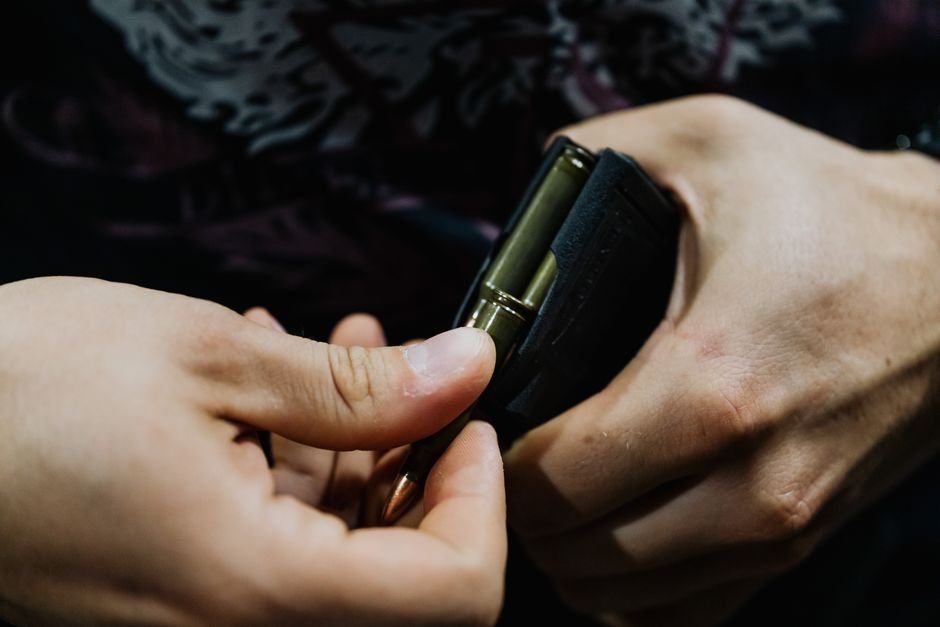
The loaded magazine storage question comes down to spring engineering, not superstition: a correctly made spring held within its normal compression range does not wear out simply from sitting loaded.
Compression Is Not the Same as Damage
A properly designed spring can remain under its normal loaded compression for long periods without losing useful force solely because it is held there.
At ordinary temperatures, spring steel is intended to operate elastically: it deflects, then returns. Time under a safe, static load is not the same mechanism as repeated wear.
A small initial set can occur as a new spring settles into its working dimensions. Harmful deformation is different: it leaves insufficient force to feed cartridges reliably.
The important question is retained function, not free length alone. A spring may look slightly shorter yet work normally; a badly weakened one may cause sluggish feeding or failures to present rounds.
Repeated cycling contributes to fatigue, but overstress, corrosion, excessive heat, poor material or heat treatment, and manufacturing defects can be equally important.
Fatigue develops from stress reversals. Corrosion creates surface flaws that concentrate stress, while heat and over-compression can alter the steel’s properties or push it beyond its elastic limit.
- Elastic range
The range in which a spring returns to its original shape after the load is removed.
- Initial set
A small, early permanent dimensional change as a new spring settles under load; it is not automatically a functional defect.
- Overstress
Loading a spring beyond its elastic range, causing permanent deformation and reduced working force.
- Fatigue
Progressive damage from many stress cycles, potentially leading to weakening or fracture.
- Stress concentration
A localized high-stress area, often caused by rust pits, scratches, or material flaws, where cracks can begin.
Confidence Depends on the Magazine
A loaded magazine is not automatically a reliable magazine. Confidence begins with design quality and condition: reputable springs, correctly formed feed lips, sound welds or polymer molding, and a body that has not been bent, crushed, or corroded. A pistol magazine buying guide is useful because outwardly similar magazines can differ sharply in materials, tolerances, and quality control.
Steel feed lips generally resist long-term dimensional change well but can rust or be bent by impact. Polymer feed lips avoid corrosion, yet poorly formulated or heat-exposed polymer can creep, crack, or spread. The magazine body matters too: dents can restrict follower travel, while dirt, dried lubricant, and rust can make an otherwise healthy spring seem weak.
Capacity and compatibility add further qualifiers. A fully loaded magazine may be difficult to seat under a closed slide in some pistols; that is a system-fit issue, not proof that static storage harmed the spring. Correct ammunition overall length, bullet profile, and caliber are equally important. Older, unknown-provenance magazines deserve more scrutiny than a well-maintained example, regardless of how many years either has remained loaded.
Condition, history, and fit—not the calendar—determine whether a magazine merits trust.
Rotation Does Not Rejuvenate a Spring
A spring does not recover lost fatigue life by spending time unloaded.
If cycling, corrosion, overheating, or overstress has altered the spring, unloading does not reverse that change. Repeated loading and unloading instead adds compression cycles—the stress history most relevant to fatigue.
Rotation has value only when it supports a defined inspection or function-check program.
Purposeless rotation creates extra handling, opportunities for damaged feed lips or debris to go unnoticed, ammunition mix-ups, and uncertainty about which magazine has actually been checked. A documented inspection can examine the body, lips, follower movement, baseplate, corrosion, and ammunition condition; a controlled function check can reveal problems static inspection cannot.
Marking magazines by an identifier and recording inspection or test dates makes patterns visible: one magazine that repeatedly hangs up, loses tension, or shows feed-lip damage can be isolated from the set. That is materially different from swapping cartridges between otherwise unexamined magazines.
The Magazine Is More Than Its Spring
A spring can be sound while the magazine still fails. Feed lips control cartridge release timing; spreading, cracking, chipped polymer, or uneven edges can produce inconsistent presentation. On metal bodies, dents near the upper tube can pinch the stack. This is often where Glock magazine reliability breaks down, too: not from loaded storage itself, but from damage, contamination, or a mismatched component.
The follower must travel freely through the full tube. Grit, unburned residue, congealed lubricant, a bent tube, or a damaged follower can cause hesitation or a failure to rise fully. Corrosion deserves equal attention: rust can roughen a steel tube internally, while corrosion around a baseplate or spring can signal moisture trapped inside.
Ammunition is part of the system. Cartridges with damaged cases, inconsistent overall shape, loose bullets, or unusually rough finishes may drag in the stack or alter feeding behavior. A baseplate that is cracked, loose, or difficult to seat can also compromise retention of the spring and follower.
Remove a magazine from critical use when it shows:
- cracks, distortion, or damaged feed lips;
- follower binding, sluggish rise, or uneven top-cartridge position;
- recurring feed-related stoppages with otherwise proven ammunition;
- rust, debris, dents, or a baseplate that will not lock securely.
Marking suspect magazines preserves useful troubleshooting history instead of letting one unreliable unit disappear into the general pile.
A magazine can look intact while internal drag or a subtle feed-lip change remains. Repeated, magazine-specific malfunctions are evidence, not bad luck.
Maintain for evidence, not spring relief
Maintenance earns confidence through evidence, not by periodically relaxing a spring.
Check the working parts
At a regular, documented interval, unload the magazine in a safe, controlled setting and inspect feed lips for spreading or cracks, the tube for dents and rust, the follower for binding, and the baseplate for movement. Wipe away grit; disassemble and clean only as the maker’s design permits. Examine cartridges for corrosion, damaged cases, or setback.
A rotation schedule is useful when it assigns magazines to inspection, function verification, and replacement after a fault. It is not a spring-rest program. Marking magazines individually makes recurring problems traceable.
Loaded Storage Is a Condition Decision
Security and access control remain separate considerations from magazine longevity.
Frequently Asked Questions
Does keeping a magazine loaded weaken the spring?
Not by itself. Springs generally lose force through repeated compression-and-release cycles, heat, corrosion, material defects, or poor design, not simply because they stay compressed.
Does periodically unloading a magazine help the spring rest?
No. A spring does not recover lost fatigue life by spending time unloaded. Repeated loading and unloading instead adds compression cycles, the stress history most relevant to fatigue.
What actually causes a magazine to become unreliable?
Dented feed lips, a dragging follower, debris, corrosion, damaged baseplates, or ammunition seated incorrectly can interrupt feeding even when spring tension is adequate.
When should a magazine be removed from service?
Remove it when it shows cracks, distortion, or damaged feed lips; follower binding or sluggish rise; recurring feed-related stoppages with proven ammunition; or rust, debris, dents, or a baseplate that will not lock securely.
What is bullet setback in a stored magazine?
Setback happens when a cartridge shifts deeper into its case, often from repeated chambering. Examining cartridges for corrosion, damaged cases, or setback is part of a documented inspection interval.
The loaded-magazine myth mistakes static spring compression for the whole reliability picture. Condition, compatibility, and environment decide whether long-term loaded storage is reasonable.
A proven magazine deserves confidence only while it remains physically sound and continues to function reliably. Manufacturer guidance and evidence from inspection and use outweigh rituals such as unloading merely to “rest” a spring.






15 Comments
Does heat change the answer much? My car gets brutally hot in summer, and I know leaving ammo and gear in there isn’t ideal. Curious whether the magazine spring itself is the concern or whether the cartridges, lubricant, and plastic parts are the bigger issue.
Question about fully loaded versus one round short: if a particular magazine is hard to seat on a closed slide when topped off, is downloading it by one a reasonable reliability choice? That seems less like protecting the spring and more like avoiding a handling problem.
Yes—that is a sensible distinction. If a magazine is difficult to seat reliably with the slide forward at full capacity, downloading by one can be a practical choice for that firearm/magazine/ammunition combination. The reason is seating margin and consistent handling, not an attempt to “rest” the spring. Confirm the chosen setup safely and in live function before relying on it.
My range bag magazines get way more abuse from being dropped in gravel than from sitting loaded in the safe. Feed lips and the follower track are what I check first now.
Glad you separated spring wear from the rest of the magazine. I’ve heard “never leave it loaded” repeated for years, but nobody could explain why unloading it for a week would somehow make a spring young again.
Good practical framing. “Maintain for evidence, not spring relief” is a much better rule than ritualistically unloading and reloading everything on a calendar because somebody at the gun counter said so.
I mostly agree, but I think “loaded storage is reasonable” needs a louder asterisk. A proven magazine stored dry is one thing; leaving loaded magazines accessible around kids, visitors, or an unpredictable household is another. Mechanical reliability and safe storage are separate decisions, like you said.
Also, cheap no-name magazines are where I’ve personally seen the weirdest failures: follower tilt, weak baseplates, and feed lips that look different after very little use.
Exactly. People turn this into a spring debate when the bigger question is often whether the mag was decent to begin with—and whether the storage setup is actually secure.
That is an important qualification. The article is addressing the mechanical question, not suggesting that every household should keep magazines loaded. Storage security, access control, local rules, and each person’s circumstances have to be evaluated separately. And yes, provenance matters: a low-quality or damaged magazine does not become trustworthy merely because it has been stored carefully.
I had a factory magazine start failing after a couple years loaded, so I’m still a little skeptical of the broad conclusion. It began nose-diving the last round and I assumed the spring was tired. Maybe it was follower drag or a bad spring from the start, but without testing before storage, how would anyone know?
I do appreciate the suggestion to keep notes. Most of us only notice a magazine’s history after it embarrasses us at the range 🙃
That is fair skepticism, and your example is exactly why a blanket claim about any individual magazine would be too strong. A last-round nose-dive can involve spring force, follower movement, tube contamination or damage, feed-lip geometry, ammunition, or a manufacturing defect. Without a baseline and inspection, loaded duration alone is hard to identify as the cause. Recording which magazine failed, with what ammunition, and under what conditions makes the next check far more useful.
I’ve had that last-round issue from a follower hanging up on crud in the tube. Cleaned it, checked it for burrs, and the problem disappeared. Not saying that was yours, just another reason the spring gets blamed first.
The part about cartridge condition was useful. I’ve seen people obsess over magazine springs while repeatedly chambering the same round and never looking at the bullet for setback. Different problem, still a reliability problem.
The corrosion point deserves more attention than it usually gets. I inherited a few old magazines that had perfectly decent-looking springs but rust under the baseplates and gritty follower travel from being stored in a damp basement.
They were a good reminder that a loaded mag isn’t just a spring in a tube. Dirt, moisture, damaged feed lips, and questionable ammo can all ruin the day long before static compression does.
“Rotation does not rejuvenate a spring” should be printed on a t-shirt. Rotation can still be useful if it makes you actually inspect and test your gear, which is a much more honest reason to do it.