
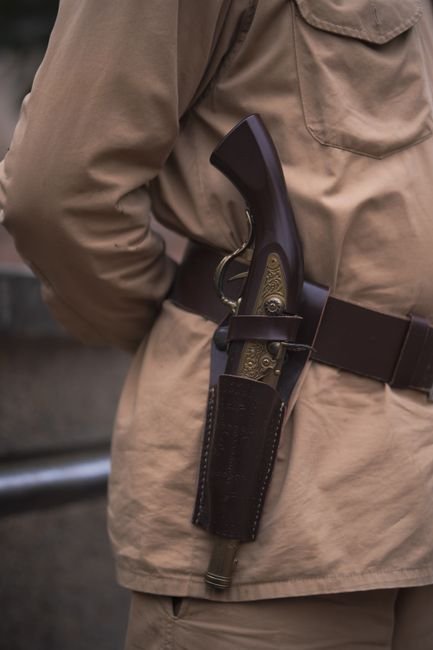
What feels fine for ten minutes can become irritating by lunchtime.
An hour into a drive, the muzzle starts digging into the thigh; after a walk, the sweat guard rubs raw; by late afternoon, the belt feels like a clamp. That pattern is common because pressure rarely shows up in the first few minutes. It appears when sitting angle, stride, heat, and moisture begin stacking together.
That does not automatically mean IWB carry is inherently uncomfortable. More often, it points to a mismatch: body shape against holster profile, belt stiffness against clip spacing, ride height against muzzle length, or cant against where the hip actually folds. Small geometry errors create hot spots; correcting the combination usually matters more than simply “toughing it out.”
- Pain that appears only after sitting usually signals placement or ride-height conflict, not just belt tension.
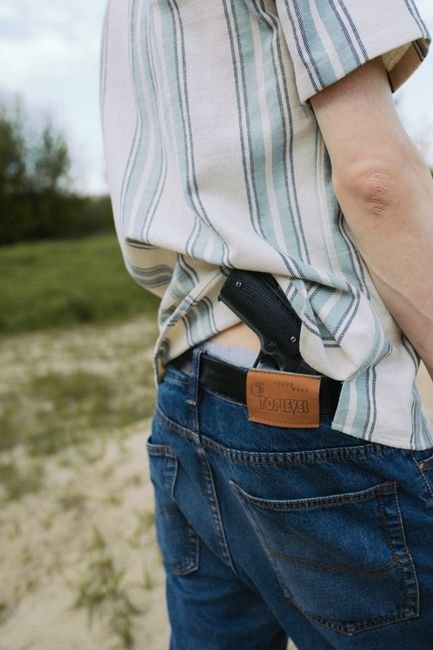
Read the pain pattern before changing anything
-
Map the exact spot
A sharp point at one corner usually signals contact pressure. A broad sore band across the waist more often points to belt compression.
-
Note when it starts
Pain that appears as soon as the holster is clipped on often comes from shape or ride height. Discomfort that builds after walking, sitting, or driving usually involves leverage or rubbing.
-
Watch what movement changes it
Worse when bending or sitting suggests the grip or muzzle is levering the holster into the body. Worse during repeated steps or torso rotation suggests friction between the holster edge, clothing, and skin.
-
Check what improves with a small reset
Loosening the belt slightly can reduce compression but rarely fixes a true pressure point. Nudging the holster position by a small amount often changes leverage fast, which helps identify the real cause.
A red patch is not automatically “rubbing,” and a bruise-like ache is not always “too tight.” Surface irritation tends to spread and heat up; mechanical pressure feels focused; leverage gets worse with posture change; belt compression feels circumferential, not pinpoint.
Why strong-side carry creates one sharp hotspot
On the strong side, discomfort often comes from load concentration rather than total weight.
The holster and belt tension concentrate mass on a small landmark.
That contact patch is tiny, so even a light setup can feel harsher.
IWB holster chafing fixes often focus on spreading that load.
Small geometry changes decide whether pressure is dispersed or drilled into one spot:
- Clock position: A shift of even half an hour can move the holster off bone and onto softer tissue.
- Ride height: Higher carry can reduce thigh interference, but may increase leverage into the belt line.
- Cant: Forward cant often rotates the grip out of the ribs and changes where the muzzle or lower shell presses.
- Clip spacing: Wider attachment points usually stabilize the rig and distribute belt load more evenly.
- Shell footprint: A broader backer or longer body can turn a sharp point into a larger, lower-pressure contact area.
If pain feels pinpoint and repeatable, the issue is usually where force lands, not simply how tight the belt is.
Appendix discomfort usually changes when the pelvis changes
Seated appendix discomfort often stems from leverage, not just tightness.
When standing, the pelvis stays neutral and the holster sits flatter.
When sitting, the pelvis rotates backward, the belt line folds, and the grip leverages outward.
The muzzle then rotates inward, causing pressure like a muzzle jab, groin pinch, or a hard spot.
IWB holster chafing fixes may help by adjusting your carry setup.
A short holster body can worsen fit. With less length below the belt, there is less counter force to resist tipping. The gun pivots inward more easily. IWB holster chafing fixes note that a slightly longer holster shell can feel better. For broader troubleshooting, compare these appendix carry changes that reduce chafing.
Small geometry changes that usually help
- Shift the holster slightly off center rather than directly over the deepest hip crease.
- Add a small wedge at the muzzle end to push the top of the slide inward and the muzzle outward.
- Lower or raise ride height one increment; too high often increases top-heavy tipping, too low can drive the muzzle into the lap sooner.
- Check whether belt tension while seated is higher than expected; over-tightening often magnifies the pivot.
The useful pattern is simple: small changes in angle and support usually matter more than dramatic relocation.
When the problem is rubbing, not pressure
A hotspot is not always a load problem. Friction usually feels broader, warmer, and more surface-level than pressure. Instead of a deep ache over bone, it tends to become a raw spot where the holster shifts a few millimeters with each step, sit, or bend.
Common causes are easy to miss:
- Rough shell edges that were never fully rounded or polished
- Exposed screw heads, posts, or clip corners contacting skin or an undershirt hem
- Sweat softening skin and increasing drag
- Micro-movement from a loose belt, flexible clip, or holster rocking on the waistband
Friction patterns also behave differently over time. They often start mild, then build as heat and moisture rise. Pressure pain usually appears where the holster presses hardest; rubbing shows up along an edge, seam, or hardware path.
If irritation appears outside the holster’s contact line, continues even after carry stops, or shows up in multiple unrelated spots, the cause may not be the holster alone. That kind of pattern can point to fabric, detergent residue, heat rash, or another skin sensitivity rather than pure gear geometry.
A clean, narrow mark that matches an edge or screw usually suggests gear-caused rubbing. Diffuse redness with no clear contact pattern suggests a different irritant may be involved.
When the belt is the real culprit
A holster that feels fine at first can turn into a vise by midday. This happens when the belt-holster system overdrives, not just retention. IWB holster chafing fixes address this by reducing pressure from movement and belt tension.
Retention and support are different jobs
Retention tuning controls how firmly the pistol locks into the holster. Support tuning controls how the holster rides against the body. Those settings interact, but they are not the same.
- Retention screws mainly affect draw resistance and gun security.
- Belt tension affects compression, hotspot intensity, and how much the holster rotates into the body.
- Clip spacing affects load distribution and whether pressure lands in one sharp spot or spreads across a wider area.
A common mistake is solving instability by cranking down everything at once. That can create a stable gun and an uncomfortable carry package.
What changes the pressure feel
A belt that is too stiff can act like a rigid band, concentrating force instead of conforming. A belt that is too soft may let the holster tip and rub, which often leads to overtightening.
Features such as a claw or wing improve concealment by rotating the grip inward, but they also increase inward leverage. If the belt is already tight, that extra leverage can turn useful concealment into constant compression. Wider clip spacing usually helps stability with less clamp force.
Why motion changes everything
A rig can feel harmless while standing still because the body is not yet asking it to manage rotation, stride, and hip flexion. Once walking, bending, or sitting begins, the holster stops being a parked object and becomes a lever system. Small geometry errors then turn into tipping, shifting, and concentrated pressure.
Body shape changes where that leverage lands. A fuller lower abdomen, a pronounced iliac crest, or a more forward pelvic tilt can make the top of the holster roll inward while the muzzle tries to climb or dig. That is why fit tuning for a Glock 19-sized setup often changes once grip length and belt line are evaluated together, not separately.
Why longer can feel better
Grip length usually drives printing and top-heaviness.
Slide length often determines stability.
A short slide with a long grip can pivot like a top-heavy hammer, creating hotspots.
For IWB holster chafing fixes, a slightly longer holster body distributes force, resisting flipping or jabbing.
Holster footprint matters in the same way. A narrow shell or closely spaced clips can focus load into one spot, while a broader footprint distributes pressure and limits side-to-side migration. In motion, comfort often comes less from softness than from stable load distribution.
Run a one-variable reset
-
Return to the least-bad setup
Start from the last configuration that was tolerable enough to compare against. Record where the discomfort starts, how long it takes, and whether it feels like pressure, leverage, or rubbing.
-
Change one control only
Move only one variable in a small increment: ride height, cant, belt tension, position, wedge thickness, or clip spacing. Multiple changes at once hide the real cause.
-
Test standing, sitting, and walking
A useful trial includes all three. Some setups feel fine upright, then pinch on the first seated pelvic rotation or begin rubbing only once the holster starts moving.
-
Keep gains; erase tradeoffs
If one symptom improves without creating a sharper hotspot elsewhere, keep that change. If a new problem appears, revert before testing the next variable.
-
Replace gear last
Once placement, tension, and support are mapped, broader buying decisions become clearer than browsing a concealed-carry accessories list on frustration alone. Symptom-led tuning often resolves comfort faster than swapping holsters at random.
Frequently Asked Questions
How can I tell if IWB pain is pressure or rubbing?
Pressure pain usually feels focused and deep over a bone landmark, while rubbing feels broader, warmer, and more surface-level along an edge, seam, or hardware path.
Why does appendix carry hurt more when sitting?
Sitting rotates the pelvis backward, which can lever the grip outward and the muzzle inward, creating a muzzle jab, groin pinch, or hard spot at the lower abdomen that isn’t present standing.
Is tightening the belt the right fix for holster pain?
Not always. Overtightening can increase leverage and turn useful concealment features like a claw or wing into constant compression, so a small position or ride-height change is often more effective than more belt tension.
What's the best way to troubleshoot holster discomfort?
Change one variable at a time — ride height, cant, belt tension, position, wedge thickness, or clip spacing — and test standing, sitting, and walking before deciding whether to keep or revert the change.
Method beats guesswork
- Pain pattern reveals mechanism.
- Single-variable testing exposes the fix.
- Wholesale replacement is rarely the first useful move.
Comfort problems usually become solvable once changes stop happening in batches. A measured reset—observe, adjust once, test in motion, then keep or revert—turns vague discomfort into a clear fit diagnosis.

15 Comments
Appendix while standing: fine.
Appendix while driving: absolute betrayal 😂
Your explanation about the pelvis rotating when sitting describes exactly what happens to me. I added a small wedge and lowered the ride height just a little, and the muzzle jab got way less obnoxious.
The part about reading the pain pattern before changing anything was honestly the most useful thing here.
I kept blaming the holster itself, but the pain was always one sharp spot on my hip bone after about 20 minutes walking, not a general “this thing sucks” feeling. Tiny cant adjustment + moving it back a hair helped way more than buying another holster did.
I wish more people talked about belt compression separately from retention. For the longest time I cranked my belt tighter thinking the gun needed it, when really the holster retention was already doing the work.
Loosening the belt one notch and changing clip spacing fixed more than I expected.
I did your one-variable reset over a week because I was getting desperate.
Baseline: okay standing, terrible sitting, and walking would slowly turn into a lower hotspot near the muzzle end. First I changed belt tension only. Better, but not fixed. Then I went back and tried a slightly longer holster body and tested standing/sitting/driving separately.
That was the answer. It spread the pressure out and stopped the tipping I didn’t even realize was happening.
Only thing I’m still unsure about is whether a claw can make belt compression worse for some people, because when I tried one before it felt like the whole setup got shoved harder into me.
Yes — a claw can absolutely improve concealment while also increasing body compression if the belt is stiff, the tension is high, or the clip spacing is narrow.
That doesn’t mean claws are bad; it just means they change how the load is applied. If you revisit one, try it with slightly less belt tension and evaluate whether the extra inward force improves stability or just creates a broader pressure band.
This matches my experience almost exactly. A claw hid the grip better, but with a super stiff belt it felt like the holster was trying to become part of my skeleton 😅
Switching to a less rigid belt helped more than removing the claw did.
The friction vs pressure distinction was weirdly eye-opening.
I kept describing it as “pain” but it was really more like a raw irritated strip by the end of the day, especially in summer. Turned out sweat + a tiny bit of holster movement was the combo. Different shirt material helped more than I expected.
That’s a classic friction pattern: superficial, gets worse with sweat, and leaves a broader irritated area instead of one deep point.
In that case, reducing movement matters as much as softening the contact surface. If you haven’t already, check whether the clips are allowing micro-shift during walking, because even a well-shaped holster can rub if it’s moving just a little all day.
The motion section is dead on. Mine felt okay standing still in the mirror, then started tipping and making a hotspot the second I walked around for an hour.
A slightly longer holster actually made it MORE comfortable, which sounded backwards until I tried it.
This was helpful, but I still think some holsters are just badly finished and no amount of “tuning” fixes that.
I had one that kept rubbing because the edge by the hardware was rough and it chewed up my skin anytime I got sweaty. Rounded edge + different undershirt solved it, but in that case the gear really was the problem.
I appreciate the article, but appendix advice always seems written for people with one body type.
For me the wedge helped a little, but the bigger difference was a slight offset so the grip wasn’t fighting my whole midsection every time I bent over. Curious if other people found offset more useful than wedge?
Yep, same here. Wedge reduced the poke, but offset was what stopped the constant “handlebar into stomach” feeling for me.
I think some guides oversell wedges like they’re magic.
Strong-side at about 3:30 always gives me one super sharp pressure point right on the top edge of my pelvis.
I tried moving it forward and backward, but then concealment gets worse. Is the better first move usually cant, or ride height?
If the pain is one sharp, repeatable hotspot over bone, I’d usually test cant before ride height.
A small cant change can rotate the pressure off that bony point without changing concealment as dramatically. If that doesn’t help, then try a slight ride-height adjustment and pay attention to whether the hotspot appears immediately, only when walking, or mainly when sitting.
Short article but very on point. The “one-variable reset” idea probably saved me from doing dumb trial-and-error with five changes at once lol.