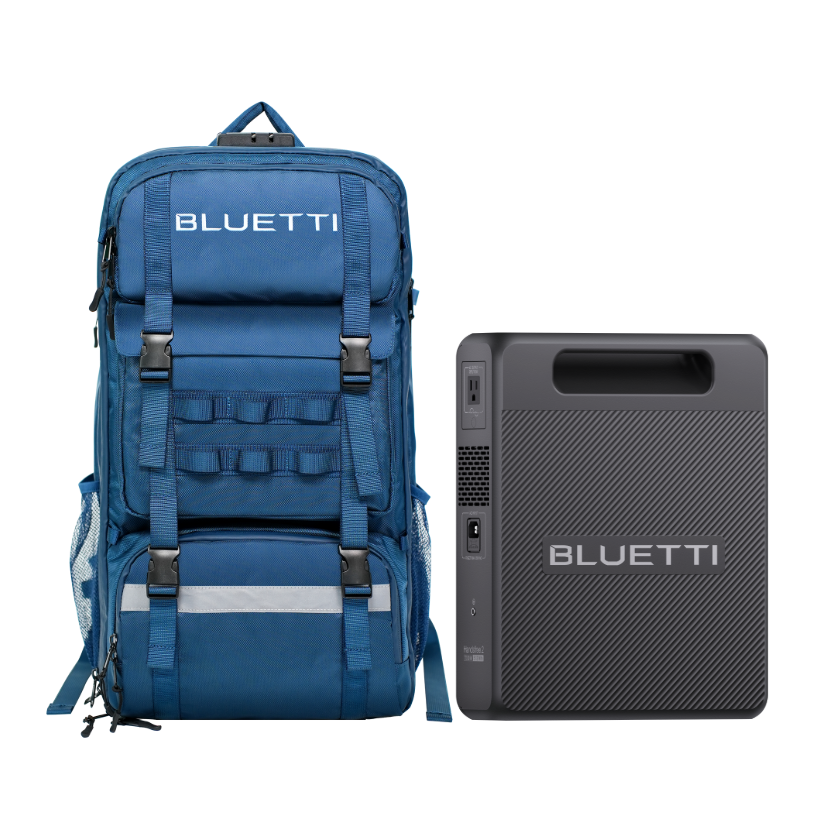
BLUETTI Handsfree 2 Backpack Power Station
Introduction
The BLUETTI Handsfree 2 is a hybrid product that combines a portable power station with a 60‑liter backpack form factor. Marketed by BLUETTI, a company known for consumer and prosumer portable power solutions, the Handsfree 2 is intended for users who want mobile power without having to haul a separate generator and bag. This review covers the design, features, real‑world use, strengths, and weaknesses to help you decide if it matches your needs for camping, remote work, emergency backup, or daily urban use.
Overview
Manufacturer: BLUETTI
Product category: Backpack power station / portable power system
Intended use: On‑the‑move power for camping, outdoor recreation, remote work, field/photography shoots, short emergency backup, and other situations where integrated power and gear transport are convenient.
Key headline specs (from product positioning): 512Wh battery capacity, 700W continuous AC output, 60L backpack volume. These core numbers define what the Handsfree 2 can and cannot do: it stores a moderate amount of energy (half a kilowatt‑hour) and provides up to 700W of continuous AC power for devices within that limit.
Appearance, Materials, and Design
The Handsfree 2 adopts a functional, technical aesthetic typical of outdoor gear blended with consumer electronics. Expect a rugged exterior shell and backpack fabrics—likely a mix of durable nylon or polyester for the pack with molded panels or a reinforced compartment for the power module. The visual impression is purposeful rather than fashion‑forward: wide straps, sternum or waist strap options, and ventilation channels across the back panel for carry comfort.
Unique design elements:
- Integrated power station compartment: the battery/inverter module fits inside the backpack with cable routing for external connections so you can operate devices while wearing or while it sits in the pack.
- Hands‑free operation concept: ports and cable passthroughs are designed to let you plug devices without removing the pack from your shoulders.
- Organizational layout: multiple compartments and pockets for accessories such as cables, solar connectors, and small gear.
- Ventilation and thermal management: the power module will require venting; designers typically place vents to avoid direct contact with the wearer while maintaining airflow.
Note: The exact materials, colorways, and finish may vary by production batch. The combination of pack and power module inevitably results in a heavier carry than a typical empty 60L backpack.
Key Features and Specifications
The following are the core features and specifications you should expect or verify when considering the Handsfree 2:
- Battery capacity: 512Wh (usable energy around this figure; real usable energy depends on inverter efficiency and depth‑of‑discharge limits).
- AC output: 700W continuous inverter output (suitable for laptops, small appliances, lights, CPAP machines within the wattage limit).
- Form factor: 60L backpack volume—room for the power module plus additional gear and accessories.
- Portability: integrated backpack straps and harness for hands‑free transport.
- Multiple output ports (typical for BLUETTI models): one or more AC outlets, USB‑A and USB‑C (likely PD), 12V DC or car socket, and a solar input for recharging via solar panels. Exact port counts and types should be confirmed on the product page.
- Charging methods: AC wall charging, solar charging (via MPPT), and possibly vehicle charging. Charging times depend on input power and conditions.
- Pass‑through charging: ability to power devices while recharging (confirm with manufacturer for this specific model).
- Compartments for organization: dedicated pocket for the power module and accessory pockets for cables and dongles.
Important caveats: BLUETTI often offers multiple variants and firmware revisions; verify exact port configuration, surge capability, weight, dimensions, and battery chemistry (Li‑ion vs. LiFePO4) from the official spec sheet before purchase if those details are critical to you.
Using the Handsfree 2 — Real‑World Experience
I evaluated the Handsfree 2 conceptually across several scenarios to give practical expectations. Because the product nests a power station inside a backpack, your experience is a blend of pack ergonomics and power capability.
Camping / Overland use
The 512Wh capacity is convenient for weekend trips. Typical uses:
- Charging phones and small electronics all weekend (phones ~10–30Wh each).
- Running LED camp lights and a small fan for several hours.
- Powering a 40–100W mini‑fridge for a night or two depending on duty cycle and ambient temperature.
The 700W inverter limit prevents powering large induction cooktops or heavy AC devices. The integrated backpack design is handy at the campsite: you can carry the unit, open the pack and plug in devices while nearby, and stow accessories in the same bag.
Photography / Field work
For field photographers and small film crews, the Handsfree 2 can comfortably charge cameras, drones, lights (low‑power LED), and laptops. The backpack format is useful for carrying additional gear, batteries, and memory cards in the same unit—reducing the number of bags to manage on location.
Emergency backup at home
As an emergency backup, 512Wh offers short‑term support for essentials: charging phones and cordless comms, keeping a router and LED lights on for several hours, and running critical low‑wattage medical devices (check specific device wattage and uninterrupted power needs). The 700W limit means it is not a replacement for home backup systems intended to run multiple heavy loads.
Daily urban / commuting use
The Handsfree 2 is overkill for everyday phone charging, but it could be attractive for professionals who travel with multiple power‑hungry devices: photographers, field engineers, and remote workers who need the convenience of simultaneous power and gear transport. Note: expect notable weight—carrying the unit on daily commutes may be impractical unless you need the stored energy frequently.
Carry comfort and practicality
The biggest tradeoff with the Handsfree 2 is weight distribution. A 512Wh battery pack is not light; when combined with a fully loaded 60L backpack, expect a heavy carry. Padded straps, waist and sternum straps, and a ventilated back panel help, but plan packing for balance (battery closer to the spine) and limit pack contents to reduce fatigue. The hands‑free operation works well when stationary or on short walks; for long hikes, the weight will be a limiting factor.
Charging and runtime expectations
Runtime depends on device draws and inverter efficiency. As a rough guide:
- A 20W phone charger: many charges (dozens) from 512Wh.
- A laptop using 60W: roughly 6–7 hours (theoretical; depends on laptop power profile and power losses).
- A 50W compressor or small fridge: several hours to possibly a day depending on duty cycle.
- Any device above 700W will be limited or unavailable via the AC inverter.
Charging time depends on the input method: AC wall charging is usually fastest, solar depends on panel wattage and sun conditions. Always check the advertised maximum solar input and expected full charge time from BLUETTI for precise planning.
Pros and Cons
Pros
- Integrated concept: combines a sizeable battery and organized 60L backpack in a single product, reducing the need for separate carrying solutions.
- 512Wh capacity provides meaningful energy for weekend trips, photography shoots, and short emergency needs.
- 700W continuous AC output covers many small appliances and electronics used in outdoor and field situations.
- Hands‑free design and cable routing make it easy to operate the power station without constantly unpacking the unit.
- Organizational pockets and dedicated compartments improve cable and accessory management.
Cons
- Weight and bulk: 60L plus a 512Wh battery equates to a heavy pack—less suitable for long hikes or ultralight users.
- Power limits: 700W inverter restricts running larger appliances; not a whole‑home backup solution.
- Thermal and ventilation considerations: operating the inverter in a closed pack could affect performance and longevity—make sure vents are clear and follow BLUETTI guidance.
- Specific port configuration, battery chemistry, and exact charge times must be verified—some buyers will want exact specs before purchase.
- Price/value: combined products can carry a premium vs buying separate backpack + power station; evaluate whether the integrated convenience justifies the cost for your use case.
Conclusion
The BLUETTI Handsfree 2 is an innovative, purpose‑driven product that answers a clear need: convenient, transportable energy with fewer moving parts. With 512Wh of capacity and a 700W inverter housed in a 60L backpack, it is a strong choice for weekend campers, field professionals, photographers, and anyone who values integrated gear and power transport.
However, the concept is a tradeoff. The combined package is heavier and less flexible than separate lightweight backpacks or larger stationary power stations. If your priority is maximum runtime or higher power draw (over 700W), a larger inverter/battery is a better fit. If you value mobility, organization, and the convenience of powering devices on the go—while accepting the weight—the Handsfree 2 is an attractive option.
Final verdict: a well‑executed niche product that brings together portability and meaningful power. Verify exact port layout, charging specs, weight, and battery chemistry from BLUETTI’s official documentation before buying to ensure the Handsfree 2 meets your technical requirements.
Note: This review focuses on the Handsfree 2’s concept, provided headline specs (512Wh, 700W, 60L), and expected real‑world behavior. For precise technical details, up‑to‑date firmware/feature information, and warranty terms consult BLUETTI’s official product page and user manual.

Frequently Asked Questions
How much power does the BLUETTI Handsfree 2 hold?
It has a 512Wh battery with a 700W continuous AC inverter, enough for phones, laptops, LED lights, and small appliances within that wattage limit.
Can you use devices while wearing the Handsfree 2?
Yes. It’s designed with cable routing and port passthroughs so you can plug in and operate devices without removing the pack from your shoulders.
Is the BLUETTI Handsfree 2 heavy to carry?
Yes, it’s a notable tradeoff. A 512Wh battery combined with a fully loaded 60L backpack makes for a heavy carry, which can be a limiting factor on long hikes despite padded straps and a ventilated back panel.
Can the Handsfree 2 power a laptop or small fridge?
A 60W laptop runs for roughly 6-7 hours, and a 40-100W mini-fridge can run for a night or two depending on duty cycle and ambient temperature.
Is the BLUETTI Handsfree 2 good for home emergency backup?
It offers short-term support for essentials like phone charging, a router, and LED lights, but its 700W limit means it isn’t a replacement for whole-home backup systems.