
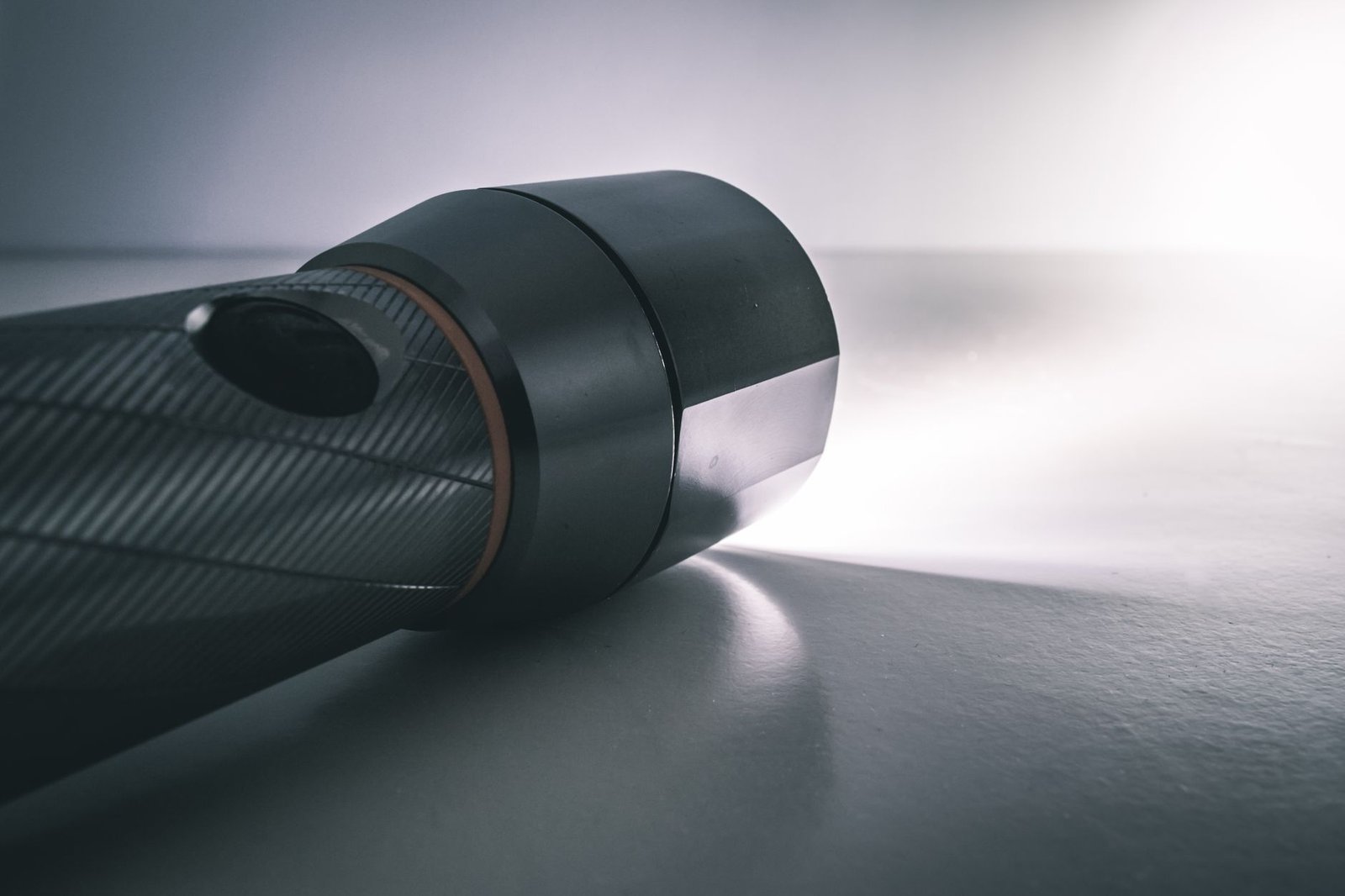
A new flashlight can make every accessory look necessary and every maintenance task feel optional.
The pattern is familiar: the light works perfectly on day one, so a charger upgrade, diffuser, holster, spare clip, and backup cells all seem tempting right now—while cleaning threads or checking O-rings can wait. That is how drawers fill up and small preventable issues sneak in.
A calmer approach works better. Buy to fix an actual annoyance: slippery grip, short runtime, awkward carry, poor charging access. Maintain the same way—small habits that stop future trouble before it starts. A quick wipe, a battery check, and a look at the seals rarely feel exciting, but they do more for reliability than a pile of extras.
- The first worthwhile spare is usually a battery or charging solution, not a cosmetic add-on.
- O-rings and threads matter most after rain, pocket lint, drops, or long storage.
What deserves attention first
Carry accessories that matter most
Carrying accessories usually improves daily use faster than upgrading for output. A beginner notices the difference each time the light is clipped, drawn, or set down. A sturdy replacement clip helps the light stay reachable and harder to misplace, as the flashlight maintenance checklist suggests.
Holsters matter most on thicker lights that are awkward in a pocket. A good fit lets the light slide out cleanly, resists shaking loose, and aligns with a flashlight maintenance checklist. Before buying, compare the light’s body and head measurements with the holster opening.
Roll prevention is another small upgrade with outsized value. On a table, car seat, or workbench, an anti-roll ring or sleeve protects the light from falls and keeps it where it was set.
A carry accessory earns its place when it improves the flashlight maintenance checklist.
- Access speed
- Secure retention
- Comfort during movement
- Stability on flat surfaces
If a light still slips free, wobbles, or rides too high, ignore brand talk and start with the usual holster retention fixes. Function is the real upgrade.
Match add-ons to the job
Diffusers, magnetic bases, head straps, and tripod mounts often look universally helpful, but each fixes a fairly narrow problem. A diffuser is most useful when the goal is softer light at short range; for maps, tents, or bedside use, a diffuser that makes reading easier can cut glare, while for walking it usually trades away too much reach.
- Harsh hotspot at arm’s length: add a diffuser or lantern cap.
- Need both hands for close work: a clip, magnetic tail, or small mount for stable close-up lighting is usually the better answer.
- Light keeps drifting during repairs: a mount solves aim and fatigue better than brighter output does.
- Need distance outdoors: beam-control add-ons are often worth skipping because they reduce throw.
Hands-free gear also brings tradeoffs. A tripod adapter is excellent on a bench, awkward in a pocket, and unnecessary for quick inspections. The simplest buying rule is to wait until the same task shows up more than once.
If a diffuser truly earns a place in the kit, fitting it without scratching the bezel matters almost as much as the diffuser itself. A useful accessory should solve one repeat problem clearly, not just make the flashlight look more complete.
Most problems come from neglect, not hard use
Ordinary use is rarely the main problem; dirt, dry threads, neglected seals, and old batteries cause more failures.
A light that gets used often but wiped down occasionally usually lasts longer than one left dirty in a drawer.
Random oils can trap grit or damage seals; the safe choice is lubricant meant for flashlight threads and O-rings.
Instead of improvising, follow proper thread cleaning and lubrication steps so the tailcap stays smooth without harming the seals.
Most routine care only needs a soft cloth, mild soap, and gentle attention around threads and contacts.
Harsh solvents, rough pads, and metal tools can scratch anodizing, strip finish, and leave residue near switches.
A basic routine stays manageable:
wipe off grit and pocket lint check that O-rings are clean and seated keep battery contacts dry replace leaking cells immediatelySmall habits prevent the sticky threads, poor contact, and water-resistance problems that often get blamed on “hard use.”
Store lights differently depending on downtime
Routine storage
A flashlight in regular rotation can usually stay assembled, but it should be kept clean, dry, and away from extreme heat. After wet use, wipe the body and threads, then leave the light open briefly if moisture may have reached the tube or tailcap. A quick look at the O-rings during battery changes helps catch flattened or nicked seals early.
Long-term storage
A light that may sit for months needs different handling. Remove the batteries, especially alkaline, since leaks and corrosion start during storage, not use. For a fuller process, follow a flashlight maintenance checklist that protects seals and contacts. Store the light loosely closed in a cool, dry place, with spare cells kept in their own case.
Before putting a stored light back into service:
- inspect contacts for white or green residue
- check O-rings for dryness or cracking
- confirm threads are clean and lightly lubricated
- test all modes before relying on it
Even a dependable light can be damaged by forgotten cells. Removing batteries before long idle periods is simple preventive maintenance.
A five-minute maintenance rhythm
-
Before leaving the house
Give the light a quick click test on low and high. Check that the lens is clear, the clip is tight, and the tailcap is fully snugged down without forcing it.
-
After a battery change or recharge
Look at the battery ends and contacts for dirt, moisture, or white crusty residue. Wipe the threads and O-ring area with a dry cloth, then close the light evenly so the seal is not pinched.
-
After rain, dust, or pocket lint
Dry the outside first, especially around the switch and charging port cover. Brush out lint, wipe the lens, and make sure every rubber cover sits flat again before the light goes back into a pocket or bag.
-
After a drop, flicker, or odd behavior
Start with the simple checks: battery orientation, tailcap tightness, and obvious dents around the tube. If the beam still cuts out, clean the contact points and test with a known-good battery before assuming the light is damaged.
-
Before setting it aside for more than a few days
Store it clean and dry, with no grime trapped around the threads. For longer breaks, remove the battery, but for short gaps a clean, dry light with a healthy cell is usually enough.
A soft cloth and a cotton swab handle most routine upkeep.
Keep the cloth, swab, and spare battery in the same drawer or pouch as the flashlight. When the light comes home wet, gets recharged, or starts acting strange, the fix is already within reach.
That small bit of setup matters more than a strict calendar. Most beginner maintenance works best when it is tied to real events that are easy to notice.
When upkeep stops being enough
What cleaning should fix
Basic upkeep works best on intermittent problems: light flicker after a battery swap, dull output from dirty contacts, or a tailcap that loosened in a pocket. After a quick clean, a battery check, and a careful retightening, the change should be obvious right away.
A dependable flashlight should not need constant opening, greasing, or contact polishing. If the same symptom returns after every outing, the problem is probably no longer dirt.
Signs a part is wearing out
Repeated failures usually point to hardware. A mushy switch, torn O-ring, weak spring, scarred threads, or a retaining ring that keeps backing out will rarely become reliable through repeated cleaning alone. If the click is inconsistent even after contact cleaning, it may be time to replace the tail switch instead of chasing the same fault.
A simple rule helps:
- One-off issue after storage, rain, or a drop: inspect, clean, recheck.
- Same issue twice in the same place: suspect a worn part.
- Corrosion, cracked body parts, battery swelling, or heat damage: stop using the light until repaired or replaced.
When a fix lasts only a day or two, endless tinkering usually costs more time than a small replacement part.
If disassembly keeps increasing while reliability keeps falling, the light is asking for parts, not more attention.
- Carry first A clip or holster usually improves a new light more than any beam accessory.
- Add with purpose Diffusers, mounts, and filters make sense only when a repeated job clearly needs them.
- Quiet upkeep A quick wipe, thread check, and battery look-over catches most trouble before output drops.
Frequently Asked Questions
What's the first accessory worth buying for a new flashlight?
A spare battery or charging solution usually helps more than a cosmetic add-on, followed by a properly fitted clip or holster if the factory one is weak or ill-fitting.
How often does a flashlight need maintenance?
A quick check makes sense before leaving the house, after a battery change or recharge, after rain or dust exposure, after a drop or odd behavior, and before storing it for more than a few days.
Should batteries stay in a flashlight during long-term storage?
No. Batteries, especially alkalines, should be removed before months-long storage since leaks and corrosion often begin during storage rather than active use.
When does a problem need a replacement part instead of cleaning?
If the same issue returns after every outing despite cleaning and a battery check, it usually points to a worn part like a mushy switch, torn O-ring, or weak spring rather than dirt.
Start Small, Stay Ready
- Retention matters more than novelty for most beginners.
- Checks tied to charging or battery swaps are easiest to keep.
The easiest starter kit is modest: one dependable carry option, a spare battery if the light uses replaceables, and a clean cloth. That covers access, backup power, and basic care without building a drawer full of rarely used parts.
In that order, the light stays useful from day one. Carry keeps it available, specialized add-ons can earn their place later, and regular checks stop small issues from turning into flicker, leaks, or worn seals.



11 Comments
I’m a little confused on diffusers. Are they mainly for camping/lantern use, or do they actually help indoors too?
My current light is way too harsh when I’m looking for stuff under the sink or in a closet at night, but I don’t want to start buying attachments I’ll use once and forget about.
They’re definitely useful indoors if you regularly do close-range tasks. A diffuser softens the hotspot and reduces glare, which makes it nicer for cabinets, closets, power outages, and tent use.
If that harshness bothers you often, a diffuser can be worth it. If it’s only an occasional annoyance, you may be better off waiting and choosing your next light with a lower mode or floodier beam instead.
I use one in the house way more than I expected. During a blackout it turns a flashlight from “laser beam in the eyes” into something actually useful lol.
This might be obvious to everyone else, but how do I tell when “maintenance isn’t enough anymore” versus when I just cleaned it badly?
I have a small flashlight that still flickers once in a while even after cleaning the contacts and changing the battery. The button also feels mushier than it used to. I’m trying not to be wasteful and replace stuff too fast, but I also don’t want to baby a dying light forever.
I’m brand new to carrying a flashlight every day, so this may be a dumb question 😅
When you say a pocket clip matters more than most accessories, do you mean for larger lights too, or mostly the small EDC ones? I’ve had one cheap light tumble to the bottom of my bag and disappear for a week, so I *get* the access part. Just not sure when a holster becomes the better option.
Not a dumb question at all. Pocket clips tend to matter most on small to medium lights you want to grab quickly from a pocket, waistband, or bag edge. Holsters usually make more sense once the light is too bulky, too heavy, or too awkward for consistent clipped carry.
A simple rule: if clipped carry feels secure and comfortable all day, stick with that. If the light shifts, prints badly, or keeps ending up loose in a bag, a snug holster is usually the better choice.
Good article, but I’m still unsure about the “don’t use random oils” warning.
If the threads feel dry, what *should* a beginner use? I’ve seen people online say silicone grease, others say never grease anything, and then somebody always suggests WD-40 like it’s magic for every object on earth 🙃
The anti-roll part was actually helpful. I never thought about it until my light rolled off the workbench and onto the garage floor… twice in one afternoon.
Do those little anti-roll rings usually fit any flashlight, or is that one of those annoying brand-specific things?
That five-minute maintenance rhythm sounds nice in theory, but I’m terrible at habits unless there’s a trigger.
Would you tie checks to charging only, or also after rain/drops even if the light seems fine? I’m asking because I tend to ignore gear until it starts flickering, which I know is exactly the problem you were talking about.
The storage section answered something I’ve wondered about for a while.
For a light that only comes out during storm season, how often would you personally check it? Every month feels excessive to me, but waiting six months also sounds like asking for battery corrosion drama.
For a storm-only light, every 2–3 months is a practical middle ground. That’s frequent enough to catch corrosion, low charge, or seal issues before an emergency, without turning it into a chore.
If it uses removable batteries and will sit for a long time, taking them out is still the safest option. Then do a quick inspection before putting it back into service.