A tactical pen sits at the grey edge between practical tool and confrontational object.
On a crowded commuter platform, a dropped cup or shove prompts a glance to a compact metal pen in a pocket. That convenience is the upside; the downside is real: escalation, regulation, and mistaken identity can turn a simple contingency into liability. Whether to add one to everyday carry depends on context, habits, and acceptable trade‑offs.
- Choose durable metal and a reinforced tip.
- Clip, size, and weight shape concealment and comfort; confirm local rules.
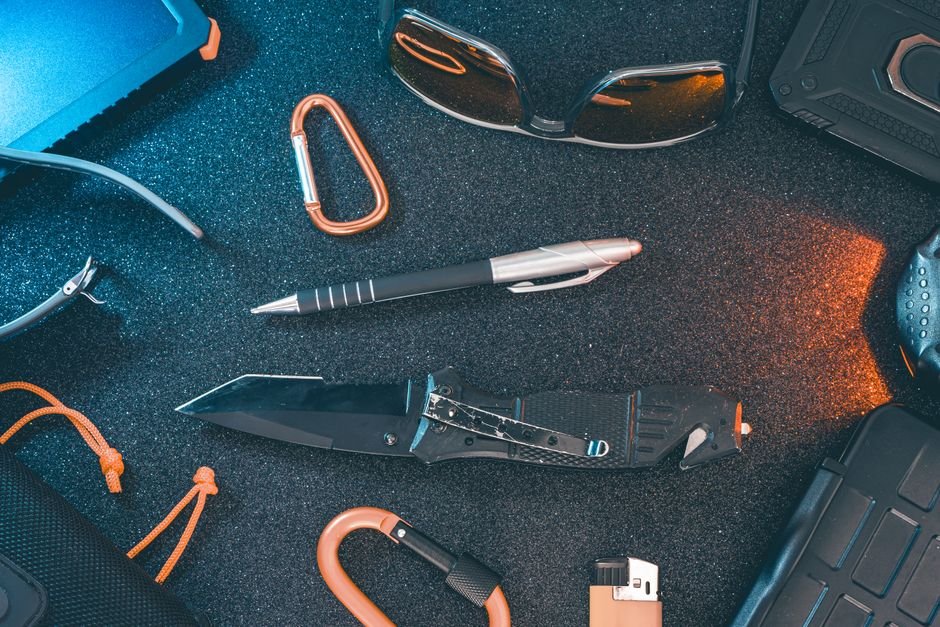
What a tactical pen is and its core parts
- Tactical pen
A compact writing instrument engineered to double as a handheld impact tool; usually metal, discreet, and intended for everyday carry.
- Core components
Barrel/body, hardened tip or strike surface, internal refill and cap or click mechanism, pocket clip, and ergonomic knurling or grip; some include modular endcaps or glass-breakers.
- Common variants
Solid-body strike pens for maximum blunt-force transfer, hollow-frame pens for storage or glass-breaking, and slim EDC-focused pens that prioritize writing comfort.
- Materials and hardness
Aluminum trades weight for corrosion resistance; stainless steel and titanium increase impact durability but add mass; heat treatment and tip geometry set localized hardness.
- Engineering trade-offs
Thicker walls, hard tips, and aggressive grips raise strike energy and durability but reduce writing comfort and increase weight; slim ergonomic designs improve writing at the cost of impact capability.
Quick comparisons:
Weight vs. strike energy: heavier, denser pens transfer more momentum. Tip hardness vs. brittleness: harder tips resist deformation but can chip. Wall thickness vs. ergonomics: thicker barrels improve impact durability but can be bulky. Refill choice vs. internal space: larger refills write better but require more internal volume.Realistic uses and limits of a tactical pen
A tactical pen most reliably serves as a compact utility and emergency tool rather than a guaranteed defensive weapon. Three evidence‑consistent roles stand out:
- Glass breaking and escape: the hardened tip is effective on tempered side windows and other brittle panes common in vehicles and buildings. It is less effective on laminated windshields and may require repeated force or alternative escape paths.
- Improvised tool tasks: as a pry point, emergency punch, or temporary driver for small fasteners, the pen can substitute when standard tools are unavailable. These uses exploit the pen’s rigidity and narrow profile rather than its striking power.
- Signaling and noise: the metal body can reflect light, tap rhythmically to attract attention, or produce a loud strike on metal or glass to signal rescuers.
Close‑range defensive strikes are possible but highly constrained. A pen can concentrate force to a small area, which may create pain or distraction if strikes find unarmored, exposed targets (eyes, throat, soft tissue). However, empirical studies and incident reports show limited stopping power against determined, clothed, or larger assailants; hits must be precise, and physiological effects are unpredictable. For a review of practical effectiveness and incident evidence, see the practical limits and evidence.
Survivability concerns include loss of grip, legal and escalation risks, and reduced effectiveness under stress or against protective clothing. Consider the tactical pen an adjunct tool: useful in specific emergencies, but not a substitute for escape, avoidance, or trained defensive options.
Training and context matter. A tactical pen can help in niche emergencies, yet real-world effectiveness depends on skill, opportunity, and the opponent’s condition or protection.
Checklist: When to carry and use defensively
-
Confirm legality and policy
Check local laws and venue rules; possession or use may be illegal or treated as a weapon, reducing defensiveness value.
-
Assess accessibility and concealability
Pen must be immediately reachable and secured for a practical grip—if it’s buried in a bag, it won’t help.
-
Verify training and simple techniques
Prefer practiced, gross-motor strikes and escape-focused use only; lack of training elevates risk of failure or escalation.
-
Match situational dynamics
Close, one-on-one threats where retreat is impossible increase usefulness; multiple attackers, firearms, or distance reduce value.
-
Have exit and escalation plan
If using a pen, commit to creating space and escaping; if no clear exit or backup, the pen’s defensive benefit is minimal.
A tactical pen is a last-resort accessory, not a substitute for awareness or trained defensive tools.
Risks include:
Limited stopping power May provoke escalation Legal consequences Ineffective against armed attackersIf any risk applies, reconsider use and prioritize avoidance.
Policy boundaries: airports, schools, workplaces
How do institutions generally treat tactical pens?
Institutions judge tactical pens by function and appearance; items intended or presented as impact tools are often treated like weapons. Presence of blades, sharp tips, or overtly combative styling increases the chance of a ban.
What to know about carrying one through airports and airlines?
Airports typically restrict tactical pens in carry-on due to pointed ends and striking surfaces; checked baggage allowances vary by carrier and country. For current screening nuance and packing suggestions consult the relevant airport screening guidance.
Are tactical pens allowed in schools?
Schools commonly prohibit objects that could be used as weapons; policy language and enforcement differ widely across districts and campuses.
What do workplaces and venues typically require?
Employers, venues, and event organizers set site-specific rules driven by safety and liability; high‑security sites often bar tactical tools entirely. Before carrying, verify the written authority (handbook, venue rules, carrier guidance), opt for non‑combat styling or checked storage where allowed, and expect confiscation or denial of entry if policy is violated.
Common myths about safety, lethality, and legal risk
It is primarily a blunt-impact and utility tool; it can cause serious injury but is not inherently designed to be deadly.
Blunt trauma rarely guarantees immediate incapacitation—outcome depends on strike location, force, and the attacker’s condition, so lethality is situational.
Possession alone does not justify aggression; legality varies by jurisdiction and by whether force was proportionate and necessary.
Self‑defense claims require imminence and proportionality; carrying a tool that can injure may increase liability if escalation was avoidable.
Effectiveness is highly dependent on training, distance, attacker intent, and whether multiple assailants are present.
Untrained use often prolongs confrontations, increases injury risk, and can worsen legal outcomes; escape and de‑escalation usually reduce harm.
Safety over striking. Tactical pens are primarily for creating opportunity to withdraw, not to win fights.
Avoid escalation: verbal de‑escalation and distance are primary defenses. Aim to disengage: strikes should create time to leave, not prolong contact. Train and document: practice safe‑focused techniques and know local law.See the practical safe-use techniques for step‑by‑step drills and legal considerations.
Carry methods and access trade-offs
A tactical pen can be carried several ways; each sacrifices either concealment or speed. For everyday discreet options, study pocketing and holster tricks to match position to clothing and routine. Orientation, clip side, and whether the tip points up or down change how quickly the pen can be cleared and used.
Common choices:
- Pocket clip (tip-up or tip-down): fast to retrieve from a strong-side pocket; tip-up usually yields the quickest, most ergonomic draw. Visibility increases with a clip exposed.
- Deep pocket carry: excellent concealment but slower; retrieve practice required to avoid fumbling while seated or bending.
- Holster (belt or inside‑waistband): good retention and repeatable draw; bulkier and more obvious under light clothing.
- Bag carry: safest for transport, slowest in an immediate need.
Posture and handedness matter — seated, reaching across the body, or wearing layers will change the required motion. Regular, realistic practice draws in different clothes and positions builds muscle memory and reveals which method actually works in daily life.
Rehearse retrievals while seated, turning, and with jackets on. Time slow, deliberate motions until they are smooth; prioritize repeatable mechanics over speed alone.
-
Visual and functional inspection
Look for cracks, dents, loose parts; check clip, seams and tip for deformation. Verify writing action and tip alignment.
-
Cleaning and drying
Disassemble following manufacturer guidance; wipe metal surfaces with a lint-free cloth dampened with isopropyl alcohol, then dry to prevent corrosion.
-
Refill check and replacement
Confirm ink level and flow. When swapping the refill, reference the refill compatibility guide for correct sizes and seating; replace with same style.
-
Threads, seals, and moving parts
Lightly lubricate threads with a tiny drop of light machine oil; check O-rings and seals for wear and seating. Avoid over-tightening.
-
Storage and periodic testing
Keep in a cool, dry place away from solvents; test writing and inspect after heavy use or every few months.
How to match a pen to its primary use
Prioritize whether the pen will be mainly for consistent writing, utility tasks, emergency escape, or as a last-resort defensive tool; different roles demand different trade-offs. For smooth long-form notes, consult writing-focused picks, and for emergency glass-break needs see escape-oriented recommendations.
Material dictates strength, corrosion resistance, and feel: aluminum is light, steel is tough, titanium is best for long-term carry and fatigue resistance. If lifespan and corrosion resistance matter, favor titanium options like those in the titanium recommendations.
Choose a conical or needle tip for precise writing; a hardened, peened bezel or carbide tip aids glass breaking and prying. For jobsite toughness and proven hard-use designs, review the heavy-duty selections, and if simplicity matters start with a model from the beginner-friendly list.
Verify which refills fit the barrel (standard Parker, Fisher Space, or proprietary) and whether spare refills are readily available; consider pocket clips, holsters, or EDC rigs that match daily dress and access needs. Budget-conscious buyers can start from the best budget options.
Common Questions
Is a tactical pen legal?
Laws vary widely by jurisdiction and venue. Tactical pens are generally legal to own in most places, but carrying them in certain locations — airports, schools, courthouses, or other restricted venues — may be prohibited. Always check local laws and site-specific policies before carrying.
Is training required to carry a tactical pen?
Training is not required by law, but it significantly improves both safety and effectiveness. Practiced, gross-motor strikes and escape-focused techniques reduce the risk of failed deployment or accidental harm during a high-stress situation.
Is a tactical pen better than a key or flashlight for self-defense?
These are different tools suited to different tasks. Tactical pens offer concealment and a writing function that keys and flashlights lack, but they provide less stopping power than dedicated defensive tools. Keys may be more readily accessible; flashlights may offer more visual deterrence. The best choice depends on what you carry consistently and practice with.
Will drawing a tactical pen escalate a confrontation?
Any visible weapon can escalate risk. Escape, de-escalation, and avoidance are preferred responses to threats. A tactical pen is best used as a last resort when disengagement is impossible, not as a first-response tool.
- Select models for everyday tasks (writing, glass-break) and durability; avoid over‑complicated features.
- Prioritize training in avoidance, legal boundaries, and rapid access over assumptions about stopping power.
A tactical pen is first a rugged writing and small-utility tool: reliable ink, prying, glass-breaking, and improvised leverage. Emergency or defensive uses exist but are situational and limited in stopping power and survivability.
Decisions to carry or deploy one should follow situational checks, institutional policy awareness, and realistic, practiced training—prioritizing avoidance and escape over confrontation. Maintain inspection, practice accessible draws, and accept that a pen complements, not replaces, other preparedness measures.