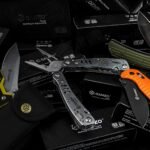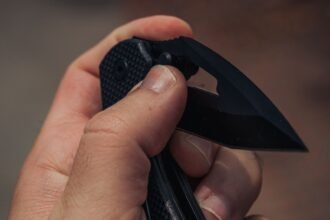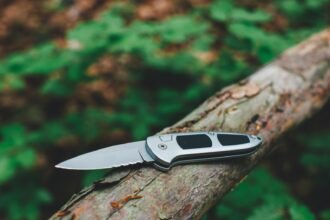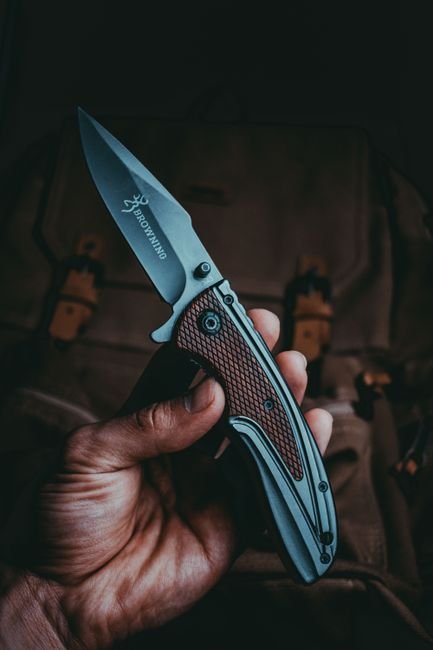
Every pocket knife carry involves trade-offs between utility and enforcement risk.
On a crowded commuter train, a passenger drawing a small folding knife to open a package triggered a police stop—blade confiscated and citation issued. That scene illustrates a core point: carrying a pocket knife is a risk‑management decision. Blade length, opening mechanism and whether the knife is visible or concealed shape legal exposure; employers, transit systems and venues layer separate rules and penalties.
- Many jurisdictions set specific length cutoffs—commonly about 2–3 inches.
- Automatic or switchblade mechanisms are widely restricted or banned.
- Visible carry, tactical clips, and locking blades attract greater enforcement attention.
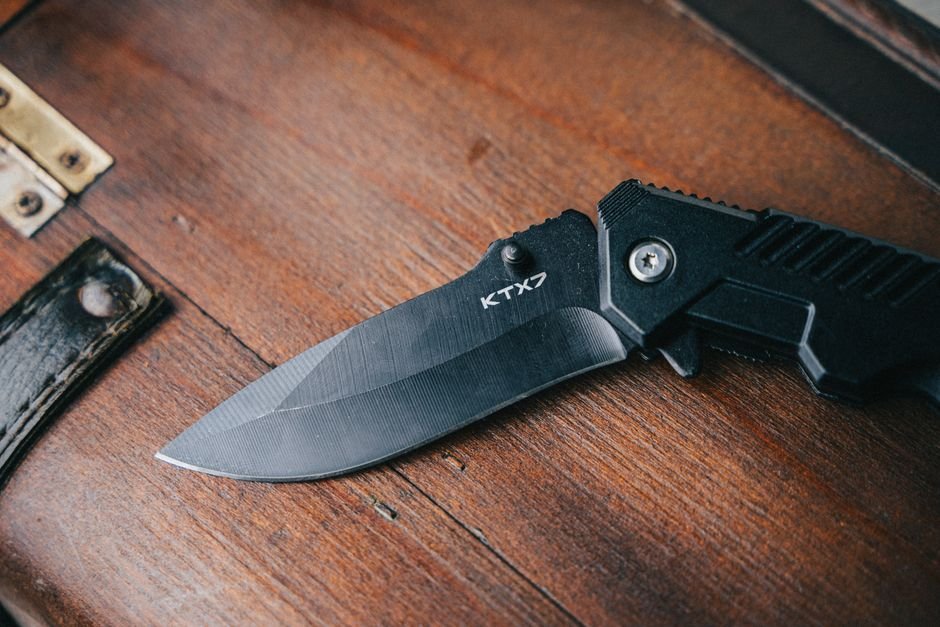
Main legal archetypes
Laws governing everyday carry (EDC) usually fall into a few repeatable archetypes. Identifying which one a local statute follows makes it clear which knife measurement or feature matters most.
Common archetypes and the controlling specification
- Numeric caps: statutes set a maximum blade length (e.g., 2.5–4 in.). The blade length measurement is the decisive spec — folding or fixed status often irrelevant unless separately regulated.
- Mechanism rules: language bans or restricts specific opening mechanisms (switchblades, gravity knives, assisted-openers). Here the trigger/type of action is the key attribute, not raw length.
- Concealment and carry method: rules prohibit concealed carry of knives or distinguish open vs. concealed carry. Whether a knife is carried openly, clipped, or in a pocket becomes decisive.
- Intent and exceptions: some laws focus on intent (weapon vs. tool) or carve out exceptions for trades, hunting, religious uses, or law enforcement. Context and purpose matter more than dimensions.
Measurement variation and statutory exceptions
Statutes differ on what “blade length” means — tip-to-guard, cutting edge, or overall knife length. Common exceptions include antique knives, slip-joints, and tools of a trade. When classifying a local rule, first determine which archetype it matches, then look for the statute’s exact measurement method and listed exceptions.
Read the definition: some laws measure overall length, others blade length from pivot.
Mechanism terms vary: ‘gravity knife’ or ‘switchblade’ may be defined differently across jurisdictions.
Exceptions matter: employment, religious use, or antiques often change applicability.
Practical blade‑length bands and modifiers
Typical blade‑length bands
Many jurisdictions use informal bands as a first screen. These are heuristics, not statutes: treat them as indicators of risk rather than rules.
- Under ~2.5 inches: frequently tolerated in public spaces; often seen as low risk. Still subject toexceptions based on mechanism or intent.
- ~2.5–3.5 inches (gray zone): mixed treatment—allowed in some places, restricted in others; enforcement often depends on context and carry method.
- ~3.5–4.0 inches: commonly triggers heightened scrutiny; folding with a locking mechanism can be treated like a fixed blade in some policies.
- Over ~4.0 inches: typically categorized as high risk for public carry and more likely to be prohibited or require specific justification.
Mechanical modifiers that change treatment
Certain features shift a knife into a more restricted class regardless of length:
- Locking mechanism: blades that lock open are frequently regulated more strictly than slip‑joint knives.
- Automatic or OTF opening: commonly banned or heavily restricted.
- Fixed blades and sheaths: often treated more severely than folders of the same blade length.
- Concealment & carry method: a concealed short blade can attract more enforcement than an openly displayed longer blade.
- Point geometry and double‑edged blades: dagger‑style or full‑double edges can be classified differently.
For model‑level nuance and marketing influences on how knives are described, see brand differences in legal blade lengths.
These bands are general indicators, not legal determinations. Enforcement and statutory definitions vary—local codes and policy determine actual legality.
Practical answers: locks, measurement, openers, transit
Do locking folding knives get treated like fixed blades?
Treatment varies. Some statutes and police guidelines treat locking folders as functionally equivalent to fixed blades because the lock prevents closure; others assess only blade length or whether the knife is carried open. Enforcement commonly depends on precise statutory language about locks or mechanical retention.
How should blade length be measured for legal limits?
Definitions differ: many authorities measure the cutting edge length along the sharpened edge, while others use the straight‑line distance from tip to the blade/handle junction or pivot. When statutes define measurement method, that definition controls; otherwise both edge length and overall blade length are useful reference points.
Are assisted‑open or spring‑assist knives considered automatic/switchblades?
Jurisdictions split on this. Laws typically hinge on whether deployment is primarily manual or spring/automatic; some classify assisted‑openers as automatic and restrict them, others treat them as manual tools. The statutory definitions for ‘automatic’, ‘spring‑assisted’, or ‘switchblade’ determine the outcome.
How are knives treated in transit and at airports?
Airport and aviation-security rules are stricter than many local laws: knives are generally prohibited in carry‑on baggage and must be placed in checked luggage if allowed by the airline and destination country. Rules, confiscation policies, and penalties differ by carrier and jurisdiction, so consult the airline and relevant security authority before travel.
Step-by-step: measuring usable blade length
- Fully open the knife and lock it
Place the knife on a flat surface with the spine up; ensure the blade is fully deployed and any lock is engaged so length is fixed.
- Measure from tip to the point where the blade disappears into the handle
Use a ruler or caliper and record the distance from the blade tip to the blade-to-handle junction (not the handle end). That point is the usable blade length in most statutes.
- Account for exposed tangs, choils and recurves
Include any cutting edge that extends beyond the handle junction; exclude decorative false points or finger guards that do not contribute to cutting length.
- Test grip reach and mark usable edge
Grip the handle as if cutting and note how much edge remains beyond the fingers — this practical reach can differ from measured length.
- Check handedness and ergonomics
Repeat the grip reach for the non-dominant hand — left-handed considerations for blade length often change usable length and concealability.
Compact selection criteria to reduce legal ambiguity
- Clear measurement point
Statutes often specify tip-to-handle-junction; prefer knives whose length is unambiguous to measure.
Look forDistinct blade-to-handle junctionAvoidBlades with complex guards or hidden tangs - Usable cutting edge vs overall length
Choose blades where the cutting edge equals the measured length, minimizing disputes over false points.
Look forStraight edge or simple recurveAvoidExcessive swedges or decorative tips - Ergonomics and grip reach
Ergonomic handles that force a longer grip can reduce exposed edge; test both hands.
Look forHandle geometry that limits forward gripAvoidLong handles that push fingers past the guard - Carry method and concealability
How the knife rides (pocket, sheath) affects perceived threat and legal classification.
Look forSecure, obvious carry orientationAvoidAmbiguous or easily concealed carry
Grip‑and‑mark: hold the knife in each hand, press an index finger along the spine, mark where the thumb meets the handle, then measure tip to mark. This mirrors actual usable edge and highlights handedness differences.
Practical rule of thumb
- Measure usable blade length with the repeatable method described earlier.
- Classify the jurisdiction into one of the four legal archetypes.
- Treat numeric bands and mechanism restrictions as heuristics, not guarantees.
A simple rule‑of‑thumb: treat the numeric blade bands and mechanism rules as working heuristics, use the repeatable measurement method to establish usable blade length, and map the local law to one of the legal archetypes (numeric cap, mechanism ban, concealment rule, or intent/exception). From that map, identify which band and mechanical modifiers are most likely to reduce legal exposure for the intended carry context (public, workplace, transit).
Finally, verify the assessment against local statutes or official sources—police guidance, court opinions, or government FAQs—before carrying; heuristics narrow uncertainty but do not replace official confirmation.