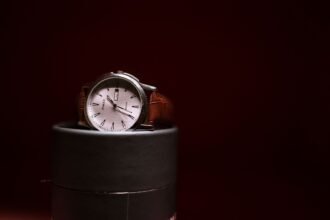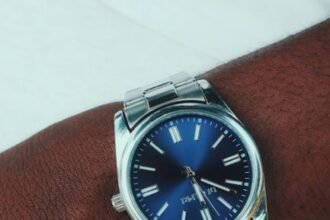
Case diameter tells only part of the fit story.
A compact-looking watch can still pinch at the crown, slide toward the wrist bone, or overhang at both ends. Lug-to-lug length and bracelet flare often determine whether the watch sits securely; ideally, the lugs remain within the wrist’s upper surface and the case stays centered without an uncomfortably tight strap.
Visual scale matters too. A thin bezel makes the dial appear larger, while a broad bezel can make the same case diameter look smaller. Rather than relying on men’s or women’s sizing, assess comfort, stability, and the intended look. An oversized style can be deliberate—but persistent rotation, pressure points, or lug overhang usually indicate a poor fit.
A sensible size range for a 6-inch wrist
- Start here Cases around 34–38 mm are a practical first stop. They often provide presence without dominating a smaller wrist, though lug shape still matters.
- Compact cases work A 39–40 mm watch can still fit neatly when the case is slim, the lugs are short or sharply curved, and the bracelet does not flare outward.
- Check the span Compare the watch’s lug-to-lug span with the wrist’s flat upper surface. Lugs that approach the edges deserve an on-wrist check; overhang usually makes a watch look and feel oversized.
- Scrutinize larger sizes Above 40 mm, examine thickness, crown size, lug projection, and clasp bulk more closely. A wide bezel may make a larger case wear visually smaller, but it does not reduce its physical footprint.
Wrist circumference alone is not decisive: a flatter 6-inch wrist may support a longer case than a rounder wrist with the same measurement.
When shopping remotely, request the lug-to-lug length, case thickness, and a straight-on wrist photo if available. For metal bracelets, also check whether the end links articulate downward immediately; fixed or protruding end links can make a compact case wear substantially longer.
The dimensions that control wrist fit
Case diameter
The width of the case, normally excluding the crown. It indicates visual scale but cannot predict fit by itself.
Lug-to-lug
The distance between the outer tips of the upper and lower lugs. On a 6-inch wrist, this often matters more than diameter because long lugs can extend beyond the wrist’s flat surface.
Lug geometry
Short, sharply curved lugs tend to wrap around a smaller wrist. Straight or nearly horizontal lugs increase the effective footprint, even when the published lug-to-lug figure appears moderate.
Effective bracelet span
Fixed or protruding end links can extend past the lugs before the bracelet bends downward. This hidden extra length may make a compact case wear considerably larger than its diameter suggests.
Case thickness
Thickness affects balance and visual bulk. A tall case on a narrow wrist may feel top-heavy, particularly when paired with a loose or flexible strap.
Use measurements from the manufacturer’s technical sheet or a named reviewer who explains the measuring method. Retail listings often omit end-link reach or repeat inconsistent dimensions.
For bracelet models, look for side and underside photographs showing where the first link articulates. If that detail is unavailable, diameter alone is not enough to judge small-wrist fit confidently.
Measure the wrist’s wearable surface
- Take the circumference
Wrap a flexible tape around the spot where the watch normally sits, just above the wrist bone. Keep it snug without compressing the skin; a paper strip can substitute, then be marked and measured flat.
- Measure the flat-top width
With the palm facing down and the wrist relaxed, place a narrow paper strip across the top. Mark where each side begins to curve downward, then measure between those marks with a ruler.
- Note the wrist shape
Two wrists with the same circumference can have different proportions. A broad, oval wrist generally offers more supporting width than a rounder wrist, so record both circumference and flat-top width.
- Make a paper watch template
Using manufacturer dimensions, draw the case width and lug-to-lug length on paper at full scale. Include fixed or non-articulating end links because they extend the effective footprint.
- Check the footprint on the wrist
Cut out the template and center it on the measured wearing position. The lug-to-lug span should remain within the usable top surface; also mark the crown if its position could cause contact.
A paper template shows footprint, not thickness, weight, strap stiffness, or how sharply the lugs curve.
Case diameter alone is insufficient for a remote purchase. Compare lug-to-lug length, case thickness, and any fixed end-link span; if a dimension is missing, request it from the manufacturer or seller rather than inferring it from photographs.
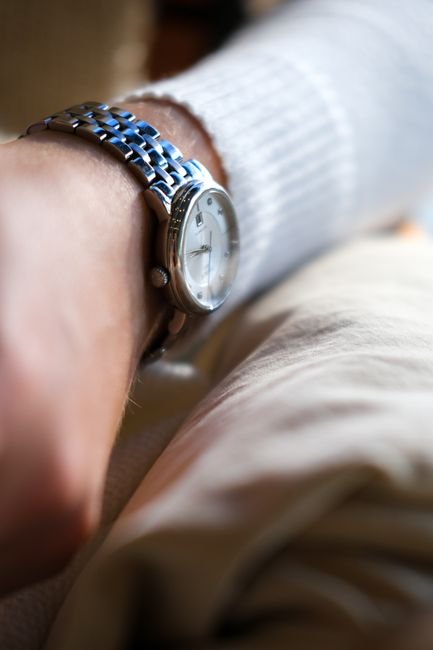
How different case sizes tend to wear
Case diameter helps narrow the field, but it should not decide fit by itself. For a 6-inch wrist, these bands provide practical starting points for comparison.
| Case diameter | Likely visual effect | Main fit risks | Dimensions to verify |
|---|---|---|---|
| 32–34 mm | Compact, restrained, or vintage-leaning | May look smaller than expected if the dial opening is narrow | Lug-to-lug, dial opening, strap width |
| 34–38 mm | Often broadly proportional | Long lugs or rigid bracelet end links can still create overhang | Lug-to-lug, thickness, end-link articulation |
| 39–40 mm | More prominent and contemporary | Greater risk of overhang, crown pressure, or visual bulk | Lug-to-lug, case shape, thickness, bracelet flare |
Why equal diameters can look different
A watch with a large dial opening and thin bezel usually appears larger than another watch with the same case diameter but a broad bezel. Light-colored or high-contrast dials can also increase visual presence, while dark dials and matching bezels may make the case seem more compact.
Shape matters as well. Round cases distribute their footprint differently from square, rectangular, tonneau, or cushion cases; corners and broad shoulders can occupy more of the wrist even when the listed diameter sounds modest. Product photos should therefore be checked alongside full dimensions, preferably using a wrist shot from directly above rather than a close, angled image that exaggerates the case.
A five-point on-wrist check
-
Start with a practical strap tension
Fasten the watch securely without cinching it down. An overly loose strap can make a suitable case rotate, while excessive tension can conceal instability and create pressure.
-
Check how the case is supported
Both lugs—and any rigid end links—should rest on the wrist’s upper surface rather than hang beyond it. A broad dial can look deliberately oversized while remaining physically supported.
-
Look for concentrated pressure
After several minutes, check beneath the lug tips, case edge, clasp, and bracelet links. Pinching, sharp pressure, or rapid skin marking suggests a geometry problem rather than merely a bold visual style.
-
Test crown clearance
Bend the hand back and rotate the wrist through normal movements. The crown or pushers should not repeatedly dig into the hand.
-
Watch for rotation
Walk around and move the arm naturally. A watch that slides off-center unless worn uncomfortably tight is likely too top-heavy or poorly matched to the wrist shape.
Bracelets should be sized before judging stability; removable links and micro-adjustment can materially change the result.
Before ordering, confirm the return window, restocking fees, warranty status, and whether bracelet sizing or removed protective film affects eligibility. Keep tags and packaging intact until fit is settled. A seller offering straightforward returns provides useful protection when published dimensions cannot reveal pressure points, crown contact, or rotation.
How watch style changes perceived size
A stated case diameter does not reveal how a watch will sit on a 6-inch wrist. The dial, bezel, thickness and bracelet connection all change its visual and physical footprint.
| Architecture | Typical effect on fit |
|---|---|
| Dress | A thin case can sit neatly, but a wide, uncluttered dial may make the watch appear larger than its diameter suggests. |
| Field | Simple dials and modest cases often suit smaller wrists. Long, straight lugs can still create overhang, so lug-to-lug length remains important. |
| Dive | A broad rotating bezel makes the dial look smaller, though added case height and weight may feel substantial. Check crown clearance and stability. |
| Chronograph | Pushers, subdials and extra thickness add visual density and physical bulk. Compact diameter alone does not guarantee a compact fit. |
| Integrated bracelet | Fixed first links may extend beyond the case and resist wrapping around a narrow wrist. Effective end-link span deserves close attention. |
When comparing styles, prioritize dress or field designs for a lower-profile appearance, and compact dive models when bezel timing and water-oriented construction matter. Chronographs and integrated-bracelet watches warrant especially careful template or in-person checks.
The strap can make or break the fit
A suitably compact case can still rotate, overhang, or pinch when its strap or bracelet is poorly matched to a 6-inch wrist. Attachment geometry determines whether the case stays centered rather than merely whether the strap closes.
- Taper: A strong taper reduces bulk near the buckle or clasp. Little or no taper can make a compact watch feel visually and physically heavier.
- Stiffness and padding: Thick, padded leather may resist bending around a small wrist, creating gaps beside the lugs. Softer leather, rubber, or fabric generally conforms more readily.
- End links: Fixed or male end links extend the effective lug-to-lug distance. Articulating female end links usually allow a bracelet to drop more sharply around the wrist.
- Clasp length: A long clasp can occupy much of the wrist’s underside, causing pressure or pulling the watch off-center.
- Adjustment range: Removable links on both sides, half-links, closely spaced strap holes, or tool-free micro-adjustment make balanced sizing easier.
Manufacturer documentation should be checked for strap length, supported wrist circumference, link removal, and clasp adjustment. If the supplied strap runs long, a short two-piece strap is often a cleaner alternative. Flexible fabric can also suit small wrists, although pass-through designs raise the case and may leave excess material to fold back. Whatever the material, adjustment should remain secure without requiring excessive tightness.
-
Start at 34–38 mm
Treat case diameter as a search filter, not a fit verdict. Compact 39–40 mm watches can also work when their overall geometry stays contained.
-
Check the supported span
Compare the wrist’s flat-top width with the watch’s effective lug-to-lug footprint. Curved, well-supported lugs matter more than the diameter label alone.
-
Add thickness and end links
A tall case may feel top-heavy, while rigid bracelet end links can extend the wearable length beyond the listed lug-to-lug measurement.
-
Confirm strap adjustment
Look for a centered clasp, usable holes or removable links, and enough fine adjustment to prevent sliding without creating pressure points.
-
Arrange a real fit check
Try the watch on when possible. For remote purchases, favor clear return terms and keep sizing materials intact until fit is confirmed.
Choose by proportion, not convention
Smaller watch cases are not gender-specific; they are simply proportion options. A suitable everyday watch should remain supported, centered, and comfortable, principles also useful when consulting an everyday carry watch guide.
Start near 34–38 mm, then judge lug support, total thickness, end-link extension, and adjustment range. Consider compact 39–40 mm models when those measurements suit the wrist, and verify the decision through a trial or returnable purchase.
Diameter is the least useful number on the spec sheet for fit. Knowing how to measure lug width gives the measurement that predicts overhang and strap choice on a six-inch wrist.