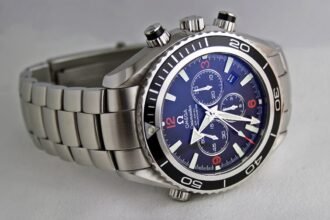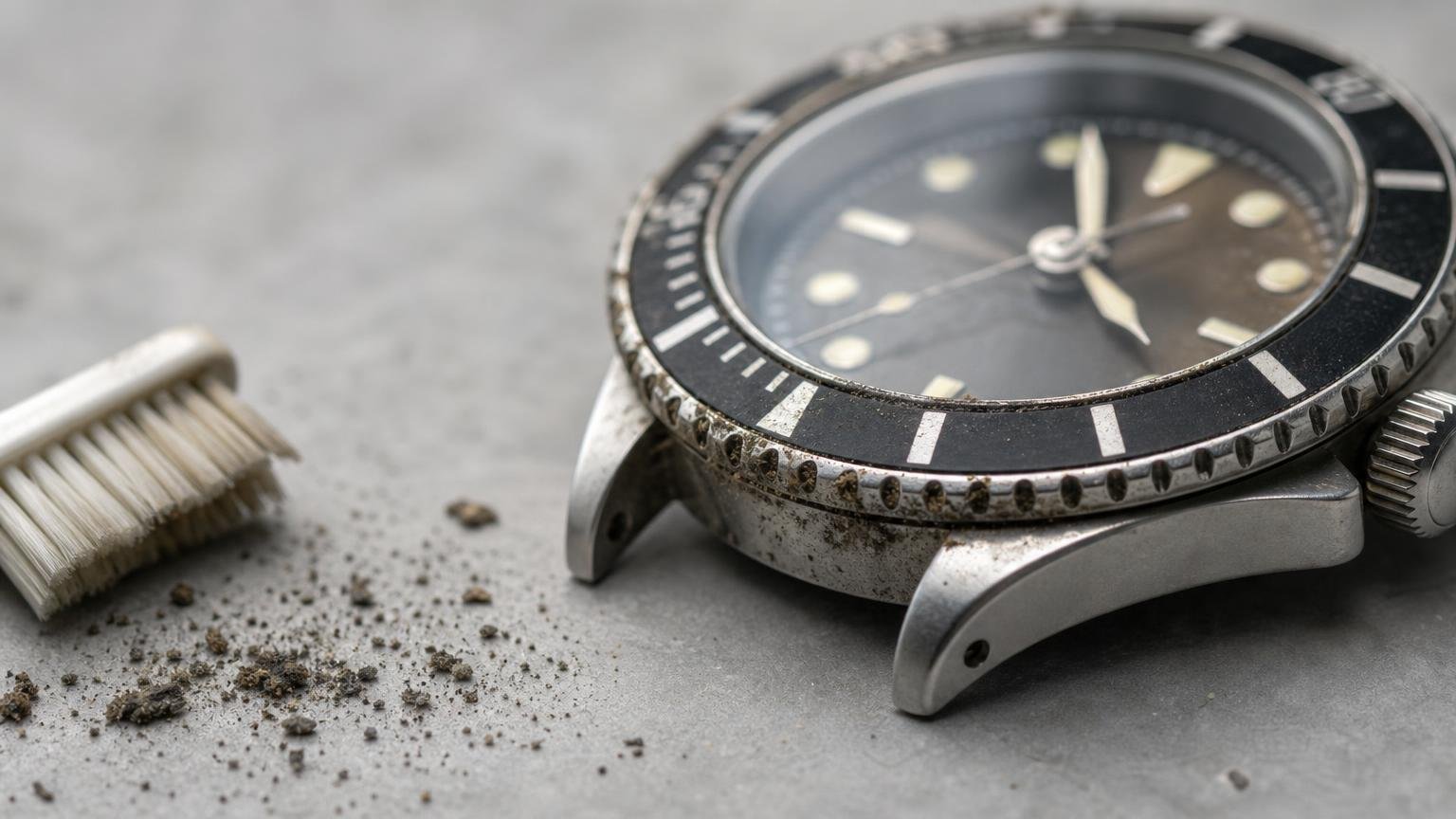
A gritty bezel is a warning sign, not an invitation to force another turn.
After a day at the beach—or contact with dust, sunscreen, soap, or dried salt—a formerly smooth bezel may scrape, stick, or click unevenly. Fine particles can lodge beneath the bezel, while sticky residue can restrict its movement.
Stop rotating it repeatedly. Continued turning may pull contamination farther into the mechanism, scratch contact surfaces, or aggravate an already bent or damaged component. First note whether the bezel moves only in certain spots, sits unevenly, or shows visible debris around its edge.
Set the watch aside and inspect it under good light. If the bezel is lifted, visibly misaligned, unusually loose, or accompanied by case damage, skip home cleaning and consult the manufacturer or a qualified watchmaker.
Why contamination changes bezel feel
A sudden gritty feel often comes from particles lodged in the narrow bezel-to-case gap. Sand and dust can scrape or roll between the surfaces, producing rough spots that appear only during part of a turn.
Residue does not need to be visible. Dried seawater or sweat leaves salt crystals; soap, sunscreen and skin products can form tacky films that attract additional grit. Repeated rotation may pull this contamination farther beneath the bezel.
The sensation depends on the mechanism:
- Friction bezels rely on controlled surface resistance. Deposits can raise that resistance unevenly, causing stiffness or intermittent binding.
- Click bezels use a spring-and-tooth or detent system. Contamination around those contact points may make clicks feel muted, irregular or unusually resistant.
Seiko’s diver-watch care guidance recommends rinsing a watch in fresh water after seawater exposure and operating the rotating bezel during cleaning to help clear salt and dirt. Rolex likewise advises periodic external cleaning with soapy water and a soft brush, followed by rinsing, where the model’s water-resistance conditions permit.
Start with noninvasive external cleaning only: verify that the crown and any pushers are secured, rinse with lukewarm fresh water, use mild soap and a very soft brush around the gap, then rinse and dry. Avoid prying off the bezel, forcing rotation or probing the gap with metal.
Check water resistance before adding water
A nominal water-resistance rating should not be treated as proof that an older or unfamiliar watch can be rinsed safely. Gaskets can deteriorate, and resistance may change after a battery replacement, case opening or poorly documented repair. A chipped crystal, damaged crown, missing pusher, corrosion or unknown service history adds further uncertainty.
Choose the method according to the watch’s current, verified status:
- Manufacturer permits rinsing and resistance is current: Close the crown fully, engage any screw-down crown and follow the model’s care instructions. Use low-pressure fresh water only if the manufacturer allows it; avoid forcing a gritty bezel to turn.
- Resistance is unknown or unverified: Keep the watch away from running water and immersion. Wipe the case and bezel with a barely damp microfiber cloth, then dry it promptly. A lightly dampened swab can reach the bezel edge without flooding the gap.
- The crown, crystal or case is damaged: Avoid liquid cleaning. A watchmaker can inspect the seals and determine whether pressure testing or service is appropriate.
Even a watch originally rated for swimming may warrant the conservative method after years without seal inspection.
Do not assume that closing the crown restores water resistance. Avoid hot water, pressurized spray, immersion, and operating crowns or pushers while wet unless the manufacturer expressly permits those actions.
Gentle cleaning
-
Lift loose particles without pressure
-
Protect leather; rinse water-safe straps
-
Use lukewarm water, mild soap; brush gently
-
Rotate slowly only if normal; rinse thoroughly where allowed; dry lint-free
Cleaning grit from bezels
Bush Camping Tools demonstrates post-dive cleaning.
When sticky residue remains
Sunscreen, lotion and dried soap can form a waxy film that survives one pass. Oxidized grime may also cling to the narrow seam around the bezel. Rather than increasing chemical strength, repeat the manufacturer-approved mild cleaning process, allowing each pass to soften the deposit.
If the watch’s water resistance is uncertain, use a barely damp microfiber cloth instead of rinsing. A damp cotton swab can clean accessible bezel edges, but it should not be forced beneath the bezel or allowed to drip. Rotate the bezel only when it moves freely; grinding or binding calls for a watchmaker.
Adhesive residue is especially risky because common removers may discolor coatings, soften gaskets or damage printed inserts. Manufacturer instructions take precedence, and persistent residue is safer left for professional cleaning.
When roughness points to damage
Once the watch is clean and dry, rotate the bezel slowly without forcing it. Consistent resistance may indicate remaining film; distinct faults at particular positions more often suggest a mechanical problem.
| Symptom | Possible cause |
|---|---|
| Missing, weak or uneven clicks | Displaced or damaged click spring; worn bezel teeth |
| Wobble or abnormal vertical play | Retaining spring, ring or bezel-seat damage |
| Grinding through much of the rotation | Corrosion, damaged contact surfaces or debris trapped beneath the bezel |
| Sharp stop at one position | Bent tooth, distorted insert or a lodged particle |
A fault that repeats at the same rotational point is especially significant. Note that a unidirectional dive bezel should resist reverse rotation by design; that alone is not abnormal.
Stop testing if the bezel binds, lifts, scrapes the case or develops extra play. Continued rotation can deform a spring or tooth and turn a serviceable fault into a replacement job.
Bezel retention varies by watch reference and may involve snap rings, wires, springs, gaskets or adhesive inserts. Improvised removal can bend parts, mark the case or disturb sealing. Persistent mechanical symptoms call for reference-specific service instructions or a qualified watchmaker.
When the grit keeps returning
If a bezel feels smooth after cleaning but soon turns gritty again, debris may remain beneath the bezel where surface cleaning cannot reach. Salt crystals, compacted sand, dried sunscreen, or corrosion products can repeatedly work back into the moving surfaces. Regular exposure to beaches, dusty jobsites, or fine workshop particles can produce the same pattern.
Track when the symptom appears and note grinding, stiff spots, missed clicks, wobble, or visible discoloration. These details help distinguish renewed contamination from a worn or corroded component.
After saltwater exposure, rinse the watch promptly with fresh water only when its current water resistance and manufacturer guidance permit it. Otherwise, use a lightly damp cloth or arrange professional cleaning.
When gentle cleaning brings only brief relief, stop repeatedly rotating the bezel. A watchmaker may remove it and inspect the underside, click spring, bezel teeth, retaining parts, seals, and case surfaces. Depending on the findings, the service may involve cleaning and lubrication approved for the model, corrosion treatment, or replacement of worn springs, rings, or bezel components.
Decide whether to clean or stop
-
Check the model guidance
Confirm the manufacturer’s cleaning instructions and water-resistance precautions before applying moisture.
-
Assess the movement
Mild, uniform drag may justify cautious external cleaning. Sharp resistance, grinding, missing clicks or wobble does not.
-
Use minimal intervention
Start with the least aggressive approved method: a dry brush, damp wipe or gentle rinse, depending on seal condition.
-
Never force rotation
Forcing a stuck or uneven bezel can damage the click spring, teeth, insert or retaining parts.
-
Dry, then reassess
Allow the watch to dry fully before testing movement. Persistent roughness, visible corrosion or uncertain seals call for professional service.
Do not remove the bezel unless the manufacturer’s service procedure specifically permits it and the correct tools are available.
A bezel that feels slightly stiff but moves evenly can often receive conservative external cleaning. Stop immediately when resistance is sharp or irregular, clicks disappear, the bezel wobbles, corrosion appears, or water resistance is uncertain. Model-specific guidance and professional inspection are safer than added force or stronger cleaners.