
A pocket pry bar is judged in ounces all day—and in leverage when something refuses to move.
The snag appears when a featherweight tool meets a paint-can lid, a stapled crate, or a stubborn trim clip: length and tip geometry suddenly matter more than the alloy stamped on the handle. A thin, well-radiused wedge can slip under an edge without chewing it up; a short, blunt bar may be stronger in section yet offer little usable purchase.
Titanium earns its place when low carry weight makes the tool likely to stay on hand. Steel or stainless can make more sense for repeated hard prying, especially with a broader, heat-treated working end. Treatment, cross-section, bend resistance, and the user’s tolerance for pocket bulk set the real limit. Material prestige does not rescue an undersized tip or poor leverage.
- A five-inch bar provides noticeably more leverage than a tiny keychain format, but can print more in a pocket.
- Broad, rounded tips generally protect softer surfaces better than sharp, narrow wedges.
Choose by carry burden, not alloy prestige


A few tenths of an ounce rarely transform occasional use. Titanium becomes more compelling when a bar is clipped to light clothing every day, exposed to sweat or weather, or made longer for extra leverage. For a drawer, vehicle, or work bag tool, stainless steel often delivers more value per dollar.
What the alloy changes in a pocket
For example, titanium vs steel pry bar weighs about 45% less by volume.
That advantage shows up most in longer bars carried with a knife, phone, or keys.
A pocket clip and edge geometry can still press, so low mass does not guarantee comfort.
In the titanium vs steel pry bar comparison, steel is substantially stiffer.
Additionally, its elastic modulus is about 190–200 GPa for steel and about 110 GPa for titanium alloys.
For equal dimensions, a titanium bar will flex more under the same load.
However, increasing titanium thickness restores rigidity quickly, but widens the bar and raises clip stand-off.
Finally, that change can erase much of its slim-pocket appeal.
Tip life and finish
Heat-treated steel generally holds a crisp scraping or nail-pulling edge longer. In a titanium vs steel pry bar comparison, titanium resists breakage for its weight. But its working end can burnish, gall, or round sooner when repeatedly levered against hard steel. Finish is separate from durability: anodized titanium can rub at corners, while coated or stonewashed steel can scratch without weakening.
Neither material is maintenance-free.
However, titanium is highly corrosion resistant, but sweat residue, grime, and trapped moisture still deserve a rinse and dry.
When comparing titanium vs steel pry bar, stainless steel resists corrosion rather than preventing it.
Steel’s lower replacement cost makes hard-use wear easier to accept.
Titanium’s premium is most defensible when reduced carry weight is felt daily.
| Titanium carry Gear Spool Mighty Bar LT Titanium Pry Tool | VS | Steel utility Zenarao Mini Stainless Steel Pocket Pry Bar |
|---|---|---|
0.634 oz | Listed weight |
0.704 oz |
Lower; add thickness | Equal-size stiffness |
Higher |
Can burnish sooner | Working-tip wear |
Usually stronger |
Very high; still clean | Sweat resistance |
High; dry after carry |
Typically higher | Replacement cost |
Typically lower |
| View | View |
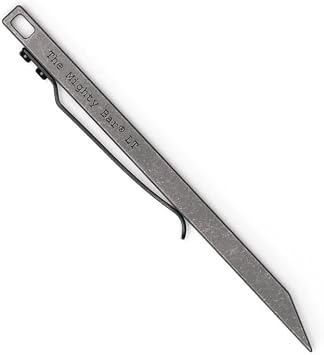
Gear Spool Mighty Bar LT: long reach without pocket bulk
Best for lightweight leverage and secure pocket carry
At 0.634 oz, the long-format Mighty Bar LT makes the case for titanium as an all-day carry material rather than a brute-force upgrade. Its titanium body suits routine lifting, separating, scraping, and light prying when a clipped tool needs to disappear beside the rest of an EDC load.
Titanium also avoids the red-rust concern that can follow sweat and rain exposure. The bar body is nonmagnetic, though the stainless-steel pocket clip should not be assumed nonmagnetic without confirmation of its specific grade.
- Exceptionally light for its length
- Titanium body handles sweat and rain well
- Nonmagnetic bar body
- Long format improves controlled leverage
- Secure stainless pocket clip
- Less stiff than equal-size steel
- Working end is not inherently more durable
- Premium material makes hard-use loss less comfortable
- Steel clip may affect total magnetic behavior
Short take The low mass is the real premium: it is easier to carry often, not automatically better at every prying job. Its longer shape helps keep ordinary leverage controlled, provided the task stays light to moderate.
The Mighty Bar LT is a persuasive choice when a pry tool must remain clipped on all day, especially around moisture or where a nonmagnetic titanium body matters. Its advantage is carry comfort and corrosion resilience, not a blanket strength advantage over steel. For occasional to moderate leverage, the long, low-weight format is compelling; repeated high-load tip work remains a better fit for a comparably sized steel bar.
Best for affordable everyday utility and portability
The Zenarao Mini Stainless Steel Pocket Pry Bar is the sensible expendable tool: small enough for a keychain, inexpensive enough that paint, adhesive, grit, and occasional loss are not disasters. Its appeal is not exotic metallurgy but dependable everyday utility—opening taped cartons, lifting staples, scraping residue, and handling the minor jobs that make pocket pry bars under four inches useful in the first place.
Stainless steel also suits damp pockets and tool pouches well, provided the tool is wiped clean after corrosive exposure. The listed material is simply stainless steel, with no grade or heat-treatment detail, so its limits deserve conservative treatment.
- Low-cost to replace
- Corrosion-resistant everyday carry
- Firm, direct feel
- Keychain-friendly format
- Steel grade unspecified
- Thin tip can deform
- Short leverage limits force
- Bottle opener adds little utility
For routine utility, this stainless mini bar makes more sense than a premium alloy tool that is treated too cautiously. Use it for light prying and scraping, not as a miniature wrecking bar: the short body cannot create much controlled leverage, and a thin tip can bend or damage the workpiece when forced under a tight gap.
Its value lies in being readily replaceable while remaining adequately tough and corrosion resistant for daily pocket duty.
Lightweight titanium design with a secure carry clip
At five inches, this clipped titanium bar occupies a useful middle ground: still light enough to disappear beside a pocket knife, yet long enough to create a more natural hand span. The added reach makes controlled package opening, trim lifting, and light separation work less awkward than with stubby keychain bars. Its listed GR5 titanium construction and rounded working edges suit an EDC role where corrosion resistance and low carry weight matter as much as occasional leverage.
- Five-inch hand purchase
- Only 17.87 g listed
- Pocket-ready carry clip
- Titanium corrosion resistance
- Rounded surface-friendly edges
- Less stiffness than equal steel
- Clip adds pocket bulk
- Not a full-size bar
- Seller claims need verification
This five-inch format makes a credible case for titanium when a tiny bar feels too short but a conventional pry bar stays at home. Geometry is the real upgrade: extra handle length and a fuller grip can improve force control more than a material label alone. Steel still makes more sense for repeated high-load work, while this design favors low-burden carry and measured everyday tasks.
Three claims that obscure the alloy choice
A titanium pry bar can be strong, but alloy grade, heat treatment, thickness, and tip shape decide the working limit.
Titanium is less stiff than steel at the same dimensions, so it flexes more under a comparable load. Steel often offers greater tip stiffness and wear resistance.
Stainless steel resists corrosion well, although salt, grime, and neglected crevices can still stain or pit it.
For wet-pocket carry, titanium is the lower-maintenance choice. Stainless remains a practical option when a hard-used bar may be lost, damaged, or replaced.
Elastic flex that disappears after unloading can be normal; a permanent bend, chipped tip, crack, or loose clip is not.
A light titanium bar may visibly spring before a similarly sized steel bar. The real warning is damage that remains after the load is removed.
Titanium suits minimalist, moisture-prone, weight-sensitive carry; steel suits rougher, economical, replaceable utility. Neither is a substitute for a wrecking bar, chisel, or insulated tool.
Avoid load-bearing lifts, vehicle work, pressurized containers, and work near energized equipment. For modest tasks such as opening paint cans without damaging the rim, use controlled leverage and stop if the tip skates or the bar takes a set.
Match the bar to the pocket and the work
-
Set the working length
A short bar suits tight, light tasks; five inches adds leverage and hand clearance.
-
Read the stock and tip together
Thickness behind a thin wedge governs support. Broad, rounded tips spread load; narrow tips enter seams but mark surfaces more easily.
-
Count secondary functions honestly
A scraper, bottle opener, or bit feature is worthwhile only when it does not compromise the primary pry edge.
-
Audit the carry hardware
Clip position, lanyard hole, exposed corners, and overall profile determine whether the tool remains among essential everyday pocket tools or stays behind.
-
Check finish and contact surfaces
Stonewashed titanium hides wear; stainless may be easier to replace. For finished wood, paint, or electronics, use a sacrificial shim.
Titanium vs. Steel Pry Bars: Common Questions
Is titanium automatically stronger than steel for a pry bar?
No. A titanium pry bar can be strong, but alloy grade, heat treatment, thickness, and tip shape decide the working limit. Titanium is less stiff than steel at the same dimensions, so it flexes more under a comparable load, and steel often offers greater tip stiffness and wear resistance.
When does titanium's extra cost actually pay off?
Titanium becomes more compelling when a bar is clipped to light clothing every day, exposed to sweat or weather, or made longer for extra leverage. For a drawer, vehicle, or work bag tool used occasionally, stainless steel often delivers more value per dollar.
Does stainless steel always rust?
No. Stainless steel resists corrosion well, although salt, grime, and neglected crevices can still stain or pit it. Its corrosion behavior depends heavily on grade and exposure, and titanium remains the lower-maintenance choice for consistently wet-pocket carry.
Does a pry bar flexing under load mean it has failed?
Not necessarily. Elastic flex that disappears after unloading can be normal; a permanent bend, chipped tip, crack, or loose clip is not. A light titanium bar may visibly spring before a similarly sized steel bar—the real warning sign is damage that remains after the load is removed.
Does a longer pocket pry bar make a real difference?
Yes. A five-inch bar provides noticeably more leverage and a fuller grip than a tiny keychain format, improving force control before carry weight becomes noticeable—though it can print more in a pocket and adds clip bulk.
- Select stock thickness and tip shape before comparing alloy.
- A carefully limited pocket kit prevents duplicated, uncomfortable tools.
The suitable pry bar is the one whose length, section, tip, and carry details match recurring tasks. Titanium earns its place when low carried weight matters; steel remains compelling when inexpensive, harder-use utility matters.
The Mighty Bar LT, Long Titanium Edition Pry Bar Tool, Stainless Steel Pocket Clip for EDC Made by Gear Spool
Features
| Manufacturer | Gear Spool |
| Part Number | MBLT1 |
| Item Weight | 0.634 ounces |
| Package Dimensions | 4.65 x 1.3 x 0.31 inches |
| Item model number | MBLT1 |
| Material | titanium |
| Item Package Quantity | 1 |
| ASIN | B0FL4V7R6Z |
| Date First Available | August 4, 2025 |
- BUILT FOR LIFE: Premium titanium construction offers exceptional strength-to-weight ratio for demanding pry bar applications
- MINIMALIST DESIGN: Long-format pocket pry bar ideal for leveraging, lifting, and separating tasks in everyday life
- ERGONOMIC: Thoughtful design provides secure control and comfortable handling during extended use
- NON Sharp: Carefully engineered working end delivers optimal leverage
- PORTABLE SOLUTION: Stiff Stainless steel clip offers ultra secure carry in the pocket or on your gear
Mini Stainless Steel Pocket Pry Bar Crowbar Multifunction EDC Tool for Bushcraft and Survival
Features
| Manufacturer | Zenarao |
| Item Weight | 0.704 ounces |
| Package Dimensions | 4.06 x 3.35 x 0.2 inches |
| Item model number | 1 |
| Color | Metallic |
| Material | Metal |
| Power Source | 1 |
| Included Components | No |
| ASIN | B0DRC9SX3X |
| Date First Available | December 24, 2024 |
- Compact Size: This mini stainless steel pry bar is a pocket-sized multi-tool perfect for everyday carry and outdoor adventures.
- Durable Construction: Crafted from high-quality stainless steel, ensuring long-lasting durability.
- Versatile Functionality: Serves as a box opener, and more, making it an indispensable tool for bushcraft, survival, and general utility tasks.
- Ergonomic Design: Features a textured grip for a secure and comfortable hold, allowing for efficient use and control.
- Portable Convenience: Compact and lightweight, this pry bar easily fits in your pocket, backpack, or tool kit for on-the-go accessibility.
Titanium Pry Bar, 5 Inch Long Pry Bar, EDC Pocket Tool with Clip, Lightweight
Features
| Brand Name | TISGOOG |
| Included Components | Pry Bar, Handle |
| Number of Items | 1 |
| Unit Count | 1 Count |
| Manufacturer | TISGOOG |
| Manufacturer Part Number | TC11 |
| ASIN | B0GF24KNG6 |
| Color | Tc11 Silver |
| Material Type | Titanium |
| Item Weight | 17.87 g |
| Number of Pieces | 1 |
- High Quality: Crafted from GR5 titanium alloy, robust and durable, withstands powerful prying without bending. High strength yet lightweight, meeting demanding operational requirements. One tool to last you a lifetime.
- Minimalist versatility: Effortlessly handles everyday repairs, opening packages, fixing items, and prying tasks. The streamlined choice for modern EDC and household tools.
- Portable Convenience: Stainless steel strong clip ensures secure carrying. The sturdy clip attaches to pockets, backpacks, or tool belts for instant access and effortless storage.
- Comfortable grip: Ergonomic handle provides a non-slip, effort-saving grip for stable control, ideal for precision work and sustained pressure.
- Safety Design: Rounded working edges protect surfaces from scratches. Precision-ground pry points deliver ample leverage while preventing damage to objects.




13 Comments
The article’s advice about unspecified steel is useful. Online listings love saying “steel pry bar” and then giving no thickness, no heat treatment, no actual grade… very confidence inspiring, obviously.
I’d rather have a cheap stainless mini bar that I can replace than gamble on a thin mystery bar for anything tougher than opening boxes.
I’m mildly skeptical of the moisture-resistance angle as a deciding factor. Stainless is already plenty corrosion resistant for normal pocket life unless you are regularly around saltwater or sweat through everything. Still, the weight difference is real—my steel bar feels way heavier than it has any right to 😂
My rule now: steel in the drawer, titanium in the pocket. The steel bar gets abused when a real small pry job comes up; the titanium one is there so I stop using my knife tip like an idiot. Works beautifully so far.
The nonmagnetic part could matter more than people think. I work around loose screws and metal shavings sometimes, and I specifically do NOT want my pocket tool collecting mystery debris all day. Titanium wins that narrow use case for me.
Good reminder that “titanium” doesn’t mean indestructible. I have seen people treat thin Ti pry tools like mini wrecking bars, then complain when they stay bent. That is not a material review; that is an overload review.
For someone who mostly needs to pop open plastic clips and occasionally scrape gasket residue, would you go Zenarao or the TISGOOG? I like the price of the stainless one, but a five-inch tool sounds less likely to slip and scratch whatever I’m working on.
For those jobs, reach and controlled hand placement may matter more than ultimate strength, so the five-inch TISGOOG is a sensible option if it will be carried regularly. The Zenarao makes more sense if you expect it to be a disposable utility tool and prefer the lower replacement cost. In either case, protecting the surface with tape or a thin plastic shim helps more than alloy choice.
The carry-burden point is the one that finally made sense to me. A tool can be “only an ounce” until it joins keys, flashlight, knife, phone, etc. The Mighty Bar LT being long but only 0.634 oz sounds much more appealing for a clipped pocket setup.
Which one did you end up choosing for daily carry?
For a clipped, everyday pocket kit, I’d choose the Mighty Bar LT because the extra reach improves control without making it feel like another heavy item. For a bag, toolbox, or job where tip wear is expected, the Zenarao-style stainless option is the more economical choice.
I bought a five-inch titanium bar last year after losing two tiny keychain pry bars in the bottom of my pocket. The extra length is honestly the feature, not the metal. It gives you enough hand purchase to lift something carefully instead of doing that awkward two-finger twist.
Mine has mostly been used around electronics packaging, paint-can lids, and stuck battery covers. No heroic prying, because I enjoy having unbent tools.
Same experience. My 3-inch one was technically portable but too short to use comfortably. Five inches is where it starts feeling like an actual tool rather than a fancy keychain.
That distinction is exactly why the five-inch format is worth considering. More leverage can also create more load, though, so the longer titanium bar is best for controlled access work rather than being used as a substitute for a heavier steel pry bar.
I keep a little stainless bar in my work bag and it has been totally fine for opening paint cans, scraping labels, and light staple pulling. For that kind of use, paying several times more for titanium feels like buying a sports car to drive to the mailbox.