
A pocket pry bar earns its place by protecting more expensive tools—and behaving itself while carried.
The temptation is familiar: a stubborn paint-can lid, trim clip, battery cover, or staple invites the tip of a folding knife. A dedicated mini bar can take that abuse, but sub-four-inch does not automatically mean pocket-friendly. At this scale, a few extra grams can drag down a keyring; a sharply machined fork can chew fabric; and an unrestrained tool can rattle loudly against keys.
Practical carry comes down to more than length. Useful examples pair a broad enough fulcrum to avoid marring surfaces with a tip thin enough to enter a seam, while keeping the handle controllable under thumb pressure. Retention matters, too: a lanyard hole, clip-compatible profile, sheath, or quiet keyring placement turns a small slab of metal into equipment that is actually carried.
- A strike cap expands a compact bar’s vehicle-trim usefulness, but makes it less keychain-oriented.
- Stainless steel resists pocket sweat; coated carbon steel may offer toughness but needs more attention at damaged finishes.
What qualifies—and what does not
Eligibility criteria
Eligibility is strict: In addition, each featured tool must have a published overall length below 4 inches. Listings that omit length, conflict across retailers, or round a 4-inch measurement ambiguously are not considered pocket pry tools eligible.
At this scale, a pry bar can lift seams, scrape residue, open paint tins, tease clips, and align small parts.
It is not the right tool for stuck fasteners or demolition; tasks require a longer bar or a purpose-built puller.
These comparisons emphasize tip shape and thickness.
They cover leverage in the hand, steel and finish, and strike-cap utility where present.
They also note carry hardware and how pocket pry tools resist becoming an awkward keychain burden.
Small dimensions change both leverage and failure modes, so the tools are judged as compact implements rather than miniature crowbars.
Overall length is checked before role, material, or claimed use; unclear measurements are flagged.
Thin access tips, controlled leverage, and carry practicality matter more than headline toughness.
Pick by the job, not the silhouette


These tools can lift light clips, scrape residue, and start small gaps. They are not substitutes for a full-size wrecking bar when leverage or controlled force matters, nor for a dedicated trim tool around finished panels and fragile clips.
Use a broad, protected trim-removal tool when surface marks or clip damage would be costly.
Why small bars succeed—or scar
A mini bar’s leverage comes more from how force enters than from its steel label. A thin, beveled entry tip can slip beneath a clip, trim edge, or staple with less initial spreading force. However, a needle-like tip concentrates force in an area and may mark plastic or painted metal before the part moves.
Shank thickness governs stiffness: a short, deep-section bar resists springing and transfers hand force predictably, while a thin flat keychain bar may flex first. That flex can warn you the job exceeds its scale.
Stainless steel and alloy steel say little without considering cross-section; heat treatment also changes stiffness and strength.
The fulcrum matters as much. A broad, rounded heel spreads load and is friendlier to finished surfaces, especially with a plastic or leather shim beneath it.
A narrow bend creates more concentrated lift. It can reach tighter recesses, but it also dents readily. Longer leverage does not erase torque limits. If the tip twists, the tool is being asked to pry sideways rather than lift.
A bar protects a workpiece only when both contact points fit: the tip must enter without wedging, and the fulcrum needs enough width to avoid printing a dent. If either condition fails, a thinner tool or a shim is often more useful than extra force.
Lisle 35100: a compact bar built for stubborn retainers
01
Best for vehicle trim and fastener work
The Lisle 35100 is less a discreet everyday pocket tool than a small, vehicle-oriented persuader. Its square 1/4-inch shaft, pocket clip, and strike cap suit the awkward jobs behind door panels, under trim, and around connector housings—where a pick is too delicate but a full pry bar is excessive.
Although it measures 5 inches rather than meeting a strict sub-four-inch rule, that extra length creates a more usable handhold for service work. It fits technicians and DIY mechanics who regularly encounter clips, caps, O-rings, seals, and lightly seized retainers.
- Strike cap accepts controlled hammer taps
- Purposeful for clips, seals, and connectors
- Square shaft resists unwanted twist
- Pocket clip keeps it available in a work shirt or tool pouch
- At 5 inches, it is not truly sub-four-inch carry
- Strike-cap capability can encourage excessive force
- Narrow tip needs a protective fulcrum near finished surfaces
- Less suited to discreet pocket carry than flatter alternatives
Short take A compact service bar with a credible place in automotive trim and retainer work. Its impact-ready handle is useful only when the contact point, leverage direction, and surrounding materials are under control.
The Lisle earns its place through job-specific toughness, not miniature dimensions. A light tap on the strike cap can free a reluctant retainer without escalating immediately to a larger bar, but the tool should be kept off paint, brittle trim, wiring, and glass; a trim wedge or sacrificial shim can spread the load when surfaces matter.
Its 5-inch length excludes it from a literal under-four-inch shortlist, yet it remains a compelling compact option for a glovebox, service pouch, or garage drawer. Controlled, straight-line force is its strength; aggressive side loading is not.
A keychain bar for keeping knife edges out of the job
Top choice for minimalist everyday carry
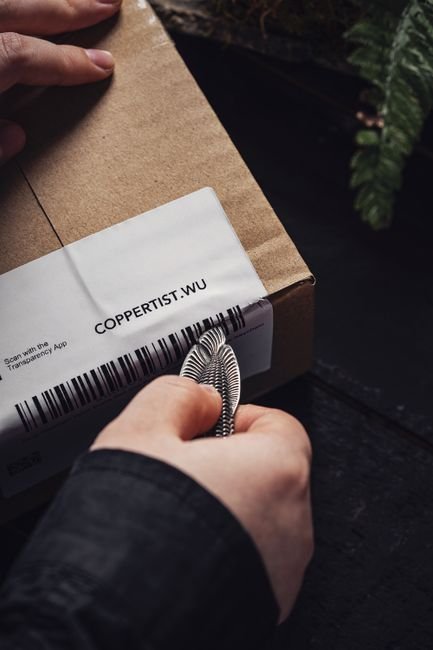
The Gear Spool Mighty Bar is a small stainless-steel pry tool aimed at the routine abuses that too often land on a folding-knife tip: breaking tape, lifting staples, scraping adhesive, nudging a paint-can lid, or turning a shallow slot in a pinch. Its appeal is not force multiplication so much as having a sacrificial, purpose-built edge already on the key ring.
This suits an everyday-carry setup where the tool must disappear among keys rather than occupy a dedicated pocket slot. Stainless steel is a sensible material for wet-pocket and keychain exposure, though its long-term corrosion behavior still depends on the unspecified alloy and on whether grime and salt are cleaned from the edges and attachment hole.
- Solid stainless construction suits routine scraping and light prying
- Key-ring format makes the tool more likely to be carried
- Dedicated edge can spare a folding knife from abusive chores
- Simple, uncoated-looking finish is easy to inspect for grime or deformation
- Short body offers little hand purchase or leverage
- Keys, split rings, and lanyard hardware can rattle or snag
- Bare stainless can show scratches despite resisting ordinary corrosion
- Not a substitute for a longer bar on tight clips or stubborn fasteners
For light daily interruptions, the Mighty Bar makes a persuasive case for separating prying from cutting. Its stainless, keychain-first format favors consistent carry and straightforward cleanup, but the same compactness limits grip, reach, and controlled leverage. It is most convincing when treated as a disposable-duty edge for small chores, not as a tiny replacement for a workshop pry bar.
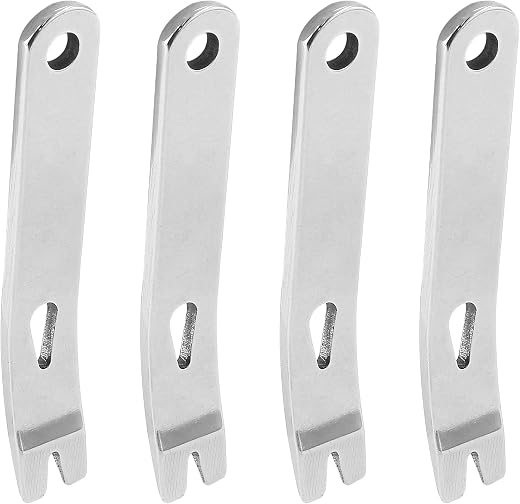
Biaungdo 3-inch set for distributed backup
Best for sharing or keeping spares handy
This is less a miniature pry bar to cherish than a four-tool placement system. The 3-inch stainless pieces make sense in the places where a light-duty separator is often missing: a glovebox kit, desk drawer, travel pouch, or a shared household repair bin.
At this size, the real advantage is not leverage; it is having a sacrificial, knife-sparing tool already near tape, batteries, trim clips, or package straps. A refined single bar remains the better choice for repeated hard use, but four basic bars can cover more small interruptions.
- Four matching bars support kit placement
- Three-inch format disappears into small pouches
- Stainless construction suits occasional carry
- Useful as dedicated non-knife openers
- Very short lever arm limits stubborn work
- Budget finishing can vary between pieces
- Narrow contact area can mark soft surfaces
- No stated heat-treatment specification
Inspect every bar on arrival: lay it on a flat surface for a twist or bow, run a fingertip along the edges for burrs, and compare tip thickness and bevels across the set. Any sharp stamping flash can be dressed lightly or assigned to rough chores; inconsistent sections or cracking near bends are reasons to retire a piece.
The set earns consideration when availability matters more than refined geometry. Four bars in separate kits can prevent improvised knife use far more often than one premium tool left elsewhere.
| Natural job | Strike cap | Tip and grip | Carry method | Loss or damage | ||
|---|---|---|---|---|---|---|
|
Lisle 35100 Compact Pry Bar With Strike Cap Vehicle trim | Retainers and seals | Square shaft, clip | Pocket clip | Keep dedicated | Check | |
| Small daily tasks | Flat, minimal grip | Key ring | One missing matters | Check | ||
|
Biaungdo Four-Piece Three-Inch Mini Pry Bar Set Backup kits | Distributed spares | Short flat bar | Several locations | One spare remains | Check |
A pocket bar can lift a lightly stuck paint-can lid when it is walked around the rim in small increments. The Lisle’s strike cap adds controlled persuasion for mechanical retainers, but tapping a paint lid can distort its rolled edge and compromise resealing.
For careful paint-can opening with a pocket pry bar, a broad protective shim spreads load beneath the tip. The Mighty Bar and the Biaungdo pieces are more likely to lack the reach and hand purchase for a stubborn lid; their compact edges suit light lifting, scraping, and opening tasks instead. Any nicked bevel or bent tip becomes more likely to mark trim or lids, so a cheap distributed spare still carries a practical replacement and surface-damage cost.
A pry bar is not automatically the safer substitute
It removes the exposed cutting edge, but it can still slip abruptly or turn a small movement into a hard impact.
A polished panel, rounded fastener, or cramped angle gives the tip little purchase. Keep the force line low and supported; a larger bar may offer more controllable leverage.
Small contact patches concentrate load and readily dent thin metal, mark paint, or crease soft plastics.
For trim and interior panels, a broad nylon wedge or dedicated clip tool spreads force across a much wider area.
Geometry matters more than carry convenience.
A scraper suits adhesive residue, a pick releases small tabs, and a longer bar reduces the force needed for stubborn clips. Selecting the matching tool limits both damage and uncontrolled release.
A retainer can release suddenly, sending the bar into paint, glass, knuckles, wiring, or nearby trim. A protected fulcrum, steady hand placement, and a tool sized for the resistance make that release easier to control.
Carry it without punishing the rest of the kit
A pocket pry tools bar needs a home as deliberately as a knife. The Gear Spool Mighty Bar fits on a keyring. Additionally, its exposed pry tip can abrade a phone, flashlight, or liner. A small sheath, heat-shrink cover, or key loop limits contact and rattle.
The Biaungdo bars fit organizers more easily when each slot isolates the working end. The Lisle’s longer body and strike cap favor a pouch or vehicle kit over loose-pocket carry.
Stainless resists ordinary moisture, not neglect. Wipe off adhesive, grit, battery residue, or road salt, dry the bar, then inspect the bevel for rolls and burrs before use.
A burr can mark trim before the bar begins to lift. When adding compact pliers to a repair kit, let the pliers pull clips, hold a shim.
Retrieve hardware, while the bar provides controlled separation rather than twisting either tool sideways.
Pocket Pry Bars: Common Questions
What length qualifies a tool for this pocket pry bar comparison?
Eligibility is strict: each featured tool must have a published overall length below 4 inches. Blade length, usable pry length, or a seller’s “pocket-size” label do not qualify on their own, and listings with unclear or conflicting measurements are treated cautiously.
Why is the Lisle 35100 included if it measures 5 inches?
The Lisle’s 5-inch length excludes it from a literal under-four-inch shortlist, but its square shaft, pocket clip, and strike cap make it a compelling compact option for vehicle trim and fastener work, so it’s noted as a vehicle-work outlier rather than a strict pocket pick.
Which pick suits minimalist everyday carry best?
The Gear Spool Mighty Bar is the top choice for minimalist everyday carry. It’s a small stainless-steel keychain tool meant to take routine abuse—tape, staples, adhesive, paint-can lids—that would otherwise land on a folding knife’s tip.
Can a small pry bar replace a full-size wrecking bar?
No. These compact tools can lift light clips, scrape residue, and start small gaps, but they are not substitutes for a full-size wrecking bar when real leverage or controlled force is needed, nor for a dedicated trim tool around finished panels and fragile clips.
How should a pocket pry bar be cared for between uses?
Stainless resists ordinary moisture but not neglect. Wipe off adhesive, grit, battery residue, or road salt, dry the bar, and inspect the bevel for rolls and burrs before use, since a burr can mark trim before the bar even begins to lift.
NEW – Lisle 35100 1/4" Pry Bar with Strike Cap and Deep Cary Pocket Clip. A Better EDC?
NEW – Lisle 35100 1/4" Pry Bar with Strike Cap and Deep Cary Pocket Clip. A Better EDC?
Pocket Pry Bars: Common Questions
What length qualifies a tool for this pocket pry bar comparison?
Eligibility is strict: each featured tool must have a published overall length below 4 inches. Blade length, usable pry length, or a seller’s “pocket-size” label do not qualify on their own, and listings with unclear or conflicting measurements are treated cautiously.
Why is the Lisle 35100 included if it measures 5 inches?
The Lisle’s 5-inch length excludes it from a literal under-four-inch shortlist, but its square shaft, pocket clip, and strike cap make it a compelling compact option for vehicle trim and fastener work, so it’s noted as a vehicle-work outlier rather than a strict pocket pick.
Which pick suits minimalist everyday carry best?
The Gear Spool Mighty Bar is the top choice for minimalist everyday carry. It’s a small stainless-steel keychain tool meant to take routine abuse—tape, staples, adhesive, paint-can lids—that would otherwise land on a folding knife’s tip.
Can a small pry bar replace a full-size wrecking bar?
No. These compact tools can lift light clips, scrape residue, and start small gaps, but they are not substitutes for a full-size wrecking bar when real leverage or controlled force is needed, nor for a dedicated trim tool around finished panels and fragile clips.
How should a pocket pry bar be cared for between uses?
Stainless resists ordinary moisture but not neglect. Wipe off adhesive, grit, battery residue, or road salt, dry the bar, and inspect the bevel for rolls and burrs before use, since a burr can mark trim before the bar even begins to lift.
Biaungdo 4 Pcs Mini Crank Crowbar, Stainless Steel, 3 Inch | Mini EDC Pry Bar Keychain, Multi-function Pocket EDC Tools, Survival Scraper Opener, For...
Features
| Brand Name | Biaungdo |
| Included Components | Opener |
| Number of Items | 4 |
| Manufacturer | Biaungdo |
| Manufacturer Part Number | QY220728-030 |
| ASIN | B0B82K45MK |
| Color | Silver |
| Material Type | Stainless Steel |
| Item Weight | 0.07 kg |
| Folded Size | 0.47 inches |
| Number of Pieces | 4 |
- Product Included: 4 pieces of 3 x 0.47"/7.6*1.2 cm (L*W) small pry bars. Perfect for your outdoor survival kit and enough quantity can meet the needs of you and your family.
- Preferred Material: Made of high-quality stainless steel eusure excellent rust resistance, strong and durable, not easy to deform and break.
- Compact Design: Small and lightweight, easy to carry and use, ideal for daily use, camping, hiking, mountaineering, and so on.
- Multifunction tool: Pry bars can be used as openers, rulers, decorations on key chains, and can also be used to wrap ropes. It is a necessity for outdoor and daily life and it can help you solve many problems
The Mighty Bar - Heavy Duty Keychain Prybar EDC Pry Bar for Every Day Carry Small Stainless Steel Key Chain Multitool Prybar for Keys - Made by Gear Spool
Features
| Brand Name | Gear Spool |
| Included Components | Key Holder |
| Model Number | MB |
| UPC | 734896618994 |
| Number of Items | 1 |
| Unit Count | 1 Count |
| Manufacturer | Gear Spool |
| ASIN | B09YSXWN3Q |
| Color | Silver |
| Material Type | Stainless Steel |
| Item Dimensions | 0.27 x 0.27 x 2.9 inches |
| Folded Size | 0.27 x 0.27 x 2.9 inches |
| Number of Pieces | 1 |
- SUPER STRONG - Milled from solid stainless steel.
- MADE TO USE - This purpose built pry bar is designed to be used. From scraping off an unwanted label, prying a staple, to turning a screw.
- MINIMALIST TOOL - You don't need to crowd your pockets with 20 different tools. This purpose built tool can accomplish most tasks in a pinch.
- FITS ANYWHERE - Fits directly on to most key rings. Put it on your keys, on a lanyard, on a pack or backpack, or even carry it loose in your pocket.
- WHAT YOU NEED - From opening boxes to splitting firewood. Do you really need anything else? The only prybar you really need.
Lisle 35100 1/4" Pry Bar with Pocket Clip and Strike Cap
- Pocket Sized Pry Bar with Many Vehicle Applications and Features a Strike Cap.
- For use when removing seals, electrical connectors, O-rings, plastic clips, plastic caps, interior trim pieces, metal, and plastic retainers.
- The strike cap in the top of the handle can be tapped with a hammer.
- The 1/4" square shaft pry bar has a pocket clip and measures 5" in length.




12 Comments
I bought one of those four-packs of tiny stainless bars a while back. Two were fine, one had a rough burr, and one was bent enough that it rocked on a table. So yes: inspect them before distributing them everywhere like tactical breadcrumbs 😂
Same experience with a generic mini-bar set. A few minutes with a file and sandpaper fixed the burrs, but I wouldn’t trust the really thin ones for anything that needs twisting.
Why not include the Gerber Shard? It seems like the obvious cheap keychain alternative to the Mighty Bar, and I see it recommended constantly.
I get that it has bottle-opener/keyring stuff going on, but for someone trying to stay under $10, is the Gear Spool really enough better to matter?
The Shard is a fair alternative, especially at its usual price. I left it out because this comparison was centered on purpose-built small pry bars and published sub-four-inch overall length, rather than multitools that happen to pry. The Mighty Bar’s simpler, dedicated edge and carry role made it easier to evaluate here; for occasional package staples or light scraping, though, a Shard can be perfectly reasonable.
The “blade-free doesn’t automatically mean safer” section is the part people skip. A little bar can launch out of a trim gap just as fast as a knife slips, particularly when someone is side-loading it because the tip is too thick.
I keep a thin plastic shim with my car-kit pry tools now. It looks a bit precious until you avoid putting a nice crescent-shaped mark in a door panel.
No Titan or Mayhew mini bar? Those are what my local hardware store carries, so I was surprised not to see either. Maybe they miss the published under-4-inch cutoff, but a quick comparison chart with the near misses would help.
Could you do a follow-up for apartment/toolbox use rather than pocket carry? I don’t need a keychain bar, but I do want something short for paint-can lids, small electronics housings, and stubborn furniture caps. The Lisle sounds more capable, although the strike cap seems like overkill for me.
That would be a useful comparison. For those jobs, I’d prioritize a wider, smoother fulcrum and a thin but not needle-like tip over a strike cap. The Lisle can work for caps and retainers, but for painted surfaces or electronics housings you would still want a protective shim and very controlled force; a small nylon trim tool may be the better first tool in part of that use case.
Glad you called out the Lisle as a 5-inch outlier instead of quietly treating it as a pocket bar. It’s the one I’d actually use on interior clips, but it would be miserable loose in my jeans pocket.
I’m mildly skeptical of keychain pry bars in general. Once keys, a light, and a fob are on there, the bar is always facing exactly the wrong direction and clacking against everything else.
Did you try any tip covers? The article mentions isolation, but I’ve never found one that doesn’t fall off after a week.
That skepticism is warranted—keychain carry is convenient, not automatically comfortable. A small section of snug vinyl tubing or heat-shrink tubing over the working end tends to stay put better than the loose rubber caps included with some tools. It does need periodic replacement, and it should come off before use, but it reduces edge contact and key-jingle considerably.
The “choose the bar that can be misplaced” advice is oddly practical. I’d rather have three inexpensive Biaungdos in the glove box, desk drawer, and bike bag than one fancy little bar I’m afraid to use.