A carrier earns its place only when it supports the shotgun, shells, and reload method at hand.
A receiver-mounted carrier may keep ammunition close yet alter handling or interfere with the fore-end on some variants. A competition caddy can enable faster load-two or load-four techniques, but adds belt bulk and demands practice. Elastic cards simplify replacement, although retention can change with shell dimensions, storage conditions, and wear.
Confirm the exact shotgun model and gauge first, then test carrier clearance, shell retention, and the intended reload technique with dummy rounds. For long-term storage, follow ammunition-maker guidance rather than leaving shells compressed in elastic indefinitely.


Common carrier types
Receiver-mounted carrier
A rigid or semi-rigid holder attached beside the receiver. Often called a side saddle, it keeps shells close to the loading port but may affect control access or firearm balance.
Buttstock carrier
A sleeve, pouch, or fixed holder positioned on the stock. It adds ammunition without occupying receiver space, though fit and cheek placement require attention.
Elastic shell card
A removable panel with elastic loops, commonly secured to a hook-backed mounting plate. Loaded cards can be exchanged, but loop tension may change with wear or storage.
Belt caddy
A body-mounted holder designed to present shells from the belt. Orientation and retention vary depending on whether it supports deliberate loading or faster competition-style techniques.
Chest rig or pouch
A body-mounted system carrying loose shells, shell cards, or trays. It generally offers more capacity than a firearm-mounted carrier but requires a longer reach.
Turn the intended use into requirements
- Activity and capacity
Start with the likely activity: hunting, home storage, competition, training, or field carry. Treat stated capacity as a manufacturer specification, then decide whether that load justifies the added weight and space.
Look forEnough documented capacity for the task without unnecessary bulk.AvoidSelecting maximum capacity before considering movement, balance, or storage. - Firearm fit and control access
Confirm the exact shotgun model, receiver pattern, stock dimensions, and mounting hardware. Installation should not obstruct the safety, action release, loading port, ejection path, cheek position, or stock adjustment.
Look forModel-specific compatibility and clear access to every control.AvoidFit claims that omit receiver, stock, or control-clearance details. - Retention and ammunition compatibility
Manufacturer listings should identify supported gauge and shell dimensions. Retention with different hull materials, brass heights, and orientations requires a described test using inert shells first, followed by controlled range verification.
Look forSecure retention across the exact ammunition carried and normal movement.AvoidAssuming one successful fit proves compatibility with every load. - Loading method and evidence
Shell-up and shell-down orientation suit different reload motions. Compare methods through a repeatable drill while recording drops, access failures, control interference, and loading time rather than relying on promotional speed claims.
Look forA loading path that remains consistent under realistic clothing and positions.AvoidUndocumented performance claims or drills that ignore safety procedures.
Fixed side saddles and receiver holders
A fixed side saddle keeps reserve shells in a consistent location, which can simplify occasional emergency or field reloads. A low-profile receiver holder offers similar access with less protrusion, but usually trades away capacity or space between shells.
Before installation, confirm:
- The carrier is specified for the exact shotgun model and gauge.
- The forend clears it throughout the complete action cycle.
- Safety, bolt release, loading port, and disassembly points remain accessible.
- Added width does not interfere with storage, slings, or the firing-hand position.
Fixed carriers make more sense when shells stay aboard and are replenished individually. If loaded carriers must be exchanged frequently, a detachable shell-card system may be more practical. After mounting, cycle the unloaded shotgun and check fastener tension according to the carrier and firearm manufacturers’ instructions.
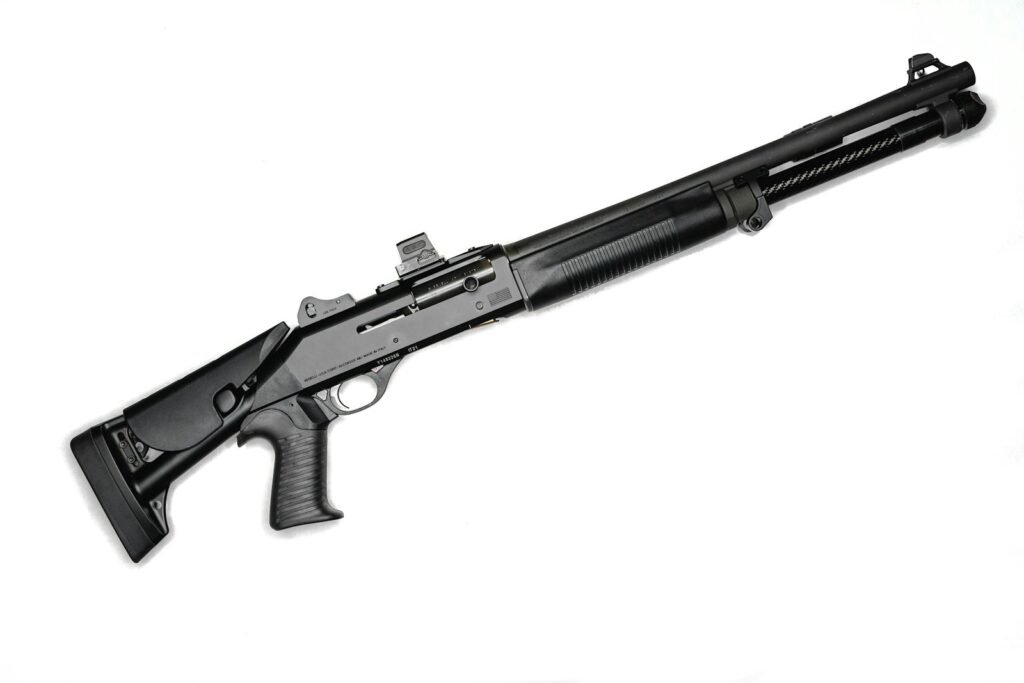
For selected Mossberg 12-gauge shotguns
This receiver-mounted carrier is listed for six shells and uses an aluminum base with a polymer body. The seller names Mossberg 500 and 590 compatibility but warns that some variations may not fit, so exact model and forend clearance require confirmation.

Buttstock carriers for modest reserves
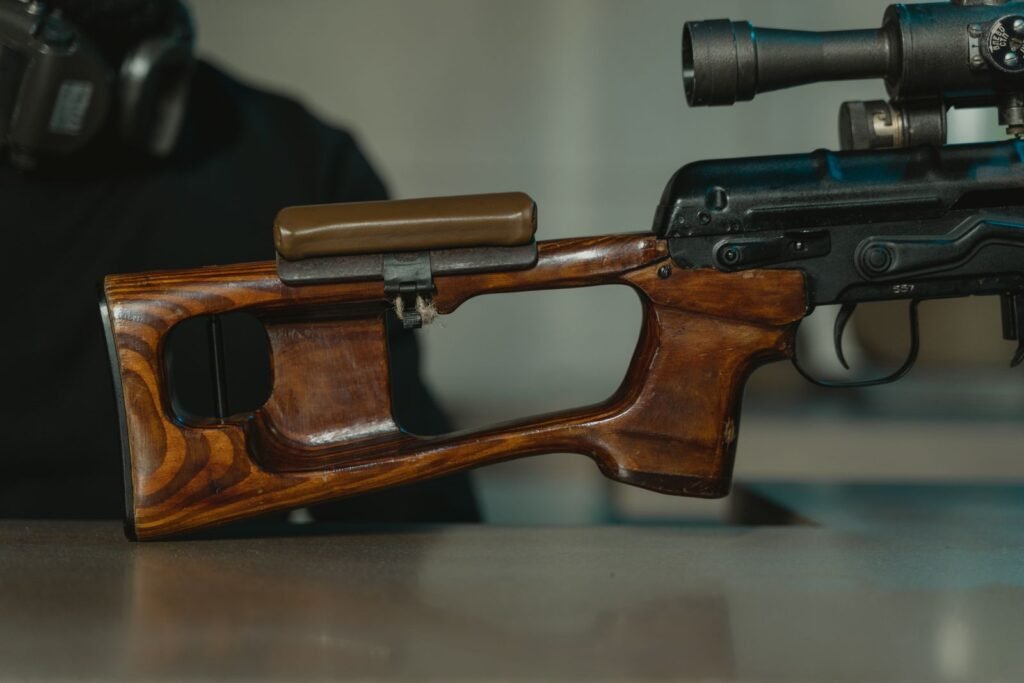
A buttstock carrier keeps several spare shells on the gun without occupying receiver space. It can suit hunting, field, or range use, where a modest reserve may matter more than rapid reloads. Access usually requires more hand movement than a receiver-mounted carrier.
Fit must be checked on the exact stock. With the shotgun unloaded, confirm that the carrier:
- preserves cheek weld and eye alignment;
- cannot rub or strike the face during recoil;
- clears the sling, swivels, and recoil pad;
- resists sliding on the stock’s taper; and
- leaves adjustment controls and stock travel unobstructed.
Load the intended shells, then shoulder the unloaded shotgun from normal positions while wearing expected field clothing. Shifting, snagging, blocked pad access, or altered facial contact indicates that a different carrier—or fewer shells—is warranted.

Belt caddies for competition reloads
Belt layout should follow the shooter’s established technique. Quad-load caddies present shells in groups of four, dual-load setups favor pairs, and conventional loading generally benefits from individually accessible shells. Mixing layouts without practice can create hesitation under time pressure.
Useful capacity comes from the stage rather than the caddy’s maximum. Check the match rules, starting condition, stage round count, and permitted ammunition placement; then add a modest reserve for misses or make-up shots.
Place the first reload where the support hand reaches naturally. Additional caddies consume belt space and may protrude enough to catch barricades or shift while kneeling. During unloaded practice with inert shells, test running, prone transitions, and awkward positions for shell dislodgement before competition.
Configured for load-two or load-four techniques
This eight-shell caddy accepts listed 2¾- to 3-inch 12-gauge shells with close spacing. The manufacturer lists mounting options for 2-inch belts, MOLLE, Blade-Tech Tek-Lok, and Safariland ELS, allowing placement to suit an established reload path.

Detachable shell cards
Shell cards hold a loaded group of shells and attach to a receiver-mounted loop panel. An empty card can be peeled away and replaced, while spare cards ride on compatible gear.
Nominal capacity does not establish ammunition fit. Check the manufacturer’s compatibility information, then evaluate each variable separately:
- Gauge: Use only the gauge named by the card maker.
- Shell length: Confirm the exact loaded-shell length is supported.
- Loop tension: Shells should stay secure during movement but release without excessive force.
- Wear: Elastic can loosen with loading cycles, heat, and storage; inspect it regularly.
- Brass orientation: Brass-up or brass-down changes the grasp and reload motion, so test both safely with inert shells.
Replace a card when shells slip, elastic frays, stitching fails, or the backing no longer attaches securely.
Detachable receiver-mounted carrier
This card uses elastic loops, hook backing, and an adhesive loop panel for receiver mounting. Esstac specifies 12-gauge shells only; shell length compatibility should still be confirmed before loading.


Mounting methods and compatibility
Adhesive-backed hook-and-loop panels require no receiver modification and allow loaded cards to be exchanged. Their reliability depends on surface preparation, adhesive compatibility, temperature, and sufficient flat contact area; removal may also affect some finishes.
Screw-mounted saddles can provide a stable platform when the receiver has the specified factory-threaded holes. Screw length and torque must follow the carrier and shotgun manufacturers’ instructions, because incorrect hardware can contact internal parts or damage threads.
Receiver-pin replacement mounts substitute model-specific pins or fasteners for factory parts. They avoid drilling, but compatibility must cover the exact shotgun model and generation—not merely the gauge or receiver family.
Other no-drill designs include stock sleeves, clamps, and rail-mounted carriers. These may be convenient, but each introduces possible movement or clearance problems. Before use, confirm that the carrier and shells do not obstruct:
- The action and forend through their full travel
- The safety, bolt release, or other controls
- The loading and ejection ports
- The trigger guard, sling, optic, or stock adjustment
With the shotgun unloaded and ammunition removed from the work area, cycle the action and operate every control. Stop if the mount binds, loosens, or contacts moving parts.
Test the carrier before relying on it
-
Confirm an unloaded shotgun
Remove all live ammunition from the work area. Visually and physically verify the chamber, magazine tube, and carrier are empty before installation checks.
-
Inspect the installation
Confirm model compatibility and follow the maker’s instructions. Check specified fastener tightness, adhesive contact and lifting edges, receiver clearance, safety access, sling movement, and stock adjustment.
-
Check fit and handling
Load only manufacturer-approved inert shells of the intended gauge and length. Test retention with different planned shell weights and orientations, then confirm the carrier does not disturb the optic mount, controls, shoulder placement, or cheek weld.
-
Cycle inert shells
Point the shotgun in a safe direction and cycle the action according to its manual. Watch for contact with the loading port, ejection path, action bars, fore-end, and mounted accessories.
-
Conduct lawful range testing
At an authorized range, begin with a small number of the intended loads. After each string, inspect for fastener movement, carrier shift, loosening shells, torn elastic, lifting adhesive edges, or a changed cheek weld.
-
Repeat under real conditions
Recheck retention after recoil, temperature changes, storage, and repeated loading. Include every shell length and load type intended for use; replace worn elastic or damaged attachment parts rather than compensating with improvised modifications.
Record fastener position or witness marks only where the manufacturer permits them; use the specified inspection and torque guidance.
Inert-shell cycling and live-fire testing are separate activities. Never mix dummy shells with live ammunition, and follow the shotgun, carrier, and range instructions throughout testing.
- Mark mounting screws or fasteners so movement becomes visible.
- Record the ammunition, shell orientation, and carrier position used in the trial.
- Reinspect retention after storage, cleaning, and repeated loading cycles.
Start with one primary activity. A fixed receiver carrier often suits consistent onboard access; detachable cards support rapid carrier changes; buttstock sleeves add a modest reserve; and belt caddies serve technique-driven competition reloads. Eliminate any option that obstructs controls, alters a stable cheek weld, interferes with the sling, or cannot retain the intended shells during normal movement.
Trial one configuration at a time on the exact shotgun, using the intended ammunition. Check loading, unloading, firing controls, action movement, shell retention, and mount security under unloaded practice before progressing to an appropriate live-fire range. Continued use should depend on repeatable function, preserved safe handling, and consistent retention—not convenience alone.
Carrier choice follows from the load. Working out which 12-gauge buckshot fits a home-defense role fixes shell length, weight and how many spares are genuinely useful, and every system below inherits those constraints.
Tactical Scorpion Gear TSG-SCM Sidesaddle Shotshell Carrier Mossberg 500 590 590da 12 Gauge Shotguns
Features
| Brand Name | Tactical Scorpion Gear |
| Manufacturer | Tactical Scorpion Gear |
| Number of Items | 1 |
| UPC | 711717775388 |
| Manufacturer Part Number | TSG-SCM |
| ASIN | B00Y72JH42 |
| Number Of Pockets | 6 |
| Closure Type | open top |
| Pocket Description | Slip Pocket |
| Number of Compartments | 6 |
| Color | Black |
| Material Type | Aluminum |
| Item Weight | 6.88 ounces |
- *【FINE CRAFTSMANSHIP】The combat-proven aluminum based polymer six shotshell carrier is a step forward in design and technology. State of the art design, injection molding and space age high-density plastics are combined to create this which cannot be duplicated in any other material. Made from USA produced polymers.
- *【MODULAR】Modular: mounts directly to the side of the weapon for quick access to shells
- *【COMPATIBLE】Weapon compatibility: Mossberg 500, 590 , 590da ect 12 gauge shot. Maverick 88guns
- *【COMPLETE / EASY INSTALL】Complete with mounting screws and allen wrench
- *【LIFETIME WARRANTY】Designed for military & police personnel. Great for civilians & off duty officers.
Johnny Clip 2x4-12 Gauge Caddy-Quad Loader-Speed Loader for 3 Gun Practical Shotgun-12 Gauge ShotShell Carrier Holder
Features
| Brand Name | J&L Dynamics, LLC |
| Manufacturer | J&L Dynamics, LLC |
| Number of Items | 1 |
| UPC | 713803681474 |
| Included Components | two 8/32 aluminum female posts for mounting SafariLand ELS |
| Model Number | Johnny Clip 2x4 |
| Manufacturer Part Number | Johnny Clip 2x4 |
| ASIN | B01HOPBR8C |
| Number Of Pockets | 8 |
| Closure Type | Buckle |
| Pocket Description | 8 pocket |
| Hand Orientation | Ambidextrous |
| Number of Compartments | 8 |
| Color | Black |
| Material Type | Nylon Polymer |
| Item Weight | 2.4 ounces |
- * QUICK & EASY RELOADS: Optimized for both LOAD 2 and LOAD 4 shotgun shell loading techniques, making it ideal for beginners learning the ropes and experts demanding peak performance.
- * SUPERIOR SHELL RETENTION: Integrated shell stops provide precise, repeatable shell alignment and superior retention, so your ammunition stays secure until you need it.
- * HASSLE-FREE ATTACHMENT: Features integrated belt loops and MOLLE compatibility straight out of the box; simply attach to your gear and go—no extra hardware needed.
- CUSTOMIZE YOUR ANGLE: Unlock maximum rotation and achieve your ideal, precise draw angle by using popular attachments like BladeTech Tek-Lok and SafariLand ELS (mounts sold separately).
- AFFORDABLE 24-ROUND RIG: Combine three Johnny Clip 2x4s to create the most affordable 24-round chest or belly rig on the market, giving you a competitive edge without breaking the bank.
Esstac 7 Round Tearaway Shotgun Shell Carrier Cards for 12 Gauge with Hook & Loop Backing
Features
| Brand Name | Esstac |
| Manufacturer | Esstac |
| Number of Packs | 1 |
| Number of Items | 1 |
| Manufacturer Part Number | 7.SC.12C-MLC |
| ASIN | B0BFBV1CPS |
| Number Of Pockets | 1 |
| Closure Type | Hook and Loop |
| Pocket Description | Slip Pocket |
| Number of Compartments | 1 |
| Color | Multicam |
| Material Type | Nylon, Polyester |
| Item Dimensions L x W x H | 7"L x 0.5"W x 2"H |
- Features high strength elastic and tear away loop
- Hook fastener on back of the card is perfect for mounting on chest rigs, vests, packs, and other tactical gear
- Includes DuraGrip Adhesive Loop Backing for side saddle mounting
- Designed for 12-gauge shells (not included)
- Perfect for hunting, shooting, and other outdoor activities
- Dimensions: 7"x2"
- Made in USA