
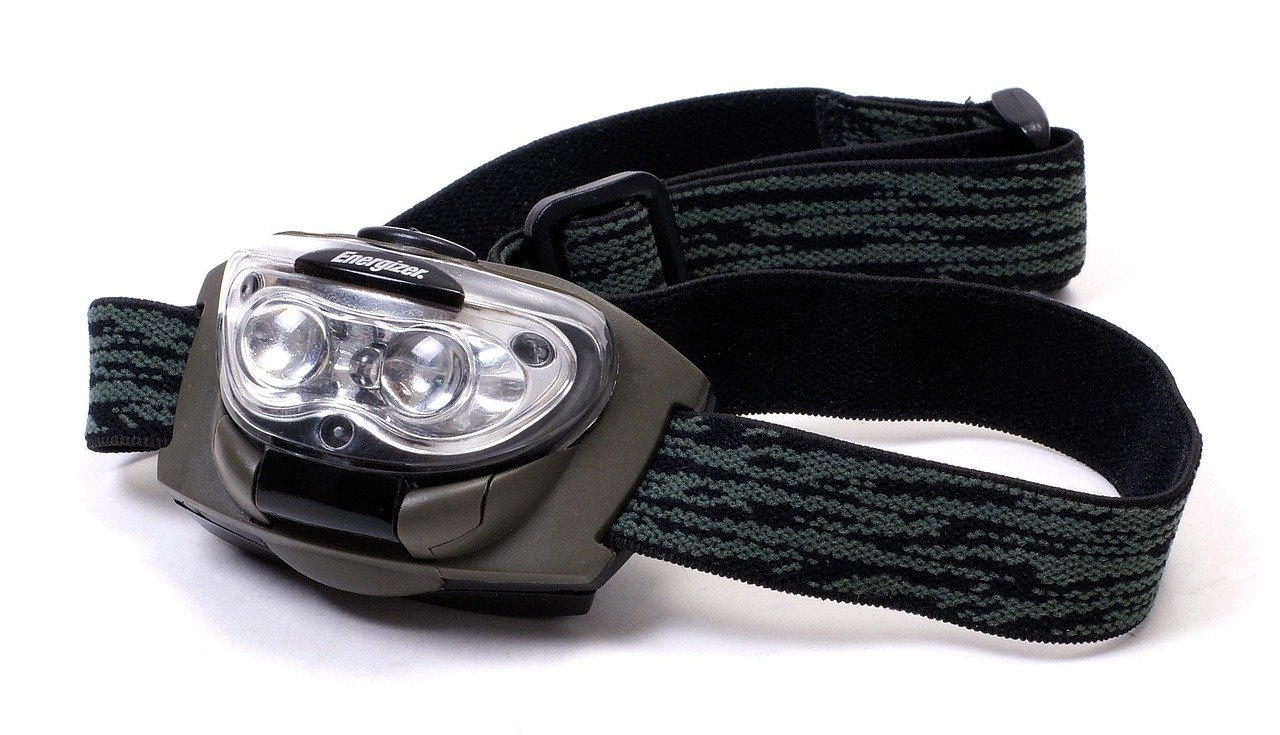
A headlamp rarely causes the hold-up; its batteries are what security staff and airlines assess.
Landing after dark with a trailhead, campsite, or power outage ahead is exactly when a headlamp belongs in the cabin bag. The lamp itself is generally straightforward. What changes the screening and airline calculation is stored energy: lithium-ion rechargeables, loose spare cells, and large battery packs require more care than an ordinary AAA-powered lamp.
As a practical rule, installed cells travel more cleanly when the headlamp is switched off and protected against accidental activation. Spare lithium batteries are typically kept in carry-on baggage, with terminals covered or each cell isolated in a case. A USB charging cable is unremarkable; the power bank feeding it is treated as a spare lithium battery and normally stays in the cabin as well. Airline limits can add stricter details.
- A battery capacity of 100 Wh or less is commonly accepted in carry-on baggage; airline-specific rules still control.
- A headlamp’s lockout mode can prevent an unintended switch-on in a packed bag.
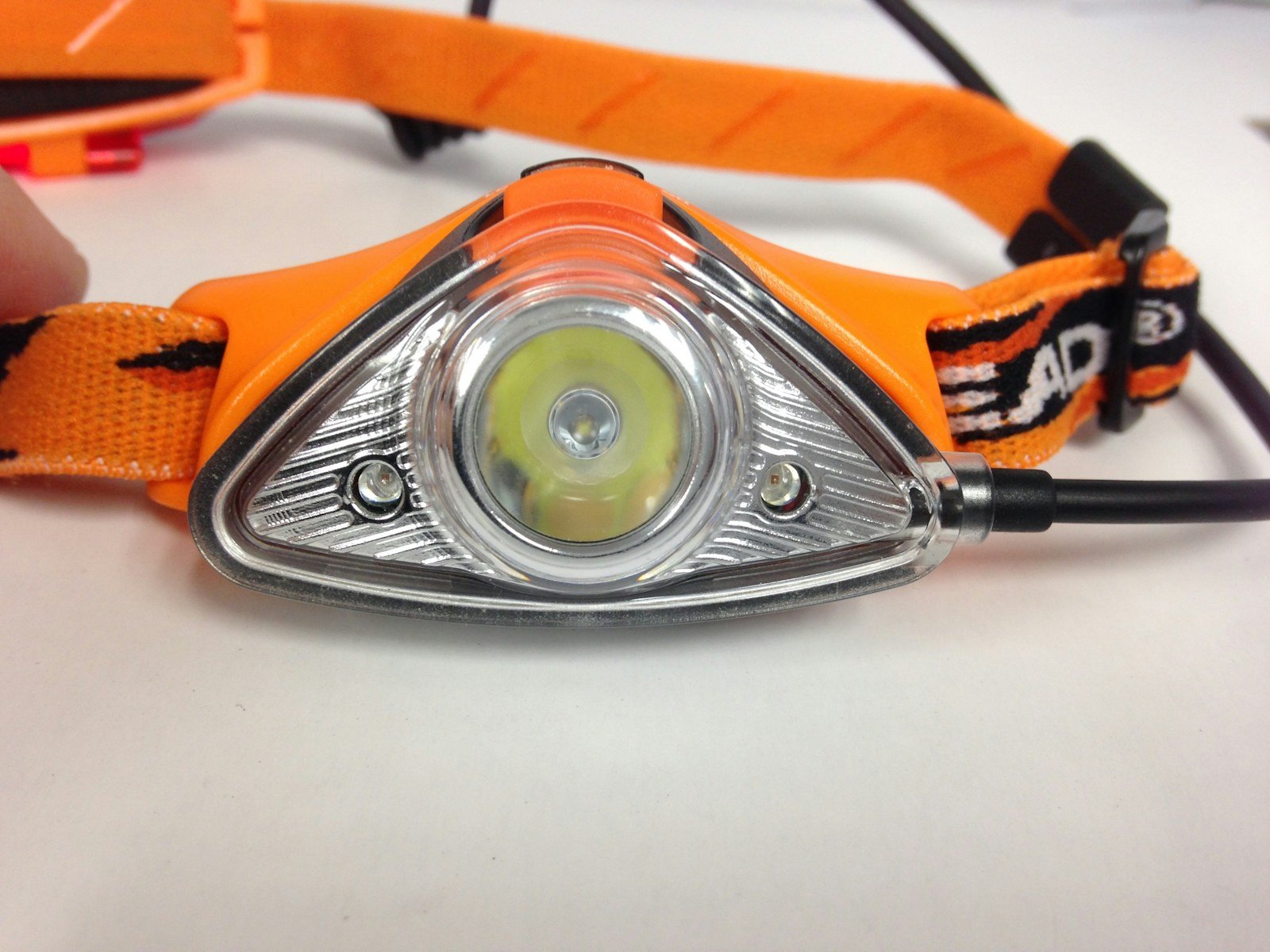
The short version of the headlamp carry-on baggage rules: an ordinary headlamp with its battery installed is fine in either carry-on or checked baggage, but spare lithium-ion cells, removable battery packs, and power banks need to travel in the cabin, not a checked bag. TSA and most airlines draw the line at watt-hours rather than lumens, so a bright lamp with a modest built-in cell can actually be less restricted than a dimmer one paired with a large external pack. Locking the switch or removing a spare battery from contact with metal objects covers most of what screening staff and airline crews actually check before a flight.
Should a Headlamp Go in Carry-On or Checked Baggage?
Can a headlamp usually go through TSA screening?
Yes. A headlamp is generally acceptable in carry-on baggage, including one with its battery installed. Screening officers can still make case-by-case decisions if the item appears damaged or unusual.
Is checked baggage allowed?
Often, yes, when the battery is installed in the device and protected against accidental activation. Locking the switch or removing the battery from contact helps prevent the lamp turning on inside a bag.
Why is carry-on usually simpler for rechargeable headlamps?
Rechargeable lithium-ion cells are more consistently accommodated in the cabin, where a battery incident can be noticed. Carry-on also avoids the risk of a checked bag being delayed, mishandled, or subject to a stricter carrier policy.
Do TSA rules settle the question for every flight?
No. TSA governs U.S. security screening, while airlines may impose tighter limits and destination countries may apply their own restrictions. Before packing, consult the carrier and choose a headlamp suited to air travel, especially when it uses a removable battery pack.
What Battery Rating Matters for a Headlamp?
Does the 100 Wh rule apply to every headlamp battery?
No. The familiar 100 watt-hour reference is for rechargeable lithium-ion batteries. Disposable lithium-metal cells are assessed by lithium content instead; alkaline and NiMH cells are generally handled as ordinary dry batteries when properly installed or protected.
What changes when the battery is installed rather than spare?
An installed battery remains inside the headlamp, with the device protected from accidental activation and damage. Spare lithium batteries—including a removable proprietary pack—belong in carry-on baggage, with terminals covered or each battery placed in a protective case.
What about a pack above 100 Wh?
Packs from 101 to 160 Wh commonly require airline approval and are subject to quantity limits; they are unusual for a conventional headlamp. A pack over 160 Wh is generally not permitted in passenger baggage, so its manufacturer label and airline policy matter before travel.
Do lumen ratings affect the battery decision?
No. Screening rules follow chemistry, watt-hours, lithium content, and whether the cell is installed or spare—not advertised brightness. Lumens versus beam throw for travel use can still matter when choosing a practical headlamp, but neither measurement changes its battery classification.
How should loose lithium batteries and power banks be packed?
-
Keep every spare lithium-ion cell in cabin baggage
Spare 18650 cells, removable headlamp packs, and power banks generally belong in carry-on baggage, not a checked suitcase. Cabin crews can respond more quickly to a battery incident in the cabin.
-
Protect each cell’s terminals separately
Use the original plastic case, a purpose-made battery caddy, or nonconductive tape over exposed terminals. Do not allow loose cells to share a pocket with keys, coins, tools, or one another.
-
Separate cells from the headlamp
A battery locked inside a headlamp is less likely to bridge its terminals against metal objects. Once removed, the same cell becomes a spare and needs individual short-circuit protection.
-
Pack a power bank as a separate battery item
A power bank is not merely a charger: it contains lithium-ion cells and is normally treated as a spare battery. Keep it in the cabin, protect its ports from contact with metal, and check its watt-hour marking and airline limits.
-
Make the rating easy to verify
Keep watt-hour labels readable and avoid improvised multi-cell packs without clear markings. An agent or airline may need to confirm capacity before departure.
A headlamp’s USB charging cable is not a substitute for terminal protection on a removable battery.
A loose lithium-ion cell can discharge rapidly if its positive and negative terminals touch a conductive object—or terminals on another cell—through coins, keys, foil, or exposed metal. That fault can create intense heat and may damage the cell.
A battery installed in a headlamp has its terminals enclosed by the device. A power bank has enclosed cells, but it is still a separate lithium-ion battery for airline packing purposes, rather than part of the headlamp.
Can a Headlamp Be Packed in Checked Baggage?
Is a headlamp allowed in checked baggage?
A headlamp with its battery installed is generally treated more favorably than a loose spare cell. Still, carry-on packing is often less troublesome because the item remains accessible if screening or airline policy requires review.
How can accidental activation be avoided?
Engage the headlamp’s electronic lockout if it has one; otherwise, remove the battery only when that is permitted and practical. A recessed switch can still be pressed by tightly packed clothing, so placing the lamp in a rigid case or protective pouch adds useful insurance.
Does the headlamp need physical protection?
Cushioning protects the lens, hinge, and battery compartment from impacts that can occur in checked bags. Keep it away from heavy objects, and do not pack it loose beside metal tools or items that could damage the housing.
Why do integrated-battery headlamps deserve extra attention?
A sealed, built-in lithium-ion battery cannot be removed and may be harder for staff to inspect quickly. Airline instructions matter especially for these lights, since carrier rules can be more restrictive than general TSA guidance and can change.
Three Headlamp Assumptions That Cause Packing Mistakes
Brightness is not an aviation battery limit.
A 1,500-lumen lamp with a small rechargeable cell may present less battery capacity than a dimmer model with a large external pack.
Most USB-rechargeable headlamps contain lithium-ion cells.
USB describes the charging connection; it does not identify the battery chemistry, capacity, or applicable carriage conditions.
Airlines, foreign aviation authorities, and security agencies can impose additional limits.
Rules may differ on international itineraries, codeshares, high-capacity packs, and larger quantities of spares.
A 60-second headlamp packing check
-
Identify the battery
Confirm whether it uses alkaline, NiMH, lithium-ion, or a removable battery pack; note any watt-hour marking.
-
Separate and insulate spares
Keep spare cells in their retail sleeve, a battery case, or individual terminal covers.
-
Prevent switch-on
Use the lockout mode, remove a removable battery, or shield the switch so the lamp cannot activate in transit.
-
Choose the stricter bag rule
Place loose lithium batteries and power banks in carry-on baggage; treat airline limits as controlling where they are tighter.
-
Verify unusual packs
For large, proprietary, damaged, recalled, or unmarked batteries, check the operating airline’s current policy before travel.

The practical takeaway
- A standard headlamp is generally uncomplicated when its battery type is known and spares are protected.
- Airline-specific confirmation matters most for atypical lithium packs, not ordinary small cells.
Pack to the strictest applicable airline and destination rule, not merely the general screening guidance. A locked, protected headlamp and properly isolated spare batteries help make inspection and transport straightforward.





7 Comments
Really useful distinction between an installed battery and a spare. One thing I’m still unsure about: if my headlamp takes three AAA lithium batteries, can I leave them installed and put the lamp in checked luggage, or do airlines treat those differently from a rechargeable lithium-ion pack?
In most cases, consumer AA/AAA lithium-metal cells installed in a device can be checked, provided the device is protected from accidental activation and the airline permits it. The practical difference is that removable spare AAA cells need their terminals protected if carried loose. Because airline policies can be more restrictive than general TSA guidance, check your carrier’s battery page before departure.
I’ve flown with AAA headlamps in checked camping gear a bunch of times. I switch the lamp to lockout, or remove one battery if it has no lockout, and put the extras in a little battery case in my carry-on.
What about a headlamp with a small built-in battery that charges by USB-C, but no watt-hour label anywhere? The article says to identify the rating, which makes sense, but some cheaper lights only list something vague like “1200 mAh.”
Would you calculate it from the voltage if you can find it in the manual, or is it better just to carry it in the cabin and not overthink it?
Yes—if the manual lists voltage as well as capacity, you can estimate watt-hours: Wh = volts × amp-hours. For example, 3.7 V × 1.2 Ah is about 4.4 Wh, far below the common 100 Wh threshold. If the labeling is incomplete, keeping that small built-in-battery headlamp in your carry-on is the simplest approach; save a manual screenshot or product page in case you need to confirm the specs.
I do this with my old rechargeable lamp. The manufacturer PDF says 3.7V even though the lamp itself only says mAh. Never been asked about it, but having the PDF saved offline is a good little travel habit.
I appreciate the lockout suggestion. My concern is less TSA and more the baggage handler finding my headlamp has turned itself on halfway across the country, then arriving with a cooked battery and a very warm sock. Happened once with a bike light—lesson learned.