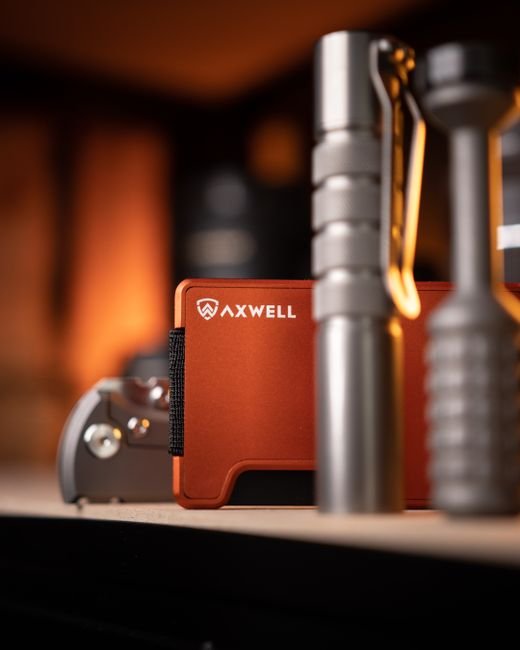
A brighter beam can solve more problems — until heat and runtime make it unusable.
Midnight, fumbling for the door: a slim keychain light slips into a pocket, or a compact 1200‑lumen torch thumps along in a jacket. The former is easy to carry, rarely gets hot and usually offers long usable runtime for small tasks; the latter delivers powerful beams for distance, signaling or quick roadside repairs but brings heat, heavier weight, louder battery drain and the risk of forced step‑down as electronics throttle output.
Those trade-offs are concrete: comfort, pocketability and stealth versus raw capability, thermal limits and real-world runtimes. That tension is why a practical decision method is necessary.
What lumens measure and related metrics
- Lumens
Lumens measure total luminous flux emitted by a source across all directions. They describe overall light output but do not indicate beam distance or concentration.
- Candela / Throw
Candela quantifies luminous intensity in a specific direction and is the basis for beam throw claims. Peak candela determines advertised range but can mislead without the beam profile.
- Lux (Illuminance)
Lux is lumens per square meter — the light that actually lands on a surface — and correlates with usable illumination at a point. Use lux to compare how well targets are lit at distance.
- CRI (Color) and Beam Pattern
CRI (Color Rendering Index) rates color fidelity; higher CRI improves contrast and object recognition. Beam pattern (hotspot, corona, spill) controls lumen distribution — a balanced pattern often beats raw lumen numbers.
- Common marketing pitfalls
Manufacturers may quote peak turbo lumens, short-duration outputs, or unverified candela while omitting thermal throttling, battery sag, or beam efficiency. For a tactical-focused primer see what is a tactical flashlight.
How perception and physics change lumen meaning
Why doubling lumens rarely feels double
Understanding light and lumens
Light falling on a surface follows the inverse-square law: illuminance (lux) drops with the square of distance.
Doubling distance cuts illuminance to one quarter.
Keeping the same lux at twice the distance requires four times the lumens.
Beam shape controls how those lumens are distributed.
For lumens for everyday carry, a tight beam yields higher lux on target than a wide flood.
Human brightness perception is not linear. The Weber–Fechner principle means perceived brightness grows roughly with the logarithm of physical light intensity. Practically this means a twofold increase in measured lumens (or lux) yields a noticeably smaller step in subjective brightness. Observers typically need on the order of 10–20% change in luminance to notice a difference, and much larger multipliers to call something “twice as bright.”
Examples and takeaways:
- 100 lm spread over 1 m² = 100 lux; spread over 4 m² = 25 lux — same lumens, big perceived change.
- To double perceived brightness, more than double the lumens may be required, especially at distance.
- For long range, prioritize candela/beam intensity; for near-area work, prioritize lumen concentration and beam pattern.
Understanding both the physics and the eye explains why raw lumen figures are an imperfect guide to real-world performance.
Why beam shape often beats raw lumens
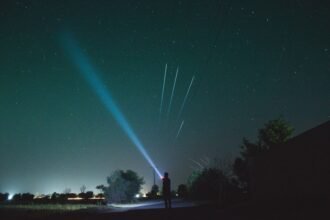
Lumens for everyday carry measure total light output, but how that light is directed governs usefulness. A narrow, high-candela beam concentrates light to reach far distances. A wide, low-candelabra spill illuminates nearby scenes more evenly. Refer to beam throw vs brightness for a deeper comparison.
Hotspot vs wide spill — quick comparisons
- Hotspot (tight beam): bright central hotspot, long throw, useful for spotting, navigation across open terrain, and signaling. Less useful for reading maps at arm’s length.
- Wide spill (flood): broad, even illumination, better for close work, reading, and peripheral visibility. Falls off quickly with distance.
- Hybrid beams: combine a modest hotspot with surrounding spill; often the best EDC compromise.
Choose beam shape by primary use: prioritize candela/throw for distance-focused tasks and spill for close-range tasks. Practical testing in the intended environment reveals the true performance more reliably than lumen claims alone.
Match lumen bands to common EDC tasks
From peak lumens to usable light
Advertised lumens are a peak snapshot under ideal conditions. Battery capacity, driver regulation and thermal management determine how long a light can actually deliver that peak — and how quickly it falls. Regulated drivers hold output constant until the battery nears depletion; unregulated designs fall with cell voltage, so a 1000-lumen claim may drop to 400 lumens within minutes.
Thermal limits force a deliberate drop in output: many lights offer a short “turbo” burst, then step down to a sustainable plateau to protect LEDs and batteries. Learn to read runtime curves: the x-axis shows time, y-axis shows lumens (or percent output). Look for a rapid spike followed by a long plateau — that plateau is the practical brightness for tasks.
For deeper context, consult how runtime affects usable lumens. When judging EDC lights, prioritize sustained-output curves and clear turbo-duration specs over single-number peaks.
Check turbo duration: how long the peak lasts.
Find the sustained plateau: practical usable lumens.
Note battery type/capacity: higher mAh = longer plateau.
Watch for step-downs: sudden drops indicate thermal or regulation limits.
Cells, capacity and usable lumens
Size versus sustained performance
Small cells (AAA/AA, 10440/18350) excel at portability and light weight, but usually have lower continuous current capability and smaller thermal mass. That limits sustained lumens. A tiny cell can hit a high peak briefly, then the driver steps down as voltage sags or heat builds. Larger cells (18650, 21700) deliver higher continuous current and longer runtime, but add bulk and weight.
Choose by the constraint that matters most. Key tradeoffs:
- Runtime: larger capacity wins for long-use tasks.
- Peak capability: high-discharge cells enable higher initial output.
- Portability and ergonomics: thin bodies and short lengths favor everyday carry.
Heat, host design and cell family usually determine usable lumens more than the LED emitter itself. Good thermal paths, a driver that supports consistent current, and a cell with adequate continuous discharge rating keep output from collapsing. For a deeper comparison, see the specifics on lumens tradeoffs with 18650 batteries.
For sustained >500 lumens, favor larger high-discharge cells and a metal host with good heat sinking.
For discreet EDC under 300 lumens, prioritize small cells and compact ergonomics.
Read runtime curves and continuous discharge specs — they predict usable light better than peak lumen claims.
Practical checklist for choosing an EDC light
-
Translate tasks and distances into a sustained-lumen target
List typical tasks and the approximate working distance for each, then pick a sustained output band that covers the farthest frequent task. As a rule of thumb: low dozens of lumens for reading/close work, tens–low hundreds for urban navigation and object ID, and several hundred+ for short outdoor range—always plan for sustained output, not peak bursts.
-
Pick form factor and battery family to match the target band
Choose a size that will carry the thermal and energy needs: tiny keychain/pen lights for low bands, single 18650/21700 or 2×CR123/AA for mid bands, multi-cell platforms for high sustained output. Favor common cell formats if field replacement matters.
-
Prioritize beam shape and candela for the task mix
Select hotspot-heavy beams for throw and high candela, wide spill for near work, or hybrid optics for mixed tasks. Match beam profile to the primary task rather than chasing raw lumens.
-
Verify regulation, thermal control and UI behavior
Confirm the driver provides regulated, predictable output and has thermal step‑down rather than erratic drop-offs. Check UI for quick access to needed modes and for a reliable lockout to prevent accidental activation.
-
Shortlist candidates and validate runtime curves
Compare manufacturer runtime graphs and look for sustained-output specs with the battery specified. Expect real-world sustained output to be lower; prefer data from independent tests or user logs before final selection.
When possible, test a candidate in the actual use environment with the intended battery to confirm sustained performance.
Frequently Asked Questions
How many lumens do I actually need for everyday carry?
For most urban EDC tasks — walking, finding keys, reading labels — 100 to 400 lumens is the practical sweet spot. Around 300 lumens is a common compromise between visibility and thermal/runtime limits in pocketable lights. Low lumen bands (5–100 lumens) cover close work like maps and gear inspection, while 400–1,500 lumens suits occasional outdoor use where you need to spot obstacles at distance.
Why doesn't doubling lumens make a flashlight feel twice as bright?
Human brightness perception follows a roughly logarithmic relationship (the Weber–Fechner principle), not a linear one. Observers typically need a 10–20% change in luminance to notice a difference at all, and much larger multipliers to perceive something as “twice as bright.” Additionally, beam shape determines how lumens are distributed — the same output spread over a wide flood produces far less lux at distance than a tight hotspot.
What is the difference between lumens and candela?
Lumens measure total light output emitted in all directions. Candela measures luminous intensity in a specific direction and determines beam throw — how far the light reaches. Two flashlights with identical lumen ratings can have very different candela values depending on their optics and reflector design, which is why a thrower with a tight hotspot can illuminate objects at twice the distance of a flooder with the same lumen count.
How long does a flashlight's turbo mode actually last?
Turbo mode typically lasts only seconds to a few minutes before the flashlight steps down to a lower, sustained output level. This is intentional — regulated drivers cut output to protect LEDs and batteries from heat damage. The sustained plateau output after the initial step-down is the practical usable brightness for most tasks. Runtime curves show this pattern: a spike followed by a long plateau at lower lumens.
Do larger battery cells (like 18650) give more usable lumens than smaller ones?
Yes, generally. Larger cells like the 18650 or 21700 can deliver higher continuous current, have greater thermal mass, and store more energy, which allows the driver to sustain higher output levels longer before voltage sag or heat forces a step-down. Small cells (AAA, 10440) can hit high peaks briefly but typically produce less sustained output. If sustained brightness matters, larger cells in a metal-body host with good thermal management are the better choice.
Final takeaway
- Pick the sustained usable-lumen band for the task, not the peak lumen number.
- Choose beam pattern (hotspot vs. spill) to match typical use distance.
- Verify runtime curves and thermal regulation to ensure sustained output in practice.
Lumens mean nothing by themselves — usable brightness depends on beam shape, thermal limits, regulation, runtime and the task at hand.
Treat lumen figures as an entry point: prioritize sustained usable output, beam profile for intended tasks, battery form factor and verified runtime curves before buying.
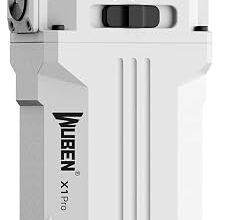
Lumen figures make far more sense next to actual pocket lights. Our Olight ArkPro vs Oclip comparison covers two EDC lights at opposite ends of the output range, and the Wuben X-Series round-up shows what higher output costs in size and runtime.
Lumens are only one of the specs worth weighing. Five tactical flashlights compared sets output against beam reach and switch design, which is where the real differences show up.