
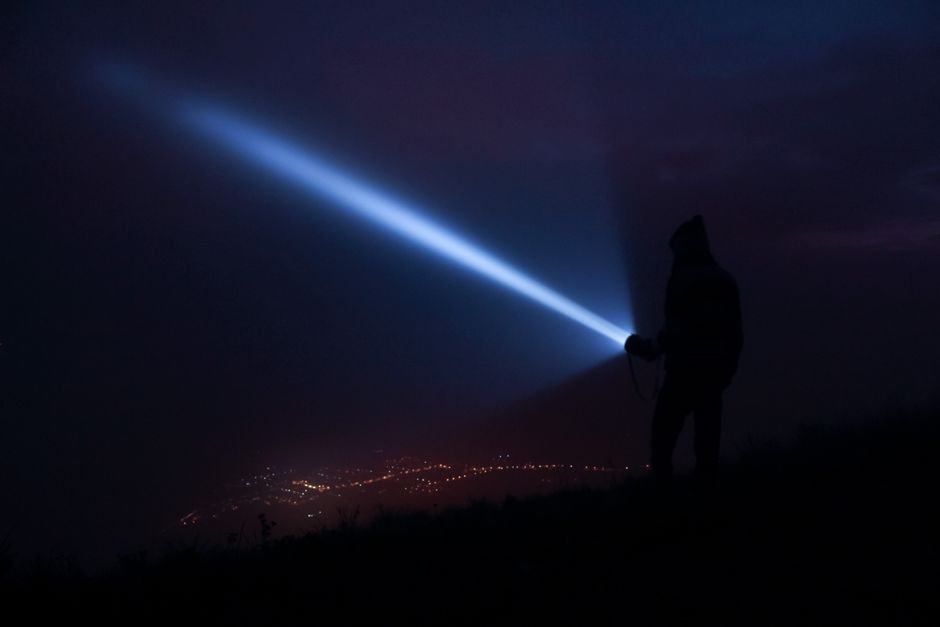
Flashlight shopping needn't be a gamble.
Standing in front of a crowded shelf—ten models, every spec a mystery—feels familiar. A first-time buyer faces two worries: either overspend on features that never get used or pick something that fails when it matters. This short, practical checklist strips away marketing noise: identify the intended use, set a realistic brightness and runtime target, check battery type and availability, and prefer simple, proven builds. Following these steps turns indecision into a confident, fit-for-purpose purchase—no gadgetry required.
Pick one primary use first
First, name a single primary use before anything else. Doing so narrows beams and runtimes, creating a clear shortlist.
If the primary need is walking a dog at night, consult the guide for dog walking lights. It shows ways to avoid blinding others. For car emergencies and roadside work, the roadside flashlight guide explains why throw and flood matter. Home outage planning calls for long run times. See the power outage buying guide. For quiet reading, a narrow, warm, low glare beam helps. Compare options in the reading at night guide. Small everyday carry choices belong to the compact category. See the apartment guide.
How this single decision reshapes tradeoffs:
- Beam — Spotty, long‑throw beams suit roadside or search tasks; wide, soft beams suit reading and walking.
- Runtime — Long runtime wins for outages and trips; short bursts are OK for quick walks.
- Size & weight — Pocketable bodies trade brightness for convenience; handheld full power lights trade portability for lumen output.
After naming the main use, follow the linked deep dives for model recommendations tailored to that role.
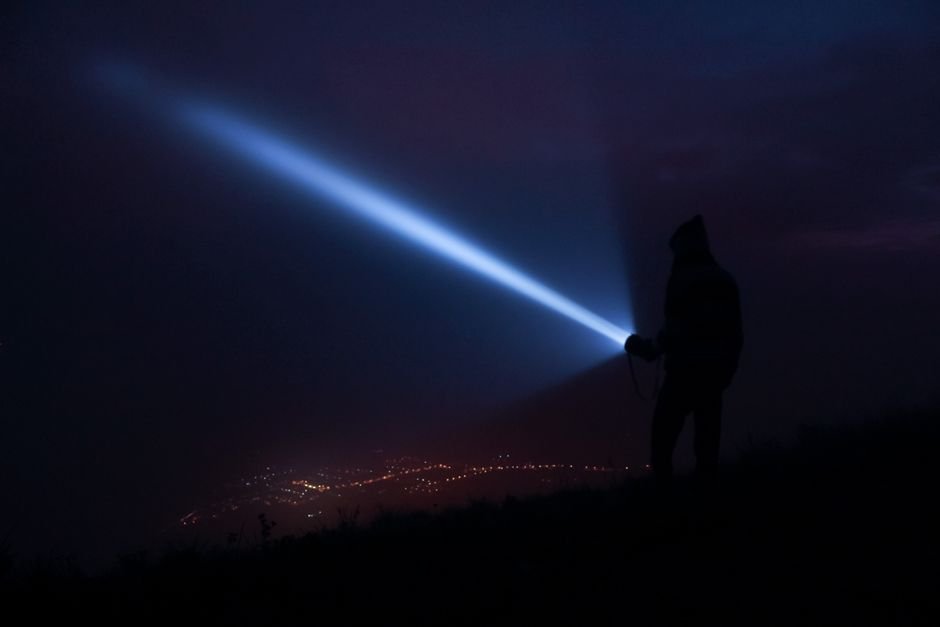
Lumens, candela and choosing a beam
Lumens versus throw
Lumens measure total light output — how much light the lamp produces overall. For near work, lumens and beam shape matter more; for distance signaling, candela is the useful figure.
Quick rules of thumb
- Close-range tasks (reading, tent work, close trail): favor a wider beam and moderate lumens (roughly under 200–500 lumens).
- Mixed use (walking, campsite scanning): choose a balanced flood + hotspot and 300–1,000 lumens.
- Long-throw tasks (search, signaling, countryside): prioritize candela/throw over raw lumen claims — look for a tight hotspot and higher candela rating.
Heat and runtime trade-offs
Higher lumen output produces more heat and usually shorter runtime; many lights thermally step down from turbo mode. If long continuous use is required, consult the guide on flashlights that stay cool before valuing peak lumens.
Match the beam profile to the task instead of chasing headline lumen numbers; that delivers the most practical performance.
High-output modes heat the LED quickly.
Avoid relying on turbo for prolonged work. Prefer regulated drivers and thermal design. Larger batteries help runtime but add weight.Runtime and battery trade-offs
Realistic runtime comparisons
Manufacturers often quote peak lumens and a theoretical runtime until the light shuts off or steps down. In practice, high modes heat the LED and driver, so most lights step down to a lower output long before the published cutoff. Look for runtimes given at a moderate output (for example, 100–200 lumens) or an indication of regulated output — those numbers are more useful than turbo-mode claims.
Battery chemistry trade-offs
- Alkaline (AA/AAA): cheap and widely available; best for occasional use. Poor cold-weather performance and limited shelf life once in use.
- NiMH rechargeables: good for frequent use; moderate cost, safe, and replaceable in common sizes. Keep a charger handy.
- Lithium primary (CR123A, CR2): long shelf life and good cold performance; costlier and less commonly stocked.
- Lithium-ion (18650/21700, built-in): high energy and long runtimes for daily users; rechargeable but require compatible chargers or built-in USB.
For budget, readily replaceable options that still perform, consult the practical picks under $20.
Quick checklist for interpreting runtime claims
-
Check the mode tested
Is runtime listed for turbo, high, or a lower regulated output? Prefer numbers for moderate outputs.
-
Identify the battery used
Runtime can vary dramatically between alkaline, NiMH, and lithium cells.
-
Look for step-down info
Does the test say when the light reduces brightness due to heat? That’s the usable runtime limit.
-
Note ambient conditions
Cold temperatures and continuous use shorten runtime; expect worse real-world numbers than lab tests.
-
Confirm battery availability
Choose chemistries that fit how often the light will be used and how easy replacement is.
Form factor: size, weight and carry
Practical fit and carry
Form factor determines when a flashlight gets used. Consider size, weight, and bezel shape together. Additionally, a heavy, bulky light stays at home; a slim, familiar shape goes in a pocket. For tiny everyday carry options, compare compact keychain models to true pocket flashlights. Test how they feel in a pocket or on a keyring. See compact keychain options for real examples.
Quick carry checklist:
- Pocket comfort: will it snag, print, or fall out? Try the clip orientation.
- Holster or lanyard: keeps larger lights usable without pocket bulk.
- Bezel profile: rounded for comfort, crenelated for grip or self-defense applications.
- Balance and grip: a light that spins in the hand is awkward for tasks; check reach to the switch.
Operation matters as much as size. For those with smaller hands or who prefer a slim shaft, compare dedicated models built for grip and reach in options for small hands. If one-handed use is likely, prioritize tail switches, pocket clip accessibility, and mode memory — the guide to one-handed flashlights and techniques explains reliable choices.
Pick a form that fits clothing and common tasks; a carried light is more useful than the brightest light left at home.
Durability: IP ratings, impacts and basic maintenance
What IP numbers actually mean
IP has two digits: the first (solids) covers dust protection; the second (liquids) covers water. If a product uses “IPX,” the dust rating is unspecified. Practical targets:
- IPX4 — splash/rain resistance (good for urban carry).
- IPX6 / IP66 — strong jets of water (better for heavy weather).
- IPX7 — immersion to 1 m for 30 minutes (short submersion).
- IP68 — sustained immersion beyond 1 m (true waterproofing).
Impact ratings, seals and ports
Manufacturers often list drop heights (1–3 m). For everyday use, aim for ≥1 m; for work or outdoor use, ≥2 m. Common failure points:
- Rubber port covers and O-rings degrade with age and grime.
- Charging contacts and exposed magnets corrode if not sealed.
Basic maintenance
- Rinse grit from threads, dry thoroughly.
- Inspect and lightly lubricate O-rings with silicone grease.
- Replace worn O-rings and prefer sealed USB-C or screw-cap ports.
These checks keep a flashlight reliable long after purchase.
Aim for IPX6/IP67 for general outdoor use
Drop rating ≥2 m for rugged tasks
Prefer sealed USB-C or screw-cap charge ports
Keep spare O-rings and silicone grease
Modes, strobe and lockouts — quick myths and facts
Too many modes usually add complexity and slow access to the brightness needed most.
A simple UI with a primary mode plus one or two extras reduces fumbling and battery waste.
Strobe can help with signaling or self‑defense but is often disorienting and can be dangerous around crowds or drivers.
If strobe is unwanted, choose models that omit it or let it be disabled; see how to find or disable strobe modes for options.
Some lights can activate from pressure or button presses unless they include a lockout.
Look for twist or tailcap lockouts or an electronic lock feature; practical tips are in preventing pocket activation.
A 6-step shopping routine
-
Lock the primary use
Name one primary task and the environment; this narrows beam shape, lumen target and runtime needs quickly.
-
Match real output to spec
Compare claimed lumens and candela against third-party tests or ANSI numbers; prefer measured output for the chosen mode.
-
Compare battery systems
Check cell type, rechargeability, availability and spare cost; confirm runtime with the intended battery and cold performance.
-
Evaluate size and carry
Weigh dimensions, weight, clip placement and bezel; pick the smallest comfortable carry that meets runtime needs.
-
Test interface and lockouts
Prefer a simple, learnable UI with clear mode steps and an effective lockout to avoid pocket activation.
-
Final cost and support check
Compare total price, included accessories, warranty and return policy; choose the option with better long-term value.
Five non-negotiables before buying
For model recommendations and budget-focused options, follow the linked deep dives on picks and price tiers.
Frequently Asked Questions
What's the difference between lumens and candela?
Lumens measure total light output, which matters most for near work like reading or camp tasks. Candela measures beam throw, which matters more for long-distance signaling or search.
What battery type should a first-time buyer choose?
Alkaline AA/AAA cells are cheap and widely available for occasional use. NiMH rechargeables suit frequent use, lithium primaries handle cold weather and long shelf life, and lithium-ion cells give the longest runtime for daily carry.
What IP rating is enough for everyday carry?
IPX4 covers splash and rain resistance for urban carry, IPX6/IP66 withstands heavy weather, and IPX7/IP68 is needed for submersion.
Is a strobe mode necessary?
Strobe can help with signaling or self-defense but is often disorienting. Many buyers are better served by a model that lets strobe be disabled or omits it entirely.
Why does a lockout feature matter?
A twist, tailcap, or electronic lockout prevents the light from turning on accidentally in a pocket, which avoids drained batteries and unexpected activation.
Next steps
- Confirm the single primary use and eliminate options that don't match.
- Shortlist three models that meet the five non-negotiables and compare spec sheets.
- Handleability check: mock the carry, review return policy and warranty before purchase.
Make a decision simple. Start from purpose, require realistic runtime and a comfortable carry, then compare three contenders by spec and feel. If unsure, use the deep dives for model picks or budget limits and read hands‑on reviews before buying.


11 Comments
Quick question: the modes/strobe/lockouts section seemed to suggest simple UIs are best. But I like strobes for emergencies — are lockouts usually physical (like twisting) or electronic? Will that interfere with using strobe when needed?
Lockouts come in both flavors. Physical lockouts (tailcap twist, bezel cover) are very reliable and simple — they completely prevent activation. Electronic lockouts are usually a sequence (hold button for X seconds) and can be convenient but slightly trickier in an emergency.
If you want strobe for emergencies, choose a light that supports both: a reliable lockout to avoid pocket activation plus an easy-to-access strobe (e.g., double-click from off). Test the sequence before you need it so it’s instinctive.
I prefer physical tailcap twist for my EDC — never had accidental activation and the strobe is a double-tap from off on mine. Works for me.
Can someone clarify the lumen vs candela bit? I get that lumens = total light and candela = throw, but how do I decide which matters more for, say, hiking vs searching my attic? Also worried about heat/runtime with high-lumen levels — is that something I should avoid entirely?
Great question. Short version: pick the metric that matches your primary use. For hiking on trails at night you usually want a balanced beam with decent lumens for area visibility and moderate candela for some throw. For attic/search tasks where you need to see far into corners or across rafters, candela (throw) matters more.
About heat/runtime: high-lumen turbo modes produce more heat and drain batteries faster. Look for a flashlight with a high output mode but also a usable mid mode that gives longer runtime. The 6-step shopping routine in the article helps you compare trade-offs directly.
I bring two lights when I hike: a headlamp for wide spill and a small throw light for spotting. Works well and keeps you from blowing runtime on one light.
I’m confused about batteries. The article mentions convenience, cold performance, and runtime trade-offs, but can someone explain which battery type is best for car emergency kits vs backpacking?
I live where it gets below freezing sometimes and don’t want a flashlight that dies in the cold. Rechargeable or disposable? Pros/cons would help.
Good topic. Quick guideline:
– Car emergency kit: keep a mix. Primary (alkaline) AAs are cheap and easy to replace, but in very cold temps rechargeable NiMH can lose capacity. Consider lithium disposable AAs (not the same as standard alkaline) — they perform well in cold and have long shelf life.
– Backpacking: high-drain lights benefit from rechargeable 18650/21700 lithium-ion cells for best runtime-to-weight. But lithium-ion internal packs can be sensitive to very low temps; store spare cells near your body to keep them warm, or use low-temp-rated cells if available.
If you want one recommendation: for a winter car kit choose a flashlight that runs on CR123A or lithium AAs (cold-tolerant disposables). For lightweight backpacking, go with a quality rechargeable lithium-ion light but carry a backup or a means to keep batteries warm.
I switched to CR123A for my winter commute and it saved me — my old NiMH headlamp started acting flaky below freezing. Just watch the cost/availability where you live.
Good article but I felt the ‘durability’ part could use more real-world examples. Saying “IP ratings matter” is fine but what does IPX8 vs IP68 feel like in day-to-day use? Also, some lights fail at the tail switch — would be nice to know which designs tend to fail more often (side switch vs tail switch).
Not trying to nitpick, just would appreciate slightly deeper examples for newbies.
Nice checklist — simple and practical. Picking one primary use first is the biggest takeaway for me. No replies