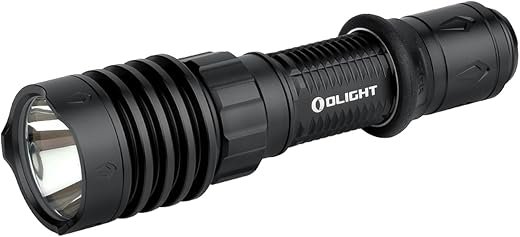
Power versus pocket: that single choice decides the rest.
On a night shift or everyday carry, choice reduces to which compromise is acceptable: maximum lumen/throw or effortless pocketability. The Warrior X4 delivers higher peak output, longer usable throw, and heavier-duty thermal management — at the cost of size, weight, and a hotter head during extended high modes. The Warrior 3S sacrifices some top-end throw for smaller footprint, easier pocket carry, and a friendlier UI under stress, yielding more practical run times at mid outputs and less thermal limitation.
Decision hinges on whether single-light dominance or daily redundancy matters; heat, UI simplicity, and frequency of high-output bursts determine the better fit.
- Warrior X4 — choose when maximum throw and peak lumens outweigh extra bulk and heat management.
- Warrior 3S — choose when pocketability, cooler sustained runs, and simpler UI matter more than raw reach.
One‑Line Recommendations


Testing methodology
Measurements combined lab meters and real-world beamshots to mirror duty use. Repeatable protocols ensured fair comparison — same battery, ambient ~22°C, and stabilized runs. Refer to what is a tactical flashlight for background.
-
Electrical & output
Peak lumens (integrating-sphere/ANSI-style), runtime to stepdown, and measured candela at 1 m; tests repeated to verify consistency.
-
Beam & throw
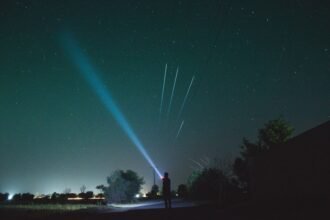
Lux readings at fixed distances, high-resolution beamshot photos at 25–100 m, and hotspot-to-spill analysis.
-
Thermal, UI & durability
Surface-temperature logging, mode spacing/activation timing, 1.5 m drop and water-seal checks.
| premium duty-class pick OLIGHT Warrior X4: High-Lumen Duty Light | VS | best value option OLIGHT Warrior 3S: Compact Tactical Power |
|---|---|---|
Longer, grip‑style | Size (handheld) |
Shorter, more compact |
≈630 m | Throw (distance) |
≈300 m |
Longer high‑mode runtime | Runtime (high) |
Cooler, shorter high runtime |
Internal Li‑Po rechargeable | Battery |
Custom rechargeable cell |
Tail dual switch, programmable | Interface & controls |
Side + tail switches, proximity sensor |
| Buy now | Buy now |
Carry modes and ergonomics
Pocket versus belt
The OLIGHT Warrior 3S is clearly the pocket-friendly option: shorter length, smaller diameter and lower weight make it comfortable in a front pocket with a clip. The Warrior X4’s larger head and heavier mass make it a poor deep-pocket candidate and a natural for a belt or vehicle holster where bulk and output are less obtrusive.
How shape affects draw and retention
- Diameter: larger bezels (X4) catch on fabric and holsters; slimmer bodies (3S) slide easier and sit flatter in pockets.
- Length: longer lights offer more leverage for one-handed activation but make concealment harder. The X4 gives better mechanical advantage; the 3S trades leverage for concealability.
- Weight: heavier head-forward lights stay put in holsters but can flop in a pocket during movement.
One-handed operation under stress
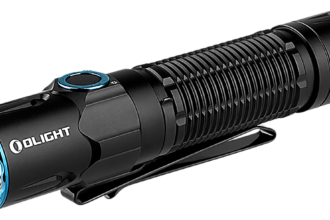
Bezel texture and tail/bezel access determine purchase when drawing rapidly. The OLIGHT Warrior flashlight has a pronounced bezel and knurling that improve finger purchase for grips. A shorter tube favors thumb-only activation from a pocket clip. For duty carry, pair the X4 with a molded holster with positive retention. For EDC, use a deep-carry clip on the 3S and practice one-handed draws until consistent.
Beam character and real‑world use
Both lights produce plenty of lumen numbers, but the shape of that light is what determines real utility.
Hotspot intensity and search
- OLIGHT Warrior X4: a tight, high‑candela hotspot that punches farther — excellent for identification and long‑distance search where concentrated light reveals details on a subject or landmark. The trade-off is a narrower field that can feel tunneled at close range.
- OLIGHT Warrior 3S: a softer hotspot with lower peak intensity but a broader corona; it lights mid-range targets clearly while preserving peripheral detail.
Usable spill and close tasks
- Warrior 3S offers a wider, more usable spill for room clearing, map work, or equipment checks at arm’s length. Its profile reduces harsh contrast and improves situational awareness.
- Warrior X4 still provides usable spill but prioritizes centralized throw; it’s less comfortable for sustained close‑in tasks.
Which matches the mission
- Pick X4 for distance ID, outdoor search, and wide‑area scans. Pick 3S for everyday carry, close quarters, and tasks requiring broad, even illumination. Consider mission distance and the need for peripheral illumination over raw lumens.

Battery, runtime and thermal behavior
Battery chemistry and cell configuration
Both lights use lithium-ion cells optimized for high discharge, but the formats matter. The OLIGHT Warrior flashlight X4 uses a larger, higher‑energy cell format that delivers higher peak current. It stores more watt-hours. The Warrior 3S uses a smaller cell format that handles discharge well, but trades peak energy for less mass.
Runtime tradeoffs and thermal behavior under sustained turbo
High turbo output always costs heat and battery voltage. The larger cell in the X4 sustains turbo longer before voltage sag forces electronic step‑down, but it also dumps more heat into the head quickly — thermal regulation steps output down to protect LEDs and electronics. The 3S reaches its thermal threshold sooner at extreme bursts, yet its lower absolute output and better surface‑area‑to‑power ratio often translate to comfortably cooler handling and a steadier high‑percentage output for medium tasks.
Practical outcomes:
- Sustained usable output: X4 gives higher peak and longer short-burst runtime; 3S often offers more usable output over long, lower‑intensity duty.
- Hand comfort: X4 runs hotter; holster or gloves advisable for extended runs. 3S is easier to hold for prolonged work.
- Recharge vs spares: Larger integrated packs favor recharging from a power bank; smaller cell formats are easier to carry as spare swappable cells.
Match choice to duty cycle: brief long‑throw bursts and on‑base recharge favor the X4; prolonged close‑in tasks and field swap-ability favor the 3S.
For long shifts without mains access, prefer carryable spare cells and a compact external charger with the smaller‑cell model. For predictable recharge access, the larger‑cell model minimizes interruptions with fewer recharges.
Frequently Asked Questions
Which is better for pocket carry, the Warrior X4 or the Warrior 3S?
The Warrior 3S is clearly the pocket-friendly option: its shorter length, smaller diameter, and lower weight make it comfortable in a front pocket with a clip. The Warrior X4’s larger head and heavier mass make it a poor deep-pocket candidate and a natural for a belt or vehicle holster.
Does the Warrior 3S have momentary/tactical tail access?
Yes, both the Warrior X4 and Warrior 3S offer tail-cap momentary activation. The X4’s larger tail and body give a more positive press under stress, while the 3S is quick but requires crisper finger placement for consistent momentary activation.
How does heat management compare between the two lights?
The Warrior X4 runs hotter under sustained turbo output because its larger cell delivers higher peak current and more total energy into the LED. The Warrior 3S reaches its thermal threshold sooner at extreme bursts, but its lower absolute output often translates to comfortably cooler handling and steadier mid-output performance over longer handheld use.
Can I swap batteries in the field with either model?
The Warrior 3S uses a smaller cell format that is easier to carry as a spare for swappable use in the field. The Warrior X4’s larger integrated pack favors recharging from a power bank or mains access rather than field swaps.
How does the Warrior 3S compare to the Fenix PD35 for mode control?
Fenix PD35-style lights typically separate tactical and mode controls, which eases deliberate mode changes. OLIGHT designs center on tail-centric tactical use, which enables faster momentary shots but involves different mode memorization trade-offs depending on the mission.
Duty‑class long‑throw light
2600 lumens with long-range throw
OLIGHT Warrior X4 is positioned as a premium duty‑class torch built for tasks that demand sustained high output and far reach. It suits professionals and serious responders who prioritize a powerful, focused beam for search, perimeter work, vehicle stops, and long‑range identification rather than ultra‑compact carry. Rechargeability, a clear battery status display, and programmable modes make it a tool‑class light for planned shifts and equipment belts. Its size and weight favor holster or belt carry over pocket carry; the design assumes deliberate on‑body placement and hand‑held use when maximum throw and sustained lumen delivery are decisive.
- Very high peak output for distance and identification
- Class‑leading throw intensity and long hotspot
- Rechargeable with USB‑C and magnetic options
- Visible tri‑color battery indicator and low‑battery vibration
- Programmable modes and tactical tail switch
- Size and weight unsuitable for daily pocket carry
- Runs hot under sustained turbo output
- Higher power demands shorten max‑output runtime
- Requires holster/belt for practical on‑body carry
Compact tactical midrange
2300 lumens; proximity sensor
OLIGHT Warrior 3S is a rechargeable, pocket‑friendly tactical light that aims to bridge everyday carry and short‑to‑midrange search tasks. It keeps a small footprint while delivering a usable hotspot and spill for close‑to‑distance work, plus convenience features like magnetic charging and a proximity sensor to manage brightness near obstacles. Suited for users who need more reach than a pocket EDC thrower but prefer to avoid holsters and heavy belt rigs — a practical, everyday tactical tool with modern controls and predictable thermal behavior.
- Compact, pocketable chassis with tactical ergonomics
- Up to 2300 lumens and ~300 m peak throw for size
- Smart proximity sensor reduces output near obstacles
- Magnetic USB charging — fast, tool‑free top‑ups
- Two‑switch interface enables quick momentary access
- Smaller cell limits sustained turbo runtime vs X4
- Not a substitute for long‑throw belt/holster duty lights
- Proximity sensor can step down output unexpectedly in close quarters
Mission‑based decision rubric
- Favor the Warrior X4 when missions demand sustained high output, long throw, or holster/belt carriage for vehicle or perimeter searches.
- Favor the Warrior 3S when pocketability, cooler handheld runtimes, and rapid pocket‑to‑hand deployment or frequent close‑quarters use matter most.
Match the light to the mission. Choose OLIGHT Warrior X4 for holster/belt duty, vehicle or perimeter search, and tasks that require maximum throw and sustained turbo; its higher output and reach give a decisive advantage at distance. Choose OLIGHT Warrior 3S for routine EDC, pocket/quick‑draw carry, close‑quarters work, and prolonged handheld use where lower heat and simpler ergonomics matter.
Two quick rules: If throw and sustained lumen output determine success, pick the X4. If carry comfort, cooler runtimes, and speed of deployment are priorities, pick the 3S.
OLIGHT Warrior X 4 Rechargeable Tactical Flashlight 2,600 High Lumens with 630 Meters Long Range Thrower, Powerful Tail-Switch Light with USB-C Charging,...
Features
| Additional Features | Adjustable Light Modes |
| Power Source | Battery Powered |
| Light Source Type | LED |
| White Brightness | 2600 Lumens |
| Battery Type | Lithium Polymer |
| Number of Batteries | 1 Lithium Ion batteries required. (included) |
| Water Resistance Level | Waterproof |
| Light Output Maximum | 2600 Lumens |
| Battery Description | Lithium-Ion |
| Mounting Type | Handheld |
| Number of Light Sources | 1 |
| Batteries are Included | Yes |
| Light Source Special Features | Adjustable Light Modes, Programmable Modes |
| Light Path Distance | 630 Meters |
| Runtime | 8 hours |
| Item Dimensions D x W x H | 3.39"D x 2.52"W x 7.2"H |
| Item Dimensions L x W x H | 7.2"L x 2.52"W x 3.39"H |
| Warranty Type | Lifetime |
| Included Components | Holster, USB-C Charging Cable x 1, User Manual x 1, Warrior X 4 x 1 |
| Brand Name | OLIGHT |
| Recommended Uses For Product | patrol, hunting, repair work, outdoor activities, household use |
| Manufacturer | OLIGHT |
| Manufacturer Warranty Description | Lifetime warranty. |
| Manufacturer Part Number | WARRIORX4-BK-300000 |
| Model Number | WARRIORX4-BK-300000 |
| Item Type Name | Flashlight |
| Unit Count | 1.0 Count |
| ASIN | B0CDH1B413 |
| Color | Black |
| Style Name | tactical |
| Finish Types | Polished |
| Shape | Cylindrical |
| Material Type | 6061-T6 Aluminum Alloy |
- [Super Bright Tactical Flashlight] Warrior X 4 is a remarkable tactical flashlight boasting an impressive 2600 lumens and a beam distance of 688 yards with 99,310-candela beam intensity
- [Dual Charging Options] Compatible with both universal USB-C for 3.5h fully charged and magnetic MCC for 5h, our rechargeable flashlights, Warrior X 4, offers a hidden Type-C charging port, ensuring versatile charging options to suit various needs
- [Clear Power Display] As a handheld flashlight for tactical use, OLIGHT Warrior X 4 has low battery vibration reminder(lower than 20%) and has a clarity tri-color battery level indicator
- [Programmable Modes] Freedom to easily choose between regular mode and tactical mode, with different experiences with the tail switch. And the strobe is available in Tactical mode
- [Upgraded Magnetic Tail Switch] The new tail switch clearly distinguishes between light and heavy presses, while nano molding technology makes metal dust cleaning on the tail switch a breeze
- Whether it's for patrol, hunting, repair work, or any outdoor and household use, the Warrior X 4 delivers improved performance and meets the diverse needs of users
OLIGHT Warrior 3S 2300 Lumens Rechargeable Tactical Flashlight, Compact Dual-Switches LED Bright Light with Proximity Sensor, Powered by Customized Battery...
Features
| Additional Features | Magnetic, Rechargeable, Waterproof |
| Power Source | Battery Powered |
| Light Source Type | LED |
| White Brightness | 2300 Lumens |
| Voltage | 3.6 Volts |
| Battery Type | Lithium Polymer |
| Number of Batteries | 1 Lithium Ion batteries required. (included) |
| Water Resistance Level | Waterproof |
| Battery Description | Lithium-Ion |
| Mounting Type | Handheld |
| Wattage | 18 watts |
| Number of Light Sources | 1 |
| Batteries are Included | Yes |
| Light Source Special Features | Proximity Sensor, Tactical Tail Switch |
| Light Path Distance | 300 Meters |
| Runtime | 55 minutes |
| Item Dimensions D x W x H | 2.72"D x 2.32"W x 6.18"H |
| Item Weight | 6.21 Ounces |
| Item Dimensions L x W x H | 2.72"L x 2.32"W x 6.18"H |
| Included Components | Battery |
| Brand Name | OLIGHT |
| Recommended Uses For Product | Outdoor activities, self-defense, and law enforcement |
| Manufacturer | OLIGHT |
| Manufacturer Warranty Description | Lifetime warranty. |
| Manufacturer Part Number | O-WARRIOR3S-BK#US-FBA |
| Set Name | Warrior |
| Model Number | O-WARRIOR3S-BK#US-FBA |
| Unit Count | 1.0 Count |
| ASIN | B09WYCPC1N |
| Color | Black |
| Style Name | handheld |
| Finish Types | Black |
| Shape | Cylindrical |
| Material Type | Aluminum |
- NOTE: Press and hold the side switch (for about 2 seconds) to access the button lockout mode
- [Indicators & Controls] This flashlight has 4-level battery and brightness indicators around the switch. The two-stage tactical tail switch allows quick operation. Please keep the tail cap clean to ensure responsive performance
- [Smart Proximity Sensor] The flashlight has a built-in proximity sensor that drops the brightness levels to protect against any nearby objects when the torch is on high, turbo, or strobe mode
- [Bright Illumination Performance] Adopts professional TIR optical lens, up to 2300 lumens and 300 meters illumination range, ideal for camping, hiking, night searching and emergency backup. Supports Strobe and Turbo modes
- [Magnetic Charging Design] The tactical LED flashlight, with the customized rechargeable battery, is easy to charge via the MCC3 magnetic charging cable. No USB-C direct charging port
- [With Nylon Holster] Comes with a durable nylon holster for quick access and safe storage, suitable for outdoor, patrol and emergency use. Made of wear-resistant material for long-term service