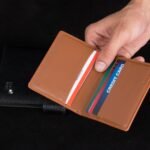
A wallet’s limit matters less than the load that remains comfortable and usable.
A slim wallet can still snap shut when overloaded. The warning signs appear elsewhere: cards catch during removal, the stack bulges through clothing, and the retention system becomes either too tight or less dependable.
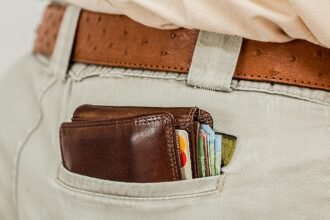
Treat the advertised maximum as a ceiling, not a target for everyday carry. Start with payment, identification, and access cards used regularly; leave occasional loyalty, membership, and backup cards elsewhere or store eligible versions digitally. Then check the loaded wallet while standing, sitting, and retrieving one card at a time. This matters especially for front-pocket carry, where excess thickness can restrict movement and create an obvious outline. A front-pocket wallet guide can help assess shape, orientation, and pocket placement alongside card count.
Start with four to six cards
A practical slim-wallet load is often four to six essential cards. That might include a primary payment card, backup payment card, identification, transit pass, access badge, and one frequently used membership or insurance card. The exact mix depends on daily routines; someone working from home may need fewer than a commuter entering a secured building.
Use a simple test: the everyday limit should be the lower of:
- the number of cards genuinely needed most days; or
- the manufacturer’s documented wallet capacity.
Capacity is a ceiling, not a target. Embossed cards may also create a thicker stack than flat cards, so smooth insertion and removal matter more than reaching the published maximum.
Review the load monthly. Move rarely used loyalty, insurance, or membership credentials to a secure digital wallet when accepted, and store occasional physical cards elsewhere.
If ten or more physical cards are routinely necessary, forcing them into a minimalist design undermines easy access and may stretch retention components. Compare wallets designed to carry 10 cards or other purpose-built higher-capacity models instead.
Sort the Stack Before Filling the Wallet
-
Empty every slot
Lay out every card, receipt, and paper insert. Hidden duplicates and expired cards become easier to spot outside the wallet.
-
Build the daily core
Prioritize a primary payment card, essential identification, and credentials needed for routine access, transportation, work, insurance, or medical care. Add a backup payment card only when it serves a clear purpose.
-
Set aside situational cards
Membership, transit, building-access, and secondary payment cards may belong in the wallet only on relevant days. Store them together so they can be swapped in as needed.
-
Remove low-value clutter
Discard expired cards and old receipts. Move rarely used loyalty numbers, gift cards, and account details to a secure location when the issuer permits it.
-
Verify digital replacements
Check the issuer, venue, and local rules before relying on a phone version. Digital identification, insurance, access, and transit credentials may not be accepted everywhere, and battery or connectivity failures remain possible.
-
Reload and check access
Return the daily core first, then add situational cards one at a time. Stop when removal becomes awkward or retention feels less secure.
Read Capacity Claims Carefully
Wallet capacity labels are not interchangeable. Before choosing a load, check exactly what the manufacturer is counting:
- Maximum capacity is the stated upper limit, not necessarily the most convenient everyday load. The Ridge, for example, is manufacturer-rated for 1–12 cards.
- Recommended range describes the load a wallet is designed to accommodate. Staying near the middle of that range may leave more room for cash and easier card access.
- Fixed slot count describes construction. “Four slots” means four compartments; it does not confirm that every slot should hold multiple cards.
Card thickness can change the result substantially. Secrid states that its Cardprotector holds four embossed cards or six flat cards, clearly showing why card type matters. Metal cards, building-access credentials, and identification cards with raised features may also consume more space than standard flat payment cards.
Cash adds another variable. Several folded bills form a stack that can press against cards, strain closures, or make retrieval awkward. For a realistic fit check, compare the manufacturer’s capacity wording with the actual mix of cards and cash—not the card number alone.
Match the structure to the load
Wallet architecture determines where bulk forms and how reliably contents stay in place. A holder may accept a stack yet become awkward if cards, seams, and folded bills all overlap at one pressure point.
| Design | Thickness and retention |
|---|---|
| Fixed slots | Separate cards for quick access and spread them across the wallet. Stitching and layered pocket material add baseline thickness, while overfilled slots may grip cards too tightly or stretch. |
| Elastic sleeves | Compress a central stack and accommodate small changes in load. Retention depends on elastic tension, which may decline with wear, especially if the sleeve remains overfilled. |
| Friction-fit metal holders | Clamp a compact, aligned card stack without layered leather. Uneven items—embossed cards, keys, receipts, or folded cash—can create pressure points or interfere with smooth removal. |
| Slim bifolds | Distribute cards and bills across two panels, reducing one concentrated bulge. The larger footprint may sit flatter than an overloaded single-stack holder. |
The decision to choose between a card holder and a bifold should reflect the routine load, not the smallest possible wallet. A bifold becomes more practical when every slot stays occupied, several cards must remain individually accessible, or cash is carried most days.
Before switching, load the wallet normally and check three things: whether cards can be removed without bending, whether contents remain secure when inverted, and whether the profile stays even when closed. Persistent bowing, stretched material, or a cash bundle attached outside the holder indicates that the current format is undersized.
Load the Wallet for Quick, Stable Access
-
Give the primary card the fastest position
Place the most-used payment or transit card in the easiest pull slot. Keep a backup payment card elsewhere so both are not removed accidentally.
-
Protect identification
Carry a driver’s license or other ID in an interior slot, preferably with its edges fully supported. An external slot may improve speed, but it also increases exposure during handling.
-
Distribute thickness evenly
Split cards between opposing sides of a bifold rather than filling one panel first. In a central-stack wallet, alternate card orientation if raised lettering or worn edges create an uneven lump.
-
Anchor cash so it cannot drift
Align bills, fold them consistently, and seat them fully beneath a cash strap or inside the bill compartment. Avoid a small, loose wad beside the card stack; it can shift and interfere with card access.
-
Adapt the load to the routine
A four-card illustration could include ID, primary payment, backup payment, and transit or access card. A six-card illustration might add health insurance and a second access or work card. These are starting arrangements, not universal prescriptions; unnecessary cards should stay out.
-
Check access and retention
Open the loaded wallet, remove each daily card, replace it, and turn the wallet upside down over a soft surface. Rebalance the stack if cards bind, cash moves, or one side bulges.
Run a loaded-wallet fit test
Test the wallet with the exact cards, cash, and receipts intended for daily carry. Work over a table or bed so a loose card cannot be damaged.
Check retention
Close the wallet and slowly rotate it upright, sideways, and upside down, reproducing normal pocket or bag angles without aggressive shaking. Cards should remain seated. Creeping cards, exposed edges, or slipping indicate that the load should be reduced.
Check access
Remove each frequently used card, then return it to the same slot. Retrieval should require deliberate pressure—not hard pulling, pinching, or bending. If replacement needs excessive force or lifts neighboring cards, remove one or more items.
Check the profile
Place the wallet on a flat surface in its normal closed position and inspect it from the side. A slight contour may reflect its design, but bowed panels, stretched seams, uneven corners, or pronounced rocking suggest overloading.
This helps explain why chronic overstuffing can make cards fall out: sustained tension may deform pockets and weaken their grip over time.
Wallet materials may relax with use. Repeat the angle and access checks; newly slipping cards signal that the working load needs trimming.
When Extra Cards Change the Limit
How should cash count toward capacity?
Folded bills add thickness and may crowd card slots. Include the usual cash amount during fit testing and remain within the manufacturer’s documented capacity.
Should business cards stay in a slim wallet?
Carry a small batch for meetings or events, then remove leftovers. Paper cards bend easily and can displace essential payment or identification cards.
What about work badges and medical cards?
A frequently used badge or important medical card may justify a permanent slot. Infrequently needed credentials can stay elsewhere unless required that day.
Can travel documents and temporary extras be added?
Hotel keys, transit passes, and similar items should be loaded only for the relevant trip or shift. Passports and larger documents generally suit a separate holder rather than an overfilled wallet.
What should happen after temporary cards are removed?
Check that the remaining cards still sit securely and do not slide out. Repeated overloading may reduce retention, even after the stack becomes smaller.
Set a Limit That Stays Useful
- Review the contents monthly; remove expired, duplicated, and rarely used cards.
- Apply a one-in, one-out rule whenever a new card enters the rotation.
Count the smallest card set that covers a normal week, then compare that number with the wallet maker’s documented capacity. Use the lower number as the everyday limit. If weekly essentials exceed the stated capacity, the wallet is undersized for that routine rather than an invitation to force in more cards.
Treat temporary additions—such as travel cards or event credentials—as exceptions, and remove them when their purpose ends. This keeps access predictable and reduces gradual overstuffing.