“Reduced recoil” sounds like a simple comfort upgrade, but the fine print determines what actually changes.
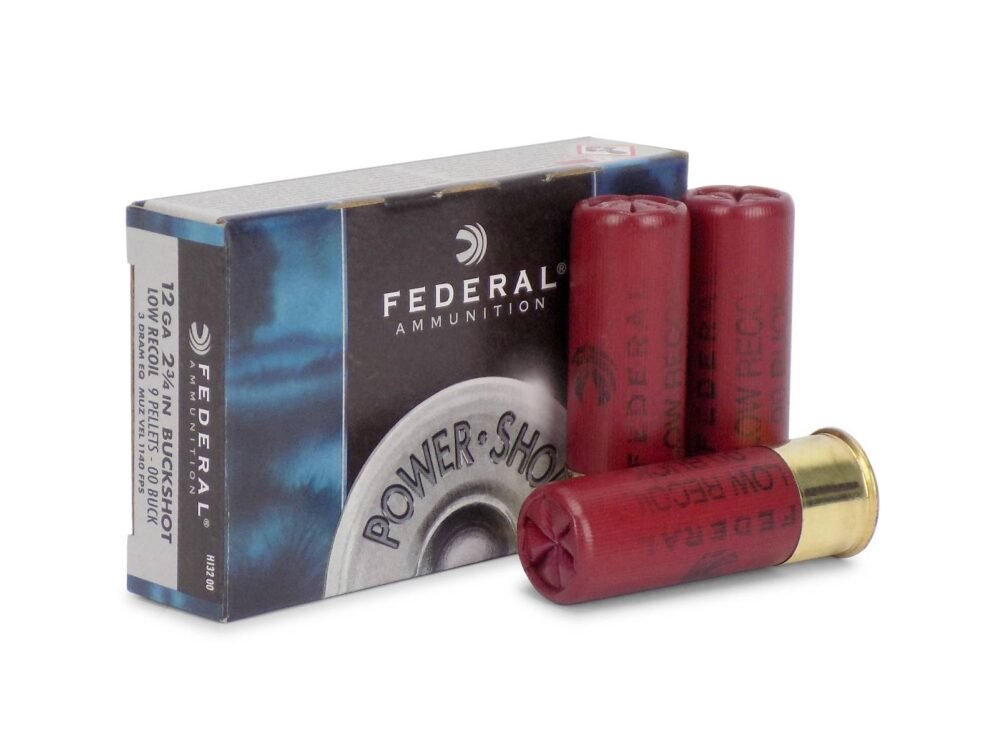
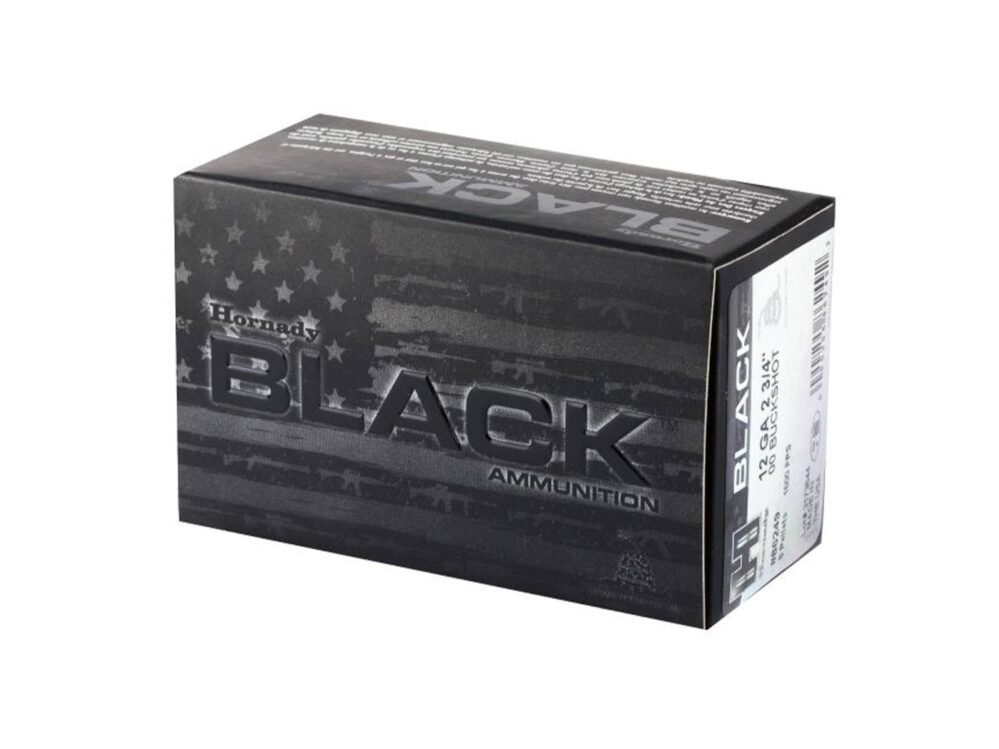
Two nearly identical boxes can both read 12-gauge, 2¾-inch, 00 buckshot while one adds a softer-shooting claim in bold type. That phrase alone does not reveal whether recoil was reduced through lower velocity, a lighter pellet payload, or a different wad and buffering system.
The comparison belongs on the side panels: pellet count, listed muzzle velocity, shell length, and any firearm-use guidance. Even when those entries match closely, the loads may pattern differently from a particular barrel. Lower-energy ammunition can also be more sensitive to semi-automatic action design, maintenance, or recoil-system setup. Manufacturer guidance should be checked first, followed by pattern and function testing with the exact load before it is relied upon.
Terms that make comparisons meaningful
Reduced recoil
A manufacturer’s comparative description, not a fixed velocity, pressure, or recoil class. Loads carrying the label can differ substantially.
Gauge
The shotgun’s bore designation. Comparisons should stay within the same gauge and compatible chambering.
Shell length
The cartridge’s nominal length designation. It must match a shell length permitted by the firearm’s barrel or manufacturer documentation.
Payload
The total shot charge, usually stated by weight. Pellet count also depends on pellet diameter and manufacturing tolerances.
Muzzle velocity
The manufacturer’s stated velocity under its test conditions. It is useful for screening loads, but does not directly report felt recoil or pattern quality.
“Reduced” needs a reference point
SAAMI’s ANSI/SAAMI Z299.2 standard covers shotgun ammunition dimensions and pressure limits, but it does not establish a universal velocity band called “reduced recoil.” The phrase is therefore most useful when comparing loads from the same manufacturer and product family—not as proof that one brand will recoil less than every standard load.
Start with the ammunition box and current manufacturer product page. Record the fields below while considering the broader shell-length and payload tradeoffs.
| Comparison field | Preferred source | Important limitation |
|---|---|---|
| Gauge and shell length | Box and manufacturer listing | Confirms compatibility, not performance |
| Pellet size, count, payload | Manufacturer listing | Same payload can use different pellet counts or buffering |
| Published velocity | Manufacturer listing | Test barrel and conditions may differ |
| Recoil result | Instrumented test or stated calculation | Requires firearm mass and a disclosed method |
| Pattern result | Targets from the same gun | Choke, barrel, distance, and lot affect results |
Use one repeatable protocol
For a defensible comparison, fire both loads through the same firearm, barrel, and choke, at the same measured distance, using identical target dimensions. Document the ammunition lot, temperature, shot count, point of aim, and any malfunctions. Pattern evaluation should report pellet strikes inside a stated circle and note point-of-impact shift; a single attractive target is not a reliable average.
Published velocity alone should not be treated as a recoil measurement. SAAMI’s recoil formula accounts for projectile mass, velocity, propellant gases, and firearm weight, while perceived recoil also changes with stock fit, recoil pads, and action operation. If powder charge or test setup is undisclosed, the result should be labeled an estimate rather than a directly measured comparison.
Same buckshot label, different payload
A buckshot designation such as 00 buck identifies the shot-size class, not a complete load recipe. Two shells carrying the same designation may use different pellet counts, total shot weights, advertised velocities, wad designs, buffering, or pellet materials. Manufacturers may reduce recoil by changing one or several of those variables; a lower pellet count is only one possible approach.
That distinction matters when selecting 12-gauge buckshot for defensive use. Pellet count affects how many projectiles are available to fill the pattern, but it does not determine where they land. Wad design, pellet deformation, barrel and choke characteristics, distance, and the specific shotgun-load combination can all change pattern distribution.
Individual pellet behavior also depends on more than the size label. Diameter class influences pellet dimensions, while material density affects mass. Hardness, plating, and buffering may help pellets resist deformation, which can influence pattern consistency; these features do not guarantee tighter results in every barrel.
For a useful comparison, check the manufacturer’s specifications for:
- pellet count and buckshot designation;
- total payload weight, when listed;
- advertised velocity and test-barrel details;
- pellet material, plating, buffering, and wad type.
Then pattern each candidate load at relevant distances using the same target and aiming method. Count hits and note overall spread, central density, and stray pellets. The preferable balance depends on the firearm’s function, reliable operation, recoil tolerance, and the observed pattern—not the reduced-recoil label alone.
What recoil numbers actually describe
Calculated free recoil begins with momentum. A fuller account includes the moving shot charge and wad, plus propellant gases; simplified calculators may combine components or approximate gas momentum. More ejecta mass or velocity generally adds forward momentum that the firearm must balance rearward.
SAAMI’s published free-recoil methods use defined projectile, propellant, velocity, and firearm-weight inputs. Gas behavior is represented through formula assumptions rather than measured individually for every shell. Changing that assumption can change the result, so figures from different calculators are not automatically comparable.
Firearm weight matters twice: with the same load momentum, a heavier firearm moves rearward more slowly and produces less calculated free-recoil energy. Muzzle velocity describes the payload leaving the barrel; free-recoil velocity and energy describe the firearm under an idealized, unrestrained calculation.
Neither number fully describes felt recoil. Stock fit, recoil-pad behavior, action type, firearm movement, pressure-time characteristics, mounting technique, and shooter physiology can change how the same calculated energy is perceived.
Patterning is a separate question. Lower velocity alone does not predict a tighter pattern, a wider pattern, or the direction the pattern center shifts. Pellet hardness and deformation, wad design, buffering, choke, bore geometry, range, and the individual barrel-load pairing all matter. The practical comparison is documented reduced-recoil 00 buckshot pattern data, followed by patterning the intended load through the specific firearm.
Three conclusions the numbers cannot support
When cycling reliability decides
A pump, lever, or bolt action uses manual input to complete the operating cycle, so a softer load does not need to generate enough energy to unlock and cycle the action. Feeding, extraction, and ammunition-related malfunctions can still occur.
Semi-automatics use gas pressure or recoil impulse to operate. Their manuals may specify shell length, payload, velocity, or minimum load requirements, making reduced-recoil cycling in semi-automatic shotguns a firearm-and-load question rather than a category-wide assumption.
Check the firearm manufacturer’s current manual before selecting ammunition. If the load is permitted, conduct a controlled range check with the shotgun in its intended, manufacturer-approved configuration. Follow range rules, use eye and hearing protection, and record the ammunition maker, product designation, lot number, rounds fired, and every failure to feed, fire, extract, eject, or lock back.
A clean run is useful evidence, not a permanent guarantee. Maintenance condition, lubrication, temperature, storage, and ammunition lot changes can affect later performance; patterning must also be evaluated separately.
Will every reduced-recoil load cycle a semi-auto?
No. Operating systems and ammunition requirements vary by model, so the owner’s manual and ammunition specifications should control the decision.
Are reduced-recoil shells automatically reliable in pumps?
No. Manual operation removes the need for the shell to power cycling, but dimensional, feeding, primer, and extraction problems remain possible.
Does one successful range session prove reliability?
It provides documented evidence only for that firearm, configuration, and ammunition tested. Any manufacturer test protocol should take priority over an arbitrary round count.
Should springs or gas parts be changed to make a load work?
Not without manufacturer guidance. Unapproved changes may affect safety and reliability; recurring failures warrant evaluation by the manufacturer or a qualified gunsmith.
Choose the load-firearm pairing, not the recoil label
- Firearm compatibility
Check the firearm manual and ammunition-maker data for action, chamber, and load restrictions. Semi-automatics require particular attention to cycling.
Look forDocumented compatibility and faultless cyclingAvoidAssuming every lighter load will function - Complete load identity
Record manufacturer, product code, shell length, shot size, pellet count, stated velocity, and lot number. Similar box labels can conceal meaningful differences.
Look forExact, repeatable product identificationAvoidComparing loads by marketing name alone - Pattern evidence
Judge pellet placement and point of impact on labeled targets from the specific firearm, barrel, and choke being considered.
Look forConsistent, useful patterns at relevant distancesAvoidTreating published velocity as pattern proof - Repeat availability
A promising load has limited practical value if the same product cannot be obtained consistently enough for confirmation and replacement.
Look forStable product codes and obtainable supplyAvoidRelying on one unidentified box
Use only ammunition approved by the firearm manufacturer and follow the range’s rules. Wear eye and hearing protection, inspect each shell before loading, and stop immediately after any unusual report, obstruction warning, or malfunction. A qualified gunsmith should evaluate unresolved cycling or firearm-condition concerns.
Run a small, documented evaluation
-
Build a short candidate list
Use manuals and manufacturer specifications to exclude incompatible loads before purchasing test quantities.
-
Label targets in advance
Record firearm, barrel, choke, exact load, lot number, distance, date, and target number. Photograph targets with labels visible.
-
Hold conditions steady
Use the same point of aim, target format, shooting position, and permitted distances. Change one variable at a time.
-
Track function separately
Log every failure to feed, fire, extract, eject, or lock open. Do not let a comfortable recoil impression erase a reliability problem.
-
Score the pattern
Record point-of-impact shift, pellet distribution within the chosen scoring area, and conspicuous flyers. Retain targets rather than relying on memory.
-
Confirm before committing
Repeat the leading pairing on another session or with another box. Treat a small sample as screening evidence, not final proof.
Perceived recoil can remain in the notes, but it should serve as a tie-breaker after compatibility, function, and pattern performance.
- Keep packaging, lot details, targets, photographs, and malfunction notes together.
- Recheck performance after changing the barrel, choke, firearm, or product code.
A reduced-recoil load is useful only when the specific firearm-load pairing cycles reliably and produces an acceptable pattern. Start with documented compatibility, verify performance on labeled targets, then consider recoil comfort and continued availability before selecting a load.
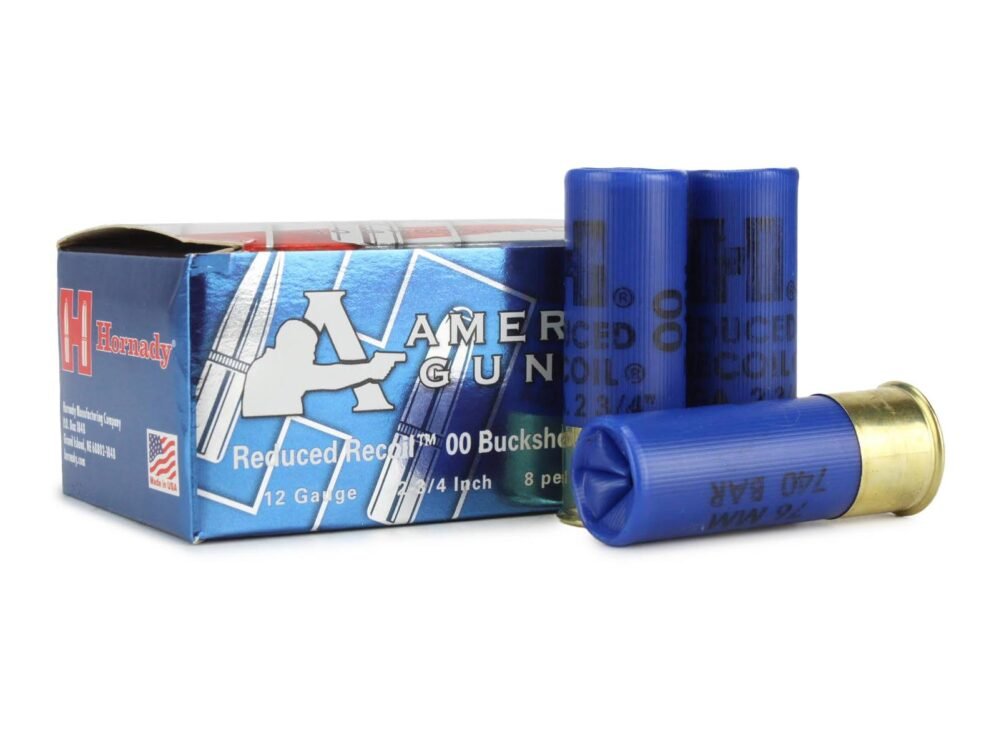
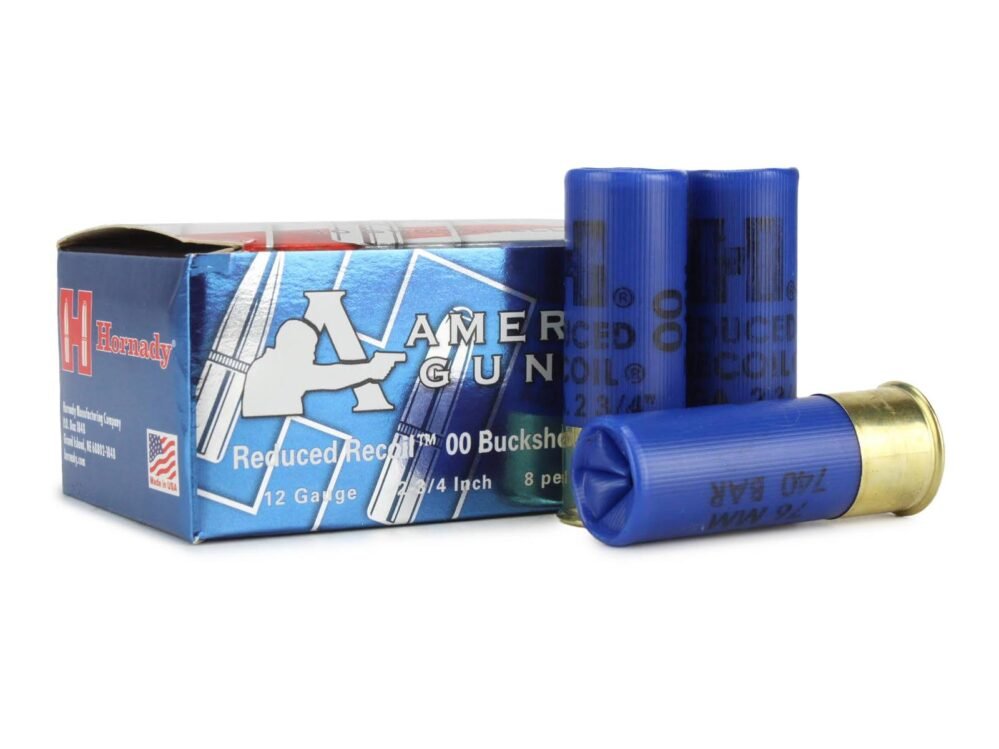
Hornady American Gunner Reduced Recoil 12 Gauge 2.75 00 Buckshot (Box)
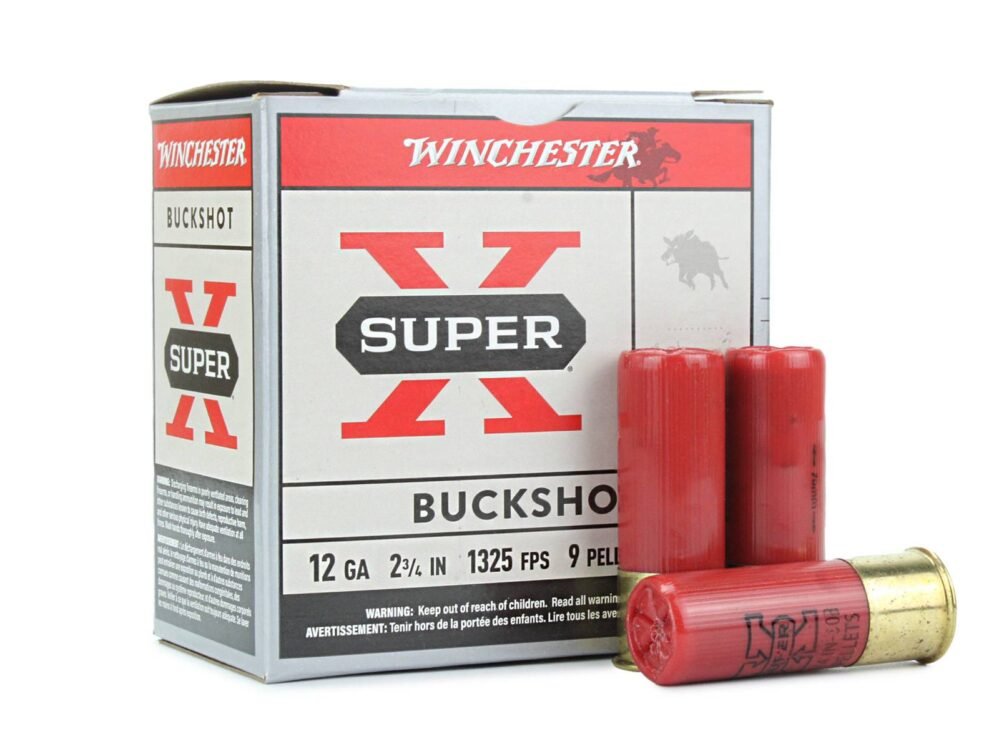
Winchester Super-X 12 Gauge 2-3/4 00 Buckshot 9 Pellet (Box)