
A high rating means little if the cushion is leaking air.
At the firing line, the telltale problem is a cup that rides up behind the jaw, leaves a gap around eyeglass arms, or slides forward every time a child looks down. That leak can matter more than the number printed on the box: earmuff ratings are measured under controlled conditions with the cushions seated correctly.
The first filter is a continuous, low-pressure seal around both ears. The headband needs enough adjustment range to sit centered over the crown, while the cups fully cover the ear without pressing the jaw hinge. “Youth” is not a fit standard, and an adult slim muff can still be too wide. Check the seal after a few head turns; hair, caps, and eyewear can all break it.
- Cup fully encloses the outer ear
- Band stays centered during head turns
- No visible cushion gap at temple or jaw

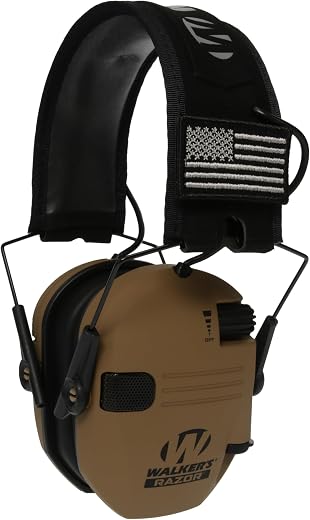

Getting youth shooting ear protection right isn’t about chasing the highest number on the box — it’s about whether the cushion holds a real seal once glasses, hair, a hat, and an actual shooting position enter the picture. The checks below walk through diagnosing where a fit is failing, what the NRR rating can and can’t tell you, and how to shortlist muffs that will actually stay sealed on a smaller head.


Find the real fit failure
A youth model can be too loose in one way and too tight in another. Before comparing ratings, look at where the seal fails: above the ear, behind the jaw, or at the crown. That pattern usually identifies the component at fault.
When the headband is the issue
Insufficient adjustment range shows up as cups sitting too low, a band that arches above the head, or sliders already at their shortest setting. A shorter, more deeply curved yoke can bring the cups into the right vertical position. But band length alone does not guarantee a workable seal.
When the earcups are the issue
A cup may reach the ear yet still be wrong for it. Smaller or shallower cushions can press on the outer ear; cups that are too large may extend onto the jaw or neck, where movement opens a leak. Check that the entire pinna sits inside the cushion opening and that the pad rests on relatively flat skin around it.
When clamping force is the issue
Excessive clamp causes hot spots, jaw pressure, or a child repeatedly lifting the muffs off between shots. Too little force lets the pads drift when the head turns. The useful target is steady, even contact—not the strongest squeeze. Thick, compliant cushions can improve seal comfort, while glasses temples, hair, hood seams, and a stock pressed into the cup can defeat even a well-sized headband.
Run a movement-and-position seal check
-
Set the baseline seal
With eyewear off, center the headband over the crown and seat each cushion evenly around the ear. The cup should not rest on the ear, hair, hat brim, hoodie seam, or the arms of glasses.
-
Check for immediate warning signs
Look for a visible cushion gap, a lower cup riding on the jaw hinge, one cup sitting higher than the other, or a headband already at its shortest adjustment. Any of these can become a leak when the child moves.
-
Add normal range gear
Put on the eyewear intended for shooting, then repeat the check. Thick temple arms commonly create a narrow channel through the cushion; slim, straight arms tend to disturb the seal less.
-
Move through shooting positions
Under close adult supervision and away from live firing, have the child look down, turn side to side, tuck the chin, and assume the intended standing, bench, or prone setup. Watch whether a cup lifts at the rear, climbs onto the ear, or shifts when the cheek meets the stock.
-
Listen and reassess
A seal that changes during movement may produce a sudden change in the sound of rubbing hands, speech, or nearby activity. Re-seat the cups once; if the gap or migration returns, the protector’s geometry or adjustment range is the limiting factor.
Conduct fit checks with unloaded equipment or a non-firing setup; confirm fit again after adding hats, eyewear, or communication accessories.
Read NRR as a comparison
The Noise Reduction Rating (NRR) is a laboratory-derived comparison number, not a promise of identical performance at every firing line. It helps compare passive attenuation between models, but how much NRR is enough for a new shooter depends on the shooting context as much as the label.
Indoor lanes add reflected sound; short-barrel centerfires produce a different impulse than a low-powered rifle outdoors. A cup with a high NRR can lose much of its practical advantage when glasses lift the cushion, a cheek weld shifts the cup, or a smaller head cannot maintain headband tension.
Electronic circuitry does not raise a protector’s passive NRR. Its value is situational awareness, while the cushion seal, cup depth, and stable fit determine the attenuation available when a shot occurs.
A slightly lower-rated model that keeps a continuous seal through movement can outperform a higher-rated model that shifts or leaks.
Choose the protection they will keep on
Passive muffs are the simplest option: no batteries, no controls, and usually fewer distractions. A well-fitting pair can be especially practical for short sessions, provided the cups stay centered and the headband maintains even pressure.
Electronic muffs add low-level sound amplification and impulse shutoff, which can make instructions and range commands easier to hear. Their extra electronics do not improve a poor seal, however; compare electronic and passive options for younger shooters by cup fit and stability first, then by features. Battery doors, volume knobs, and bulk can also create more opportunities for fidgeting.
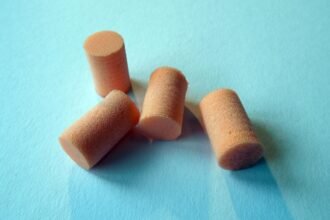
Correctly inserted foam plugs sit in the ear canal, not merely at its entrance. They can be compact under a helmet or slim muffs, but insertion technique, small ear canals, and repeated removal make consistent use harder for some children.
For louder or indoor firing lines, plugs worn under stable muffs provide two barriers. The practical winner remains the setup the child can wear continuously, without cup migration, discomfort, or frequent readjustment.
Compare the dimensions that decide fit
- Adjustment and cup geometry
Record the shortest headband setting, not merely the advertised age range. Shallow or narrow cups can lift at the jaw even when the band appears small enough.
Look forLow minimum setting and cups that fully clear the ear.Avoid“Youth” labeling with no fit-range or cup-depth detail. - Cushions, pivots, and weight
Soft, resilient cushions and freely aligning pivots help maintain an even seal around smaller jaws. Low mass reduces the tendency for cups to creep upward during movement.
Look forReplaceable cushions, smooth pivots, and stable balance.AvoidStiff pads, binding yokes, or top-heavy electronics. - Rating and operating details
Compare NRR within similar designs, then inspect volume controls, shutoff behavior, battery access, and whether controls can be operated with gloves. Electronic features matter only when the seal remains intact.
Look forClear controls and uncomplicated battery changes.AvoidA higher rating used to excuse poor fit or fussy operation. - Trial terms
A return window matters because indoor wear cannot prove a shooting seal. Keep packaging intact and confirm whether fitted cushions or opened batteries affect eligibility.
Look forPlain, documented return conditions.AvoidUnclear exclusions for opened protective equipment.
A smaller-profile adult muff sometimes provides a lower minimum adjustment, deeper cups, or more compliant cushions than a youth-branded alternative. It earns consideration only after a full seal check: the cushions stay centered through head turns, eyewear, and shooting positions, with no jawline gap or upward cup migration.
The label is a starting point; the stable seal is the deciding evidence.
Accessories and shooting position can break the seal
Glasses, hair, and hats create hidden gaps
A muff that fits in a mirror can leak once glasses, hair, or a hat enter the picture. Thick eyewear temples create a channel beneath the cushion; braids, ponytails, and loose hair can do the same. Bulky cap seams, hood edges, and hat buttons also prevent the pad from lying evenly against the head.
Low-profile cups sit closer to the head and usually interfere less with a rifle or shotgun stock. That can preserve a consistent cheek weld for youth who regularly shoot long guns, especially from prone or bench positions. The trade-off is less internal depth, which can make some ears contact the liner or reduce comfort during long sessions.
Deeper cups often provide more ear clearance and cushion volume, but may touch the stock or shift during a firm mount. They tend to suit pistol-focused sessions and long-gun setups with generous stock clearance. Fit checks are most revealing when performed with the child’s normal glasses, hair arrangement, hat, and shooting position—not as a standalone try-on.
| Best match | Cup profile | Stated rating | Power | Main compromise | ||
|---|---|---|---|---|---|---|
|
ProCase Kids Short crown-to-ear | Very short head | Youth-sized | NRR 21 dB* | Passive | Lower isolation | Check fit |
|
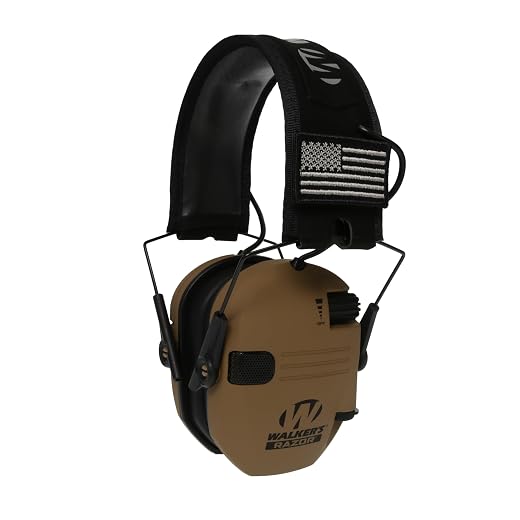
Razor Slim Stock clearance | Rifle stock | Extra slim | NRR 23 dB | Replaceable batteries | Adult headband | Check fit |
|
Razor Recharge Long sessions | Communication | Slim electronic | NRR 21 dB | USB-C rechargeable | 21 dB indoors | Check fit |
ProCase Kids: sized for a short crown-to-ear span
For a very short crown-to-ear span
The youth-oriented ProCase is the clearest starting point when adult muffs bottom out before the cushions reach the ear centers. Its adjustable headband, padded pressure-diffusing band, and soft cups are designed around smaller heads rather than merely reduced cup thickness. The listed protection claim is NRR 21 dB (the title also cites SNR 27 dB—these are different systems and not interchangeable).
It is passive, with no batteries or ambient-sound function. That simplicity helps for a child who dislikes controls, but it also means speech and range commands remain muffled. The compromise is isolation: 21 dB is modest for loud indoor firing lines, where maintaining an unbroken seal and considering compatible added protection matters most.
Walker's Razor Slim: extra-slim cups for stock clearance
For stock clearance and awareness
Razor Slim’s extra-slim cups reduce interference with a rifle or shotgun stock—often the decisive problem once a smaller wearer can physically get a muff onto the head. Two high-gain microphones amplify safe ambient sound, while loud impulses are limited; the recessed external knob makes volume changes less likely to be bumped.
The commonly stated NRR is 23 dB. Its padded metal wire-frame band is durable, but it remains an adult-format muff: published evidence does not establish its minimum crown adjustment. Check whether the cups sit over, not above, the ears at the shortest setting. It uses replaceable batteries, and electronic function adds both awareness and another failure point.
Razor Rechargeable: slim electronic profile with USB-C charging
For communication over long sessions
This Razor variant pairs a slim electronic profile with a stated 21 dB NRR, a recessed volume control, and a comfort headband. Its 300 mAh internal battery is rated for up to 80 hours; USB-C charging and an LED level indicator remove the need to carry disposable cells. That arrangement suits repeated sessions where amplified conversation and commands are useful.
The compromise is not fit-proofing. It is still listed as an adult product, and the available information does not specify its minimum adjustment range, so a short crown-to-ear distance can still leave the cups riding high. Its 21 dB rating also makes it less compelling as a stand-alone choice on particularly reverberant indoor lanes.
Add layers only after the muff fits
A correctly fitted muff is the starting point. Doubling up—foam plugs under muffs—can add useful protection for sustained indoor firing, muzzle brakes, short barrels, or busy firing lines where reflected sound raises the overall exposure.
That extra layer does not rescue a muff that rides up, pinches painfully, or loses its cushion seal when the head turns or meets the stock. A displaced outer cup can still leave the ear vulnerable to side leakage and can make the wearer remove the whole setup. Correct the headband range, cup placement, eyewear interference, or clamp-force problem first.
For ear protection suited to indoor ranges, low-profile muffs over properly inserted plugs are often easier to keep sealed around a cheek weld than bulky cups. The plug must sit fully in the ear canal; a plug protruding far outside the ear can push the muff cushion out of position.
Use the same movement-and-position check with both layers in place. If the combined setup causes pain, cup migration, or poor communication, it is not a dependable upgrade.
The strongest practical combination is a stable muff seal plus correctly inserted plugs. If either layer changes position during shooting, reassess the fit rather than relying on the second layer.
Frequently Asked Questions
What does the NRR rating on ear protection actually measure?
The Noise Reduction Rating (NRR) is a laboratory-derived comparison number, not a guarantee of identical protection at every firing line. It helps compare passive attenuation between models, but how much NRR is enough for a new shooter depends on the shooting context as much as the number on the label.
Do electronic ear muffs provide more hearing protection than passive muffs?
Electronic circuitry does not raise a protector’s passive NRR. Its value is situational awareness—amplifying safe ambient sound and limiting loud impulses—while the cushion seal, cup depth, and stable fit are what determine the attenuation actually available when a shot occurs.
How should foam ear plugs be worn for them to work properly?
Correctly inserted foam plugs sit in the ear canal itself, not merely at its entrance. Insertion technique, small ear canals, and repeated removal can make consistent use harder for some children, so fit should be checked each time they go in.
When should a child wear plugs and muffs together?
Doubling up—foam plugs worn under muffs—can add useful protection for sustained indoor firing, muzzle brakes, short barrels, or busy firing lines where reflected sound raises overall exposure. The plug still needs to sit fully in the ear canal, and the outer muff still needs to keep a stable seal, or the combination will not reliably improve on a single layer.
What NRR do the ProCase and Walker's Razor models mentioned in this guide list?
The ProCase Kids Ear Muffs are listed with a 21 dB NRR (the title also cites SNR 27 dB, a different measurement system that is not interchangeable with NRR). The Walker’s Razor Slim Electronic commonly lists a 23 dB NRR, and the Walker’s Razor Rechargeable lists a 21 dB NRR with a 300 mAh battery rated for up to 80 hours.
Why might a low-profile muff work better than a deeper one for a young shooter?
Low-profile cups sit closer to the head and usually interfere less with a rifle or shotgun stock, which helps preserve a consistent cheek weld. Deeper cups offer more ear clearance and cushion volume but can touch the stock or shift during a firm mount, so they tend to suit pistol-focused sessions more than long-gun setups with tight stock clearance.
Make fit verification a routine, not a one-time purchase
- A muff that stays sealed during ordinary range movement is more valuable than a higher-rated model that gets shifted or removed.
- Repeat the check after growth spurts, cushion replacement, or changes in glasses, hairstyle, hats, and firearm setup.
Start by naming the failure: cups that sit too low, cushions that leak around glasses, excessive clamp force, or a headband that cannot hold position. Then test the candidate with the child’s usual eyewear, hair arrangement, hat if relevant, and unloaded shooting posture. A few head turns, looking up and down, and cheek-weld motions quickly show whether the cushions stay evenly compressed.
Keep the protection only if it remains comfortable enough to wear for the full session and maintains a consistent seal without repeated readjustment. Recheck that result as the child grows and whenever cushions flatten, headbands loosen, or accessories change; a formerly good fit can quietly become unreliable.
ProCase Noise Cancelling Headphones for Kids Toddler, SNR 27dB Noise Reduction Ear Muffs, Hearing Protection for Monster Jam, Concerts, Fireworks, Shooting,...
Features
| Brand Name | ProCase |
| Global Trade Identification Number | 04259405550535 |
| Age Range Description | Little Kid |
| Style Number | PC-08361606 |
| Manufacturer Part Number | PC-08361606 |
| Item Type Name | Earmuffs |
| Unit Count | 1.0 Count |
| Manufacturer | Procase |
| ASIN | B07QHBYT26 |
| Material Type | Acrylonitrile Butadiene Styrene, Stainless Steel |
| Size | Kids Size |
| Noise Control | Sound Isolation |
| Single Number Rating SNR | 27 Decibels |
| Noise Reduction Rating NRR | 27 Decibels |
| Fit to Size Sentiment | Positive |
| Apparel Closure Type | Adjustable |
| Fit Type | standard |
| Item Dimensions | 6 x 4 x 0.6 inches |
| Color | Blue |
| Product Style | Noise Cancelling Safety Ear Muffs |
| Collection Name | Kids Noise Cancelling Headphones |
| Pattern | Solid |
- solid ABS-shell and thickened noise-dampening foam
- Imported
- ProCase Kid-friendly Noise Cancelling Ear Muffs are made with noise-dampening sponge material and offer a NRR 21dB rating which certified by ANSI S3.19 (US) & CE EN352-1(EU), efficiently filter out sounds to a minimum for hearing protection. The kids ear muffs adopt eco-friendly materials and non-toxic materials to ensure safety during daily use. With pressure diffuser technology, the padded headband reduces the pressure and provides maximum comfort for your kids without adding much weight or bulks. Adjustable headband and soft ear cups ensure snug fit for various head size. It is perfect for monster jam / monster trucks, sports events, Disneyland, concerts, movie theaters, fireworks, etc.
- Constructed by solid ABS shell and thickened sound-absorbing foam, our earmuffs achieve SNR 27 dB noise-isolation, ANSI S3.19 (US) and CE EN352-1(EU) both certified, which can reduce sensory overload, perfect for kids with autism or sensory issues
- The adjustable headband features ergonomics telescopic arms that can stretch up to 32 mm/ 1.3 inch on each side, which makes it possible to cover various head sizes for different ages of kids. No worries about kids’ fast growing
- Kindly Note: For more efficient sound isolation, the earmuffs are a little tight before using. If you feel tight for your kids, we recommend putting it on a box or other objects for 1-2 days to stretch the headband and get it looser
- Crafted with skin-friendly materials, the well-padded headband offers maximum comfort and snug fit with less pressure. The 360° rotatable cups and ultra-soft ear cushions provide long-lasting comfort. In addition, the holeless pivot frees your worry of hair getting stuck
- Compact folding design is for easy storage and convenient portability, enabling you to bring them to any noisy scenes, such as monster jam truck show, fireworks, airplane travel, sports events, Disneyland and concerts
Walker's Razor Slim Electronic Muff
- PROTECT YOUR HEARING: Walker's Razor Ear Muffs have an ultra low-profile design featuring extra slim ear cups, for a secure fit; these ear muffs protect against hazardous noises, while still letting you clearly hear everything going on around you
- SOUND AMPLIFICATION: Walker's Razor Ear Muffs amplify safe sounds using two hi-gain microphones to provide clear omni-directional hearing; The low end frequencies are enhanced to produce accurate, natural sound
- RUGGED DESIGN: These muffs feature a rugged design with a rubberized coating, helping to prevent damage to the interior electronics; the housing is made from a sound dampening composite; the headband is a padded metal wire frame
- EASY-TO-USE CONTROLS: These muffs have a volume control knob on the outside that is slightly recessed, providing easy-to-use controls and preventing accidental volume adjustments; the battery door also opens from the exterior
- LISTEN TO MUSIC: These ear muffs also have an audio input jack, allowing you to plug in your phone or other favorite sound source, effectively converting these ear muffs into a set of headphones with hearing protection
- FAST REACTION TIME: Sound activated compression technology features a 0.02 second reaction time to ensure your hearing is always protected from sudden loud noises during shooting activities
Walker's Rechargable
Features
| Brand Name | Walker's |
| UPC | 888151029930 |
| Global Trade Identification Number | 00888151029930 |
| Age Range Description | Adult |
| Style Number | GWP-RSEMRC |
| Manufacturer Part Number | GWP-RSEMRC |
| Included Components | Razor Rechargeable Muff - Black |
| Item Type Name | Razor Rechargeable Muff - Black |
| Unit Count | 1 Count |
| Manufacturer | GSM LLC |
| ASIN | B08ZGQLPRY |
| Noise Control | Sound Isolation |
| Single Number Rating SNR | 21 Decibels |
| Noise Reduction Rating NRR | 21 Decibels |
| Fit to Size Sentiment | Positive |
| Apparel Closure Type | Pull On |
| Fit Type | Over the Head |
| Item Dimensions | 1 x 1 x 1 inches |
| Color | Black |
| Product Style | Walker's Earmuffs |
| Pattern | Black |
| Material Type | Plastic |
| Garment Size Country | United States |
| Size | One Size |
- Plastic
- Made in the USA or Imported
- HIGH PERFORMANCE - Enjoy up to 80 hours of battery life for extended shooting sessions with the RAZOR Rechargeable safety earmuffs; This hunting muff features a USB Type-C charging port (cable included) & LED battery level indicator for added convenience
- RELIABLE SAFETY - Protect your hearing with these range shooting earmuffs, featuring advanced noise reduction technology & frequency tuning for natural sound clarity; With a noise reduction rating of 21dB, these lightweight earmuffs safeguard your hearing
- DURABILITY & COMFORT - With durable sound-dampening composite rubber housing, the hunting muff is built to last; The comfort headband keeps the protective muffs in place during rigorous training; The collapsible design adds convenience for on-the-go use
- CLEAR BALANCED SOUND - The two hi-gain omnidirectional microphones pick up ambient noise and deliver ultra-clear amplified sound through the full dynamic high-definition speakers; A 3.5mm audio jack is added to connect to your electronics as well
- SOUND-ACTIVATED COMPRESSION - Boasting a 0.02-second sound-activated compression, these outdoor hunting earmuffs swiftly compress loud noises to safe levels; This enables enhanced protection and situational awareness in any shooting environment


23 Comments
I like the advice to prioritize what they will actually keep on. My daughter dislikes the pressure of passive muffs but pays attention better with electronic ones because she can hear instructions.
Is it reasonable to choose the electronic option with a slightly lower NRR if it seals better and she won’t keep taking it off?
Yes—between two properly rated options, the one that consistently seals and stays on is often the more practical choice. A higher printed NRR cannot compensate for gaps, shifting cups, or a child repeatedly lifting a muff off an ear. Compare the ratings, but test both options with her eyewear, movement, and normal shooting position before deciding.
This was our exact tradeoff. My daughter wears the electronic pair correctly for the whole session; the higher-rated passive pair spent half the day around her neck. Pretty easy decision after that.
Does hair actually matter that much? My kid has thick curly hair and refuses to tie it back for anything, including apparently basic safety lol. I can see hats being a problem, but I wasn’t sure about hair around the cushion.
For a 9-year-old using a rifle with a normal cheek weld, how do you tell whether cup depth is enough before taking them to the range? If the stock pushes the bottom of the cup a little, is that automatically a failed seal?
A stock touching the outer shell is not automatically a problem; what matters is whether it changes cushion contact. At home, have them shoulder the unloaded rifle in their normal position and look/feel for a visible gap at the lower rear or lower front edge. If the cup gets pushed upward, rotated, or lifted away from the head, that setup is likely to leak during firing.
Also check it with the exact glasses they wear. My niece’s pair had thick arms that created a tiny gap we totally missed until she turned her head.
Do foam plugs under muffs make sense for a beginner who still struggles to insert plugs correctly? I don’t want to create a false sense of security if the plugs are barely in, but our indoor range is pretty loud.
This is the first article I’ve found that explains why my daughter’s muffs look fine in the mirror but slide up after a few rounds. Is cup migration usually a sign the headband is too long, or can it mean the cushions are just too stiff?
It can be either, but where the gap appears is useful. If the whole muff rides upward or the cups sit too high even at the shortest setting, the headband geometry or minimum adjustment is probably the issue. If the band stays put but a cushion lifts around the jaw or behind the ear, cushion shape, cup angle, or clamp force is more likely.
We had the jaw-line gap problem with my son. Softer cushions helped a little, but a slimmer cup that sat farther back made the bigger difference.
Could you clarify “minimum adjustment”? Is that the measurement from the top of the headband to the cup, or the shortest overall inside height? I’m trying to compare listings and they all seem to measure something different.
Maybe I’m being picky, but rechargeable electronic muffs worry me for kids because dead batteries always seem to happen at the exact wrong time. Are they still providing passive protection when the electronics are off, assuming the cups seal properly?
In most electronic earmuffs, the passive cup-and-cushion protection remains in place when the electronics are off or the battery is depleted. The amplified awareness feature stops working, but the physical hearing protection does not depend on it. Still, confirm that point in the specific model’s manual, and treat a good seal as the non-negotiable part.
That’s been my experience. Dead batteries make conversation annoying, not the muffs useless. I keep spare batteries anyway because kids suddenly need to hear every snack-related instruction.
Thank you for saying NRR isn’t a magic number. I kept comparing the biggest number on the package and wondering why the “better” pair was clearly leaking around my kid’s glasses. Marketing makes this way more confusing than it needs to be 🙃
I appreciate the distinction between “youth” and actually small-head compatible. My 11-year-old is petite, but she hates anything that clamps hard enough to leave red marks.
Is there a reasonable way to judge clamp force from product specs? Most listings give NRR and maybe weight, then nothing useful about fit.
The movement check is such a good point. We did a living-room fit test, then at the range my son looked down to load magazines and the cups crept above his ears. Not ideal, obviously.
Would you repeat the whole check every visit, or just when changing glasses/hat/gear?
A quick version is worth doing every visit: cups centered over the ears, cushions lying flat, then a few head turns and the usual shooting position. The full check is especially important after changing eyewear, hats, hairstyle, firearm setup, cushions, or after a growth spurt. It becomes a fast habit once they know what a good seal feels like.
We make ours do a “look left, look down, shoulder it” routine before the line goes hot. Takes maybe ten seconds and catches most of the slipping.
I bought a youth pair based on the age range on the box and the cups barely covered my 7-year-old’s ears. The label said 6–12, which now feels almost comically unhelpful.
When you say cup coverage, should the entire ear fit inside with room around it, or is light contact with the ear okay?
The entire ear should sit inside the opening without being folded, pinched, or pressed against the cushion. Light contact with the inner cup liner can be acceptable, but the cushion itself needs to seal against the head around the ear, not against part of the ear. If the ear is crowding the opening, fit and comfort often get worse as the session goes on.
Yep, the “6–12” thing got us too. We switched to a compact adult model and it fit my small 10-year-old much better than the designated youth one.