
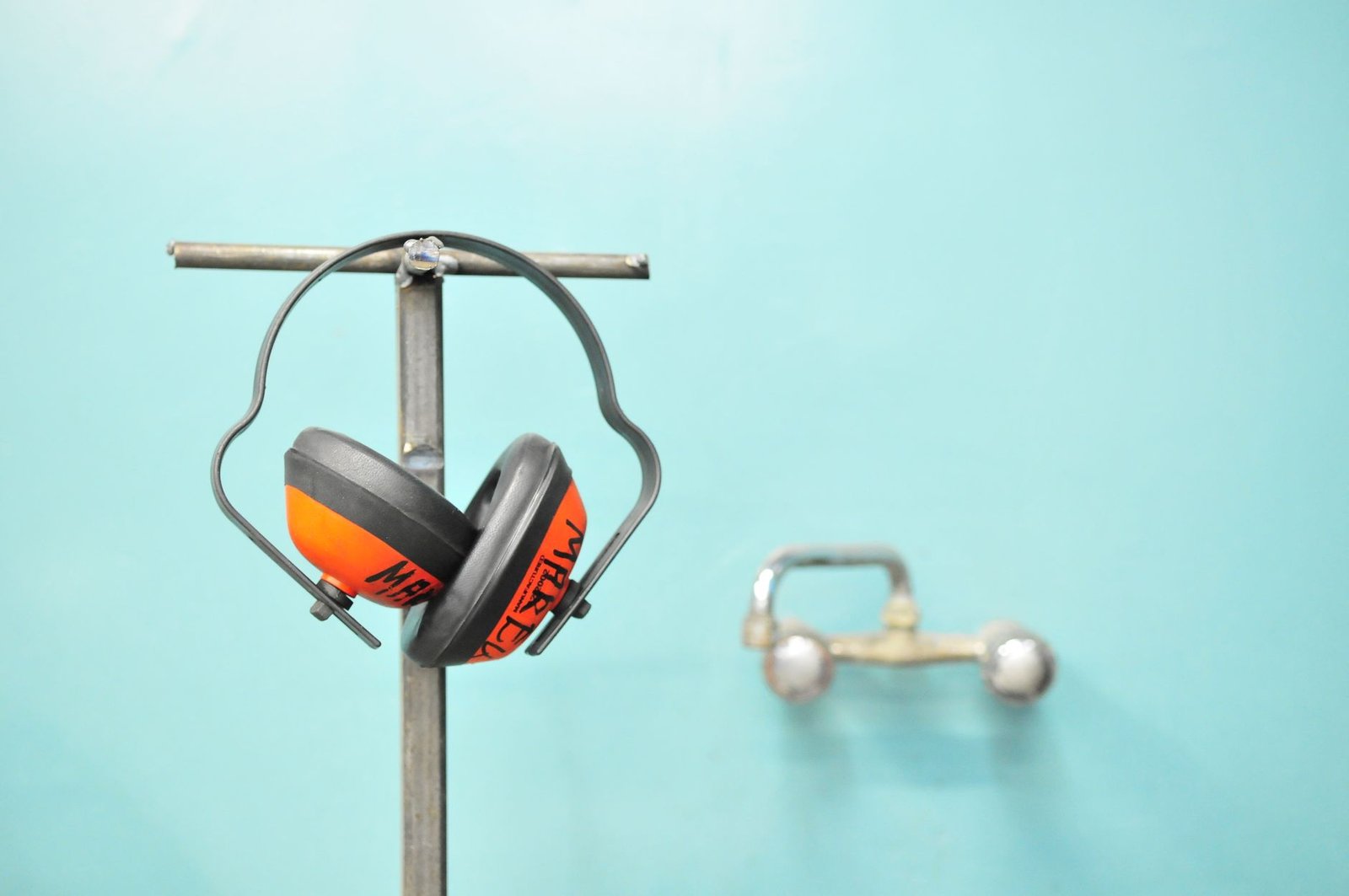
The best first pair is the pair that stays sealed from the first shot to the last.
At the firing line, a compact pistol report can feel less like a loud sound than a sudden physical crack. That is why hearing protection is not a minor accessory: its value depends on uninterrupted, correct wear during every live-fire moment.
A first-time visitor will encounter passive plugs, passive earmuffs, and electronic earmuffs, plus confusing Noise Reduction Rating (NRR) figures. The rating matters, but fit matters first: foam plugs need proper insertion, while muffs need cushions that fully seal around the ears. Glasses, thick hair, hat brims, and a poor headband position can break that seal. A comfortable setup is more likely to remain in place through conversation, instruction, and repeated shots—when protection is actually needed.
- Electronic muffs can amplify ordinary range commands while limiting loud impulse sounds.
- Doubling plugs with muffs is commonly used for higher-noise indoor lanes or firearms with sharper reports.
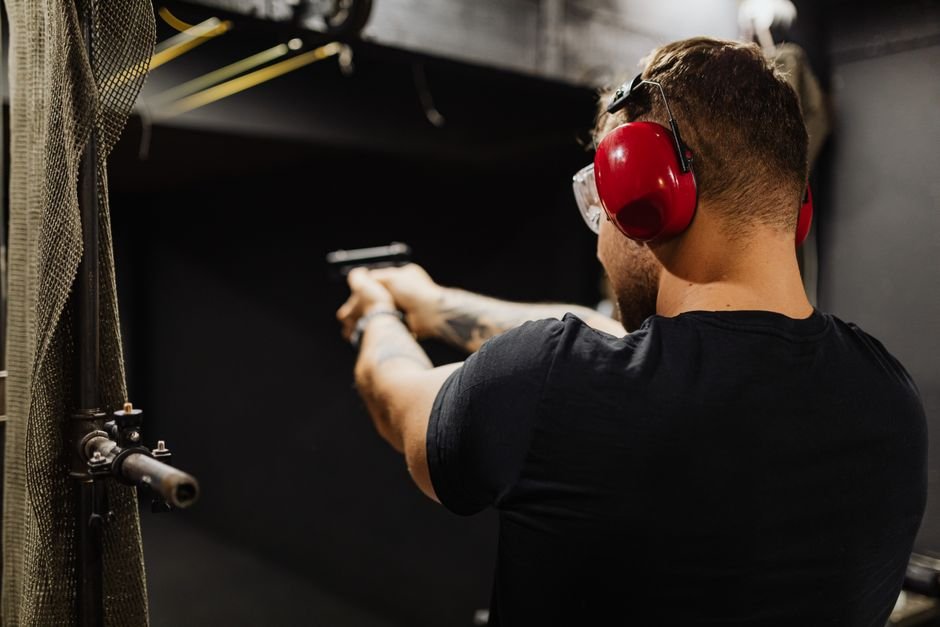
What the NRR can—and cannot—tell
Noise Reduction Rating (NRR) is a standardized U.S. laboratory rating for how much sound a protector reduced under controlled test conditions. It is useful for comparing similarly certified earmuffs and plugs: a higher NRR generally indicates greater potential attenuation when the seal and insertion are correct.
It cannot produce one universal answer to how much rating is enough at a shooting range. The test rating is not a direct prediction of protection during gunfire. Firearms create extremely brief impulse noise, while actual exposure changes with firearm type, barrel length, ammunition, muzzle devices, lane position, and whether shooting occurs indoors or outside.
Indoor walls and partitions can reflect sound back toward the shooter; a nearby braked rifle may matter more than the rating printed on a personal protector. Eyeglass temples, jaw movement, and imperfect plug insertion further reduce real-world performance. NRR is therefore a comparison tool—not a conversion chart from a box label to a universal firing-line outcome.
A 30 dB NRR does not mean every gunshot reaching the ear is reduced by exactly 30 dB. Laboratory attenuation, fit, and impulsive range noise are different measurements.
Plugs, passive muffs, and electronic muffs
Three common formats
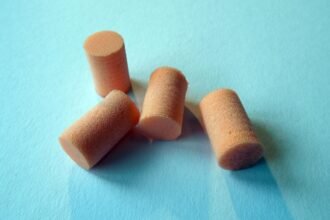
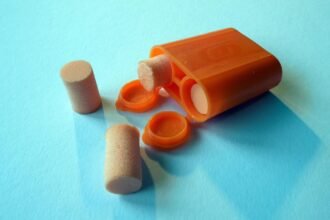
Earplugs—foam, flanged, or custom-molded—are light, inexpensive, and easy to carry. They fit under helmets and muffs, but foam plugs only work well when inserted deeply and allowed to expand; a plug sitting at the ear opening offers far less isolation.
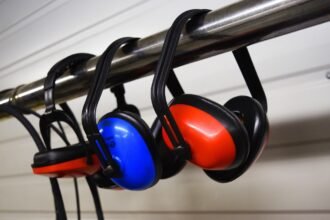
Passive earmuffs surround the ear with insulated cups and need no batteries. They are quick to put on and simple to inspect, although a rifle stock can disturb the lower cup seal. The practical trade off between electronic and passive muffs often comes down to bulk, awareness, and whether batteries are worth managing.
Electronic muffs add external microphones and level-dependent circuitry. Quiet sounds such as conversation and range commands can remain audible, while sharp report noise is limited. That awareness is their main advantage—not automatically greater attenuation. Their baseline protection still depends on the cup design, cushions, headband tension, and an intact seal.
For a first setup, handling each format while mounting an unloaded long gun can reveal stock interference, glasses-related gaps, and whether plugs plus muffs are needed for the environment.
Match protection to the range
An outdoor firing line disperses sound into open air, though covered benches, side berms, nearby walls, and muzzle brakes can still create sharp reflections. A single well-fitted plug or muff may be workable for lower-intensity outdoor sessions when it remains sealed and comfortable throughout.
Indoor lanes are less forgiving. Hard walls, ceiling baffles, adjacent shooters, and short distances to neighboring muzzles keep energy in the space; rifles and braked handguns can be especially punishing. That is why whether earmuffs alone are sufficient indoors depends on the specific lane, firearm mix, and how reliably the muff cushions seal around eyewear.
For busy indoor ranges, many experienced shooters use dual protection: properly inserted plugs beneath earmuffs. Electronic muffs can still provide amplified speech and range commands while the plugs supply a second barrier. The arrangement also offers practical redundancy when a muff seal shifts during movement.
Do not add the two package NRR figures together. Combined performance is estimated with a conservative adjustment because the same sound pathways, fit errors, and real-world impulse conditions affect both layers. A closer look at how plugs beneath muffs change the effective NRR estimate helps put the labels in perspective.
Plugs plus muffs are common where reflected noise, neighboring shooters, or high-volume firearms make a single layer feel marginal. Fit still determines whether the added layer delivers its intended benefit.
A secure seal has to stay secure
A muff’s cushion and a plug’s ear-tip are not comfort details added after protection is chosen. They are the interface that creates attenuation. A small opening under a cup can admit disproportionately more sound than its size suggests, while a plug that slowly backs out changes fit without announcing itself.
A practical fit check
Before live fire, confirm that muffs sit symmetrically, with each cushion fully surrounding the ear and the headband applying even pressure. Glasses temples, thick hat seams, loose hair, and hoodie drawstrings can create leak paths; thin, low-profile eyewear temples usually interfere less. The cups should not rock when the jaw moves or when the head turns.
For foam plugs, roll the plug into a narrow, crease-free cylinder, insert it with clean hands, and hold it in place while it expands. After fitting, only a small portion should remain visible. A gentle tug should not dislodge it, and speech should sound notably quieter and more internal.
Pressure points, heat, jaw fatigue, or an unstable seal matter because discomfort encourages lifting a cup between strings or removing protection early. The most capable protector is effective only while worn correctly. A short dry fit before the session can reveal conflicts with eyewear, stock weld, or headwear before range noise makes adjustment harder.
When standard muffs do not fit
Clearance and headband geometry
A conventional earmuff can collide with a rifle stock, pushing the cup upward as the cheek settles on the comb. That disrupts both cheek weld and the cushion seal. Low-profile designs reduce cup depth, but the relevant test is the mounted shooting position—not how slim they look on a shelf. A closer look at rifle-friendly low-profile models helps separate genuinely shallow cups from cosmetic styling.
Smaller heads create a different problem: an adult headband may bottom out before the cups sit centered over the ears. The result can be excess clamp at the jaw, gaps above the ear, or cups that shift with movement. Hearing protection made for smaller head sizes often uses a shorter adjustment range and lighter cup geometry. Specialized fit research is warranted when a headband cannot maintain a centered, stable seal through normal movement.

Eyewear changes the fit
Safety-glasses temples pass directly through the area a muff cushion needs to compress. Thick, curved, or rubberized arms can hold the cushion away from the head; hair, cap brims, and mask straps can create similar leak paths. The result is not always obvious from the outside.
A quick fit check can help: seat the cups, move the jaw and head through normal range motions, then feel for cushion displacement. How safety-glasses arms affect the cushion seal explains why even a narrow channel matters.
For long sessions, thin, straight temples and cushions that remain comfortable without excessive clamping tend to support more consistent wear. Compare muffs that stay comfortable over glasses rather than assuming every high-rated model fits the same.
Choose by the conditions that expose weaknesses
- Start with the loudest likely venue
An outdoor lane with space between shooters creates different demands from a reverberant indoor bay. For enclosed or consistently busy ranges, the strongest indoor-range options often make dual protection a sensible starting configuration, not an upgrade based on a bigger number.
Look forProtection that matches range acoustics and neighboring fire.AvoidTreating one muff setup as universal. - Decide whether conversation matters
Electronic muffs can pass speech and range commands while limiting loud impulses; passive muffs remove batteries and controls from the equation. A budget-muff comparison is useful only after deciding whether awareness, battery type, runtime, and backup power are worthwhile.
Look forUseful amplification with straightforward power management.AvoidAssuming electronics improve attenuation by themselves. - Test the seal in the firing position
Glasses, jaw movement, and a rifle stock can lift cushions or disrupt cheek weld. Low-profile cups help only when the headband tension and cushion shape still maintain contact.
Look forA stable seal through movement and stock mounting.AvoidThin cups that sacrifice fit for clearance. - Buy for repeated use, not shelf appeal
Replaceable cushions, protected microphones, robust hinges, and controls usable with gloves matter over time. Headline rating, familiar branding, and price alone reveal little about those details.
Look forServiceable parts and durable everyday controls.AvoidChoosing on rating, logo, or cost alone.
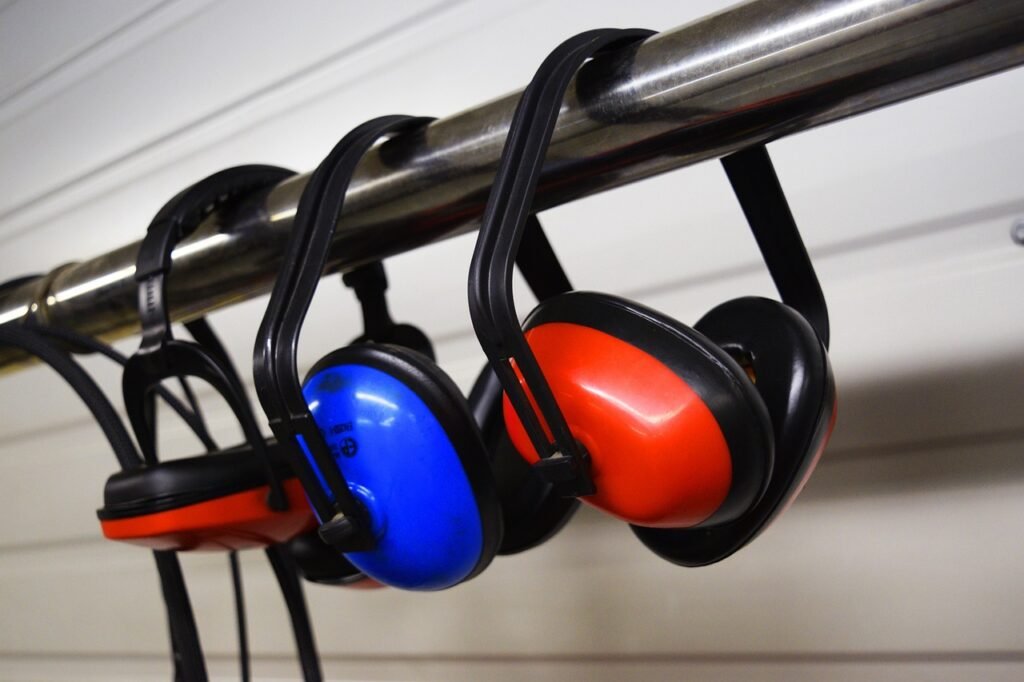
A five-minute check before every session
-
Examine the parts that make the seal
Look for flattened, cracked, stiff, or detached ear cushions; bent headbands; and debris on the sealing surface. For plugs, discard damaged or dirty pairs and confirm that reusable plugs remain supple and intact.
-
Fit protection before entering the active area
Seat plugs fully, then place muffs so both cushions contact bare skin around the ear. A brief head turn, jaw movement, and chin tuck can reveal a cushion lifting at the glasses temple or hairline.
-
Confirm electronic function without trusting it blindly
With electronic muffs, check battery charge, power-on behavior, volume adjustment, and both microphones before exposure to gunfire. Electronics provide awareness only when functioning; the passive seal remains the primary barrier.
-
Recheck after adding eyewear or headgear
Safety glasses, caps, hoods, communication gear, and a different cheek weld can shift cushions or create a channel beneath them. Repeat the movement check after every change, not just at initial fitting.
-
Treat wear items as consumables
Cushions, foam plugs, and batteries age on different schedules. Keeping spares in the range bag prevents a worn seal, exhausted battery, or missing plug from turning a well-chosen setup into a compromised one.
If a seal cannot be restored, moving away from the active firing area provides time to correct the setup.
Frequently Asked Questions
What does the NRR rating actually tell me?
Noise Reduction Rating (NRR) is a standardized laboratory rating that lets you compare similarly certified earmuffs and plugs. It is not a direct prediction of real-world gunfire protection, since fit, firearm type, and whether you’re indoors or outside all change actual exposure.
Should I use plugs, passive muffs, or electronic muffs?
Earplugs are light and easy to carry but need deep, correct insertion. Passive muffs need no batteries and are quick to put on. Electronic muffs add microphones so you can hear range commands while still limiting loud impulse noise, but their baseline protection still depends on the seal.
Do I need double protection at an indoor range?
Many experienced shooters use plugs beneath muffs at busy indoor ranges, where hard walls and nearby shooters keep noise energy in the space. Don’t simply add the two NRR numbers together — combined performance is estimated with a conservative adjustment.
How do I check that my hearing protection is sealed correctly?
Confirm muffs sit symmetrically with each cushion fully surrounding the ear, and check that the cups don’t rock when you move your jaw or turn your head. For foam plugs, only a small portion should remain visible after insertion, and a gentle tug shouldn’t dislodge them.
Why do my glasses affect how well my earmuffs seal?
Safety-glasses temples pass directly through the area a muff cushion needs to compress, and thick or rubberized arms can hold the cushion away from the head. Thin, straight temples tend to interfere less and support a more consistent seal.
Start With Protection That Stays Put
- A modest protector worn continuously with an intact seal is more useful than a feature-rich model that is uncomfortable or poorly fitted.
- The setup can change as shooting environments, firearm types, and stock positions reveal new fit or noise challenges.
For a first range setup, the priority is uncomplicated: choose hearing protection that forms a dependable seal and provides attenuation suited to the actual setting. A quiet outdoor bay, a reverberant indoor lane, a rifle stock pressed to the cheek, and a shooter with glasses can produce very different results from the same earmuff or plug. Fit checks matter more than impressive claims on packaging.
Electronic amplification is valuable when conversation, range commands, or environmental awareness must remain audible, but it is not the starting requirement. It becomes worthwhile after the basic fit and protection question is solved. In louder, more enclosed, or sustained-fire conditions, properly fitted plugs beneath muffs provide an added margin. The best arrangement is the one the wearer can seal correctly, keep on without interruption, and match to the venue and shooting position.


5 Comments
I’m setting up for my first indoor range visit and wear prescription glasses. Is the leak from the glasses really enough that I should use plugs under muffs, or is that mostly for rifle shooters? The whole NRR thing has been more confusing than helpful, honestly.
It can matter indoors even with handguns, because reflected sound and nearby shooters can make the environment more demanding. Glasses do not automatically mean your muffs are ineffective, but thick or sharply angled temples can hold the cushion away from your head. Try the muffs with your actual glasses, move your jaw and head around, and check that both cushions remain evenly seated. For a busy indoor range, properly inserted foam plugs under muffs are a sensible extra layer.
I use thin-temple shooting glasses and it made a noticeable difference compared with my regular chunky frames. Still use plugs indoors though—cheap insurance.
Glad you emphasized that electronic muffs don’t magically provide more protection. I had assumed “electronic” meant safer, period. For a beginner, is there any downside to starting with passive muffs besides not hearing conversations as well?
How do you know whether the ear cups are too big for a smaller head? I borrowed a pair that felt comfy sitting still, but when I leaned down to pick up brass they shifted a little. Not sure if that is normal or a sign they’re wrong.