
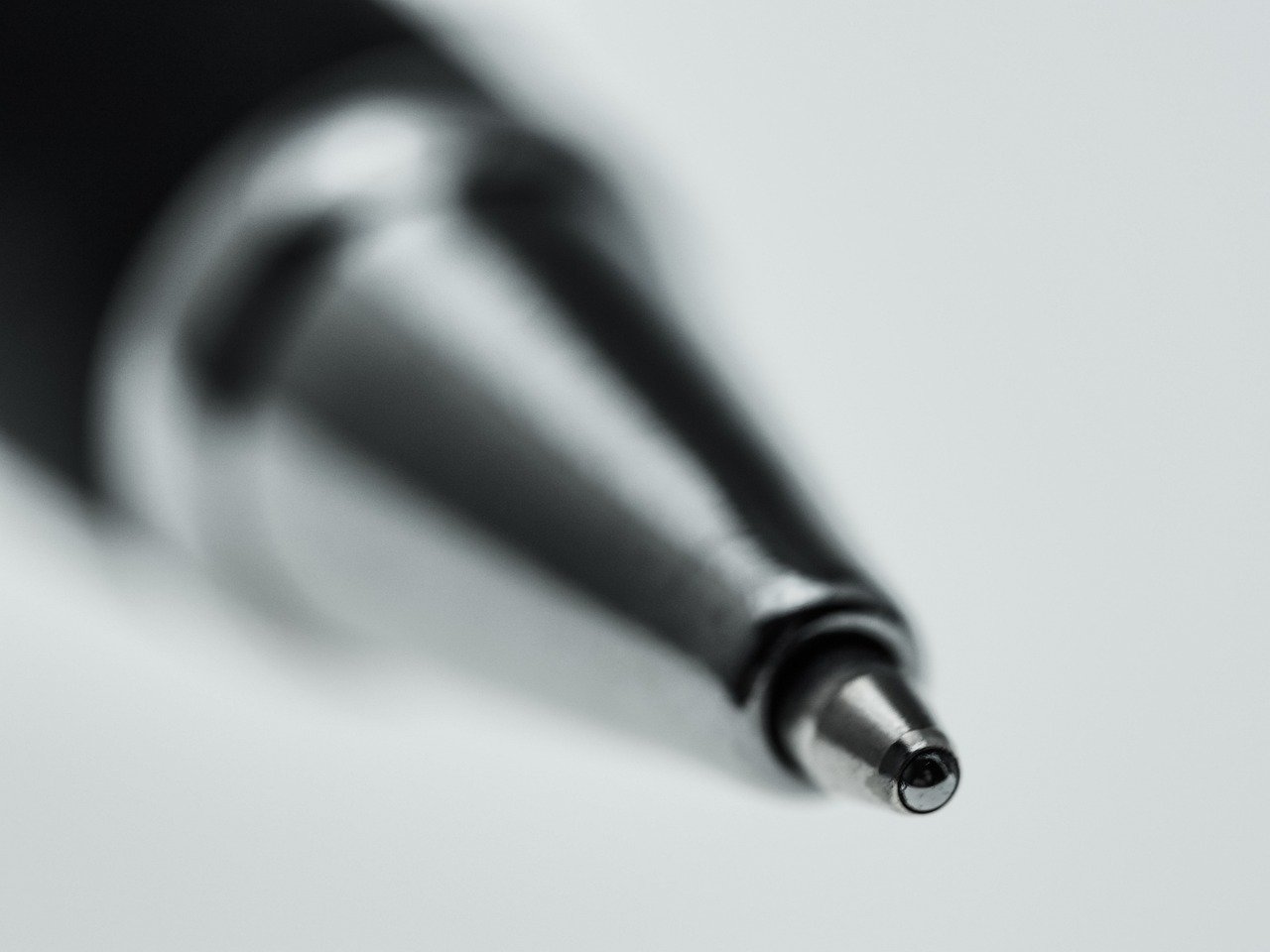
A nearly identical refill can still be a complete mismatch.
A favorite click pen goes dry at the worst moment; an online listing shows a familiar-looking cartridge, and the replacement arrives a few millimetres too long, too narrow, or unable to engage the tip. Ink colour and brand name are weak clues. Compatibility is governed by the refill’s physical standard: overall length, barrel diameter, tip profile, rear end, and the way its spring and actuator meet.
That matters especially in everyday-carry pens and notebooks, where a compact body may use a proprietary refill despite resembling a common model. A reliable order starts with the spent refill, not the pen’s exterior: read every marking, measure it, compare its shoulder and tip shape, then confirm the mechanism it serves. Photos can suggest a match; dimensions and geometry establish one.
- Measure length from tip to rear cap; even small differences can prevent extension or retraction.
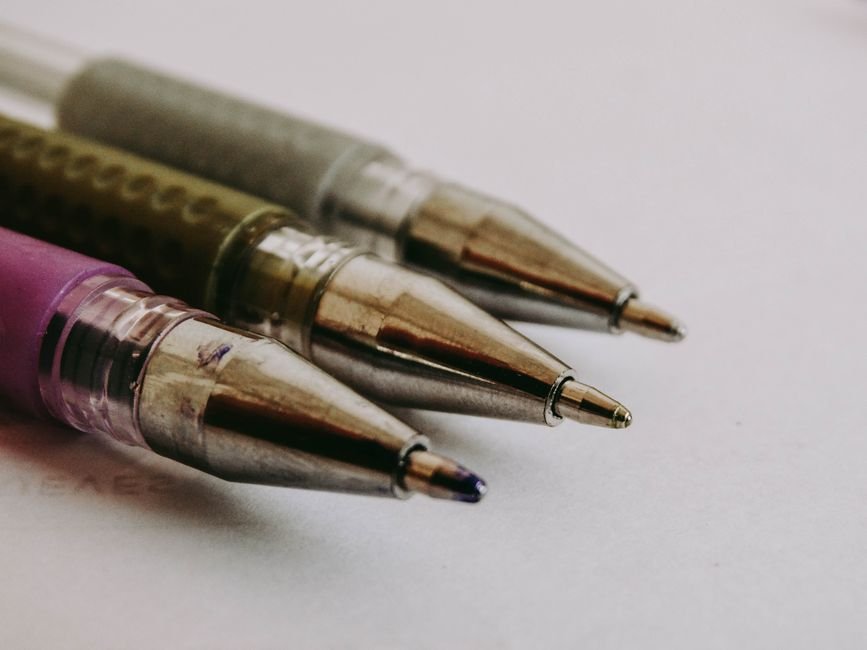
Read the pen’s markings first
Before measuring anything, transcribe every identifier on the pen and any remaining packaging. A small code on the barrel or cap can distinguish outwardly similar models that accept entirely different refills.
Check the barrel, clip, cap, tip section, and box or sleeve for:
- brand name, model name, and collection name
- alphanumeric codes, including punctuation and letter suffixes
- nib size, ink designation, or country-of-origin text
- cartridge or refill wording printed on packaging
Photographs are useful, especially of faint laser engraving and the clip underside. Record markings exactly rather than “correcting” a suspected typo; a hyphen, suffix, or finish code may identify a particular production run.
Search using the full phrase “[pen model] refill” before assuming that every pen from the same brand uses one standard format. Manufacturers often change mechanisms, tip lengths, or rear-end engagement between generations while retaining a familiar model name. If a pen is vintage, discontinued, or inherited, include any date code and compare photographs of the pen body—not just the refill name—in retailer listings or catalog archives.
Remove the refill and record its physical specification
-
Open the pen without forcing the mechanism
Unscrew the barrel or pull apart the sections at the intended joint, then extend the tip if the mechanism permits. A refill that does not slide out may be retained by a spring, a threaded collar, or a cartridge-specific holder.
-
Identify the ink system before comparing shapes
Note whether the refill is ballpoint oil-based ink, low-viscosity/hybrid ballpoint ink, gel, rollerball, fountain-pen cartridge, or pressurized ink. Similar-looking tubes can have incompatible tip seats and mechanism travel.
-
Measure the body and tip
Record overall length in millimetres, tube diameter, and the length and shape of the metal tip. Photograph the refill beside a ruler; a needle-like conical tip, a broad shoulder, or a plastic nose can determine whether it reaches the pen’s opening.
-
Examine the rear end and spring arrangement
Check for a capped end, plastic plug, threaded end, narrow peg, or broad actuator button. Note whether the spring sits around the tip, behind the refill, or is captive in the barrel; spring position affects usable refill length.
-
Capture every marking and compare the complete profile
Photograph printed codes, logos, tip size, ink colour marks, and date or batch text before handling rubs them away. Match those details with dimensions and end geometry, rather than treating a colour label or brand name as proof of fit.
Keep the old refill until the replacement has been tested; it remains the most reliable physical reference.
Some low-cost, promotional, and disposable pens use an integrated ink tube and tip assembly that was never made for replacement. Others have heat-staked, glued, or sealed barrels that can be opened only destructively.
If no separate refill emerges, or the ink reservoir is permanently joined to the nose section, listings for standard refills are unlikely to apply. The pen may be serviceable only as a complete unit.
Compare the dimensions that control fit
Compare overall length, tube diameter, tip profile, and shoulder position against millimeter drawings. Similar lengths may still miss the cone or click mechanism.
Finding Monteverde refill types
Monteverde Pens explains its refill types, helping compare an installed cartridge with a plausible replacement.
Identify the refill family before comparing brands
Parker-style G2
A roughly 98 mm, wide metal ballpoint refill with a stepped nose and rear end designed for many twist and click pens. “G2” here describes the physical pattern, not a specific ink.
ISO G2 gel/rollerball
This use of “G2” refers to a gel or rollerball refill designation and is not automatically Parker-shaped. Length, collar, and rear plug still need checking.
D1
A short, narrow metal refill used in many multi-pens and compact pens. Its small diameter and standardized short length are distinctive.
Euro-style rollerball
A long, slim refill, often about 110–112 mm, with a straight body and a plastic rear plug. It is common in capped rollerball pens.
Cross-style and proprietary
Cross-style refills use a characteristic long, narrow format and may engage by a threaded or shaped rear end. Proprietary cartridges require the pen maker’s exact pattern.
Match the rear end to the mechanism
The word “G2” is ambiguous. A listing for a Parker-style G2 normally means the familiar large metal ballpoint format; a gel or rollerball listing may use G2 in an ISO-related or product-family sense instead. Treat the term as a starting clue, then verify the measured body, tip collar, and rear end.
Rear construction determines whether the mechanism can push the refill far enough and retract it cleanly. A click pen usually bears on a flat cap or molded rear plug, while a capped pen may need only the correct nose seat and length. Bolt-action pens can be less forgiving: a raised cap, narrow stem, or unusual rear taper can miss the actuator or drag in its channel.
A spring is normally fitted over the front barrel, behind the tip shoulder. If it sits at the rear, is captive in the pen, or is built into a cartridge assembly, transferring a spring from another refill can create a false fit. Multi-pens usually use D1 refills, with separate springs and short actuator travel; a longer Euro-style refill cannot be trimmed into compatibility.
Pressurized Space Pen-type cartridges deserve a separate check. Some use an adapter to mimic a Parker-style G2 length, while others require the original pressurized form. Compare the adapter, not merely the ink cartridge, when reviewing differences between Space Pen and Rite in the Rain refills.
Gel, hybrid, ballpoint, and pressurized ink describe writing behavior—not the mechanical interface. A refill can write similarly yet fail because its rear plug, shoulder, or spring position differs.
Use evidence in the right order
A convincing product photo cannot override a mismatch in the pen’s mechanism. Confirm the refill system first; only then compare ink behaviour.
- Check the pen maker’s compatibility listing
The manufacturer’s model-specific guide, service sheet, or refill chart is the strongest starting point. It may distinguish revisions that share a pen name but accept different cartridges.
- Match the physical specification
Compare the listed refill length, barrel diameter, tip/nose shape, rear plug, and actuator position with the removed refill. A technical drawing or measured specification carries more weight than a generic “fits” label.
- Use retailer evidence as a cross-check
Retailer compatibility tables, verified reviews, and customer photos can reveal packaging changes or successful substitutions. They are supporting evidence, not proof, because listings can combine similar-looking refill families.
Once physical fit is established, ink type, line width, colour, and writing feel become meaningful choices.
Pen Refill Compatibility: Common Questions
Can a ballpoint refill be replaced with gel or rollerball ink?
Sometimes, but only when the alternate refill uses the same physical family and engages the mechanism correctly. Ink category alone does not predict fit; gel and rollerball versions may have different noses, shoulders, or rear actuators.
Do refill adapters make incompatible refills safe to use?
Adapters can correct a small length or rear-end difference in some mechanisms, but they do not solve a mismatched tip seat or barrel diameter. An adapter that changes travel can also leave the tip partly extended or prevent reliable retraction.
Why begin with the original refill?
An original-equipment refill provides a known working length, tip geometry, and actuator arrangement for that pen model. It creates a useful baseline before testing compatible alternatives with different ink characteristics.
Can a refill that is slightly longer be trimmed?
Trimming may damage a sealed rear plug, alter the actuator surface, or remove material needed for spring contact. It is generally more reliable to find a refill made for the required dimensions.
Are customer photos enough to confirm compatibility?
Photos can help identify the barrel profile, packaging code, or pen revision, especially when official information is sparse. They cannot reliably show internal seating depth or mechanism engagement without measurements.
Verify the replacement in a fixed sequence
-
Start with the pen model
Search the exact barrel marking, including generation or region suffixes. An official compatibility list is stronger evidence than a marketplace title.
-
Confirm the refill family
Match the system designation and mechanism type first. Similar-looking ballpoint, gel, rollerball, and pressurized refills may share a brand yet use different actuator designs.
-
Compare critical measurements
Check overall length, maximum barrel diameter, and the position of any shoulder or collar. A small difference can prevent the refill from seating at the correct depth.
-
Inspect both ends
Compare the nose cone and tip projection, then the rear plug, cap, or push-button contact. The rear geometry must meet the pen’s actuator; the front must clear the nose opening.
-
Choose writing specifications last
Once fit is established, select ink colour, point size, and ink type. These preferences do not indicate mechanical compatibility.
Photographs are useful only when a ruler and both refill ends are visible.
A refill that is too long may keep a click pen partly extended; one that is too short may not reach the actuator. A refill that is too wide can bind in the barrel or nose, while a refill that will not retract often has the wrong rear plug, shoulder position, or spring arrangement—not a failed pen mechanism.
Before treating poor writing as a fit issue, it can help to troubleshoot a pen that skips despite having ink.
Store one empty original refill in a small labeled sleeve with the pen model, refill code, and measured length. A photo is useful, but the actual part preserves the nose shape, rear plug, and spring arrangement that often settle a later compatibility question.
Know when to stop the search
An empty original refill turns a future purchase from guesswork into a direct comparison. Keep it with the pen rather than discarding it after replacement.
When a pen has an obscure, discontinued, or costly-to-source system, continued matching may not be worthwhile. In that case, dependable pocket pen options can offer a simpler route: choose a model with a clearly documented, widely available refill family and retain its first empty refill.


6 Comments
Step 3 didn’t totally work for me because my old refill has no code anywhere, just a tiny plastic rear cap. I got the length and diameter, but I’m still unsure how to describe the nose profile when searching. The pen is an older gift pen and I can’t find a model marking either 🙃
That is the awkward case where the empty refill itself becomes the best reference. Take a straight-on photo of the tip and a side photo next to a ruler, then note where the widest shoulder begins relative to the tip. Also check whether the rear cap is flat, rounded, or has a narrow projecting peg—those details often rule out most candidates before you buy.
I had one like that. Searching images for “ballpoint refill nose profile” alongside the length got me closer than searching by pen brand. Not elegant, but it worked.
Good reminder that the spring position matters. I assumed every click pen just used the spring at the tip, then wondered why my replacement would write but wouldn’t retract. The spring was supposed to sit behind the refill in that pen. Tiny part, huge amount of annoyance.
How much tolerance is realistic on overall length? I found a refill with the same diameter and what looks like the same tip, but it is about 2 mm shorter than the old one. The rear actuator is also a little more rounded. I don’t want to order it just to discover the clicker barely reaches it.
Two millimetres can be significant in a retractable pen because it directly changes how far the mechanism can push the tip out. If the original used a rear plug or peg, compare its length and shape as carefully as the overall refill length. A rounded rear end may work in some mechanisms, but it can also slip or fail to engage. Unless the maker lists that refill as compatible, I would treat it as a risky substitute rather than a likely match.