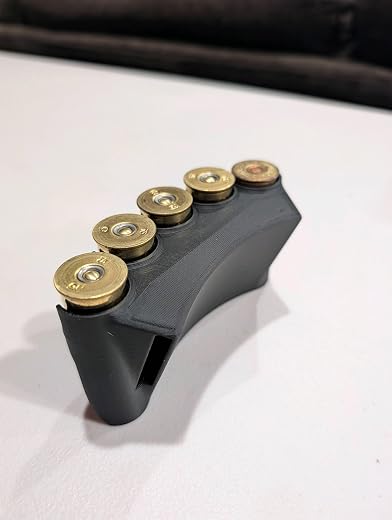
A full caddy matters only when every shell remains secure and easy to reach.
Halfway through a shotgun-heavy stage, spare shells do little good if the next stack has rotated behind the hip or started bouncing loose. Advertised capacity describes storage, not necessarily usable ammunition under movement.
A workable belt balances loading technique, retention, placement, and stage demand. Quad-load and dual-load methods favor different shell orientation and spacing; firmer retention may secure shells during sprints but increase extraction effort. Clustering carriers can restrict bending, interfere with other gear, and force awkward reaches. Capacity should be planned from the stage backward: count required shots and likely makeups, reserve accessible positions for reloads, then add only the buffer that remains stable through running, kneeling, and transitions.
Match the carrier to the stage plan


A spring-fed dispenser, dump pouch, and exposed-shell caddy support different loading motions. Do not compare capacity alone. Confirm manufacturer-stated gauge, shell count, belt-width range, mounting hardware, and permitted orientation. Then test retention with the exact belt and ammunition configuration under unloaded, range-safe conditions.
How each design changes the reload
Exposed competition caddies
Open clips make shell orientation easy to read and support twin- or quad-loading, but leave ammunition vulnerable to bumps and debris. Their width can also consume substantial belt space.
Enclosed dispensers
Designs such as the SME AmmoPal shield most of each shell and present rounds sequentially. Protection improves, but access is generally better suited to deliberate loading than grabbing multiple exposed shells together.
Canvas carriers
The Allen Eliminator uses flexible loops and is advertised by the manufacturer for 25 shells. Canvas can provide economical capacity, although loop indexing and retention may vary as the material flexes or wears.
Adjustable rigid holders
A 12-gauge 4×3 holder can organize shells in three rows of four while allowing retention or mounting adjustments, depending on the model. The denser layout saves linear belt space but may require more precise hand placement.
Comparisons should begin with the maker’s shotgun shell carrier specifications and system guidance, then check whether independent testing confirms retention, access, and durability. Marketing language alone cannot establish match performance.
Use manufacturer manuals, product drawings, and mounting instructions to confirm gauge, stated capacity, dimensions, belt compatibility, orientation, and adjustment range.
Third-party evidence is stronger when the tester, setup, ammunition, movement drill, and failure criteria are disclosed. Unattributed claims or isolated comments should not be treated as measured results.
If mounting hardware, dimensions, or retention behavior cannot be verified, describe the detail as unconfirmed rather than inferring it from photographs. Recommendations should not imply hands-on testing.
Capacity does not establish usable speed; indexing method, belt placement, and the shooter’s loading technique remain decisive.
Calculate usable stage capacity
Start with the written stage brief, not the carrier’s advertised capacity. Count shotgun targets, confirm the starting condition, and check division or match rules for the permitted chamber-and-tube load. Then calculate how many shells the caddy should carry:
Required carried shells = target count + make-up allowance − legal starting load
Set the make-up allowance from the stage itself. Difficult steel, awkward shooting positions, or long transitions may justify more spare shells than close, forgiving targets. Also account for unloaded starts or rules requiring a specific initial load.
Capacity must then be rounded to the chosen loading pattern. For example, a hypothetical 13-target stage with nine shells legally loaded and two planned make-ups requires six carried shells. A quad-loading setup would usually need space for two complete four-shell grabs, making eight indexed shells more useful than six shells scattered across partial groups.
Total storage is not the same as usable capacity. Shells positioned behind other equipment, split into incomplete grabs, or reachable only with a major hand reversal may function as emergency reserves rather than stage-ready ammunition. Added carriers also consume belt space and lengthen hand travel. The practical stopping point is enough complete, cleanly indexed grabs for the plan and its realistic misses—not simply the largest possible shell count.
Where the caddy sits matters
Front-of-belt placement offers a short reach and keeps shells visible, which can simplify indexing. The tradeoff is pressure during deep torso flexion, kneeling, or prone movement. A tall carrier may also catch the rifle sling or interfere with the pistol during transitions.
Support-side placement often supports a natural loading path while leaving the firing hand free. However, it competes directly with rifle magazines, medical gear, and dump pouches. Spacing should preserve a clean grip on both shells and magazines without forcing the elbow behind the torso.
Wraparound placement spreads higher capacity across more belt area and can reduce one heavy pressure point. Shells positioned near the back become harder to see and reach, while rearward carriers may contact the ground in prone positions. The Allen Eliminator’s longer canvas format and multi-caddy layouts deserve particular scrutiny for bunching, belt rotation, and conflicts with sling movement.
Whatever the layout, transitions should be tested from standing, kneeling, and prone positions—not just at a workbench.
Confirm the gauge, belt compatibility, mounting method, and orientation from the manufacturer’s documentation. Tighten fasteners exactly as directed, then use inert training shells to test retention while bending, jogging, going prone, and transitioning between unloaded firearms in a safe practice area. Recheck hardware afterward.
SME AmmoPal: Sequential shells in an enclosed dispenser
01
Best overall for secure, ambidextrous shell access
The AmmoPal carries up to 10 12-gauge shells in a spring-fed body; “12 gauge” should not be mistaken for 12-shell capacity. Retention fingers hold shells even when the dispenser is inverted, while a large thumb-sweep area supports gloved, left- or right-handed access.
Its adjustable mounting system makes it a capacity-oriented option for stages where protected, one-at-a-time access matters more than presenting four exposed shells as a quad-load stack. The seller’s specifications do not state a belt-width range, so attachment compatibility and clearance should be confirmed before match use.
- Holds up to 10 shells
- Contained, sequential presentation
- Retention works when inverted
- Ambidextrous thumb sweep
- Removable baseplate aids cleaning
- Slower indexing than exposed quads
- Enclosed body adds bulk
- Belt-width range not specified
- Mount details need confirmation
Practical take The AmmoPal exchanges exposed-shell indexing for a contained column and controlled single-shell dispensing. Its capacity is useful only if the body clears adjacent equipment and remains reachable through the intended stage positions.
The AmmoPal is a credible option when 10 contained shells and sequential access fit the stage plan. It should not be treated as a direct substitute for an exposed quad-load caddy: presentation, hand motion, and belt bulk differ substantially. Confirm the mounting interface and practice retrieving shells with the dispenser in its actual belt position before competition.
Allen Eliminator: Economical bulk shell reserve
Top choice for range and clay shooting convenience
Allen’s listing specifies room for one standard box of 25 shotgun shells, plus four exterior loops on each side for extra shells or choke tubes. A rear metal clip attaches the carrier to a belt or waistband, avoiding the need to thread it onto a competition belt.
The canvas pouch is better viewed as bulk ammunition storage than as a dedicated loading fixture. It can provide a substantial reserve for early match setups, practice sessions, or stages where emergency shells matter more than perfectly indexed grabs. Competitors developing twin- or quad-loading technique may eventually prefer rigid carriers that hold every shell at a repeatable angle.
- Manufacturer-stated 25-shell capacity
- Eight exterior utility loops
- Metal belt or waistband clip
- Relatively accessible entry point
- Bulk pouch does not index every shell
- Flexible canvas offers limited movement control
- Clip is less secure than fixed belt hardware
- Not purpose-built for quad loading
Adjustable 4×3 holder: Configurable shell presentation
Angle and height adjustments personalize belt-mounted access
This belt-mounted caddy is intended for competitors who want to alter shell angle and row height rather than accept a fixed presentation. In the seller’s terminology, “4×3” appears to mean four groups of three shells, for 12 shells total—not multi-gauge compatibility.
The listing specifies 12-gauge shells only and a detachable clip for belts up to 2.25 inches, using included spacers. Because the adjustment range and belt-thickness limits are not published, compatibility should be confirmed before use. After installation, load all 12 positions and test retention while sprinting, kneeling, going prone, and entering awkward shooting positions.
| Capacity | 12 shells |
| Layout | 4 groups × 3 |
| Shell fit | 12 gauge only |
| Belt width | Up to 2.25 in |
| Mount angle | Adjustable |
| Row height | High or low |
| Material | Injection-molded |
- Angle and height adjustments allow a more individualized pickup position
- Included spacers support belt-clip setup
- Twelve-shell layout suits quad-loading stage plans
- No published angle range or belt-thickness specification
- Listing does not identify a separate retention-tension adjustment
- Generic material description provides limited durability detail
- 12-gauge fit only
Match orientation to the loading motion
Brass-up places the metal case heads toward the caddy’s upper edge; brass-down reverses that presentation. Neither is inherently faster. For load-two and quad-load techniques, the useful orientation is the one that lets the support hand index the same shell landmarks and move toward the loading port without a corrective regrip.
Hand position drives the choice. A shooter who locates the case heads with the thumb may favor a different setup from one who traps the shell stack against the fingers. Caddy angle, torso position, and loading-port approach also affect which brass orientation produces cleaner reloads.
A simple comparison keeps the decision objective:
- Run equal repetitions in each orientation with identical belt placement.
- Note dropped shells, incomplete grabs, and any wrist roll before insertion.
- Repeat while stepping, kneeling, and entering an awkward position.
- Keep the arrangement that preserves the same grip under movement.
Once selected, orientation should remain consistent across caddies so every index begins from the same visual and tactile cue.
Run a complete retention check
Confirm reliable shell retention throughout the full loading motion, not merely while the belt is stationary.
- Check shell fit and tension: Inert shells should index cleanly without rattling, creeping out, or requiring excessive force.
- Inspect mounting hardware: Tighten fasteners to the manufacturer’s guidance, mark their position with a witness line, and check clips, hook-and-loop panels, and belt attachments for movement.
- Remove contamination: Clear sand, mud, unburned powder, and fabric debris that can reduce friction or obstruct a dispenser.
- Replace worn parts: Retire stretched loops, cracked polymer, weakened springs, rounded clips, or damaged fasteners rather than compensating with improvised modifications.
Validate the complete match setup while standing, kneeling, going prone, sprinting, and transitioning to the shotgun. Repeat the sequence with every caddy loaded as planned for competition.
Keep live ammunition outside the test area and verify the shotgun is unloaded. Reject any setup that shifts, sheds shells, blocks another magazine or holster, or interferes with movement and firearm access.
Build the carrier plan from the stage
-
Count required shells
Subtract the legal starting load, add realistic make-ups, then round to complete twins or quads.
-
Reserve usable belt space
Mark areas blocked by the holster, magazines, buckle, flexion, or prone positions.
-
Choose the loading format
Favor a dispenser for contained sequential access, a canvas pouch for reserve ammunition, or exposed rows for configurable presentation.
-
Confirm fit and specifications
Check manufacturer-stated gauge, capacity, belt attachment, orientation, and retention adjustment before ordering.
-
Test the complete layout
Load actual shells; sprint, kneel, go prone, and perform planned reloads. Reject shifting mounts or inconsistent release.
SME AmmoPal suits enclosed sequential dispensing; Allen Eliminator provides economical bulk reserve; the adjustable 4×3 offers tunable presentation. Choose only after the loaded setup delivers secure, repeatable access through the stage’s required movement.
Speed is only useful with shells worth loading. A stage-ready caddy pairs naturally with the 12-gauge 00 buck loads worth stocking, since consistency between rounds matters more under a timer than raw capacity.
SME Versatile Durable High-Impact PVC UV-Resistant Ambidextrous 12 Gauge Up to 10 Shotgun Shell Adjustable Mounting System
Features
| Brand Name | Shooting Made Easy |
| Manufacturer | AmmoPAL |
| Global Trade Identification Number | 00888151019818 |
| Number of Items | 1 |
| UPC | 888151019818 |
| Unit Count | 1 Count |
| Included Components | shell holder |
| Item Type Name | gun-magazine-pouches |
| Model Number | SME-AMPL-FDE |
| Manufacturer Part Number | I2-LLA7-PFNL |
| ASIN | B07H13L8JG |
| Number Of Pockets | 1 |
| Closure Type | Clips |
| Pocket Description | Slip Pocket |
| Number of Compartments | 1 |
| Color | Flat Dark Earth |
| Material Type | Metal |
| Item Dimensions L x W x H | 1"L x 1"W x 1"H |
| Item Weight | 8 ounces |
- SHELL DISPENSER - The innovative retention fingers of the AmmoPal dispenser ensure your shotgun shells stay securely in place, offering reliable retention even when the dispenser is inverted; This ultimate tool by SME is also available in various colors
- BEST CONSTRUCTION - This 12 Gauge Shotgun Shell Dispenser is made of high-impact Geon PVC: UV-resistant, oil-resistant, and flame-resistant to withstand virtually anything you throw at it; Durable spring made of the same material used in USGI shotgun mags
- MINDFUL DESIGN - Constructed to fit up to 10 shells of 12 gauge this unique shell holder features an ambidextrous design that allows for right or left-handed operation; It also has a large thumb sweep area that accommodates gloved operation
- EASY TO MAINTAIN - AmmoPal's user-friendly design includes a removable base plate with a convenient drain slot; This feature allows easy access to the spring and follower for cleaning & maintenance, ensuring that the dispenser remains in working condition
- VERSATILE MOUNT - Exclusive, adjustable mounting system has two sets of dual mounting clips (1 long, 1 short) and can be used together or independently; The clips are removable and can be adjusted into over a dozen configurations to mount almost anywhere
Adjustable Angle and Height Shotgun Shell Clip 4x3-12 Gauge Shotgun Bullet Shell Holder Attach to Belt
Features
| Color | Khaki |
- Only Fit for12 gauge shells ,Holds 12 shells
- Detachable belt clip Attachment,belt clip can accommodate up to a 2.25” belt with the included adjustable spacers. According to personal application habits, you can change different angles
- Adjustable buckle height,The upper row of equipment fasteners can be adjusted high or low,Suitable for different users easy to take
- High strength injection molding material, durable
- WHAT WILL YOU GET? 1* Large Shotgun Bullet Shell Holder
Allen Company Shotgun Shell Pouch - Clay, Trap and Skeet Shooting Accessories - Hunting and Gun Range Gear - Soft Canvas Design - Shotgun Shell Holder -...
Features
| Brand Name | AC Allen |
| Manufacturer | The Allen Company |
| Global Trade Identification Number | 00026509008958 |
| Number of Items | 1 |
| UPC | 026509008958 |
| Unit Count | 1 Count |
| Included Components | Product^Included Accessories |
| Item Type Name | Basic Shell Pouch |
| Model Number | 8310 |
| Manufacturer Part Number | 8310 |
| Warranty Description | 1 year manufacturer |
| ASIN | B019KAR3IC |
| Number Of Pockets | 3 |
| Closure Type | Drawstring |
| Pocket Description | Slip Pocket |
| Number of Compartments | 2 |
| Color | Coffee/Copper |
| Material Type | Polyester |
| Item Dimensions L x W x H | 3"L x 5.38"W x 8"H |
| Item Weight | 0.27 g |
- Allen Eliminator Single Box Shotgun Shell Carrier with Molded Frame, Sporting Clay or Trap Shooting Shotgun Shell Carrier
- SHELL HOLDER: This shotgun shell bag can hold a standard box of 25 shells for easy access on the shooting range or while hunting. It also has four loops for extra shells or choke tubes on each side.
- GREAT FOR COMPETITIVE SHOOTING: This caddy is a handy companion for clay, trap, and skeet shooting competitions or range practice.
- EASY TO CARRY: Our shell carrier clicks easily to your belt or waistband thanks to the metal clip on the back.
- DURABLE: The rugged canvas construction of this pouch can handle all sorts of conditions and environments. No matter where you go, it can provide long-lasting storage for your shotgun shells.
- ALLEN COMPANY: We share your passion for the great outdoors. Our unwavering dedication lies in crafting superior hunting, shooting, and archery gear that combines quality and value.