
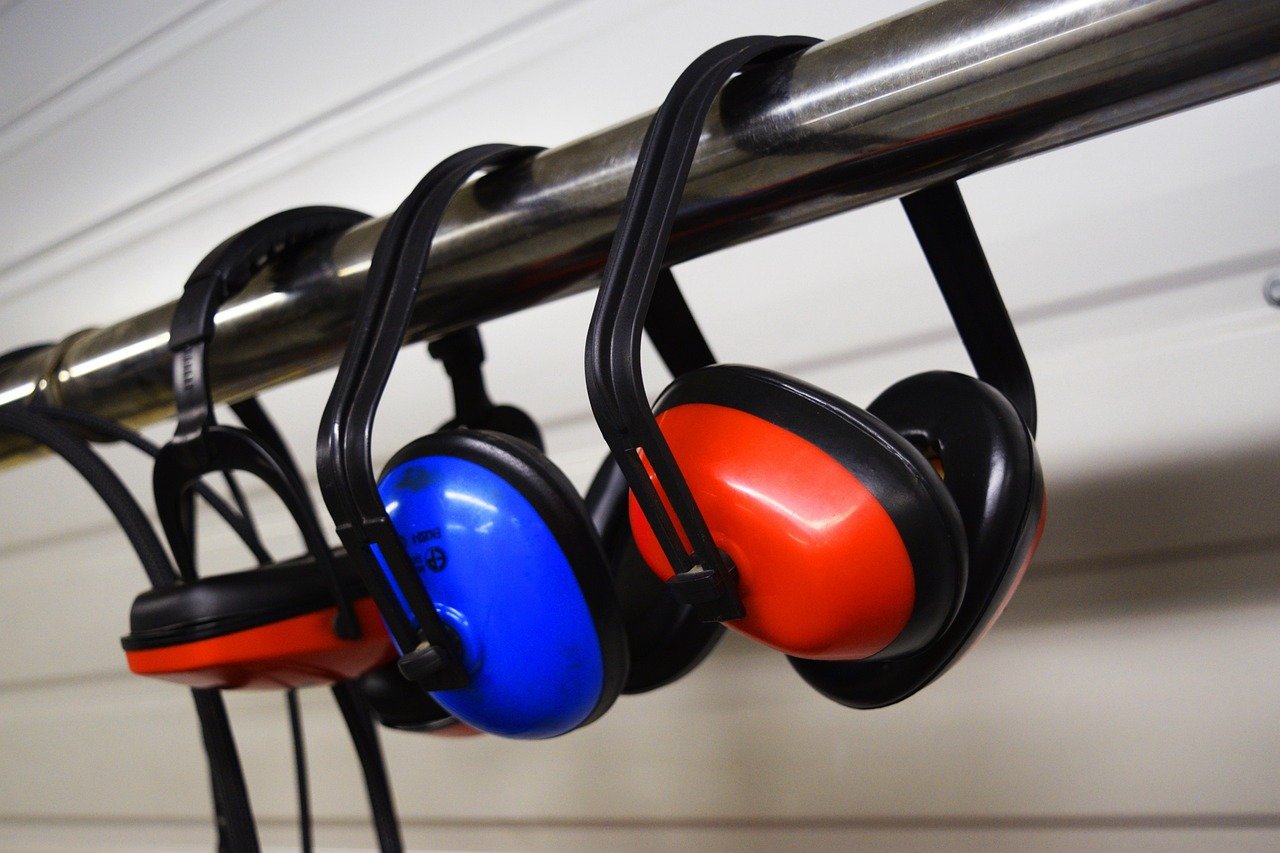
Two neat numbers can feel reassuring right up to the moment they need to be trusted.
A foam plug marked NRR 33 sits next to earmuffs marked NRR 27, while the setting is a shrieking saw bay or indoor range. The instinct is simple: add them, subtract them, do something with the numbers and hope the result means “safe.” That is the package-label trap—high stakes, tidy arithmetic, and no label that explains what combined protection really becomes.
The risk in rough math is that NRR looks more exact than it is. It comes from controlled laboratory testing, then gets compressed into a single rating that already hides variation in fit, seal, frequency, and real-world wear time. Layering plugs under muffs can help, sometimes a lot, but the gain is not a straight sum. When exposure is serious, false precision matters: a guessed combined number can sound authoritative while missing the actual protection by a meaningful margin.
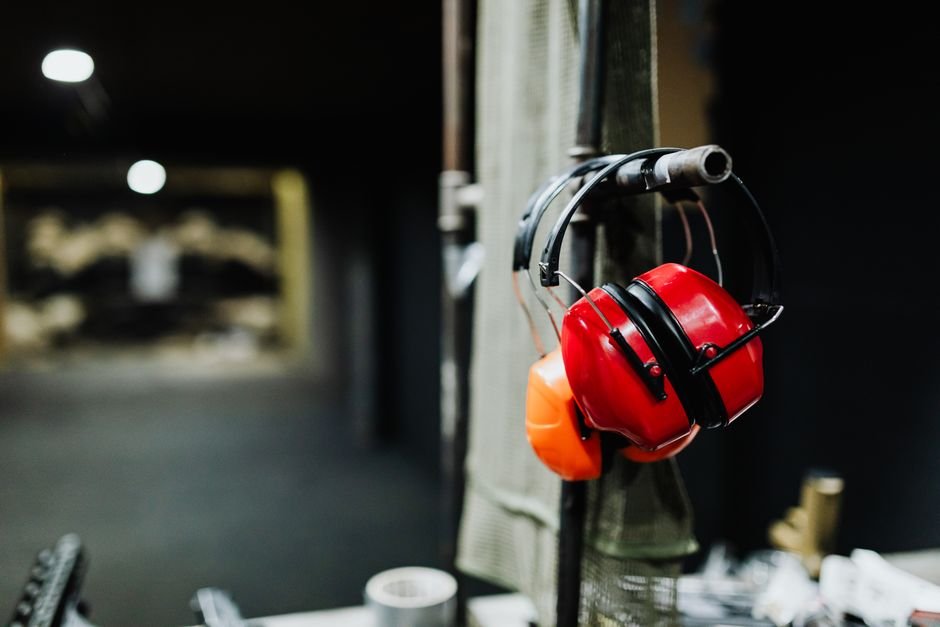
Dual protection is the standard approach for high-exposure shooting environments: pairing earplugs with earmuffs closes the gaps that either device leaves open on its own, adding real margin against imperfect fit and reflected indoor-range noise.
What dual protection usually adds
- Simple rule Earplugs under earmuffs are usually estimated as the higher NRR plus about 5 dB.
- Not additive A 33 dB plug and 27 dB muff do not become 60 dB; their labeled performance overlaps.
- Why limited The extra gain is limited by fit, seal leaks, and sound reaching the inner ear through bone.
Combine 33 dB earplugs with 27 dB earmuffs, and the practical estimate is roughly 38 dB, not 60 dB. That is why dual protection helps most as a margin against imperfect fit, not as a way to stack label numbers.
Why the label is only a starting point
NRR is best read as a lab comparison number, not a promise of real-world attenuation. It helps rank products under controlled test conditions, but field performance often lands lower. That gap matters when discussing hearing protection ratings for shooting range use, where noise is brief, sharp, and highly variable.
A single printed number also hides fit quality. Foam plugs can test very well, yet small changes in insertion depth can cost substantial protection. Earmuffs face the same problem: safety-glasses temples, hat brims, hair, or stock contact can break the seal and reduce low-frequency blocking.
Frequency matters too. NRR compresses performance across the spectrum into one label, but gunfire is not a smooth, steady sound. Rifles, pistols, and indoor range reflections create different mixes of peak energy, so two products with similar NRRs may behave differently in practice.
Common losses come from user error and movement:
- plugs not fully expanded in the ear canal
- muff cushions worn, stiff, or misaligned
- jaw movement shifting the seal
- inconsistent placement during repeated on-off use
That is why dual protection can add margin without making the label arithmetic simple. The posted NRR remains useful, but mainly as a starting benchmark, not a guaranteed outcome.
Why the second layer adds less than expected
Both devices are trying to block much of the same sound energy, especially in the mid and high frequencies where many plugs and muffs already perform best. Once the easier-to-block portion is reduced, the remaining sound is the harder part: low-frequency energy, vibration through the skull, and leakage around the protector. That is why the second protector delivers diminishing returns rather than its full labeled value.
A simple way to think about it is that dual protection is limited by the weakest path left open. If earplugs cut airborne sound in the ear canal, earmuffs cannot fully “re-block” what has already bypassed the canal through gaps, headband pressure changes, temple arms, hair, or jaw movement. The same is true in reverse: a perfect muff cannot make up for a shallow or poorly expanded plug.
Where the stacking breaks down
- Frequency overlap: both protectors often attenuate the same bands.
- Seal leakage: small breaks in either seal can dominate the final result.
- Bone conduction: some sound reaches the inner ear without traveling only through the ear canal.
- Mechanical limits: cup volume, cushion compression, and plug insertion depth cap real-world gains.
In practice, dual protection helps most when each protector covers the other’s weak spots, not when both claim large ratings on paper alone.
A practical way to estimate dual protection
- Start with the higher labeled NRR
Take the larger of the two ratings, not both together. That higher number is the base because the second protector does not create a fresh, independent wall of attenuation.
- Add about 5 dB for the second layer
For a quick conservative estimate, dual protection is commonly treated as the higher NRR plus 5 dB. This reflects the usual real-world benefit of plugs under muffs without pretending the labels stack perfectly.
- Run the easy math
Earplugs rated NRR 33 under earmuffs rated NRR 27 are estimated at about 38 dB, not 60. If the muffs are NRR 30 and the plugs are NRR 22, the working estimate is about 35 dB.
- Use the rule for comparison, not precision
The shortcut helps compare setups in the field: moving from a 25-NRR muff alone to that same muff over decent plugs may move the estimate to roughly 30 dB. It does not guarantee that exact reduction at the ear.
- Keep the limit in mind
If either protector leaks, the combined result falls fast. Dual protection mainly adds a margin against imperfect fit, brief seal loss, and high peak exposure rather than delivering the sum printed on both packages.
Quick estimate only; actual attenuation depends on insertion depth, seal quality, head movement, eyewear, and noise spectrum.
NRR 29 plugs + NRR 31 muffs is not 60 dB. A conservative field estimate would treat that combination as about 36 dB.
That gap is the whole point of dual protection math: the second device helps, but mostly by covering residual leakage and fit weaknesses.
Fit usually matters more than a 2–3 dB label gap
A dual-protection setup is only as good as its weakest leak path. In practice, a deeply inserted foam plug often delivers more attenuation than a nominally higher-rated plug that is barely seated. The same principle applies outside the ear: a muff with intact cushions, steady clamping force, and a clean seal can outperform a slightly higher-rated model that leaks around the ear.
The biggest real-world losses usually come from simple seal failures:
- Shallow plug insertion leaves part of the ear canal unblocked, reducing low- and mid-frequency attenuation.
- Eyewear temples can break the muff cushion seal and create a direct leak path.
- Hair, hats, hoodie seams, or cap brims can hold the cup slightly off the head.
- Worn cushions or weak headband tension reduce the passive barrier that does most of the work.
That is why small package differences matter less than basic fit quality. A 30-NRR muff with a compromised seal may protect worse than a 27-NRR muff that sits flat and firm. Likewise, dual protection gains can shrink quickly if either layer is misfit.
Electronic muffs still rely on passive protection
Electronic earmuffs add microphones, amplification, and level-dependent shutoff or compression, but their impulse protection still comes primarily from the passive cup, cushion, and seal. Electronics help audibility and communication; they do not replace the need for solid passive attenuation. If the seal is poor, the circuit cannot “make up” that lost protection.
Why 5 dB can matter more than it sounds
A roughly 5 dB improvement can look small on paper, but decibels are logarithmic. In simple energy terms, that change represents about a threefold reduction in sound energy reaching the ear. Within shooting ear protection, that extra margin often matters most where noise is not just loud, but trapped.
Indoor ranges, concrete bays, and other hard-surfaced spaces tend to reflect muzzle blast back toward the shooter. Instead of one clean impulse, the ear can receive the direct blast plus fast-arriving reflections from side walls, ceiling, partitions, and nearby lanes. The result is a denser, harsher sound field than the same firearm often produces outdoors.
That is where a modest gain becomes meaningful:
- Reflections raise total exposure, even when the peak source is unchanged.
- Nearby shooters add overlapping impulses, shrinking the quiet time between blasts.
- Small seal disruptions from cheek weld, glasses, or head movement matter less with a second protector in place.
- High-frequency splash and residual leakage are more effectively covered when plugs and muffs work together.
It does not make an extreme environment gentle. It does, however, create a larger buffer in places where every decibel is competing against reflections, repetition, and imperfect fit.
Three rating myths that inflate expectations
Combined protection is usually estimated as the higher NRR plus about 5 dB, not the sum.
Both protectors block many of the same sound paths. Leakage around cushions, imperfect insertion, and bone conduction limit how much the second layer can add.
Their main advantage is situational awareness; peak attenuation still comes mostly from the passive cup, cushion, and seal.
Level-dependent electronics control what reaches the speakers, but the muff’s physical build does most of the blocking when impulse noise arrives.
A slightly lower-rated protector that seals reliably can outperform a higher-rated one worn poorly.
Glasses gaps, shallow plug insertion, stock weld, heat, and head movement can erase small label advantages fast.
Frequently Asked Questions
Do earplug and earmuff NRR ratings add together?
No. Combined protection is usually estimated as the higher of the two NRR ratings plus about 5 dB, not the sum of both labels.
What is a quick example of the combined estimate?
33 dB earplugs under 27 dB earmuffs is estimated at roughly 38 dB, not 60 dB.
Why does the second layer add less than expected?
Both protectors block much of the same sound energy, and the gain is limited by seal leakage, bone conduction, and fit quality.
Do electronic earmuffs protect better than passive ones?
Not necessarily for peak attenuation. Electronic muffs mainly help with situational awareness; the passive cup, cushion, and seal still do most of the blocking.
Is the highest NRR label always the best choice?
No. A slightly lower-rated protector that seals reliably can outperform a higher-rated one that fits poorly.
Use the estimate carefully
The safest shorthand is simple: do not add the two package ratings together. For most plug-and-muff combinations, the practical estimate is the higher NRR plus about 5 dB, not a doubled total.
That extra margin is only as real as the fit. A shallow foam plug, hair breaking the muff seal, temple arms, jaw movement, or a poorly matched cup shape can erase much of the expected gain. In practice, dual protection helps most when the better protector already fits well and the second layer closes the remaining weak paths.

8 Comments
So if package ratings are not additive, why do so many people casually say “just add the two numbers”? I’ve heard that for years at ranges and from store employees too.
Is that just old advice that refuses to die, or are some people mixing up OSHA-style derating math with actual combined attenuation? Kinda frustrating because it sounds simple, but simple and wrong is still wrong lol
This is probably a dumb question, but does the 5 dB estimate still hold if the noise is lots of short sharp peaks instead of steady noise?
I’m thinking indoor shooting where there are reflections plus the person next to you firing something way louder than you brought 😅 You mentioned overlapping/high-intensity indoor noise, so I wasn’t sure if that means the extra 5 dB becomes *more* important, or if the estimate itself changes.
I appreciate the myth-busting, especially the point that electronic muffs are still passive-first.
One thing I still wrestle with: if bone conduction caps attenuation anyway, is there a point where chasing higher and higher passive ratings just becomes diminishing returns? Not saying fit doesn’t matter — it obviously does — but a lot of advice online acts like one more NRR point is life-changing.
Feels like people are arguing over 26 vs 29 while wearing the headband crooked 🙃
Not a dumb concern at all — there absolutely are diminishing returns.
Past a certain point, the limiting factors become leakage, inconsistent fit, the frequency content of the impulse, and yes, bone conduction. That doesn’t mean higher-attenuation gear is meaningless, especially indoors, but it does mean small paper differences are often less important than getting deep plug insertion and a reliable muff seal.
That’s why I push fit so hard in the article: a well-worn setup often beats a nominally higher-rated setup worn poorly.
This. People love spec-sheet debates.
Meanwhile half the line has safety glasses arms breaking the cushion seal and wonders why it still sounds brutal.
The “higher NRR + about 5 dB” rule makes sense, but what would you do with a super mismatched combo, like foam plugs inserted well plus cheap low-profile electronic muffs that barely seal around glasses?
Is it still fair to think in terms of +5, or is that one of those cases where the leak from the muffs can basically erase the benefit you hoped to get from doubling up? I liked the part about seal breaks mattering more than small label differences, because that seems way more real-world than the marketing copy.
That’s exactly the kind of case where the simple estimate can overstate what you actually get.
The “+5 dB over the better protector” rule is a practical, conservative shortcut, but it assumes both protectors are worn reasonably well. If the muffs lose seal because of glasses, shallow cups, hair, or movement, the second layer may add less than expected. The plugs may still be doing most of the work, but the dual-protection benefit can shrink if the muffs are not covering residual leak paths effectively.
Yeah, glasses totally wrecked mine indoors. I switched to thinner temple arms and it was way better.
Not scientific lol, but subjectively the difference was obvious.