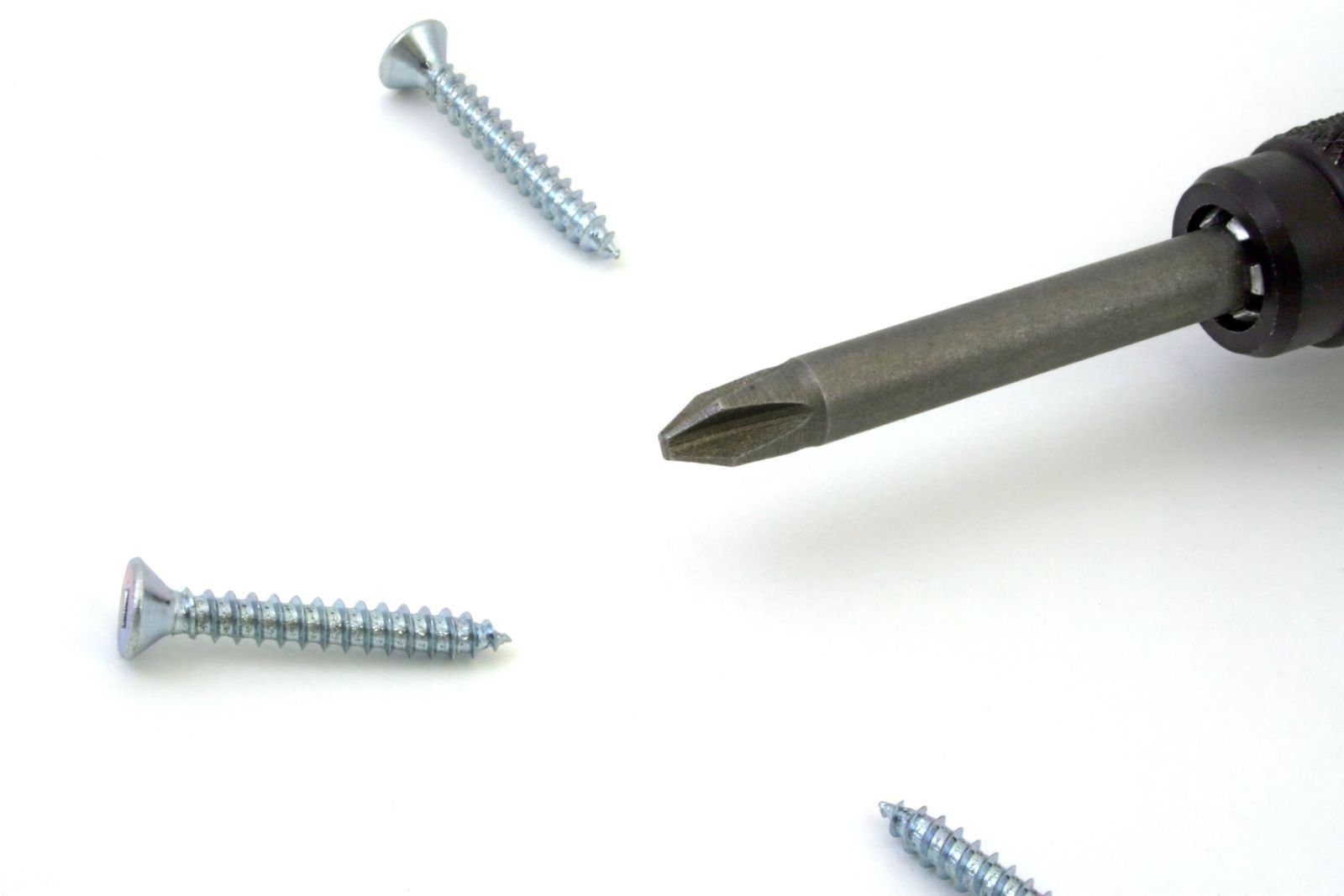
A standard 1/4-inch hex bit may look close, but appearance alone does not establish compatibility.
A bit that enters only partway—or needs pressure to seat—is the warning sign. Leatherman uses more than one driver design: many models have a flattened bit exchanger for the company’s double-ended flat bits, while certain tools or accessories accept conventional 1/4-inch hex bits.
The exact tool and driver must therefore be identified before choosing bits, just as driver configuration matters when selecting a full-size EDC multitool. Leatherman’s model documentation and compatibility information are the appropriate references; similar-looking holders should not be assumed interchangeable.
Forcing a full-size hex bit into a flattened exchanger can deform the holder, damage the bit-retention mechanism, or leave the bit poorly engaged. Stop if insertion requires unusual pressure. A loose or partially seated bit may slip under torque, damaging the fastener or causing injury. Use a manufacturer-listed adapter when standard 1/4-inch bits are required.
Do ordinary 1/4-inch bits fit a Leatherman holder?
Will a standard 1/4-inch hex bit fit directly?
Not in Leatherman’s proprietary flat-bit exchanger. That holder accepts Leatherman’s flattened, double-ended bits; an ordinary 1/4-inch hex bit requires a compatible adapter or accessory explicitly listed for that bit format.
How can a flat-bit exchanger be identified?
It has a narrow, rectangular opening and a retention mechanism for flattened bits. Models such as those in the Wave+ and Surge bit-driver system should still be verified against the exact model’s tool list or user guide.
Is a fixed Phillips screwdriver a bit holder?
No. A fixed Phillips driver is a solid, folding tool with no removable bit, even if its shaft resembles a holder. Leatherman’s official model specifications distinguish “Phillips screwdriver” from “large bit driver” or similar wording.
What if an adapter is already attached?
A removable accessory fitted over a fixed driver can make the assembly look factory-integrated. Its markings and product documentation should be checked separately because compatibility depends on the accessory, not merely the multitool model.
A bit that starts into the opening may still be incompatible. Forcing it can damage the holder or leave the bit poorly retained. Use only the bit format named in Leatherman’s documentation for the exact tool or adapter.
Confirm the driver before buying bits
-
Find the exact model name
Read the handle engraving, packaging, receipt, or official product record; similar-looking Leatherman models may use different drivers.
-
Open the suspected driver
Check whether it contains a removable flat bit, forms one solid Phillips tool, or carries a detachable adapter.
-
Read the official tool list
Look for terms such as “bit driver,” “Phillips screwdriver,” or the specific accessory name.
-
Match the replacement format
Buy flat Leatherman bits for a proprietary exchanger. Choose standard 1/4-inch hex bits only when the documented adapter or accessory accepts them.
Archived manuals may be needed for discontinued models.
Practical ways to use standard bits
What is the simplest conversion for a Leatherman flat-bit holder?
A manufacturer-listed extender or ratchet driver can plug into the large bit driver and accept standard 1/4-inch hex bits. Compatibility should be checked against the exact multitool model, since similar-looking interfaces may differ.
Can a fixed Phillips driver be converted?
Some Leatherman models support a removable driver made specifically to fit over their Phillips tool. This route is model-dependent; a generic socket adapter may fit poorly, slip, or damage the driver.
Why choose an adapter instead of Leatherman flat bits?
Standard bits provide more profiles and are easier to replace, while flat bits keep the tool slimmer. An adapter adds length and bulk, which can improve reach but restrict access near walls or inside confined assemblies.
When is there no suitable conversion?
Conversion may be unavailable when Leatherman does not list an adapter for the tool’s driver interface. Do not force a nominally similar adapter; compare the contrasting Center-Drive and Wave+ driver designs, which illustrate why bit format alone does not determine compatibility.
Insert the bit fully and confirm that the adapter’s magnet, detent, or locking feature holds it securely. Extra extension increases leverage, so stubborn fasteners should be approached cautiously.
Risky shortcuts that do not fix poor fit
A multitool driver is convenient, but it is not automatically suitable for every fastening job.
Choose the appropriate dedicated tool for:
Safety-critical torque: use the specified, calibrated torque tool. Electrical work: use properly rated insulated tools and follow isolation procedures. Precision fasteners: use a correctly sized precision driver with controlled force.If the bit rocks, binds, slips, or will not retain normally, stop before applying torque.
Check compatibility before buying
-
Identify the tool and driver
Record the exact Leatherman model and whether it has a flat bit exchanger, fixed driver, or adapter.
-
Check manufacturer documentation
Confirm that Leatherman lists the tool, holder, and adapter as compatible.
-
Look for explicit 1/4-inch acceptance
Do not assume a holder accepts standard hex bits because its opening appears similar.
-
Match profile and length
Select the required tip, such as Phillips, Torx, or hex, and ensure the bit length leaves usable clearance.
-
Perform an unloaded fit check
Insert the bit without applying torque. Replace any loose, cracked, rounded, or deformed bit, holder, or adapter.
Direct insertion generally calls for Leatherman’s flattened bits; ordinary 1/4-inch hex bits usually require a manufacturer-listed adapter.
Can a standard bit be forced into a flat exchanger?
It should not be forced or reshaped. Poor engagement can damage the bit exchanger and increase slipping.
Is slight movement acceptable?
Some movement may reflect the holder’s design, but the bit should remain retained. Unexpected looseness warrants checking the manual and inspecting both parts.
Does an adapter make every bit suitable?
No. The bit still needs the correct profile, length, clearance, and condition for the fastener.
When should a dedicated driver be used?
A dedicated, correctly rated driver is preferable when high torque, precise control, or critical fastening is involved.
Confirm the complete setup
Start with the exact Leatherman model and driver type, then verify manufacturer-listed compatibility and explicit 1/4-inch hex-bit acceptance. Choose the required profile and length, dry-fit without torque, and replace loose or deformed components before use.
Bit compatibility only matters if the driver gets used, which is worth checking against what an EDC multitool is actually for before buying into a proprietary bit system.