
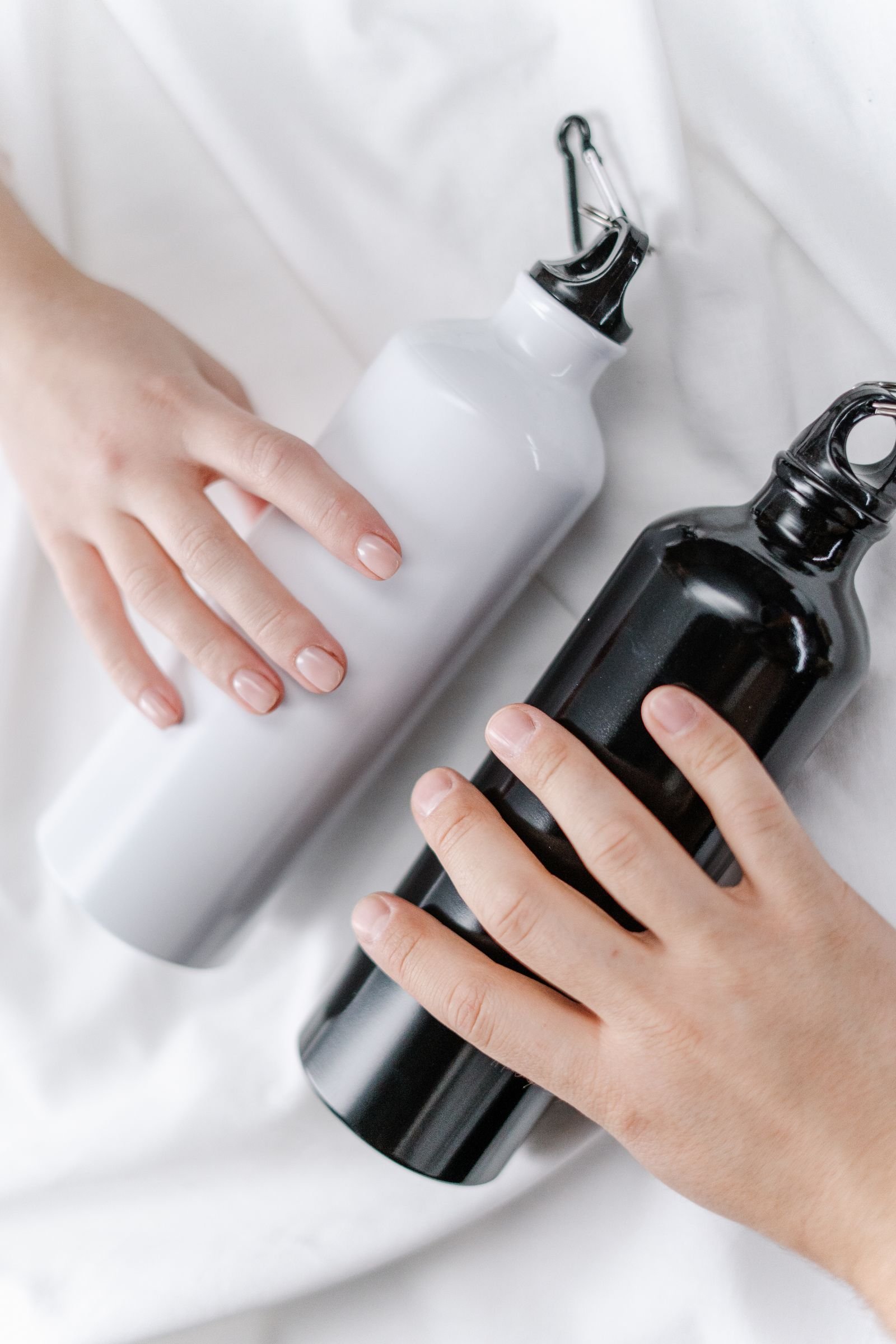
A commuter bottle earns its place not at the desk, but during the rushed minutes between doors.
One loose cap can soak a laptop sleeve; one bulky cylinder can turn a crowded tote into a daily puzzle; one awkward spout can demand two hands just as a train begins to move. None of these failures seems dramatic once, yet commuting repeats them five days a week—and turns minor friction into damaged gear, missed sips, and needless cleanup.
A practical bottle is therefore more than a container. Its value lies in how the seal, shape, opening mechanism, and exterior behave under jostling, tight storage, and distracted use. Details such as a protected mouthpiece, a cap that cannot cross-thread, or a base sized for a vehicle cup holder often matter more in transit than headline capacity or insulation time.
- Bag pressure can force liquid past weak gaskets or poorly aligned threads.
- Wide bodies waste space even when their stated volume is modest.
- Exposed sip valves collect grime when bottles share space with keys, cables, and transit surfaces.
Map the bottle’s actual working day
- Time between refills
A desk with a filtered tap, station fountains, and a long transfer create very different capacity needs. Bottle volume matters only after estimating the longest realistic stretch without water.
Look forCapacity matched to refill gaps, not a maximum-size instinct.AvoidOversizing for rare long days and carrying unused water. - Bag geometry and access
Measure the bottle pocket’s diameter and height, then consider whether the bottle must share space with a laptop, packed lunch, or umbrella. A bottle carried loose needs a different profile than one kept upright in a side sleeve.
Look forA stable footprint and dimensions that suit the usual bag.AvoidAssuming a listed capacity reveals how well it packs. - Movement and orientation
A bottle that spends the journey upright on a desk faces little risk; one that rolls beneath a seat or lies beside electronics makes closure design far more consequential. This is central to deciding what belongs in a commuter carry.
Look forA lid and seal designed for the route’s likely positions.AvoidTreating “leak-resistant” as adequate for a bag carried sideways. - Daily carrying load
Water adds substantial mass, especially at larger volumes. Include the bottle’s empty weight, the walk from platform to office, and whether it is refilled before the return trip.
Look forA capacity-to-weight balance that remains comfortable on ordinary days.AvoidChoosing insulation or volume without accounting for loaded weight.
Leak resistance is a lid system
However, leak-proof matters only when the entire closure path stays sealed.
The cap-to-neck interface, gasket, drinking opening, moving parts, and any pressure-relief valve must all stay leak-free.
Even a secure-looking screw cap can seep if its silicone ring is twisted, flattened, absent, or crumb-covered — a reliable seal is what actually prevents leaks for commuter use.
Upright spill resistance is the basic standard for a commuter bottle. It tolerates a bump on a train table or a brief tip while the drinking port is closed.
Upright spill resistance is the basic standard for a water bottle, commuters, travel water bottle. It tolerates a bump on a train table or a brief tip while the drinking port is closed.
Additionally, it stays dry when it lies sideways or upside down under a laptop and charger. That test places continuous pressure on every seam rather than merely challenging the mouth opening.
For commuting, relatively simple closures often have fewer failure points. A threaded cap with one visible, removable gasket is easier to inspect than a lid with concealed channels, multiple tiny O-rings, springs, and a flip spout. Protective covers also matter: they keep the drinking interface from being knocked open and reduce dirt reaching the seal.
Before packing, inspect the gasket for cuts, stretching, residue, or a gap in its groove. Tighten the lid evenly rather than forcing it past the threads; cross-threading can create a leak path that feels tight in the hand.
Fill with water, close normally, dry the exterior, then place the bottle upside down on a paper towel for several minutes. Moisture around the cap, hinge, or vent indicates that the closure is spill-resistant, not dependable for loose bag carry.
Compact means more than capacity
Capacity is a poor proxy for portability. Two bottles holding the same volume can pack very differently: a narrow, tall cylinder may fit a side sleeve yet collide with an overhead bag flap, while a shorter, wider vessel may sit securely inside a tote but miss the sleeve entirely.
Measure the space the bottle must occupy, not merely the pocket opening. Record interior diameter, usable vertical height, and the narrowest point—often an elastic rim or zipper track. Then compare those figures with the bottle’s maximum dimensions, including the lid, flip cover, carry loop, and any protruding straw. A small clearance matters: fabric pockets compress, but zippers and rigid cup-holder rings do not.
For commuter backpacks with practical bottle-pocket design, pocket depth is as important as width. A tall bottle that projects above the pocket can snag on train seats or doorways; a deeply seated one is less exposed but must remain reachable.
Cup holders add another constraint. Check the base diameter, rather than the body’s widest point, because tapered bottles may look compatible yet wobble at the bottom. For bags without a dedicated sleeve, a smooth-sided bottle with a low-profile lid generally wastes less interior volume than one with an external handle.
Size capacity around the refill gap
Capacity works best when it covers the longest realistic gap between refills, rather than the entire day. A short rail trip with dependable fountains may suit a smaller bottle; a door-to-door commute, transfers, and an evening stop can justify more volume. The relevant question is how long the bottle must bridge, not how much water could be carried.
Filled weight rises quickly. Water weighs about 1 kg per liter before the bottle, lid, and any insulation are counted. A larger insulated vessel can therefore become tiring in a hand, pull at a shoulder-bag pocket, or make a slim work bag stand awkwardly. Many commuters gain more from a moderate size that is refilled once than from a heavy bottle carried full all day.
A practical capacity choice balances three variables:
- Refill rhythm: reliable refill points permit less volume.
- Journey duration: delays, warm platforms, and onward plans extend the gap.
- Carry method: a bottle held in hand tolerates different weight and shape than one riding in a bag pocket.
Choose controls for the way the bottle travels
A bottle handled on stairs, platforms, and crowded vehicles benefits from a textured or powder-coated grip. This matters especially on smooth metal bodies, where condensation or rain can make a wide, secure hold more valuable than a perfectly sleek finish. A low-profile carry loop can help with short hand-carried stretches, but a protruding handle may snag inside a packed bag.
Closure design sets the real speed-versus-sealing trade-off. A screw cap is usually slower to open but has few exposed moving parts and commonly packs neatly. Flip or push-button lids offer one-handed access, yet add hinges, seals, and drink ports that need cleaning and protection. Straw-style caps can make sipping easy while walking, but their venting and internal tube create more potential leak paths.
For bag transport, a cap with a positive lock, covered mouthpiece, and minimal accidental-release risk is often the more practical choice. For a bottle that stays upright in an external pocket, quicker access may be worth the added mechanism. Handle position, lid height, and locking tabs should also be checked against the bag opening—not only the bottle’s stated dimensions.
Choose materials for the route
A bottle’s shell changes how it behaves between the platform, office, and return trip. Single-wall stainless steel is durable and relatively light, but cold drinks can sweat onto papers or electronics. Vacuum-insulated steel limits condensation and holds temperatures longer, at the cost of added weight and a wider body.
Plastic bottles are often the lightest option and can be useful where impacts are likely, though some retain flavors from strongly scented drinks. Glass avoids flavor carryover and makes contents easy to see, but it adds weight and needs a protective sleeve for crowded commutes. Powder-coated steel tends to tolerate scuffs better than glossy finishes, while dents remain a realistic trade-off in tightly packed bags.
Heat is not assumed
A bottle that insulates cold water is not automatically appropriate for coffee or tea. Hot-liquid suitability depends on the maker’s stated temperature limits, lid materials, venting design, and whether the drinking opening can safely manage steam. A sealed straw lid, for example, may be unsuitable for hot drinks.
Care instructions matter too:
- Hand-wash-only vacuum bottles may be inconvenient for daily use.
- Narrow necks and fixed straws need brushes to prevent residue buildup.
- Silicone gaskets benefit from regular removal, rinsing, and thorough drying to reduce lingering odors.
Cleanability keeps a bottle leakproof
A commuter bottle’s weakest point may emerge after months of use, not on its first day. Sweetened drinks, coffee residue, and hard-water deposits can collect beneath mouthpiece covers, in straw joints, and around lid threads. That buildup can hold odors, obstruct moving parts, or prevent a gasket from sitting flat.
Dishwasher-safe is not a blanket durability promise. It may apply only to the bottle body, only to the top rack, or only to selected lid components. Heat and detergent can eventually stiffen silicone, distort thin plastic parts, or degrade printed markings; the maker’s component-specific care instructions matter more than the headline.
Before choosing a design, check whether it has:
- A lid that opens far enough to expose hidden channels
- A removable gasket that can be inspected without stretching it
- A cleaning brush sized for straws, valves, and narrow ports
- Replacement seals, straws, and caps available from the manufacturer
A “leak-proof” claim generally describes a bottle in sound condition and closed as intended. A flattened, nicked, missing, or incorrectly seated gasket can defeat even a well-designed lid. After cleaning, reassemble the seal dry and evenly, then perform an occasional inverted water test over a sink before trusting it in a bag.
Let the commute set the weights
Score each feature from 1–5, then weight leak resistance at 35%, packed profile at 30%, cleanability at 20%, and insulation or capacity at 15%. A bottle that remains dry when inverted and clears a crowded bag pocket is more valuable than a larger model.
Weight secure retention and one-handed access at 30% each, capacity at 20%, and leak resistance plus cleanability at 10% each. Check cage diameter, cap operability with gloves, and whether the valve stays closed over rough pavement.
Give cup-holder fit 35%, one-hand operation 25%, leak resistance 25%, and capacity 15%. Measure the holder’s narrowest point; a tapered base may fit where a large straight-walled bottle does not.
Weight capacity and cleanability at 25% each, leak resistance at 25%, and packed profile at 25%. This balance suits alternating desk days, transit legs, and occasional longer refill gaps; removable seals and a wide opening reduce maintenance friction.
-
Measure the space that matters
Check the narrowest bottle pocket, desk cubby, car cup holder, and the clearance under any bag flap. Compare those dimensions with the bottle’s widest point, including lid locks, loops, and boot.
-
Run a dry handling rehearsal
With the bottle filled to its intended level, open, drink, close, carry, and stow it one-handed as the commute requires. Note whether the lid catches on fabric, the grip becomes insecure when wet, or the full bottle feels top-heavy.
-
Test the seal before trusting the bag
Fill with water, close every drinking port and secondary lock, then place it upside down on a dry towel for several minutes. Repeat after opening and reclosing the lid; some leaks appear only when a seal is slightly misseated.
-
Inspect the cleaning path
Remove the gasket, straw, valve, and cap parts where applicable. Confirm that a brush can reach every wet channel and that replacement seals are available if the design relies on them.
-
Make the first commute a controlled trial
Carry it in a low-risk compartment with a towel or pouch, then inspect the lid, surrounding items, and drinking surface at day’s end. Small irritations are useful evidence, not details to ignore.
- A bottle that fits the bag but frustrates the hand is not fully commuter-ready.
- Seal performance and cleaning access deserve retesting after regular disassembly.
- The most useful capacity is the amount that bridges the actual refill gap without making the carry awkward.
A suitable commuter bottle earns its place through a short, realistic trial rather than a feature list. Its dimensions, closure, cleaning access, and handling need to work together under the route’s ordinary constraints.
The right choice is usually the one that creates the fewest repeated actions: no careful packing to prevent leaks, no struggle to access the drink, and no hard-to-clean parts left behind after the day.

CamelBak Chute Mag Vacuum Insulated Stainless Steel Water Bottle, Magnetic Leak‑Resistant Cap for Everyday Hydration
Features
| Brand Name | CamelBak |
| Recommended Uses For Product | Travel |
| Age Range Description | Adult |
| Model Name | Chute Mag Insulated Stainless Steel |
| Included Components | Water Bottle, Packaging |
| UPC | 886798024226 |
| Manufacturer | CamelBak |
| Global Trade Identification Number | 00886798024226 |
| Item Type Name | insulated-beverage-bottles |
| Unit Count | 1 Count |
| Manufacturer Warranty Description | Got Your Bak Lifetime Guarantee |
| ASIN | B07XRWTGV6 |
| Capacity | 20 fluid ounces |
| Item Dimensions W x H | 3.74"W x 9.45"H |
| Item Weight | 316 g |
| Number of Items | 1 |
| Additional Features | Carrying Loop |
| Cap Type | Screw Cap |
| Material Type | Stainless Steel |
| Product Care Instructions | Dishwasher Safe |
| Color | Black |
| Pattern | Water Bottle |
| Theme | No Theme |
- One Handed Drinking Without Disruption: Magnetic cap stows securely while drinking and seals tightly when closed to help prevent leaks on the move
- Reliable Cold Retention Performance: Double wall vacuum insulation helps keep drinks cold for hours during workouts, commutes, and active days.
- Dry Carry in Any Conditions: Sweat resistant exterior helps prevent condensation so hands, bags, and gear stay dry
- Built for Daily Use: Durable stainless steel body with a powder coat finish stands up to everyday wear and active routines
- Simple, Hassle Free Cleaning: Bottle and cap are dishwasher safe for quick, convenient maintenance

Hydro Flask Water Bottle - Insulated Stainless Steel - Non Spill, Leakproof in 24 Oz Agave Green
Features
| Brand Name | Hydro Flask |
| Recommended Uses For Product | Water |
| Age Range Description | Adult |
| Model Name | Standard Mouth Flex Cap Bottle |
| Included Components | 1 Water Bottle |
| UPC | 840394202266 |
| Manufacturer | Hydro Flask |
| Global Trade Identification Number | 00840394202266 |
| Item Type Name | Water Bottle |
| Unit Count | 1 Count |
| Manufacturer Warranty Description | Lifetime |
| ASIN | B0DG36YPZM |
| Capacity | 710 ml |
| Item Dimensions W x H | 2.85"W x 12.45"H |
| Item Weight | 0.38 kg |
| Number of Items | 1 |
| Additional Features | Cold 24 Hours, Double Wall, Hot 12 Hours, Leakproof |
| Material Type | Stainless Steel |
| Color | AGAVE |
| Theme | Solid Color |
- 24 OZ AGAVE GREEN BOTTLE: Fill and refill with the Hydro Flask Standard Mouth insulated water bottle with leakproof cap. With a comfortable, flexible handle, the bottle is easy to grab and take anywhere. Double-wall insulation keeps drinks cold up to 24 hours and hot for 12.
- NONSTOP COLOR: Color-matching lid for a monochrome, stylish look for all your drinking needs. The large, refillable, portable water bottle is one of the perfect hydration accessories with matching lids and logos. Match these water bottles to your mood.
- 24 HOURS COLD. 12 HOURS HOT: The insulated water bottle keeps drinks cold for 24 hours and hot for 12 thanks to double-wall vacuum insulation. TempShield insulation is designed to be lightweight and efficient temperature retention, keeping contents ready to sip.
- LEAKPROOF: Say goodbye to leaky reusable water bottles. The Flex Cap on this stainless steel insulated reusable bottle is leakproof when closed. Simply close it shut and toss it into your bag or use it as a travel water bottle without worry.
- FITS CUPHOLDERS: The cupholder-friendly design means your water bottle fits simply and easily in most cupholders. These bottles are right at home on the open road, on the sidelines, outdoor, indoor, at work or school, or wherever you need to set your sips.
- PURE TASTE: Durable pro-grade stainless steel water bottle ensures pure taste and no leftover flavor transfer. So, today's water won't have any taste of yesterday's iced tea. BPA - Free
- DISHWASHER SAFE: Easy to use and easy to clean, just toss the lid and bottles into the dishwasher. Designed to keep bright color, being dishwasher safe means your favorite Hydro Flask is always at-the-ready.






14 Comments
What about hot coffee on a winter commute? Lots of bottles say insulated, but that does not necessarily mean the lid is safe for hot liquid or that opening it on a moving bus won’t result in a steam facial. I’d rather see hot-drink compatibility treated separately from insulation claims.
How would you handle a commute with no reliable refill point? My door-to-door trip is about 90 minutes each way, and I go to the gym before heading home. A huge insulated bottle solves the water problem but makes my laptop bag feel ridiculous.
I’ve considered carrying a small bottle plus a soft collapsible backup bottle, but I’m unsure whether those are actually practical once they’ve been used and need cleaning.
That is exactly the kind of case where capacity should follow the refill gap rather than a generic “all-day” size. A medium rigid bottle for daily use plus a collapsible reserve can make sense if the backup has a wide enough opening to dry fully and does not spend days damp in the bag. Another option is planning one dependable refill around the gym, if that is available, so you can avoid carrying the full return-trip volume all morning.
I tried the collapsible-bottle plan. Great for emergencies, but I only liked the kind that opens wide like a normal bottle; the narrow silicone pouch versions were annoying to wash and tasted weird for a while.
The cleaning section hit home. I had a bottle that started “leaking” after about six months, and it turned out the gasket had a tiny bit of buildup underneath it, so the cap could no longer seat evenly.
Do you recommend removing the gasket every time the bottle is washed, or only periodically? I worry that constantly prying it out will stretch it or tear it.
It depends on the lid design and how often the bottle carries anything besides water. For plain water and daily washing, a periodic gasket inspection—perhaps weekly or every few washes—is usually reasonable; wash it separately whenever you see residue, odor, or a change in sealing. Follow the maker’s instructions if available, and use a blunt tool or your fingers rather than a sharp utensil so the gasket is not nicked.
I do mine about once a week and let it dry separately. The important part for me was making sure the groove dries too; putting a clean gasket back into a damp channel seemed to bring the smell back faster.
I commute by bike, then take a train, so the bottle gets bounced around in a pannier and usually ends up horizontal. I used to prioritize a one-hand flip lid, but the little drinking port was always the part that collected grime and eventually leaked.
For that route, is a screw cap basically the safer choice even though it is slower at a station? Or are covered straw/flip lids reliable if the gasket is maintained?
For repeated vibration and horizontal storage, a simple screw cap generally has fewer potential failure points and is easier to inspect. A covered straw or flip lid can still work well, especially if the cover seals the drinking port and the straw assembly is removable, but it needs more frequent cleaning and gasket checks. The best compromise is often a bottle with a secure screw-on main cap and a drinking interface that is protected rather than exposed.
I bike with a covered straw lid and it has been fine, but only after I started replacing the tiny silicone valve every year or so. The lid looks clean long after that little part is not, unfortunately.
One thing I’d add: condensation can be almost as annoying as a leak. My cheap plastic bottle didn’t spill, but after cold water it made the papers in my messenger bag damp. Not catastrophic, just a very dumb way to discover that “leakproof” isn’t the whole brief.
The inverted leak test is such a simple point, but I honestly never did it before trusting a bottle in my work tote. How long would you leave it upside down—just a few minutes, or overnight with the lid closed?
A few minutes over a dry paper towel is usually enough to reveal an obvious lid or gasket problem. For a bottle that will regularly ride sideways in a bag, I’d also do a longer 30–60 minute test, then gently shake it and check around every seam. Overnight can be useful, but it is not necessary for most first trials.
Glass gets dismissed a bit too quickly in commuter discussions. I take the bus and mostly keep my bottle upright in a padded sleeve inside my bag, so I like that glass doesn’t retain tea smells. Obviously I wouldn’t bring it on a packed bike commute, but route-specific material advice is the right approach.