
The best bulk case is the one that keeps practice consistent without becoming an expensive guess.
A shooter who fires 150 rounds on Saturday can empty a 1,000-round case in less than two months—quickly enough to value consistency, but slowly enough that a poor match becomes tedious. A bargain load that produces erratic ejection, stubborn failures to feed, or an unfamiliar point of impact is not cheap once it consumes range time and confidence.
Predictable brass-cased factory ammunition is often the sensible baseline for weekly drills: it tends to cycle broadly across striker-fired pistols, compact guns, and carbines while leaving reloadable cases behind. Remanufactured loads can stretch the training budget, but their value depends on proven lot-to-lot reliability in the specific firearm. Quantity matters, too. A 200- or 500-round pack limits exposure while confirming function; 1,000 rounds makes more sense after several trouble-free sessions. The lowest sticker price matters less than dependable ignition, manageable recoil, and enough ammunition on hand to preserve a regular practice rhythm.
- At 150 rounds per weekly session, 500 rounds covers about three range visits; 1,000 rounds covers roughly six to seven.
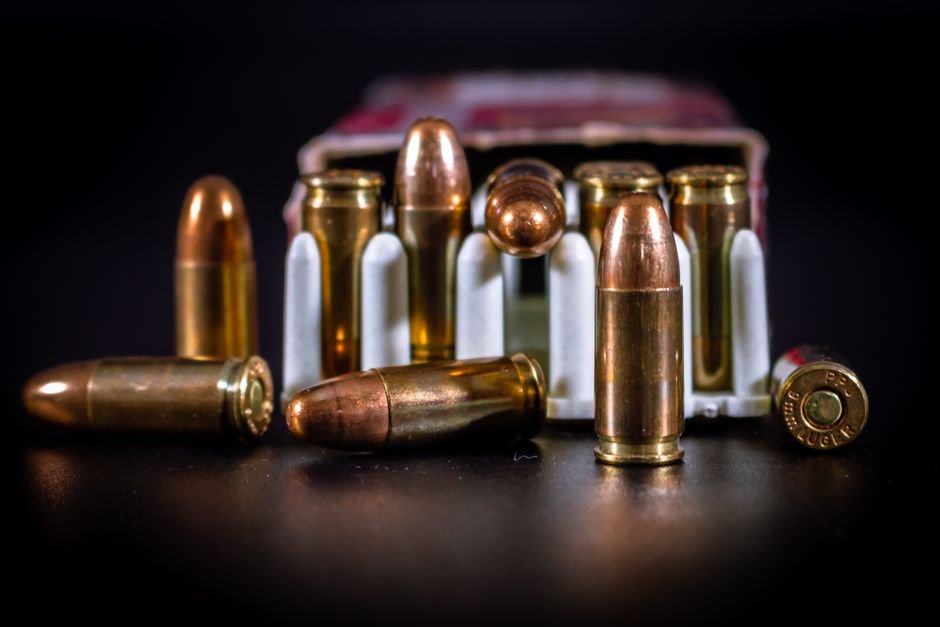
Four Bulk Options, Matched to the Range Day
Measure the rounds that actually work
- Reliable rounds over carton count
The meaningful comparison is delivered cost per round that feeds, fires, ejects, and groups without interrupting the session.
Look forConsistent function across several magazines.AvoidA low headline cost erased by stoppages. - A sensible baseline load
Brass-cased 115-grain FMJ is the common practice standard: broadly available, mild enough for long sessions, and representative of many service-pistol setups.
Look forCleanly formed brass and conventional FMJ bullets.AvoidUnknown-case mixes or damaged rims. - Repeatable lots matter
Velocity variation can change point of impact and expose marginal cycling. A load that runs in one pistol still merits a function and grouping check in the intended firearm.
Look forSimilar ejection, recoil impulse, and group size.AvoidAssuming another pistol's results transfer. - Keep duty testing separate
Bulk FMJ establishes training reliability; defensive ammunition requires its own, smaller validation process.
Look forDedicated testing of the selected carry load.AvoidTreating range FMJ as defensive proof.
Remanufactured ammunition can be a capable training choice when its lot runs consistently, but case history and component variation deserve more scrutiny than new factory brass. For defensive ammunition, the amount of defense ammo worth testing is a separate question from stocking weekly-practice FMJ.
A sensible 500-round brass reserve
01
Top choice for dependable weekly range practice
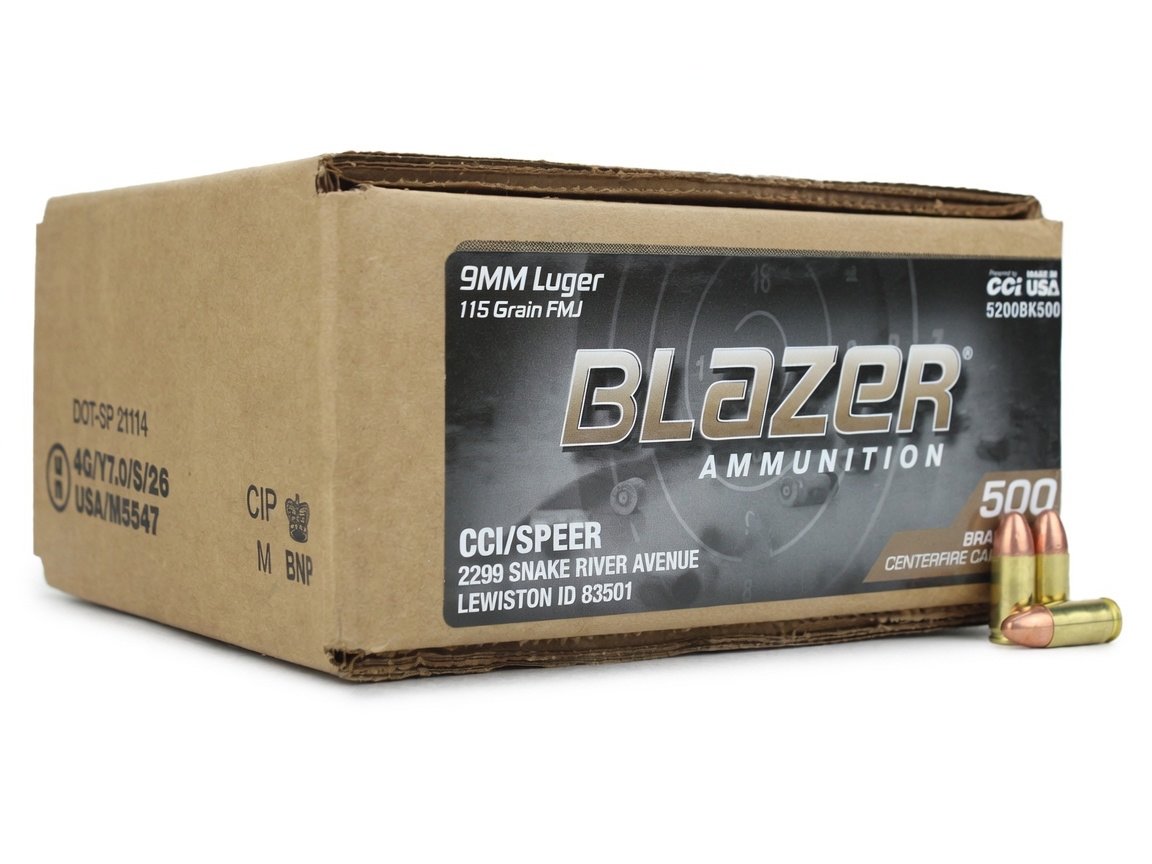
CCI Blazer Brass 9mm 115-grain FMJ is a factory-new, loose-packed practice load built around the most familiar 9mm range configuration: a 115-grain copper-plated full-metal-jacket bullet in a brass case. The 500-round format fits the shooter whose regular sessions consume a few boxes at a time without turning ammunition storage into a case-lot commitment.
Its brass cases matter beyond dependable extraction. Shooters who collect their own fired cases retain reloadable material, while ranges that segregate brass make conventional cases easier to recover than steel or aluminum alternatives. A manageable supply also makes it easier to notice a pistol’s changing function or a lot-specific quirk before a much larger purchase is opened.
- Factory-new, reloadable brass cases
- Conventional 115-grain FMJ practice load
- 500 rounds suit recurring sessions
- Loose bulk pack simplifies loading
- No duty or defensive-load analogue
- Less inventory than a full case
- Loose packing offers no tray organization
Quick take This is the practical default for ordinary range use: enough ammunition to establish a routine, without the storage, cash outlay, or untested-lot exposure of a much larger order.
CCI Blazer Brass earns the lead spot because it keeps the variables simple. Standard-weight FMJ, factory-new brass, and a usable 500-round count cover the routine work of confirming zero, practicing draws where permitted, and running drills without treating every range day as a supply decision.
For reloaders and brass-conscious shooters, the case material adds value after firing. The package is not the biggest available, but its restraint is part of the appeal: it is substantial enough for repeat practice and small enough to evaluate with a particular pistol before scaling up.
Remington UMC 115-Grain Mega Pack for familiar range work
A practical choice for high-volume target shooting
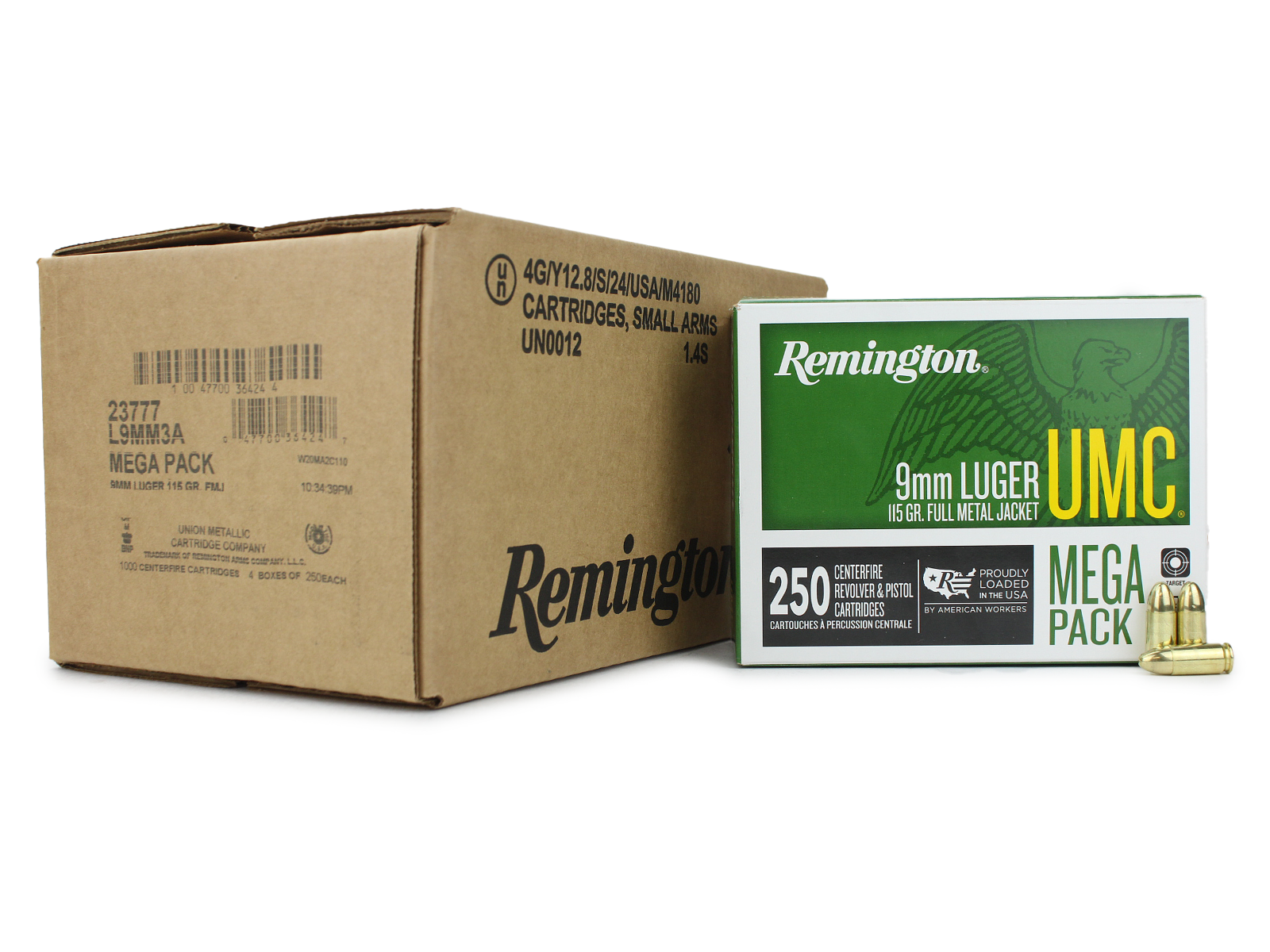
Remington UMC’s 250-round Mega Pack is conventional factory-new 9mm: a 115-grain full-metal-jacket load in brass cases, built around the practice ammunition format found at many indoor and outdoor ranges. It fits shooters whose routine reliably consumes more than a few boxes at a time, without moving into a full-case commitment.
The 115-grain FMJ profile is a useful practice baseline because it is widely available and commonly feeds well in service-size and compact 9mm pistols. UMC lists this load at 1,145 fps and 335 ft-lb at the muzzle, placing it in familiar standard-pressure territory rather than the heavier, softer-pushing 124- or 147-grain practice categories.
That distinction matters on target. A pistol may print this lighter bullet at a slightly different elevation than heavier loads, and its recoil impulse can feel sharper even when overall recoil remains mild. It is best treated as a consistent training load in its own right—not an automatic stand-in for every heavier cartridge.
- Factory-new brass cases
- Common 115-grain FMJ format
- 250-round supply suits frequent sessions
- Standard-pressure practice profile
- Not a full-case quantity
- Point of impact can differ from heavier loads
- Recoil feel may be sharper than 147-grain loads
A 1,000-round supply for a settled training routine
Best suited to extended range sessions on a budget
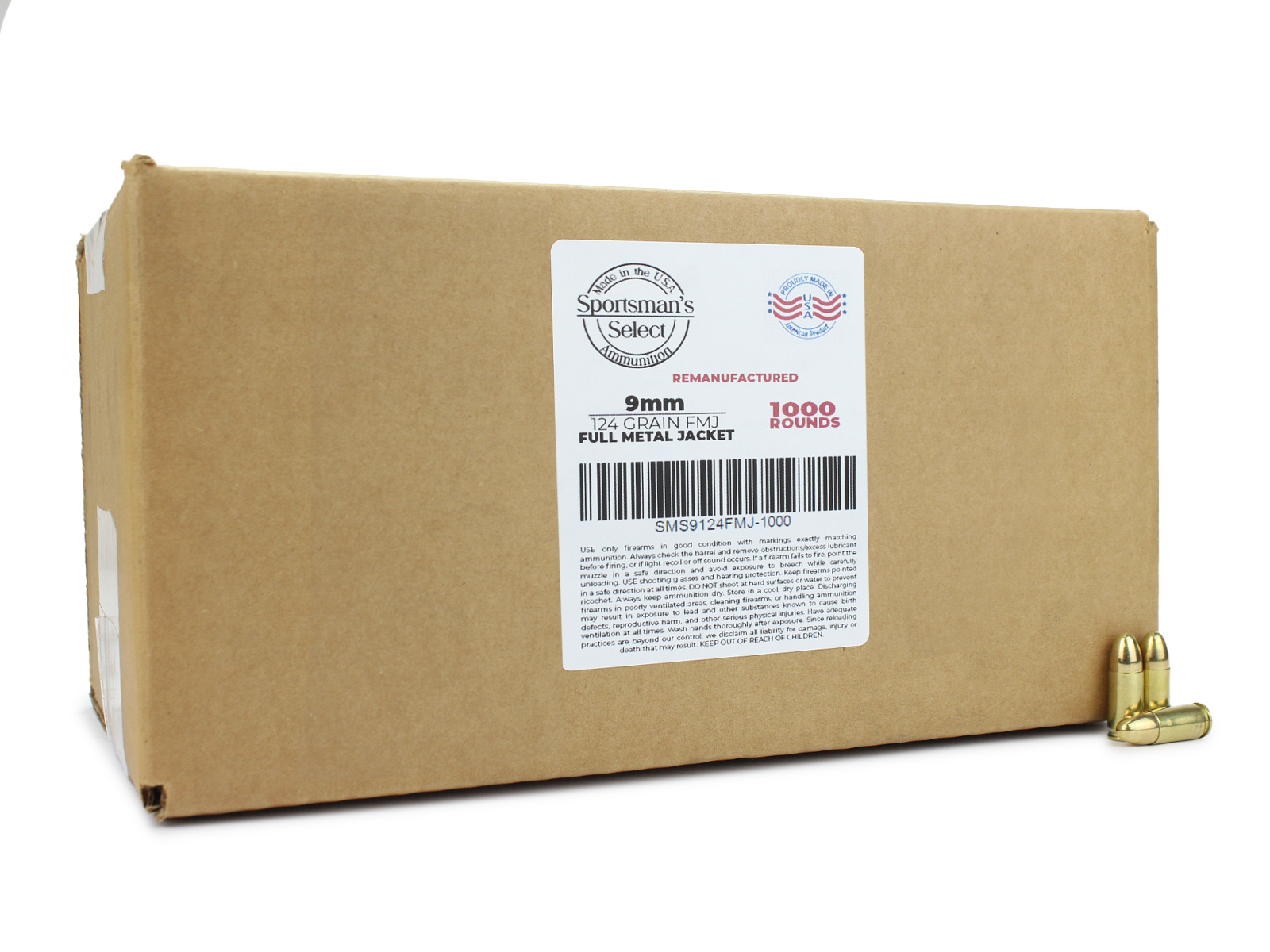
Sportsman’s Select Remanufactured 9mm 124 Gr FMJ is aimed at shooters whose practice schedule can genuinely absorb a full case. Remanufactured ammunition is loaded using previously fired brass that has been collected, processed, inspected, and reloaded with new components; it is not factory-new ammunition.
The 124-grain FMJ format makes this a plausible training match for pistols commonly run with midweight 9mm loads, but the case quantity only makes sense after the load has proven itself in the particular gun and magazines. Case condition, extraction behavior, and acceptable range use matter as much as the headline round count. Those comparing case materials can also review brass versus steel for range practice before choosing a long-term supply.
- 1,000 rounds support frequent practice
- 124-grain FMJ suits common training setups
- Brass cases can simplify range recovery
- Remanufactured lots warrant gun-specific testing
- Case cosmetics may vary from factory-new loads
- Some ranges restrict remanufactured ammunition
Before committing to 1,000 rounds, run a modest sample through the intended pistol and magazines. Note the lot information on the packaging, if provided, and inspect cartridges for consistent seating, intact primers, and undamaged cases.
Also confirm the range’s ammunition rules. Indoor facilities may limit certain projectile types or prohibit remanufactured loads, regardless of whether the ammunition functions well.
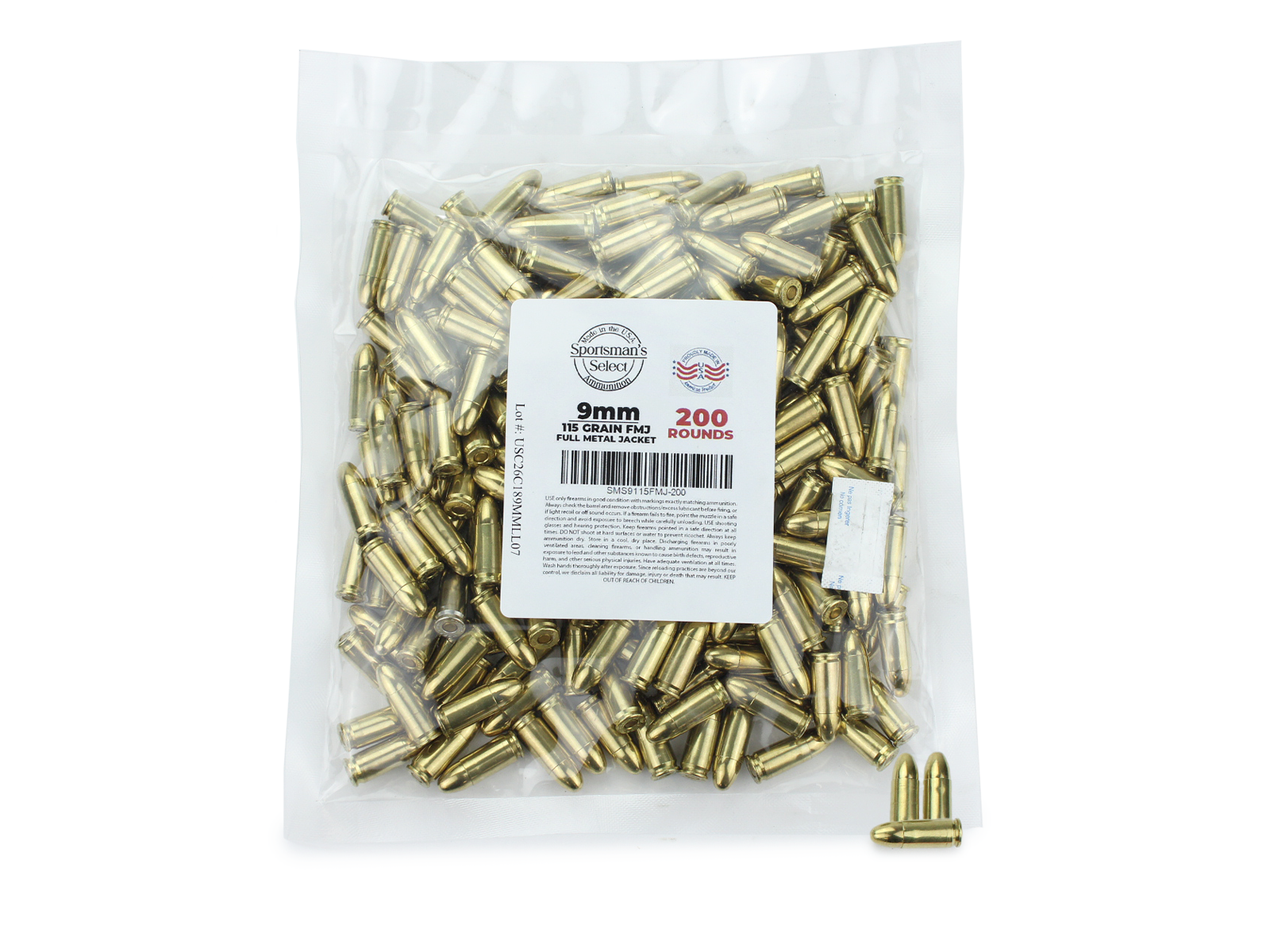
Sportsman's Select: 200 rounds for a controlled remanufactured trial
- Enough ammunition to evaluate feeding, extraction, ejection, and point-of-impact behavior across several magazines
- Limits the commitment to a remanufactured load before moving to a larger lot
- Compact quantity for a single function-and-familiarity range visit
- 115-grain FMJ keeps the test close to common light-bullet practice ammunition
- Too little volume to establish a meaningful weekly-practice reserve
- A single 200-round lot cannot reveal every lot-to-lot variation
- Remanufactured cartridges merit a visual inspection before loading
The 200-round pack gives enough repetition to check basic cycling and build familiarity with the load without tying up much space or budget. For a function session, it is appropriately sized. For recurring weekly drills, its round count disappears quickly; a larger, previously tested supply is the more durable answer.
Build a monthly round-count plan
-
Record a normal session
Use actual fired rounds, not the box brought to the range. Include drills, warm-ups, and the occasional extra magazine.
-
Multiply by realistic attendance
A 150-round session attended four times calls for 600 rounds per month; count canceled trips as part of the pattern, not an exception.
-
Add a modest working buffer
Keep enough for one additional typical visit or a short delivery delay, stored securely, dry, and separately from questionable or mixed-lot ammunition.
-
Rotate rather than accumulate blindly
Shoot older lots first, label purchase dates and lot numbers, and inspect remanufactured cartridges during loading.
-
Compare the delivered figure
Divide the final order total—including freight, taxes, and applicable fees—by rounds received. That true cost per round can change which pack is the practical monthly buy.
Recalculate after a new training block, a different range cadence, or a change in ammunition weight.
Match the case size to the calendar
A 200-round pack is a screening quantity, not a stockpile. The Sportsman’s Select 200-round remanufactured pack can reveal whether a pistol cycles the load consistently and whether its point of impact suits the intended drills. It also covers a short visit without leaving a questionable lot on the shelf.
A 500-round pack becomes a practical reserve: roughly several modest sessions, depending on drill volume. CCI Blazer Brass fits this middle ground particularly well because factory-new brass supports routine practice and, where applicable, case recovery. It leaves room to change loads or adjust a training plan without carrying a large unused inventory.
A 1,000-round case fits an established cadence, not merely an attractive per-round figure. The move from 500 to 1,000 rounds of 9mm makes sense when the same load has already proven reliable, storage is orderly, and expected range attendance will turn the supply over within a predictable period. Sportsman’s Select’s 1,000-round remanufactured option is therefore better treated as sustained training inventory than an initial experiment.
The final check before ordering
Before checkout, confirm the listing says 9mm Luger/9×19, not a similarly named cartridge, and that its bullet type fits the intended range use. Standard FMJ is widely accepted, but some facilities restrict steel-core projectiles, exposed lead, magnetic bullets, or remanufactured ammunition. Local rules and the range’s own policy can differ.
Compare the delivered total—shipping, required fees, and any quantity limits—not merely the advertised per-round figure. Check whether the case count is sealed factory packaging or loose/repacked ammunition, then retain the lot number and order record.
A new remanufactured lot merits a closer look on arrival: inspect packaging, headstamps where relevant, cartridge condition, and overall consistency before relying on it for a full training schedule. Manufacturer guidance on storage, compatibility, and lot-specific notices remains the controlling reference. For a wider method covering quantities, shipping, and testing, see the bulk-ammunition buying guide.
Frequently Asked Questions
What's the best bulk 9mm ammo pack for regular weekly range practice?
The CCI Blazer Brass 9mm 500-Round Bulk Pack is the top pick for weekly practice. It combines factory-new, reloadable brass cases with a common 115-grain FMJ practice load in a manageable 500-round supply, covering roughly three range visits at 150 rounds per session.
How many rounds do I need for a typical month of practice?
Start from an actual session count: a 150-round session attended four times a month works out to roughly 600 rounds. Add a modest buffer for one extra visit or a short delivery delay, and rotate older lots first rather than accumulating ammunition blindly.
Is remanufactured 9mm ammo safe to buy in bulk?
It can be a capable training choice when a lot runs consistently, but because it’s loaded from previously fired, inspected brass rather than factory-new components, it deserves more scrutiny than new brass. Run a modest sample through the intended pistol and magazines before committing to a full case, and check the range’s rules, since some indoor facilities restrict remanufactured loads outright.
What's the difference between a 200-round pack and a 1,000-round case of remanufactured ammo?
A 200-round pack, like Sportsman’s Select’s 115-grain option, is a screening quantity meant to reveal whether a pistol cycles a load reliably before a larger purchase. A 1,000-round case, such as Sportsman’s Select’s 124-grain remanufactured pack, only makes sense once that same load has already proven reliable and expected range attendance will turn the supply over in a predictable period.
Does bullet weight, 115-grain versus 124-grain, matter for practice ammo?
Yes. A 115-grain FMJ load such as Remington UMC’s, listed at 1,145 fps and 335 ft-lb at the muzzle, can print at a slightly different point of impact and feel like sharper recoil than a heavier 124-grain load. It’s best treated as a consistent training load in its own right rather than an automatic stand-in for heavier cartridges.
What should I check before placing a bulk 9mm order?
Confirm the listing is for 9mm Luger/9×19 with a bullet type your range allows, since some facilities restrict steel-core projectiles, exposed lead, magnetic bullets, or remanufactured ammunition. Compare the delivered total, including shipping and fees, rather than just the advertised per-round price, and note whether the case is sealed factory packaging or loose/repacked ammunition.
Buy for the next sessions, not the biggest carton
- A replenishment point based on completed range sessions keeps inventory useful rather than merely impressive.
- A new lot merits the same brief function check, even when the brand and bullet weight are familiar.
CCI Blazer Brass 500-round packs are the strongest default for weekly practice: factory-new brass, practical session coverage, and enough volume to reveal a pistol’s preferences without committing to a full case. Remington UMC 115-grain Mega Packs suit shorter, familiar range days. Sportsman’s Select 200-round remanufactured packs are for a controlled trial; its 1,000-round pack belongs only in an already proven routine.
The useful rule is simple: buy the smallest quantity that reliably covers the next several sessions, then increase volume only after acceptable function is established. Consistent practice and a repeatable replenishment rhythm matter more than the largest advertised bulk pack.
CCI Blazer Brass 9mm 115 Gr FMJ (500 Round) Loose Bulk Pack (Box)
Remington UMC 9mm 115 Gr FMJ Mega Pack (Case)
Sportsman's Select Remanufactured 9mm 115 Gr FMJ (200 Rounds)




10 Comments
I’m a little cautious about recommending the Sportsman’s Select 1,000-round reman pack as a weekly option without more emphasis on velocity consistency. My CZ eats nearly everything, but my friend’s compact has had occasional failures to return to battery with reman ammo that looked fine on a quick inspection.
Would you put 200 rounds through a new reman lot before buying another 1,000, even if the brand has worked previously? Lots can change, and the savings disappear pretty quickly after one frustrating range trip.
Yes—especially with a different lot, I would treat a 200-round check as worthwhile when practical. Run it through the actual pistol, magazines, and cadence you use, while watching for feeding, extraction, ignition, and point-of-impact changes. A prior good experience is useful evidence, but it is not a guarantee that every remanufactured lot will behave identically.
For someone on a pretty tight budget, would you choose the UMC 250 pack over the 200-round reman trial if both land around the same total price? I only get to the range once a month and probably shoot 100-125 rounds. Factory-new sounds preferable, but 250 means leftovers and apparently that is a crime against my tiny ammo can.
I’d take the UMC if the per-round cost is close. Leftovers are just next month’s first two magazines, not clutter. The 200-round reman pack makes more sense if you specifically want to test that reman load before committing to the 1,000-round version.
Can you clarify what you mean by checking range rules for remanufactured ammo? My indoor place allows FMJ only, but I’ve never seen anything specifically banning reman. Are some ranges worried about steel cases, bullet construction, or just liability paperwork?
Why no Winchester White Box or Federal American Eagle in the comparison? Those are usually what I see locally, and after shipping the “delivered per round” number can make the online bulk packs look a lot less magical.
Fair question. We kept the list to the four pack sizes/products being evaluated rather than trying to rank every common 9mm load. Federal AE and Winchester can absolutely be sensible choices when their delivered cost is competitive; the same small-batch function test and final checkout math apply.
The 500-round Blazer Brass recommendation makes sense to me. I shoot about 150 rounds every other Saturday, so a case of 1,000 would just sit around forever while I convince myself I’m “building inventory” 😅
Also appreciate the reminder that reloadable brass has value. I don’t reload yet, but my club has a couple people who gladly trade components or range favors for clean brass.
The monthly round-count plan is the best part here. I used to buy 1,000 every time there was a sale, then miss two range weekends and wonder why I had more cartons than shelf space.
Now I keep roughly a 500-round buffer, count what I actually fired, and buy according to that. Less exciting than panic-buying, much easier on the wallet.
Glad you mentioned that 115-grain can change the zero compared with 124 or 147. People act like 9mm is all interchangeable until their group moves and then suddenly the sights are “broken.”
I normally train with 124 because that’s what my pistol seems happiest with. The UMC Mega Pack may still be fine for a casual session, but I wouldn’t use a 115 bulk deal to judge whether my carry setup is shooting where I expect.