
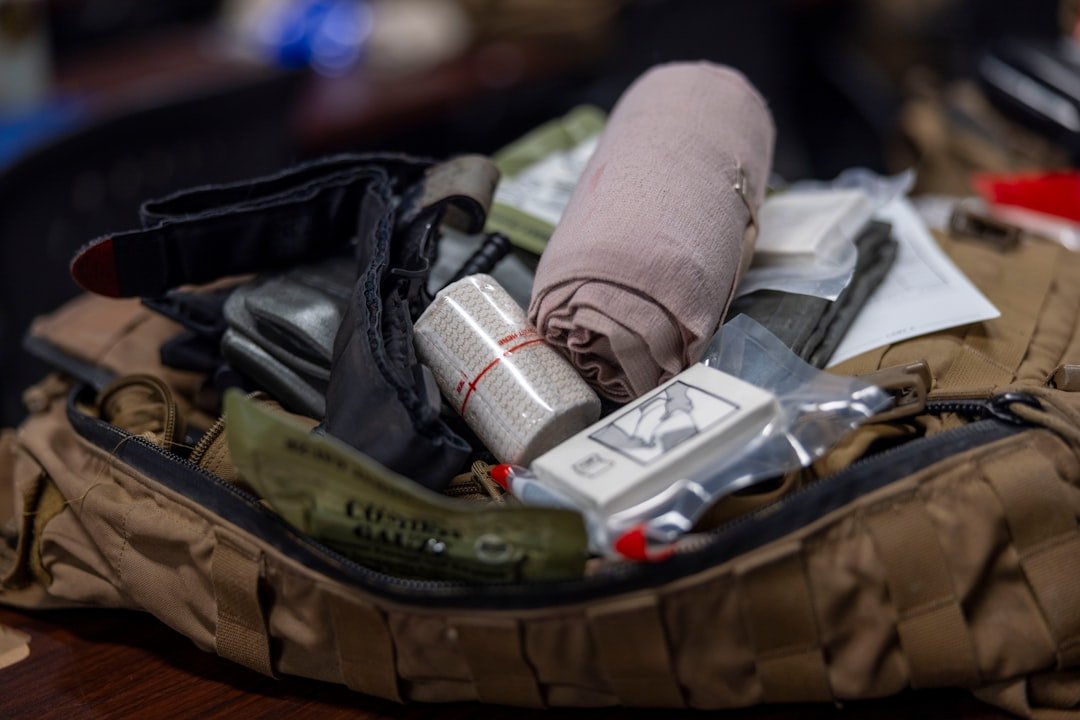
A compact kit can be sensible; a tourniquet is a commitment to a narrow, high-consequence problem.
A key ring, phone, wallet, and small first-aid pouch suit most office commutes—until the routine includes remote roads, power tools, hunting, industrial work, or long waits for emergency services. The relevant variable is not how dramatic a kit looks, but the combination of injury exposure, distance from definitive care, and whether someone nearby can recognize catastrophic bleeding.
A tourniquet adds bulk and expense, but its larger drawback can be false confidence. It is designed for severe limb bleeding, not everyday cuts, nosebleeds, or most household injuries, and it does not replace calling emergency services or broader first-aid capability. In a dense city with rapid access to care, a minimal kit may match the actual risk profile; in isolated or higher-hazard settings, the calculation can shift substantially.
- Long emergency-response intervals raise the value of focused trauma equipment.
- Work and recreation hazards can matter more than the contents of a pocket.
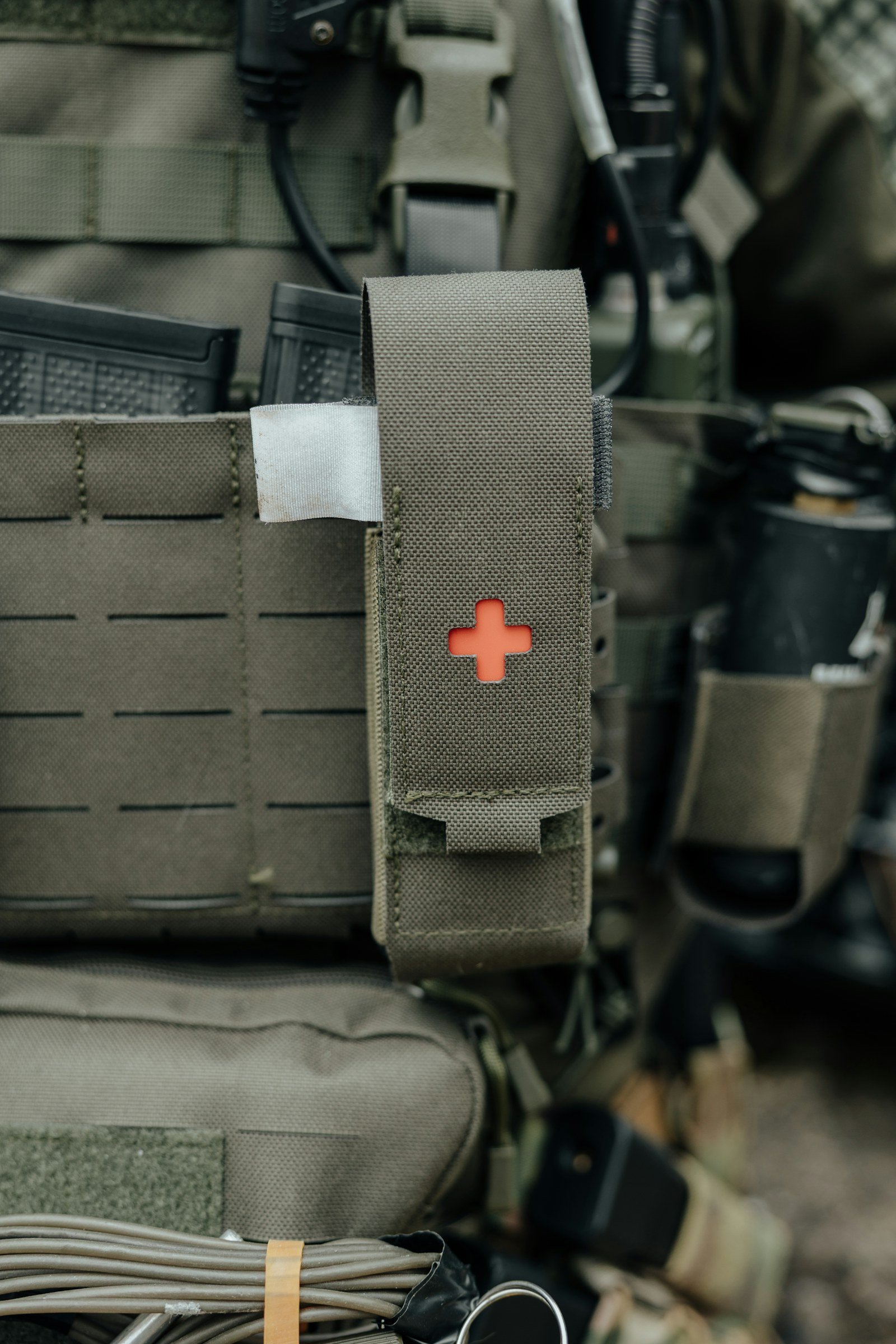
A tourniquet belongs in some carries—not every carry
- Exposure matters Routine errands in settings with rapid emergency response may not create enough likely benefit to justify dedicated carry.
- Context changes Higher-risk work, remote travel, hunting, range use, or tools and machinery can make severe extremity trauma more plausible.
- Capability counts A device is only useful within a coherent plan: reputable equipment, accessible placement, and training that includes when not to apply it.
A tourniquet is not a general-purpose first-aid item or a badge of seriousness. Carrying one solely because it is common in EDC culture can create a kit with impressive-looking gear but no practical decision framework.
For many low-exposure daily routines, a compact first-aid kit, emergency contact information, and familiarity with local emergency access may be the more proportionate foundation. Where bleeding risk and delayed care credibly intersect, an established windlass-style tourniquet can become a rational addition—provided it is carried where it can actually be reached and its limitations are understood.
What a tourniquet is—and is not
Life-threatening limb bleeding
Severe bleeding from an arm or leg that is uncontrolled or rapidly recurrent, including blood loss that is pulsatile, pooling, or soaking through material. It is the narrow problem a tourniquet is designed to address.
Tourniquet
A purpose-built device tightened around a limb to stop arterial blood flow beyond its placement. It is not a general wound dressing and is not intended for bleeding from the chest, abdomen, neck, or groin.
Direct pressure
Firm pressure applied to the bleeding site, often with gauze or other dressing material. For many external wounds, it can control bleeding without limb occlusion.
Wound packing
Placing suitable dressing material firmly into a deep wound, then maintaining pressure. It is particularly relevant where a tourniquet cannot be applied effectively, such as junctional areas.
Definitive care
Emergency evaluation and treatment that identifies bleeding, shock, tissue injury, and complications a field intervention cannot resolve.
A tourniquet can be appropriate when catastrophic arm or leg bleeding is not controlled quickly by direct pressure or when pressure is impractical in the circumstances. Its purpose is to buy time, not replace care.
Emergency services and prompt medical assessment remain central. Even when bleeding appears controlled, the underlying injury, blood loss, and the effects of limb occlusion require professional evaluation. A carried device also has limited value without the ability to recognize its narrow indication and communicate what occurred to responders.
Not every bloody wound is a tourniquet emergency
Abrasions, small cuts, and controlled oozing are typically routine wound-care problems.
Blood can look dramatic on skin or clothing without representing dangerous blood loss.
Rapid, persistent flow; quickly saturated material; pooling; or blood hidden by clothing can all be concerning.
Some severe bleeding is not neatly “spurting,” especially with deep wounds or awkward body positions.
Traumatic amputation, deep penetrating or crush injury, delayed rescue, and signs of deterioration raise concern.
Mechanism, access to emergency care, and the person’s overall condition change the stakes.
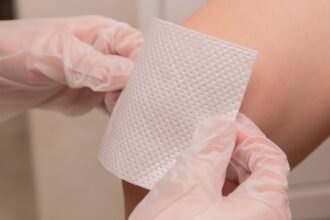
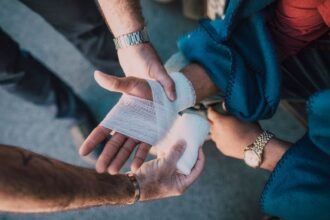
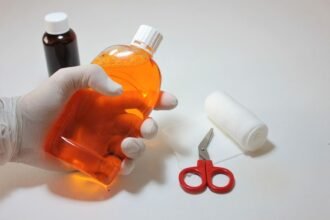
Minor bleeding has its own practical framework: stopping minor bleeding without a tourniquet involves different tools and decisions. A tourniquet is designed for suspected life-threatening bleeding from an arm or leg, not as a default response to every cut.
A tourniquet is not the only threshold
A wound can be unsuitable for ordinary self-care even when bleeding is controlled and a tourniquet carry has no role. Depth and location matter; gaping edges, exposed fat or deeper tissue, and injuries near joints can affect function. Injuries near joints, tendons, hands, face, or genitals can raise concerns about closure and infection.
Further concerns include impaired movement or sensation, and injuries near tendons, hands, the face, or genitals may raise questions about healing and return of use. When such risks exist, care decisions should be guided by professional evaluation to minimize complications and maximize outcome.
Mechanism also changes the picture. Bites, dirty punctures, crush injuries, and cuts involving glass or metal may call for professional treatment. Wounds with a possible retained foreign body may also call for professional treatment.
Worsening pain and redness spreading from the wound are reasons to seek clinical assessment. Warmth, swelling, drainage, fever, or a wound that reopens are additional signs to seek care. A first-aid kit and a tourniquet address immediate problems; neither substitutes for definitive wound evaluation.
When carry becomes proportionate
- Exposure to high-energy injury
Regular contact with machinery, cutting tools, vehicles, firearms, remote land, or technical outdoor activity changes the bleeding-risk picture. Frequency matters less than whether a rare incident could produce rapid limb hemorrhage.
Stronger case for carryA plausible mechanism for catastrophic extremity bleeding.Weak reasons to carryCarrying solely because a dramatic event is imaginable. - Time until capable help arrives
A short response time in a staffed setting is not the same as immediate hemorrhage control at the scene. Remote travel, isolated shifts, and delayed discovery can make early intervention more consequential.
Stronger case for carryMeaningful gaps before trained responders and equipment are available.Weak reasons to carryAssuming an emergency number eliminates the initial delay. - Resources already within reach
A workplace, vehicle, range, or organized event may already have trauma supplies and trained personnel. Those resources can reduce the value of duplicating equipment, although their location and availability still matter.
Stronger case for carryKnown, accessible kits and a realistic plan for reaching them.Weak reasons to carryCounting supplies that are locked away, distant, or unfamiliar. - Training and maintenance
A tourniquet is most useful when its carrier can recognize severe limb bleeding, apply the device under stress, and keep it serviceable. Unpracticed carry can create false confidence rather than useful capability.
Stronger case for carryCurrent hands-on instruction and periodic practice with the specific design.Weak reasons to carryNovelty gear carried without familiarity or inspection.
Someone commuting between well-resourced urban settings may face a different decision from the same person on a remote trail, at a worksite, or during a long drive through sparsely served areas. Carry need not be an identity or a permanent rule; it can reflect the day’s exposure, distance from help, and practical ability to use the equipment.
A compact trauma kit with a tourniquet may be more coherent than a loose device carried without gauze, communication access, or a plan to summon emergency services. Equipment is only one link in the response chain.
Skill matters after the carry
Equipment access, severity recognition, dispatch communication, and stress performance are separate competencies. Hands-on instruction can test them; viewing alone cannot.
Carrying a tourniquet
Matt Tracer shows a comfortable, practical method for tourniquet carry integrated into daily routine.
Why provenance matters more than appearance
A tourniquet is not simply a strap with a rod. A purpose-built commercial design pairs sufficiently wide webbing, a mechanical tightening system, and hardware engineered to tolerate high tension without slipping.
Its performance depends on those parts working together. It does not rely on a tactical-looking colorway or a package claim.
For selecting a dependable everyday-carry tourniquet, traceability is a useful first filter. Manufacturers commonly identify the maker, model, instructions, and production or lot information, and sell through channels that show stock provenance. Missing identification, inconsistent logos, or photos that don’t match can signal an unverified listing.
Novelty training items and costume gear may resemble field equipment. They may use weak plastic, thin webbing, decorative stitching, or poorly finished windlasses. These features can mislead people into thinking they are suitable for serious use. However, appearances do not prove performance or safety.
Improvised belts, cords, and narrow straps also lack width. They lack the mechanical leverage that makes controlled tightening predictable. Their familiar appearance is not the same as a tested design. Relying on them risks failure during critical moments. Always rely on purpose-built gear for critical medical tasks.
Counterfeits are hard to spot. Packaging may imitate legitimate products.
Periodic inspection can reveal frayed webbing. It can show ultraviolet or heat damage, cracked hardware, contamination, missing components, or a windlass that no longer moves smoothly.
Storage conditions and any prior use can matter as much as the original purchase.
A recognizable silhouette does not establish material quality, provenance, or mechanical reliability.
Carry is only the first layer
A tourniquet is most useful as part of a distributed first-aid system: the nearest layer handles the first minutes, while larger kits supply what follows. No single location optimizes every situation.
Access versus capability
On-body carry offers the shortest reach when a person is separated from a bag or vehicle. Its limits are bulk, weather exposure, and the tendency to make one device feel like a complete kit.
A daily bag can carry a more capable module: trauma dressings, gloves, gauze for wound packing, and a way to contact emergency services. It remains only as useful as the bag’s actual proximity; it may be across a room, left in a car, or inaccessible after a crash.
Vehicle kits support longer travel and multiple occupants, but distance from the vehicle is the defining compromise. They also face temperature swings, moisture, and theft risk. Workplace kits can add volume and redundancy, provided their location is known and access is not restricted.
A practical arrangement often uses layers rather than duplication: immediate-access equipment for plausible severe bleeding, fuller supplies where time and space permit, and periodic checks for damage, missing items, and changed routines.
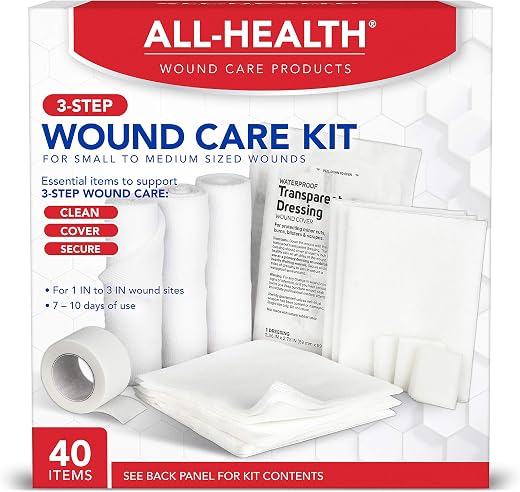

Build the carry around the day, not the label
-
Map credible mechanisms
Consider recurring exposure to tools, machinery, traffic, sharp materials, remote travel, or violent injury—not merely the possibility of seeing blood.
-
Factor in time to help
Longer delays to capable emergency care can strengthen the case for more capable equipment; dense urban routines may have different limits and resources.
-
Count only usable equipment
A traceable, intact tourniquet carried where it can be reached is more meaningful than an unverified device buried in a bag.
-
Match gear to demonstrated capability
Hands-on training can clarify whether recognition, application, communication, and follow-through remain workable under stress.
-
Keep the smaller option legitimate
For many ordinary routines, a compact basic-wound setup—such as gloves, dressings, and a way to summon help—can be the proportionate layer.
Preparedness is a fit, not a badge
A tourniquet can be sensible when credible limb-trauma hazards, delayed care, trustworthy equipment, immediate access, and practiced use align. It is not a universal marker of responsible everyday carry.
A modest, accessible wound-care kit is often the more honest match for routine life. Equipment matters most when it reflects real exposure and can be used within an emergency-response plan.
Carrying a Tourniquet: Common Questions
Does stopping visible bleeding mean the emergency is over?
No. A tourniquet can buy time, but it does not replace care. Even when bleeding appears controlled, the underlying injury, blood loss, and the effects of limb occlusion require professional evaluation, and emergency services should still be contacted.
Is any visible blood a sign that a tourniquet is needed?
No. Abrasions, small cuts, and controlled oozing are typically routine wound-care problems. Blood can look dramatic on skin or clothing without representing dangerous blood loss; a tourniquet is meant for suspected life-threatening bleeding from an arm or leg.
What should someone check to avoid an unreliable tourniquet?
Traceability is a useful filter: established manufacturers commonly identify the maker, model, instructions, and lot information. Missing identification, inconsistent logos, vague descriptions, or a windlass that no longer moves smoothly can signal an unverified or damaged product.
Is carrying a tourniquet enough on its own?
Not by itself. Equipment access, severity recognition, dispatch communication, and stress performance are separate competencies. A traceable, intact tourniquet carried where it can be reached, paired with hands-on training, is what makes the carry meaningful.
Frequently Asked Questions
Is a tourniquet considered an everyday carry item?
A tourniquet is typically a specialized item for users with relevant first-aid training and work in higher-risk environments. For most everyday routines, a compact first-aid kit covers more common injuries and carries less specialized training burden.
When should I carry a tourniquet vs. a first-aid kit?
Carry a tourniquet if you work in high-risk settings, have appropriate medical training, and face realistic scenarios where hemorrhage control is likely. Otherwise, a small first-aid kit with bandages, antibiotic ointment, and pain relief is more practical for daily use.
How do I know if I'm trained well enough to carry a tourniquet?
Proper tourniquet use requires hands-on training from medical professionals. If you haven’t completed a wilderness first-aid or medical response course covering tourniquet application, carrying one without training creates false confidence in an emergency.


9 Comments
What about parents at playgrounds or kids’ sports? There are lots of scraped knees and occasional nasty-looking facial cuts, but the realistic risk of catastrophic limb bleeding seems pretty low. I’m leaning toward gloves, gauze, a pressure dressing, saline, and knowing where the AED/first-aid office is rather than adding a TQ to every diaper bag.
One thing I’m still unsure about is provenance. If someone already owns a cheap online tourniquet with no clear manufacturer, is it better than nothing as a backup, or should it simply not be part of the plan at all?
I understand not wanting counterfeit gear, but “throw it out and buy the approved model” can sound a bit glib for people on a tight budget. Is there a practical way to evaluate one at home without pretending that an inspection proves it will work?
That is a fair concern. A visual inspection and practice application can reveal obvious problems—weak hardware, poor stitching, a strap that slips, or a windlass that cannot be secured—but they cannot establish reliable performance under real loading. That is why traceable, purpose-built equipment is the safer standard when a tourniquet is part of your emergency plan.
For a limited budget, I would prioritize a reputable basic wound-care kit, training, and a plan to call for help, then add a credible tourniquet when the person’s exposure justifies it. I would not rely on an untraceable device as though it had been validated; if it is retained, it should be understood as uncertain rather than a substitute for dependable equipment.
The distinction between “bloody” and life-threatening bleeding was the most useful part. People online make it sound like any cut that looks dramatic means TOURNIQUET NOW, which seems like a good way to create a second problem.
What should a bystander actually look for if they have no medical background and the scene is chaotic?
A useful plain-language concern is bleeding that is rapidly flowing, pulsing, pooling, or soaking through attempts at firm direct pressure—especially after a mechanism that could seriously injure a limb. Worsening responsiveness, pallor, or signs of shock raise urgency too, although you should not wait for those signs before acting on clearly uncontrolled major bleeding.
Call emergency services early when possible. If you are not confident about what you are seeing, prioritize scene safety, firm direct pressure with appropriate material, and getting professional guidance; hands-on bleeding-control training is the best way to turn those descriptions into practical recognition.
This. The hands-on class I took made “apply pressure” feel way less vague than videos did. It’s surprisingly hard to keep doing it effectively when someone is moving around or you’re stressed.
I appreciate the pushback on EDC labels. A pocket full of tactical-looking stuff is not automatically preparedness; sometimes it’s just expensive cosplay with extra laundry problems 😅
I work in an office and commute by train, so I’ve always felt a little silly carrying a tourniquet on my person. But I do drive a few hours most weekends. Would it make more sense to keep a known-good one in the car and a normal wound kit in my backpack, or is vehicle storage too unreliable because of heat and cold?
That is a sensible layered approach for many people. A basic wound kit in the bag covers more common minor needs, while a vehicle kit can support the road-trip exposure you describe.
For the tourniquet, follow the maker’s storage guidance, protect it from unnecessary UV/physical damage, and inspect it periodically for deterioration or contamination. The bigger issue is access: a kit buried under luggage is less useful during a roadside emergency than one you can reach quickly and safely.