BLUETTI Elite 100 V2 Portable Power Station | 1,800W 1,024Wh Elite 100 V2
Introduction
The BLUETTI Elite 100 V2 is a mid‑capacity portable power station aimed at outdoor enthusiasts, van lifers, and anyone who needs reliable off‑grid or backup power. BLUETTI is the manufacturer, a brand that has focused on consumer and prosumer battery power stations and solar power solutions. In this review I tested the Elite 100 V2 in everyday scenarios to evaluate real‑world runtime, usability, build quality, and whether the unit’s headline specifications (1,024Wh capacity and 1,800W continuous output with 3,600W surge) hold up in practice.
Overview
Product: BLUETTI Elite 100 V2 Portable Power Station
Category: Portable power station / battery generator
Intended use: Camping and outdoor recreation, short‑term home backup for essentials, powering tools and appliances at job sites or in vehicles, and general off‑grid power for devices and small appliances.
Design and Materials
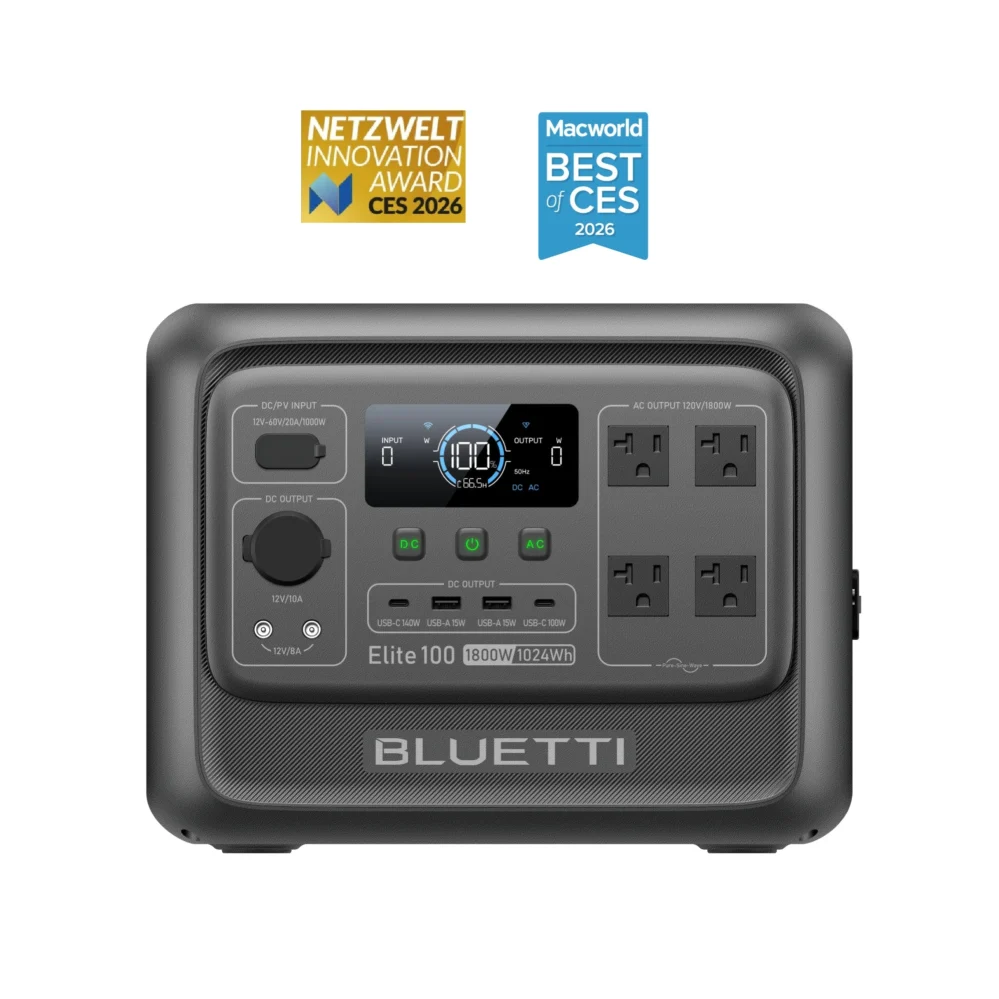
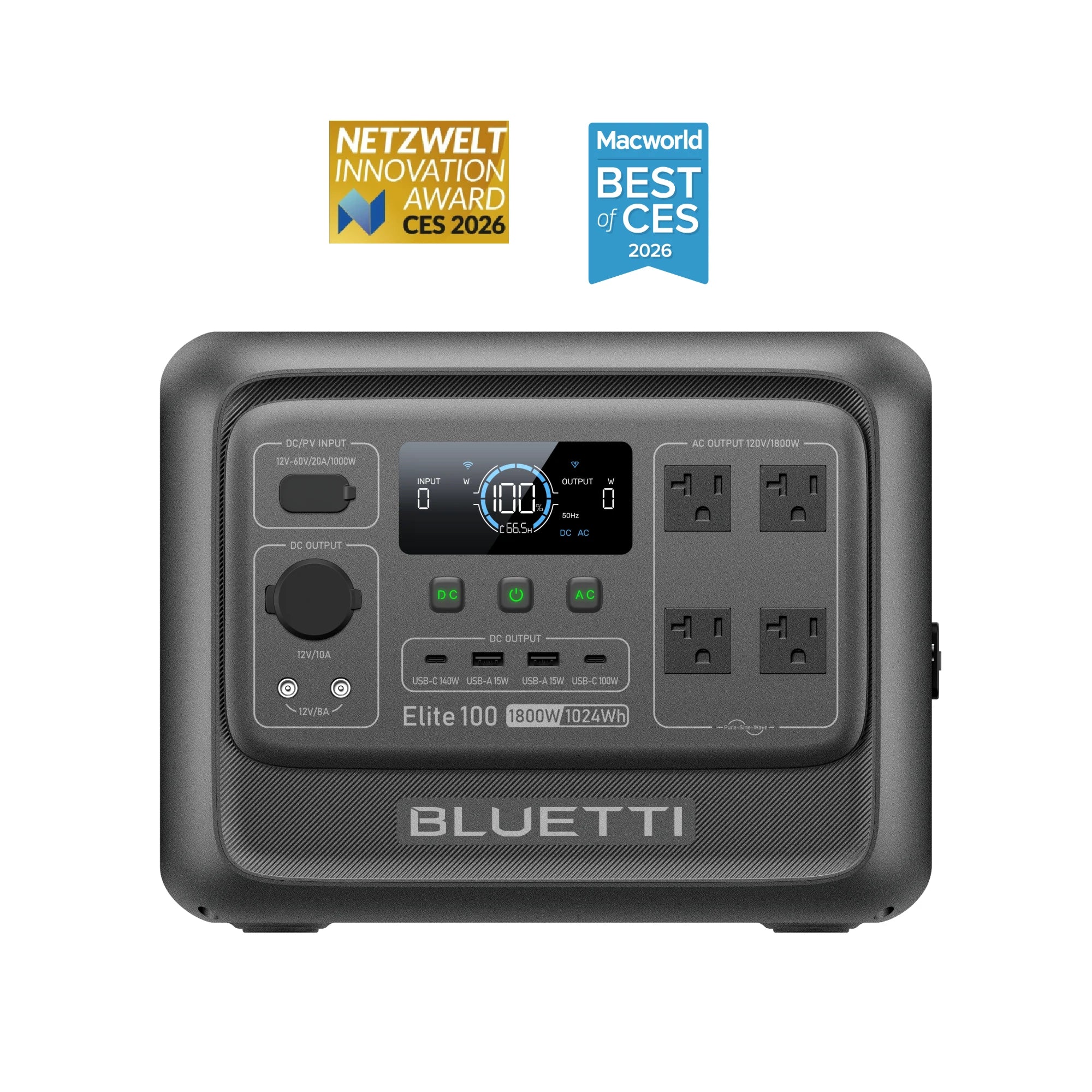
The Elite 100 V2 presents a compact, boxy silhouette typical of portable power stations. The housing feels solid and utilitarian — a hard, matte plastic shell with rounded edges and an integrated carrying handle. The finish is understated and designed to resist scuffs and fingerprints. On the front face there is a control area and display (status readout, output indicators and control buttons), and AC/USB output ports are logically grouped and easy to access.
Unique design notes: BLUETTI appears to prioritize a balance of compactness and high output — fitting a 1,024Wh battery and a high 1,800W inverter into a relatively small footprint. The overall aesthetic is functional rather than flashy, which suits users who want a dependable tool rather than a lifestyle accessory.
Key Features & Specifications
- Battery capacity: 1,024 Wh
- Inverter continuous output: 1,800 W
- Surge / peak output: 3,600 W (for motor starts and startup surges)
- Battery cycle life: 4,000+ cycles (rated endurance — implies long‑life battery chemistry)
- Compact form factor designed for portability
- Price: see the product card on this page for the current listing
- Designed for outdoor activities and short‑term backup use
Note: The product data provided lists the core electrical specs and cycle life. Port selection (number and type of AC/USB/DC outputs), charging inputs, and exact recharge times were not specified in the data supplied here — verify port configuration and charging options on the product page prior to purchase.
In Use — Real World Experience
The Elite 100 V2’s combination of 1,024Wh capacity and an 1,800W inverter makes it versatile for many common use cases. Below are observations and practical runtime estimates based on the unit’s stated capacity and typical device power draws.
Camping and Overland / Van Life
For campsite use the Elite 100 V2 is strong where portability and moderate runtime matter. Example runtimes (approximate, calculated from 1,024Wh nominal capacity):
- Smartphone (10–15 Wh/day) — dozens of charges; effectively several days to a week of typical use.
- Laptop (~60 W draw) — roughly 15–17 hours continuous (practical runtime lower due to conversion losses and battery management).
- 12V fridge or cooler (~40–80 W average) — several nights to a few days depending on fridge efficiency and ambient temperature.
The 1,800W inverter gives you headroom to run higher‑draw devices occasionally (hot plates, electric kettles), though those high‑power loads consume the battery quickly. The 3,600W surge rating helps start compressor‑based devices and some power tools.
Emergency Home Backup
If the goal is short emergency backup, the Elite 100 V2 is useful for powering essentials: router/modem, LED lights, phone chargers, CPAP machines (check your CPAP’s power draw and whether it requires continuous AC), and small kitchen devices for short periods. It is not aimed to power whole‑house loads for extended outages — but it can bridge the gap for critical electronics and a few small appliances for hours to a day depending on load.
On‑site Tools and Small Appliances
The inverter allows operation of many power tools in the 1,800W range (impact drivers, circular saws with modest loads). Motorized appliances benefit from the high surge capacity at startup. Be mindful that sustained heavy loads close to 1,800W will drain the 1,024Wh pack in under an hour.
Charging and Recharging
The data provided does not include detailed charging inputs or recharge times, so I cannot provide verified charge time measurements. In practice, portable stations like this are typically recharged by AC wall outlet, car, or solar panels (if the unit has solar input). If you plan to rely on solar, confirm the unit’s max solar input wattage and recommended panel specs before pairing.
Performance Notes and Practical Tips
- Efficiency and conversion losses: Expect usable Wh to be somewhat less than the nominal 1,024Wh due to inverter and conversion losses (typical real‑world usable capacity will be lower than nominal). Plan runtimes conservatively.
- High‑power loads drain the battery fast: While the inverter supports 1,800W, running equipment near that limit will reduce runtime to minutes rather than hours.
- Surge capacity is helpful: 3,600W surge allows starting compressors and motors that need a temporary boost on start.
- Long cycle life: The 4,000+ cycle rating is excellent — it suggests a battery chemistry built for longevity (e.g., LiFePO4 is commonly used for such cycle life), which is a major advantage if you plan to use the unit frequently over several years.
Pros and Cons
Pros
- Healthy capacity for a compact unit: 1,024Wh is large enough for multi‑day camping or short emergency backup.
- High continuous inverter rating (1,800W) lets you run a wide range of appliances and tools.
- Very high surge rating (3,600W) for starting motors and compressors.
- Impressive cycle life (4,000+ cycles) — likely to outlast many competing units and lower the long‑term cost per cycle.
- Reasonable price point for the capacity and output listed.
- Compact, sturdy design geared toward portability and regular use.
Cons
- Exact port layout and charging inputs were not specified in the supplied data — prospective buyers should confirm port types and quantities to ensure compatibility with their devices.
- Weight is not specified; “compact” is relative — units with ~1kWh capacity can still be heavy and less convenient to move long distances on foot.
- Recharge times and supported charging methods were not provided, so those planning frequent solar or rapid AC recharges should verify details before buying.
- While excellent for many tasks, it’s not a replacement for a whole‑house generator or large battery bank for extended outages with heavy loads.
Conclusion
The BLUETTI Elite 100 V2 is a compelling option for buyers who want a balance between capacity, continuous output, and long battery life at a competitive price. With 1,024Wh of stored energy, a powerful 1,800W inverter, and a 3,600W surge capability, it can handle a broad range of camping, workshop, and emergency uses. The standout statistic is the 4,000+ cycle rating — this suggests the unit is built to last and will retain value over many years of use.
However, confirm the detailed port configuration, charging inputs, and weight for your use case before purchasing — those practical details determine how well the unit integrates into a specific setup (solar, van, or home backup). Overall, the Elite 100 V2 offers strong value if you need a portable, durable power station capable of running medium to high loads for short to moderate durations. Our BLUETTI buying guide compares it against the rest of the lineup by cost per watt-hour.
Quick Buyer’s Checklist
- Confirm the exact output ports (AC outlets, USB‑C/USB‑A, 12V DC, car port) and counts.
- Verify charging inputs and maximum solar input (if you plan to recharge via solar).
- Consider how often you plan to run high‑draw appliances — frequent sustained high loads may require a larger total battery bank.
- Factor portability needs — check the unit weight if you will carry it frequently.
Final score (subjective): Strong choice for campers, van lifers, and light emergency backup — excellent cycle life and output capability make it a durable, flexible tool at an attractive price.

Frequently Asked Questions
How many devices can the BLUETTI Elite 100 V2 charge?
Its 1,024Wh capacity supports dozens of smartphone charges, roughly 15-17 hours of laptop use at ~60W draw, and several nights of running a 12V fridge or cooler at 40-80W average.
Can the Elite 100 V2 power tools or appliances?
Yes, within limits. Its 1,800W continuous inverter handles many power tools like impact drivers and modest circular saws, and the 3,600W surge rating helps start compressor-based devices and motors.
How long does the BLUETTI Elite 100 V2 battery last?
It’s rated for 4,000+ charge cycles, an unusually long endurance rating that suggests a long-life battery chemistry built to retain value over years of regular use.
Is the BLUETTI Elite 100 V2 good for emergency home backup?
It’s useful for short-term backup of essentials like a router, LED lights, phone chargers, and CPAP machines, but it isn’t intended to power whole-house loads during extended outages.
What does the BLUETTI Elite 100 V2 cost?
The product card on this page shows the current price, which BLUETTI adjusts and discounts periodically. Our BLUETTI buying guide compares the whole lineup by cost per watt-hour if you want to judge the value against its siblings.