
Less recoil buys time, but never for free.
A full-power 12-gauge 00 buck load can shove the muzzle high enough to turn a fast second shot into a reset drill. Sight lift grows, split times stretch, and long practice strings become punishing even before patterning enters the picture.
Low-recoil buck cuts that disruption, often making pumps and semi-autos easier to run cleanly. But the lighter impulse can also change everything else: velocity, pellet deformation, pattern density, point of impact, and—especially in semi-autos—cycling margin. The best shell is not automatically the softest; it is the one that balances control, pattern quality, reliable function, and the shotgun’s intended role.
Best low-recoil options by role
Pellet count alone does not decide the winner. In practice, the right choice is the load that does three things well:
patterns tightly enough at realistic distance hits to the expected point of aim cycles reliably in that specific actionThat is why an 8-pellet Hornady load can outperform a 9-pellet Rio in one gun, while the reverse happens in another. The training and slug entries belong here for the same reason: low recoil is useful, but fit to the shotgun matters more than a generic ranking.
What “low recoil” actually means
A low-recoil shell is not defined by the box alone. Recoil is mostly driven by payload weight and muzzle velocity, then moderated by gun weight and action type; basic defensive shotshell principles still apply.
-
Payload and velocity matter most
A 9-pellet 00 buck load at modest speed usually feels softer than a full-power version because less momentum is being launched. “Reduced recoil” can mean lighter shot, lower velocity, or both.
-
The shotgun changes the result
A heavy gas-operated semi-auto often feels noticeably gentler than a light pump or inertia gun firing the same shell. That also means one brand’s soft load may cycle perfectly in one gun and stumble in another.
-
Soft shooting is only useful if performance holds
Lower recoil does not excuse blown patterns, weak penetration, or intermittent function. The worthwhile loads are the ones that keep pellets together at realistic distances and run with complete reliability.
Marketing terms are a starting point, not proof.
Two shells with the same “low recoil” claim can feel very different once gun weight, action design, pellet count, and velocity are factored in.
Balanced reduced-recoil 00 buck
02
Reduced kick for defense and training
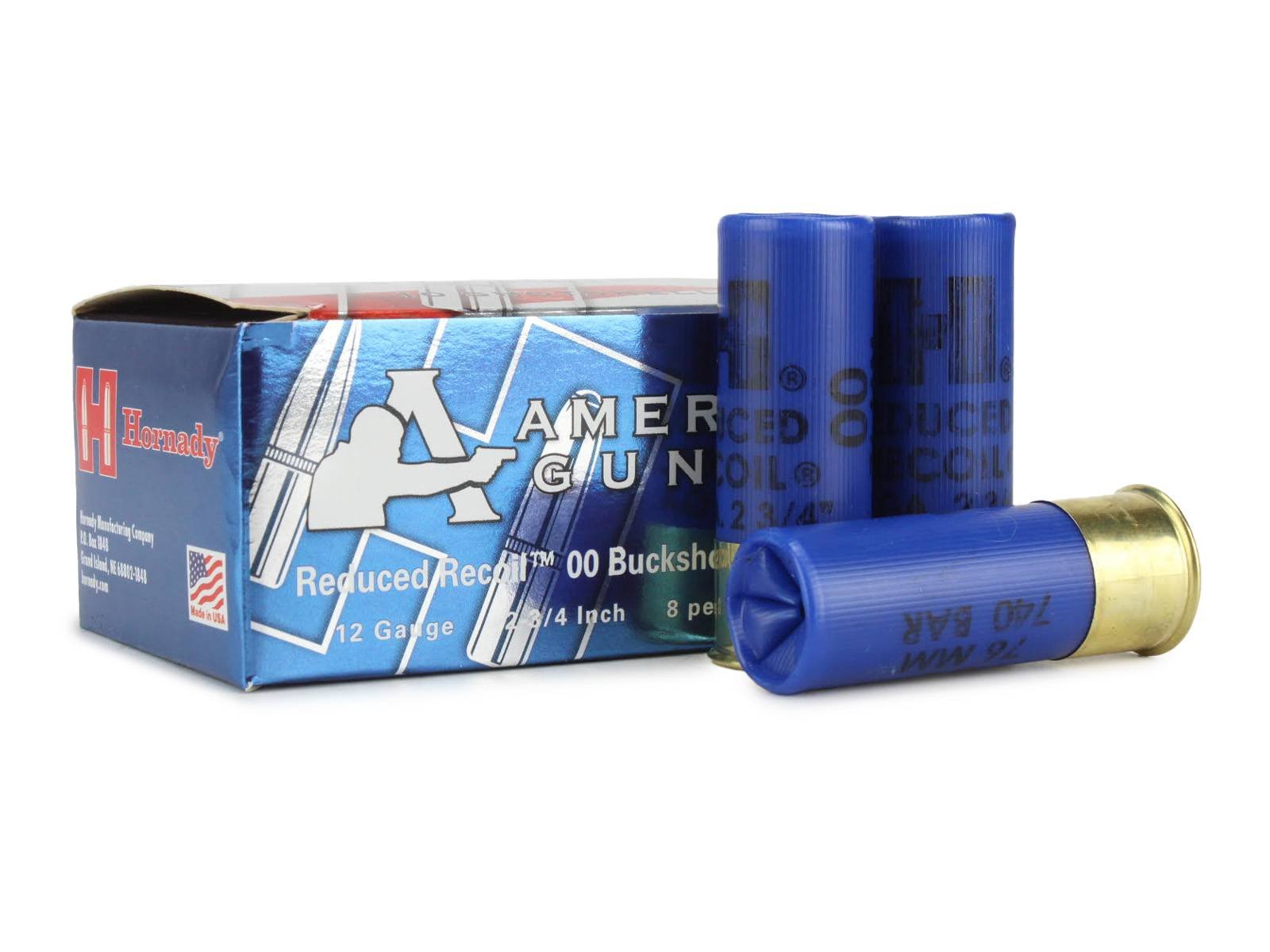
Hornady’s American Gunner reduced-recoil load is the clean middle-ground pick for shooters who want true 00-buck performance with less disruption between shots. Its 8-pellet 2.75-inch setup keeps the feel closer to duty-style buck than ultra-soft specialty loads, while still trimming enough recoil to make faster follow-ups realistic. It fits best in defensive shotguns that have been confirmed at room-to-hallway distances.
- 8-pellet 00 buck keeps a duty-like payload
- Noticeably easier recovery than full-power buck
- Consistent pellet quality supports tighter patterns
- Strong crossover between defense and practice
- Some semiautos cycle better with hotter loads
- Patterns still need verification at indoor distances
- Less velocity margin than full-power duty buck
Quick take This is the safest all-around reduced-recoil buck choice in the group: soft enough to speed follow-ups, serious enough to remain a real defensive load. Pattern checks at roughly 5 to 15 yards matter, and gas or inertia guns on the edge may prefer warmer ammunition.
Hornady gets the balance right: enough recoil reduction to help split times, but not so much that the load stops feeling like serious 00 buck. In a pump or a well-tuned semiauto, it can serve as both a realistic practice round and a credible defensive load. The deciding test is simple: confirm pattern spread and point of impact at true indoor distances, then verify reliable cycling if the shotgun is semiautomatic.
Affordable reduced-recoil 00 buck for real-volume testing
Budget-friendly heavy-hitting buckshot
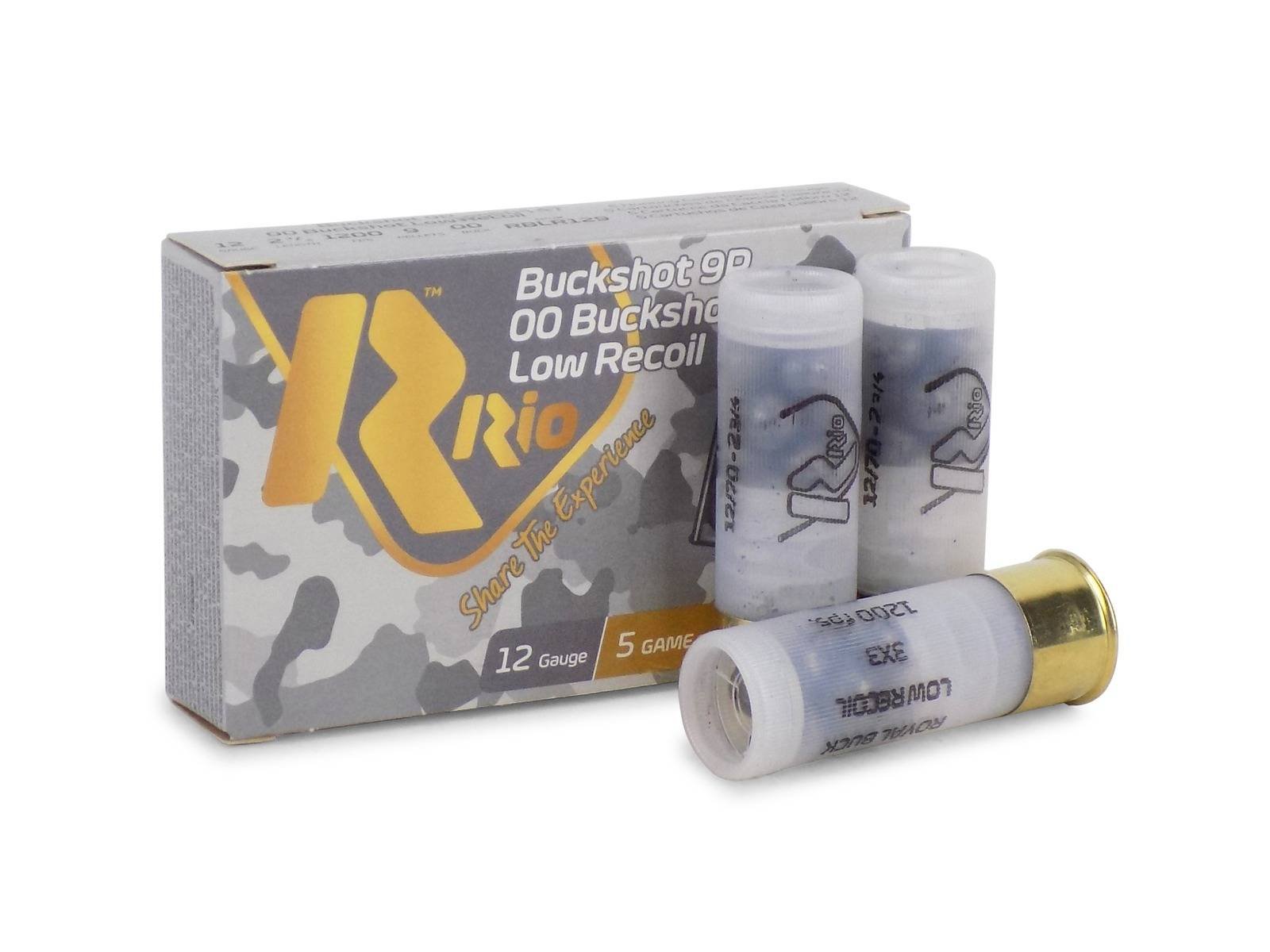
Rio Royal Low-Recoil 12-Gauge 9-Pellet 00 Buck makes sense for shooters who want reduced-recoil 00 buck in usable quantity, not just a token box. Its main appeal is simple: the lower buy-in makes it easier to pattern, function-test, and still keep a meaningful reserve on hand. That makes it a practical fit for pump guns, many semiautos that already run lighter buck reliably, and anyone comparing loads without burning through a premium-budget stack.
- Usually easier to buy in quantity
- Reduced recoil with full 9-pellet payload
- Practical option for pattern and function testing
- Pattern quality can vary notably by shotgun
- 9-pellet loads may throw a flyer sooner than tight 8-pellet loads
- Semiauto reliability still needs confirmation
Rio earns its place by making low-recoil 00 buck affordable enough to use seriously. For many shooters, that matters more than marginal refinement.
The tradeoff is that bargain buckshot should never be assumed to pattern well in every gun. If a shotgun prints Rio tightly and cycles it cleanly, the value is hard to ignore.
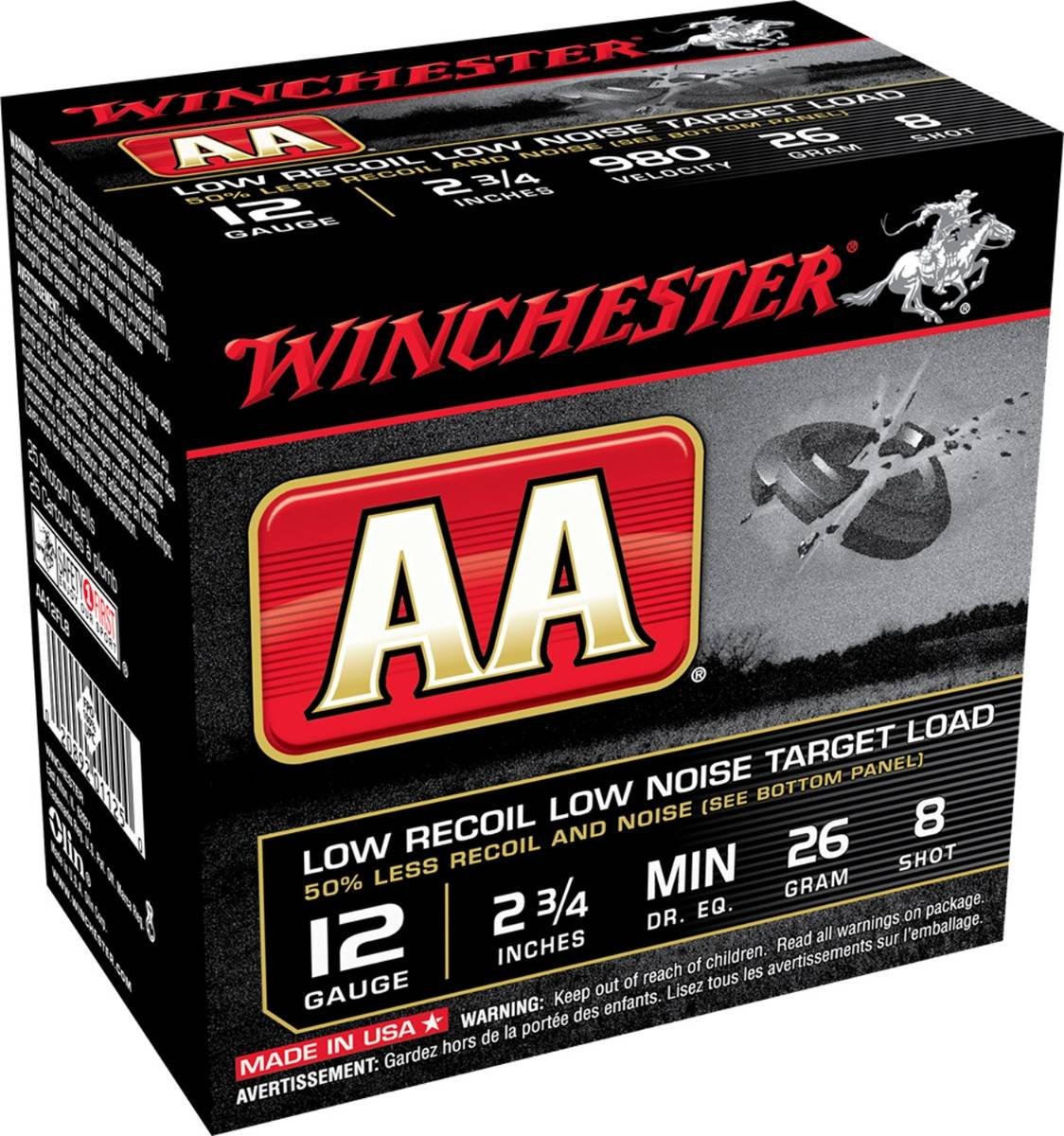
Low-recoil birdshot trainer: Winchester AA 1 oz #8
Target-grade performance with softer recoil
This fills the practice lane rather than the buckshot lane. Winchester AA Low-Recoil #8 gives softer, cheaper repetitions for mount consistency, trigger press, cadence, and sight return, making long sessions less fatiguing. It suits clay shooters and defensive-shotgun owners who want better handling habits before validating those habits with buckshot.
- Soft, target-grade recoil pulse
- Excellent for cadence and sight tracking
- Easier to run in higher practice volume
- Does not mimic buckshot patterns
- Point of impact can differ
- Cycling may not match buck loads
Useful work with this load includes:
recoil management target transitions loading rhythm sight returnIt remains a training surrogate, not a substitute. Final checks still belong to the chosen buckshot load.
Among the non-buck options, this is the cleanest way to extend useful shotgun practice. It can sharpen tempo and handling without full-buck fatigue, but it does not replace buckshot validation.
Precision low-recoil slug: Federal Premium TruBall HP
- Usually prints tighter and more predictably than buckshot past room distance
- Reduced-recoil 1 oz loading helps split the difference between control and slug performance
- TruBall design has a strong reputation for smoothbore accuracy
- Not a direct buckshot substitute; terminal behavior changes substantially
- Greater penetration potential makes backstop considerations more serious
- May shift point of impact versus buckshot and birdshot
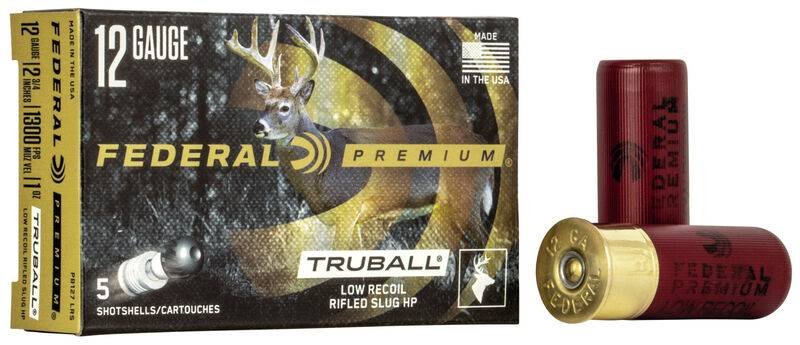
Federal’s low-recoil TruBall HP makes sense for shotguns that simply shoot slugs better than they pattern buck, or for roles where a precise single impact is the priority. It is an adjacent option, not a blanket replacement: moving from buckshot to a slug changes both wound mechanics and the overpenetration discussion, so this load belongs in a deliberate, gun-specific plan.
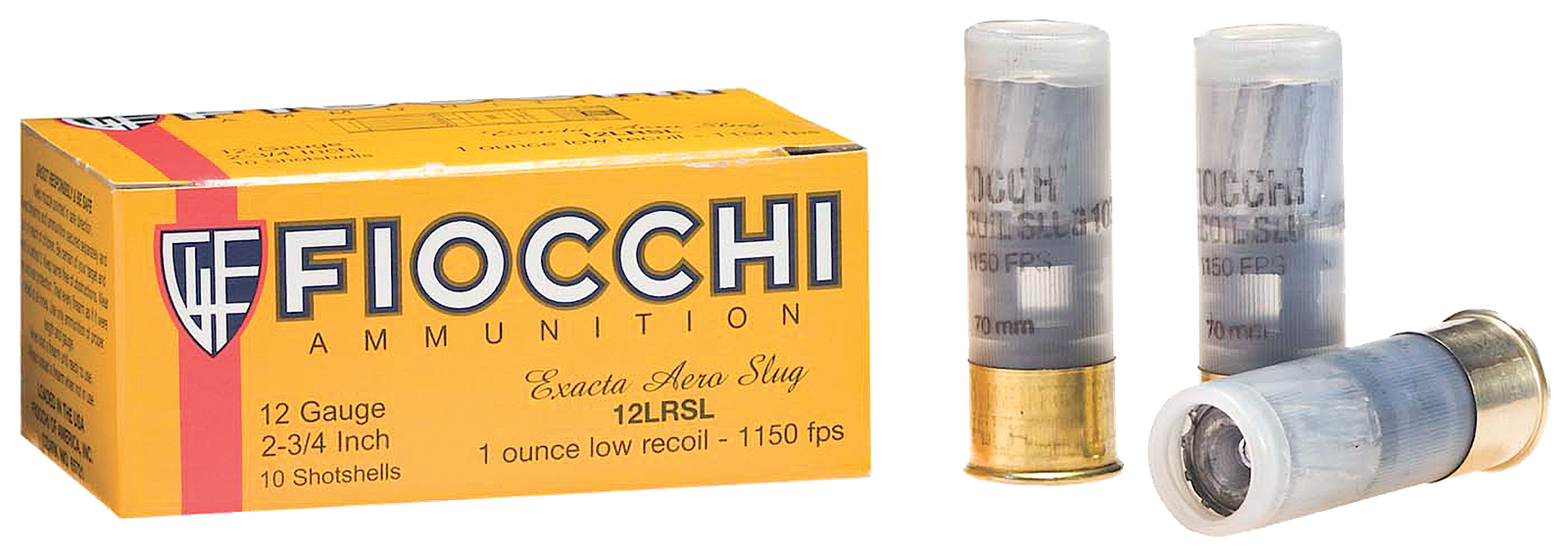
Fiocchi Low-Recoil Aero Rifled: practical defense slug
- Controlled recoil for a 1 oz slug
- Simple, familiar smoothbore slug option
- Solid fit for straightforward defensive slug use
- Greater penetration concern than buck
- Point of impact can vary a lot by shotgun
- Less polished track record than premium slug designs
Fiocchi’s low-recoil Aero Rifled works best as the practical slug choice for readers who want controlled recoil and simple slug utility without paying for a more specialized concept. It can be a credible alternative when a single projectile is preferred, but point of impact must be confirmed in the actual shotgun before it is trusted for defensive use.
Once recoil is manageable, pattern quality and pellet placement often matter more.
A soft load that throws a flier can erase any split-time advantage, while a slightly sharper load may keep every pellet where it belongs.
Reduced-recoil buck can still expose marginal cycling, ejection, or bolt-lock issues.
Gas drive, dwell time, and hull energy vary by load. Some guns dribble empties, short-stroke, or stop locking back when dirty or hot.
Buckshot needs checking at room distance, hallway distance, and a longer yard reference.
Point of impact, spread, and pellet symmetry can change noticeably between roughly 5, 10, and 15 yards, even from the same barrel.
Pattern each buck load at several realistic distances, then add rapid pairs to see whether recovery actually improves. In semiautos, watch ejection distance, bolt lock, and whether the gun keeps cycling when warm and fouled. That information matters more than recoil feel alone. It also helps frame how penetration influences buckshot selection before chasing the gentlest shell on the shelf.
Which lane fits the shotgun best
- Pump or semiauto
Pump guns usually tolerate reduced-recoil buck with little drama; semiautos can be far pickier about cycling. Hornady is often the safer first buck load in autoloaders, while pump owners can explore Rio more freely.
Best fitVerified cycling, especially in semiautosSkip ifAssuming every soft load will run - Practice-heavy or ready-only
A high-volume owner gets real value from Winchester AA because it builds cadence, mount consistency, and sight return without pounding the shoulder. A dedicated defensive setup still makes more sense around Hornady or Rio, then confirmed with enough live buckshot.
Best fitAA for reps; buck for proofingSkip ifTreating birdshot practice as final validation - Buckshot first, then slug backup
Most readers still land on the two buck loads because buck remains the better default for typical defensive distances. Hornady leans cleaner and more refined; Rio makes sense when pump reliability and affordable pattern testing matter more.
Best fitHornady for polish, Rio for valueSkip ifGoing to slugs before buck is sorted - When slugs actually fit
Slug loads are the sidearm of this list: useful when the shotgun may need longer shots or a different impact profile. Federal TruBall is the accuracy play; Fiocchi is the practical reserve choice.
Best fitSecondary-role slug capabilitySkip ifDefaulting to slugs indoors
Frequently Asked Questions
What does "low recoil" actually mean for 12-gauge buckshot?
Low recoil is mostly driven by payload weight and muzzle velocity, then moderated by the shotgun’s weight and action type. “Reduced recoil” can mean lighter shot, lower velocity, or both, so the same label can feel very different from gun to gun.
Is Hornady American Gunner Reduced-Recoil 00 Buck a good choice for semiautos?
It is often the safer first buck load in autoloaders because its 8-pellet payload and consistent pellets keep enough impulse for reliable cycling while still trimming recoil. Semiautos can still be picky, so cycling should be verified in the specific gun.
Should birdshot practice loads replace buckshot pattern testing?
No. Loads like Winchester AA Low-Recoil #8 build recoil management, target transitions, and sight return, but they are a training surrogate, not a substitute. Final pattern, point-of-impact, and reliability checks still belong to the actual buckshot load.
How should a low-recoil buckshot load be tested before relying on it?
Pattern each load at multiple realistic distances, such as roughly 5, 10, and 15 yards, since spread and point of impact can shift noticeably between them. In semiautos, also confirm the gun keeps cycling, locking back, and ejecting cleanly when warm and fouled.
When does a low-recoil slug make more sense than buckshot?
A slug like the Federal Premium TruBall HP fits shotguns that pattern buckshot poorly or roles needing a precise single impact at longer range. It is an adjacent option, not a blanket replacement, since moving to a slug changes wound mechanics and overpenetration considerations.
- Federal Premium TruBall HP stays the better low-recoil slug for smoothbores that need the steadiest practical accuracy.
- Fiocchi Low-Recoil Aero Rifled makes more sense as a lower-cost backup slug than as the primary answer to a buckshot problem.
Hornady American Gunner Reduced-Recoil 00 Buck remains the lead pick when low recoil still has to act like serious buckshot: manageable impulse, credible patterns, and broad usefulness for both defensive verification and familiarization. Rio Royal Low-Recoil 9-pellet 00 Buck is the smartest second choice when cost limits round count, provided the shotgun keeps patterns tight and cycling reliable. Winchester AA Low-Recoil #8 earns space only as a supplemental trainer; if it does not materially increase repetitions, another box of buck adds more value.
The decision rule is simple: choose the softest true buckshot load that still patterns where needed and runs cleanly, then rank every option by verified placement and function—not by “low-recoil” printed on the box.
Fiocchi Low Recoil 12 Gauge 2.75 1 oz Aero Rifled Slug (Box)
Federal Premium 12 Gauge 2.75 1 oz Low Recoil TruBall HP Slug (Box)
Rio Royal Buck Low Recoil 12 Gauge 2.75 9 Pellet 00 Buck (Box)
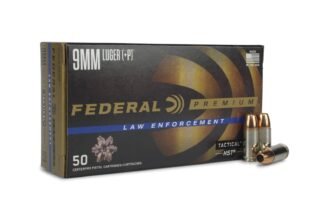
Hornady American Gunner Reduced Recoil 12 Gauge 2.75 00 Buckshot (Box)

7 Comments
Glad you mentioned the Winchester AA as a trainer instead of pretending birdshot = defensive substitute. Way too many articles blur that line.
That said, why AA specifically over the cheap bulk low-brass stuff from the big box stores? If the whole point is handling reps and cadence, I’m wondering if the nicer shell is worth it or if you just picked the AA because it’s more consistent.
Surprised you didn’t include the Federal FliteControl low recoil 8-pellet 00 buck here. Was that left out because of price/availability, or because you were trying to keep the list to stuff normal people can actually find?
I liked the point you made that low recoil kinda stops mattering if the pattern is junk or the gun won’t cycle. That part gets skipped in a lot of “best ammo” lists.
Mostly selection discipline. I tried to keep the list centered on loads that fit the article’s specific lane: reduced-recoil options that balance follow-up speed with pattern utility and are realistic to test in volume.
FliteControl is absolutely relevant, but once I narrowed for role coverage, cost spread, and products that readers could compare across buck, trainer, and slug use, Hornady and Rio made the cleaner cut for this piece. In a broader 12-gauge buck roundup, that Federal load would deserve a serious look.
No Remington Managed-Recoil mention? Not trying to be that guy, but it felt odd since this article is literally about faster follow-ups with 12 gauge.
Also appreciate the repeated “shotgun-specific fit” reminder. People buy one magic box and act shocked when their semi short-strokes or their pattern opens up like a dinner plate at hallway distance 🙃
I get why Hornady leads, but the Rio pick is probably the most useful inclusion for a lot of us. If I’m actually going to pattern a bunch, test a reserve stash, and see what my semi does when it gets dirty, price matters a LOT more than internet prestige 😂
Curious though: did you leave out any lower-cost NobelSport or Sellier & Bellot options because they patterned badly, or just because they’re hit-or-miss depending on the gun?
Same thought here. Cheap enough to actually shoot 50+ rounds in testing beats “premium” stuff I’m scared to burn through. My 930 has been weirdly okay with Rio, but not with every bargain load.
The slug section was useful, but I kind of wanted one more sentence on why Brenneke-style low recoil stuff didn’t make it. You touched the penetration tradeoff with the TruBall and Fiocchi, which was good, but if someone keeps slugs as a backup role only, I’m not sure how to choose between “better accuracy” and “cheap practical slug.”
Maybe that’s just beyond the scope of this article, idk.