

A quiet, repeatable trigger press can reveal errors that recoil and noise often hide.
A range trip can disappear into ammunition costs, travel time, lane rules, and the simple difficulty of hearing a clean trigger break amid recoil. At home, a cleared handgun and a purpose-built training aid can slow the work down: sight movement through the press, trigger take-up, grip pressure, presentation, and magazine changes become easier to isolate.
That value depends on an uncompromising safety routine: remove live ammunition from the practice area, visually and physically verify the firearm is unloaded, and use a safe backstop and direction. Dry practice develops mechanics; it does not prove recoil management, reliability, or shot accountability. Those results need periodic confirmation with carefully observed live fire. The tools below range from laser-feedback systems to inert rounds, reset magazines, and dedicated trigger trainers.
- Laser cartridges show point of impact but do not reproduce recoil or cycling.
- Reset devices can increase repetitions without changing the handgun’s original trigger parts.
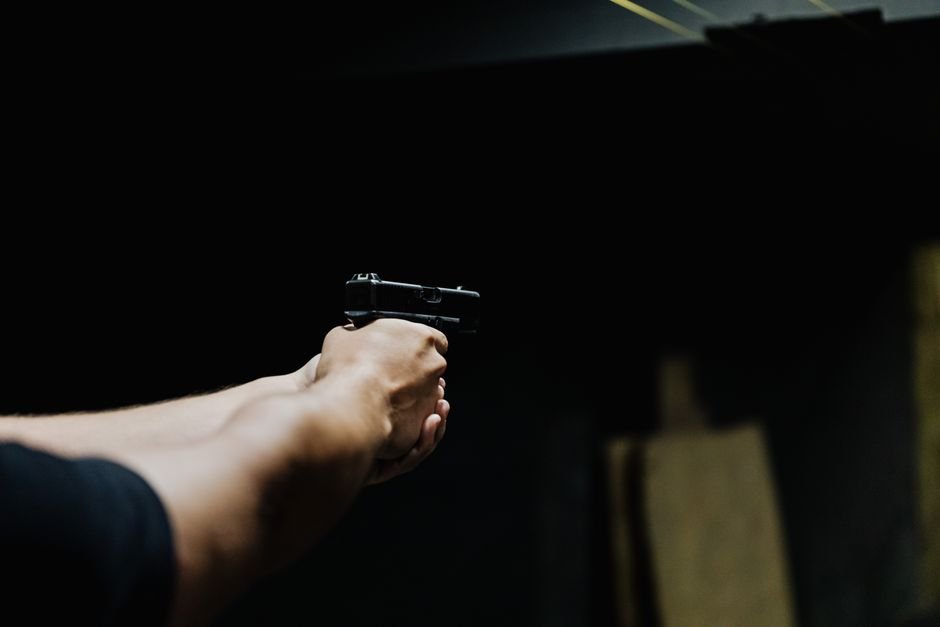
Match the tool to the repetition


A laser system can reveal whether the sights moved at the break. A resetting magazine preserves cadence. Inert rounds make magazine and action work more realistic. None replaces the others; the useful choice is the one that makes the intended error visible.
Before every session: remove live ammunition from the practice area and verify the handgun’s condition according to its manufacturer’s procedure.
Keep practice gear and ammunition on separate tracks
-
Create an ammunition-free practice area
Remove live cartridges, loaded magazines, and ammunition containers before handling the handgun. A different room or closed container helps prevent routine from becoming assumption.
-
Verify the firearm’s condition every session
Follow the firearm manufacturer’s unloading procedure, visually and physically check the chamber and magazine well, then point only at a suitable backstop.
-
Install only the tool needed for the drill
A laser cartridge such as Strikeman goes in the chamber for shot indication; GORTAR snap caps cushion cycling and manipulation. TRT magazine aids support reload repetitions, while an external trigger trainer is used apart from the firearm.
-
Respect the device’s operating limits
DRYFIREMAG kits provide a reset-like trigger cycle only on listed Glock models. Cartridge dimensions, striker designs, and reset mechanisms vary, so manufacturer fit guidance takes priority.
-
End with a deliberate reset
Remove the training aid, inspect the firearm again, and store practice gear separately before live ammunition returns.
- Laser cartridge
Chambered insert that emits a brief laser on firing-pin impact; useful for observing point-of-aim and trigger disturbance.
- Snap cap
Inert cartridge-shaped round for loading, unloading, and cycling practice; not a laser-feedback device.
- Magazine training aid
Magazine-format insert that can support reload or trigger-reset drills, depending on its design.
- External trigger device
Standalone resistance tool that trains finger movement without inserting anything into the handgun.
Do not rely on a dummy round, laser cartridge, or reset magazine as a safety status indicator. Treat the handgun as capable of firing throughout setup and practice, and follow both the firearm and accessory manufacturer’s directions.
Compare the function, not just the format
A useful dry-fire tool earns its place by supporting the exact repetition being practiced.
Chamber tools need caliber fit; magazine devices need model-specific geometry. Pairing, target placement, and loading steps affect session friction.
Laser cartridges show impact; reset magazines restore repeated presses. Reload aids add insertion and release work, while inert rounds and trigger trainers serve mechanical drills.
Construction durability matters alongside batteries, targets, apps, replacement caps, and proprietary inserts.
Strikeman records laser hits, not a cycling trigger. DRYFIREMAG supplies reset behavior but no impact location; TRT emphasizes magazine handling. GORTAR and adjustable trainers support simpler mechanical repetitions.
Strikeman 9mm kit for visible trigger-press feedback
01
Best for guided, app-based practice at home
The Strikeman 9mm system turns a compatible pistol into a simple laser-feedback trainer: a chambered cartridge emits a laser when the trigger is pressed, while the included target, phone holder, and app record the hit. That immediate visual record is particularly useful for slow presentations, sight confirmation, and deliberate trigger presses. A low-left or otherwise recurring mark can expose anticipation, grip disturbance, or sight movement that a silent click alone may conceal.
Its value is strongest when the repetition ends at the press. The kit is a 9mm-specific package, so fit and reliable activation should be confirmed in the individual pistol’s chamber before a session. It also belongs in a strictly unloaded setup, with the chamber and ammunition status independently verified before the cartridge is inserted.
- Visible point-of-impact feedback reveals press errors
- Target and phone mount support structured home sessions
- Base app access is included without a subscription
- 9mm cartridge limits this kit to compatible chambers
- Battery condition affects laser feedback
- App and phone setup add friction to simple repetitions
- No slide cycling, recoil, or realistic reload work
Quick take A well-rounded guided option for diagnosing what happens at the instant of the press. It complements, rather than replaces, tools that preserve trigger reset or magazine handling.
GORTAR 9mm Snap Caps for physical loading drills
Affordable choice for realistic loading and malfunction drills
GORTAR’s 9mm dummy rounds are a practical, low-cost starting point when dry practice needs something a laser cartridge cannot provide: a cartridge-shaped object for magazine loading, chambering, extraction, administrative handling, and selected malfunction repetitions. The steel-case-and-plastic construction is intended to approximate the feel and magazine weight of loaded ammunition, while the orange tip and case hole provide visible inert-round cues.
The rubber primer insert can soften firing-pin contact, but it is not a guarantee of protection for every pistol or an excuse to ignore the manufacturer’s dry-fire guidance. These rounds do not record hits, illuminate a target, or reset a semiautomatic pistol’s trigger. Verify the caliber and chamber fit before use, inspect tips and primer inserts for wear, and keep marked dummy rounds physically segregated from live cartridges at all times.
- Physical cartridges for loading, chambering, and extraction repetitions
- Twelve-round set supports magazine-weight and handling work
- Orange tip and case hole aid visual identification
- Rubber primer insert provides a cushioning interface
- No laser impact feedback or scoring
- Does not cycle the slide or reset the trigger
- Fit and ejection behavior can vary by pistol
- Wear inspection matters with repeated chambering
TRT magazine-style aids for repeatable reload work
The TRT 9mm/.40 Cal training aid is a magazine-shaped insert intended for dry reload and immediate-action repetitions without filling a magazine with dummy cartridges. It can make it easier to rehearse the full sequence: acquire the spare, index it into the magwell, seat it decisively, re-establish the firing grip, rack when the drill calls for it, and finish with a controlled trigger press.
The three-pack format suits structured repetitions, particularly alongside compatible mag carriers and training accessories. Its purpose is functional rather than ballistic: it keeps the drill focused on handling transitions instead of loading, ejecting, and collecting inert rounds. As with any dedicated training item, it belongs in a clearly separated dry-practice setup with the firearm verified unloaded.
Fit deserves a short check before building speed. Magazine-well engagement, base-pad clearance, release-button contact, and retention can differ by pistol. It also will not necessarily reproduce the weight, capacity, follower travel, slide-lock activation, or control interference of the magazine carried or used at the range.
- Supports repeated insert-and-seat repetitions
- No loose dummy rounds to load or retrieve
- Three aids allow staged drill setups
- Fit varies across pistol platforms
- Does not duplicate loaded-magazine weight
- May not activate slide lock or mirror controls
Adjustable resistance for isolated trigger work
The Adjustable Trigger Trainer is a handheld resistance device for rehearsing a smooth, deliberate press without handling a pistol. Its four independently adjustable finger buttons make it more of a grip-and-trigger-control exerciser than a conventional dry-fire aid; resistance is advertised from roughly 8 to 12.7 pounds, with one- and two-stage modes.
It suits short practice blocks aimed at reducing sympathetic finger movement, building a consistent index-finger press, and noticing left-to-right imbalance in the supporting fingers. The portable format can make frequent, low-friction repetitions practical. Still, its button travel, hand position, break, and reset cannot duplicate a particular handgun’s trigger or frame geometry. It complements—not replaces—unloaded pistol practice that includes sight management, presentation, and follow-through.
- Four fingers can be trained independently
- Adjustable resistance supports progressive practice
- Compact for short, frequent sessions
- Two-stage option adds a break-like cue
- Not shaped like a handgun grip
- Button travel differs from pistol triggers
- No sights, draw, holster, or reset work
- Resistance range may feel heavy for some trigger styles
A reset magazine for uninterrupted Glock trigger strings
05
The DRYFIREMAG Glock Trigger Reset Magazine Kit replaces the usual rack-the-slide pause with a mechanical reset after each press. In a compatible Glock, that makes it a focused option for cadence work, controlled pairs, and longer trigger-control strings while the firing hand and sight picture stay largely undisturbed.
Its included spring kit permits a stated range of trigger resistance, so the reset can be configured closer to a preferred training feel. It is among the more specialized dry-fire tools made for Glock owners, rather than a universal insert: fit must be confirmed against the exact model, caliber, frame format, and generation, then the magazine installed and function-checked according to its instructions.
- Resets without slide racking
- Supports sustained cadence repetitions
- Spring kit adjusts resistance
- Keeps hands on grip
- Limited to listed Glock variants
- Does not cycle the slide
- No recoil or live-fire validation
- Setup merits careful checking
In brief A capable, purpose-built way to repeat Glock trigger presses without breaking position. Its value depends on exact compatibility and accepting that the press is only one part of the firing cycle.
For compatible Glock double-stack models, this magazine-style device can make high-volume press-and-reset practice feel markedly less stop-start than conventional dry fire. It is particularly useful when evaluating sight movement through repeated presses at a deliberate or faster cadence.
It does not reproduce slide cycling, recoil, or the confirmation that comes from periodic live fire. Correct installation and model-specific compatibility remain central to whether the training feel is useful.
- Diagnose the press
When the question is where the shot breaks, visible impact feedback is more useful than extra handling repetitions.
ChooseChoose Strikeman for an immediate point-of-aim record and repeatable trigger-press diagnosis.SkipDo not expect a laser cartridge to provide recoil, cycling, or a natural reset. - Build loading sequences
Inert rounds and magazine aids answer different problems: one rehearses cartridge handling; the other speeds the magazine exchange.
ChooseUse GORTAR snap caps for loading or malfunction-sequence handling; reserve TRT aids for reload-specific sessions.SkipDo not treat an aid's weight, insertion, or slide-lock behavior as identical to a service magazine. - Refine trigger movement
A separate trainer isolates finger force, while a reset magazine preserves a Glock’s grip and trigger path across strings.
ChooseChoose the adjustable trainer for resistance work; choose DRYFIREMAG when Glock-compatible reset cadence is the goal.SkipDo not combine them in one drill unless each supplies feedback the other cannot. - Keep the signal dependable
Feedback is useful only while the accessory remains consistent.
ChooseMaintain the small replacement parts that keep practice accessories dependable, and verify fit before a session.SkipDo not continue with weak laser batteries, battered dummy rounds, loose magazine aids, or unreliable target/app registration.
Before starting, confirm laser batteries and target/app detection. Retire dummy rounds with cracked rims, flattened noses, or damaged markings. Check that magazine-style aids seat, release, and clear as intended in the specific pistol; their fit can change with wear. If hits stop registering or the app drifts, reset the setup before judging the trigger press.
Dry-Fire Training Tools: Common Questions
What's the difference between a laser cartridge and snap caps?
A laser cartridge like Strikeman emits a laser on firing-pin impact so a target and app can record where the shot broke—useful for diagnosing sight movement and trigger disturbance. Snap caps such as GORTAR are inert cartridge-shaped rounds for loading, chambering, and extraction practice; they don’t record hits or provide feedback on the press itself.
Can dry-fire practice replace live-fire training?
No. Dry practice develops mechanics like sight movement, trigger take-up, grip pressure, and magazine changes, but it doesn’t reproduce recoil management, reliability, or shot accountability. Those results still need periodic confirmation with carefully observed live fire.
Which tool is built for Glock trigger-reset practice?
The DRYFIREMAG Glock Trigger Reset Magazine Kit replaces the usual rack-the-slide pause with a mechanical reset after each press, making it useful for cadence work and trigger-control strings. It’s limited to listed Glock double-stack models and doesn’t cycle the slide or provide recoil.
What safety routine should precede every dry-fire session?
Remove live ammunition from the practice area, visually and physically verify the firearm is unloaded following the manufacturer’s procedure, and use a safe backstop and direction. No training aid—dummy round, laser cartridge, or reset magazine—should be relied on as a safety status indicator.
Do dry-fire tools reproduce recoil or slide cycling?
No. Laser cartridges show point of impact but don’t reproduce recoil or cycling, and reset devices increase repetitions without changing the handgun’s original trigger parts or simulating recoil. These tools train mechanics, not the full firing cycle.
- Use the laser kit to diagnose point-of-impact disruption; use the reset magazine when Glock trigger cadence is the priority.
- Keep snap caps or the TRT aid for loading, unloading, and reload sequences rather than trigger-feedback work.
For guided 9mm trigger-press feedback, the Strikeman system is a strong fit. The DRYFIREMAG is the more specialized option for compatible Glock pistols when repeated reset practice matters, while GORTAR snap caps and the TRT aid suit handling and reload work. The adjustable trainer is useful for isolating finger control away from the pistol.
Priority remains a cleared space, confirmed compatibility, one objective per session, and live-fire confirmation of any skill change.
Clear the firearm, magazines, and practice area; move live ammunition elsewhere. Choose one skill—such as a straight trigger press or a reload—and perform 10 slow, deliberate repetitions. Note any sight movement, grip shift, missed index, or equipment interference. Reset the device, recheck the unloaded firearm, and return the area to normal storage before leaving.
Affordable Dry Fire STRIKEMAN LASER TRAINER
How To Dry Fire Like A Grandmaster Shooter With JJ Racaza
Train Like This & You’ll Outshoot 90% of Gun Owners
Strikeman 9mm Dry-Fire Laser Training System - Great for Target Shooting Practice with Pistols - Kit Includes Access to Updated App (No Subscription Needed),...
Features
| Manufacturer | Strikeman |
| Item Weight | 1.72 pounds |
| Package Dimensions | 12.71 x 9.96 x 2.17 inches |
| Batteries | 3 Product Specific batteries required. (included) |
| Size | 9mm |
| Style | 9mm |
| Item Package Quantity | 1 |
| Battery Cell Type | Silver Oxide |
| ASIN | B0C6N2784M |
| Date First Available | May 31, 2023 |
- Includes the Strikeman laser cartridge, phone mount and tripod, and a sturdy 3 piece target which can be fixed to the wall, or stand on its own. The kit works seamlessly with the base Strikeman app, no subscription needed.
- Improve home defense accuracy without breaking the bank with this live ammo substitute. Dry-fire laser training brings the range to you, so you can train anytime, anywhere, no range fees. The Strikeman system is designed to improve accuracy, quicken holster draw, and is compatible with most calibers.
- Train at Home: Safe, non-damaging and quiet, our training system suits indoor practice; the laser cartridge makes no sound when used. However, sound effect options are available in the app settings.
- The new and improved Strikeman app provides real time tracking and feedback. Consistent tracking of your training metrics will allow you to monitor your growth and fine-tune your accuracy. The new Strikeman app features enhanced laser accuracy, improved rapid fire detection, and additional timer options, to ensure a quality training experience.
- Advanced Defense-Training Technology for All: Used by police officers, military and special ops for years, Strikeman has finally made dry-fire training easily accessible for everyday 2A enthusiasts.
- This training system is designed for practice use only. When the device is in place, your equipment is disabled and cannot be operated as normal. This is not an operational accessory — it is strictly a training tool.
3 Pack - TRT Tap Rack Dry Fire Safety Training Aid 9MM/.40 Cal Pistol Magazine Dummy Ammo
Features
| Brand Name | Rogers Shooting School |
| Manufacturer | Rogers Shooting School |
| Number of Packs | 3 |
| Number of Items | 3 |
| UPC | 752830733381 |
| Unit Count | 3 Count |
| Manufacturer Part Number | 3X-SA2B-243W |
| ASIN | B07CNBDHSB |
| Number Of Pockets | 1 |
| Closure Type | Snap |
| Pocket Description | Magazine Pocket |
| Number of Compartments | 1 |
| Color | Black, Orange |
| Material Type | Plastic" or "Polymer |
| Item Weight | 9.07 g |
- Designed such that the slide of the pistol can pass over the TRT without stripping it from the magazine
- TRT loads into an empty pistol magazine; Perfect for use during dry fire training; Keeps the magazine follower positioned so that it will not engage the slide stop of the pistol
- Recommended for use with MantisX
Dry Fire Training Trigger Resetting Magazine | Trigger Weight Spring Kit
Features
| Item Package Dimensions L x W x H | 6.69 x 2.36 x 2.32 inches |
| Package Weight | 0.2 kg |
| Item Dimensions LxWxH | 5 x 1.5 x 1.5 inches |
| Item Weight | 3.2 ounces |
| Brand Name | DRYFIREMAG |
| Country of Origin | United States |
| Model Name | Standard DryFireMag® for Glock Double Stack 9mm/40 CAl/357 SIG/45 GAP with Spring Kit |
| Color | Orange/Black |
| Material | Polycarbonate |
| Suggested Users | unisex |
| Number of Items | 1 |
| Manufacturer | DryFireMag, LLC |
| Part Number | D-G9-SK |
| Style | Glock Double Stack 9mm .40 .357 .45GAP .22 with Spring Kit |
| Included Components | DryFireMag® Dry Fire Training Magazine, Product Instructions, Spring Kit |
| Sport Type | Fire Training |
| ASIN | B07JR1Q4ZM |
| Date First Available | April 27, 2024 |
- Glock Dry Fire Mag with Spring Kit included — fits 9mm (G17, G19, G19X, G26, G34, G45, G47, G49), .40 (G22, G23, G27, G35), .45 GAP (G37, G38, G39), .357 SIG (G31, G32, G33), .22 (G44) in Gen 3, 4, 5, 6, and V Series
- No slide racking between trigger presses — practice double taps, multi-shot strings, and draw-to-fire drills with both hands on pistol, sights on target. Break and reset closely simulate live fire; included spring kit tunes pull weight 3 to 10+ lbs.
- Spring kit included for trigger weight adjustment. Out of the box, this dry fire mag simulates a factory Glock 5.5 to 6 lb pull. Swap springs lighter for competition training or heavier for concealed carry practice — tunable from 3 to 10+ lbs.
- Mechanical trigger reset tool designed for Glock small-frame double stack models. Not compatible with 10mm or .45 ACP large-frame Glocks, single-stack G43X/G48, firing pin-activated laser cartridges, or some laser training systems.
- Dry fire mag with built-in trigger reset for building shooting fundamentals without live ammo. For Glock Performance Trigger or other custom triggers that return forward to the cocked position, remove the spring for a more natural press.
GORTAR Snap Caps Training Dummy Rounds Practice Safe Loading Firing Close to Real Weight
Features
| Item Package Dimensions L x W x H | 3.58 x 3.46 x 0.79 inches |
| Package Weight | 0.13 kg |
| Brand Name | GORTAR |
| Warranty Description | 6 months |
| Model Name | Dummy rounds-9mm |
| Color | Silvery & Orange |
| Material | Mid steel & Plastic |
| Suggested Users | unisex-adult |
| Manufacturer | GORTAR |
| Style | 9mm-12pcs |
| Included Components | Dummy rounds, Rubber pads |
| ASIN | B0DKSZKPR5 |
| Date First Available | August 10, 2024 |
- Our dummy round is simulate live ammunition with exactly the same size and the close weight. Ideal for malfunction drills and dry fire training, as they do not contain any dangerous primers and explosive charges.
- Develop your shooting skills safely with dummy rounds(completely safe), used for training and instructional activities, practice loading/reloading, gun handling drills, malfunction drills and diagnosing shooting problems.
- Silver metal case with hole and plastic tip make the round highly visible. When loaded, these inert dummy training rounds give your magazine a near-normal, fully-loaded weight, giving you a realistic training experience.
- These dummy rounds are made of mild steel & plastic. No chance of rim breakage. As well as a rubber primer to protect the firing pin, making them ideal for all your training needs.
- These rounds are for training purposes only and must be used as intended, contact us with any questions or need help.
Trigger Trainer Dry Fire Practice Tool – Compact Shooting Rhythm and Training Device, Adjustable Resistance for Firearm Accuracy and Muscle Memory, for and...
Features
| Brand Name | LJDTTXS |
| Unit Count | 1 Count |
| UPC | 723661202735 |
| Manufacturer | LJDTTXS |
| Part Number | N34 |
| ASIN | B0D8BJKL15 |
| Color | 2-stage |
| Style | Suitable for everyone |
| Item Shape | Star |
| Material | Polypropylene |
| Tension Supported | Medium |
| Item Weight | 2.4 ounces |
- 1. Enhance Shooting Skills with Precision Training: The Trigger Trainer features four adjustable buttons that allow independent force exertion by each finger. This design identifies weak points in grip strength, helping you improve trigger control and overall shooting accuracy. Perfect for beginners and experienced shooters aiming to refine their technique.(1 stage no real click sound,2 stage with real click sound)
- 2. Customizable Resistance for Tailored Practice: Each button offers an adjustable pressure range of 8-12.7 (lb), enabling you to customize the training experience to match your skill level and goals. Whether you're training for competition, self-defense, or improving accuracy, this tool adapts to your needs.
- 3.Compact and Portable Design for Daily Use: With its lightweight, pocket-sized design, this dry fire training aid is perfect for on-the-go practice. Utilize fragmented moments throughout your day to develop muscle memory and enhance your shooting skills without the need for live ammunition or range access.
- 3. Scientific Approach to Muscle Memory Development: Train efficiently without wasting bullets or being affected by recoil. This innovative tool helps you master the critical "pull" action, ensuring a smooth, upright, and consistent trigger pull for improved precision and control during live fire.
- 4. Safe, Cost-Effective, and Enduring Training Solution: Unlike live fire practice, the Trigger Trainer eliminates the risk of damaging the firing pin or excessive wear on your weapon. With no recoil interference, shooters can focus on building grip strength and shooting technique, making it ideal for both indoor and outdoor training scenarios.
- 5. For shooting practice, competition preparation, self-defense training, or improving performance in shooting games, the Trigger Trainer is a must-have accessory for firearm enthusiasts and professionals alike.

22 Comments
For a budget under $30, would you buy the GORTAR snap caps first or the adjustable trigger trainer? I shoot a compact 9mm and my biggest problem is jerking the press, but I also need to practice loading/unloading without using live rounds.
The trigger gadget sounds targeted, yet it seems like it could teach a press that doesn’t translate once my hand is actually on the pistol.
For your stated priorities, I’d start with clearly marked, caliber-correct snap caps and use them for safe handling/loading repetitions, then do slow unloaded pistol presses with strong visual discipline. The handheld resistance trainer can help you notice finger isolation, but you are right that it cannot reproduce grip, trigger reach, sights, or pistol geometry. If the jerk appears only on the gun, the pistol-based drill is the more relevant diagnostic.
Same conclusion I came to. The finger trainer helped my awareness a little, but watching the front sight during a slow press taught me more for basically free.
Could you add a quick “best starter setup” list next time? Something like: snap caps + a safe backstop/target for under $25, laser kit for under $100, then reset magazine only if you own a compatible Glock. The article explains the categories well, but a buyer with zero gear may still not know where to start.
The separate-storage reminder is the most important part of this article, honestly. Dummy rounds that look too much like real ammo make me nervous, even with the “I know what I’m doing” crowd.
I’m mildly skeptical of laser targets for diagnosing a bad trigger press. If the gun/laser moves after the break, sure, but a phone target can make people chase score instead of watching the sights. Why not recommend a blank wall drill as the first step?
Also, the 10-rep sequence is a good idea. Ten clean reps beats 100 sloppy ones, as my increasingly annoyed front sight keeps telling me.
That skepticism is healthy. A laser system is feedback, not a substitute for observing the sights or maintaining a stable visual reference; a blank-wall drill is an excellent low-cost first step for isolating press movement. We included laser feedback because it can make impact movement observable and reviewable, but it should support deliberate mechanics rather than turn every session into a score contest. And yes: contained, repeatable sets are preferable to racing through a pile of poor repetitions.
Exactly. I use the laser target once a week to check myself, but most sessions are just slow presses at a blank wall. Less app fiddling, more noticing what my hands are doing.
Glad you separated laser feedback from trigger-reset tools instead of treating them like the same thing. Why Strikeman over the Mantis Laser Academy stuff, though? For someone already using a phone app, the differences can look pretty thin from the product pages.
That’s a fair question. We used Strikeman as a straightforward example of a cartridge-based 9mm laser system with visible/app-recorded impact feedback; it was not meant to imply that Mantis Laser Academy is unsuitable. The main selection criterion was demonstrating the “laser feedback” category, while noting setup, batteries, caliber fit, and the fact that a laser cartridge does not create slide cycling or a reset.
I’ve used both styles and the app experience matters more than people think. If the app makes you actually review your groups, it’s useful; otherwise it becomes expensive cat-chasing-a-dot entertainment.
I appreciate the warning that the TRT-style magazines may not match real magazine weight, follower behavior, or slide lock. That is exactly the sort of detail reviewers skip.
Did you leave out weighted dummy magazines because fit varies too much across pistols? I’d rather practice a reload with something closer to my actual carry mag than with an ultra-light insert.
The DRYFIREMAG section should probably be even louder about model fit. A friend ordered one assuming “Glock” meant all Glocks… spoiler: it did not 😅
Do you think the reset-mag advantage is worth it for a casual shooter, or is the old rack-the-slide-between-reps method enough?
Agreed—“Glock compatible” is not specific enough, and buyers should verify the exact pistol generation/model listed by the manufacturer before ordering. For a casual shooter, manually resetting between carefully observed repetitions can be perfectly useful and costs nothing. A reset magazine becomes more compelling when the goal is sustained cadence, larger numbers of trigger presses, or practice sessions where repeatedly cycling the slide interrupts the drill.
I bought one mainly because I was doing 50-ish presses at a time. For ten deliberate reps, racking the slide is not exactly a hardship.
No mention of the SIRT pistol? Not cheap, obviously, but it avoids putting a training device in the actual gun. That seems like a meaningful safety benefit for some households.
Why no mention of the CoolFire system? I know it costs a lot more than snap caps or a laser cartridge, but it at least gives some recoil impulse. Seems like it belongs in a comparison of dry-fire accessories, even if it gets a big “not for beginners” disclaimer.
CoolFire is a reasonable alternative to discuss, especially for shooters who want a recoil-related training component. We kept this list focused on lower-complexity tools tied to specific repetitions—impact feedback, loading, reloads, isolated press work, and reset—rather than systems requiring gas, firearm-specific configuration, and more maintenance. Its price and setup make it a different budget and safety conversation, but it can be valuable when used correctly.
That was my thought too. Mine is fun, but “more stuff to check before practice” is exactly right. I don’t pull it out for a quick ten reps.
Why were the GORTAR rounds chosen specifically instead of A-Zoom or Tipton snap caps? I’ve had cheap dummy rounds chip around the rim after lots of extraction drills, so “affordable” can become fake savings pretty fast.
I do like that you called out inspections and wear. People act like inert rounds are immortal little purple nuggets.
The GORTAR set was included as an accessible example of clearly identifiable 9mm inert rounds for loading and extraction practice, not as a claim that it outlasts every alternative. A-Zoom, Tipton, and other reputable options can be good choices depending on availability, markings, material, and how aggressively they will be cycled. Regardless of brand, inspecting rims, bodies, and markings—and retiring damaged rounds—is part of using them responsibly.
“Immortal little purple nuggets” made me laugh because mine absolutely became chewed-up little purple nuggets. Extraction drills are rough on them.