
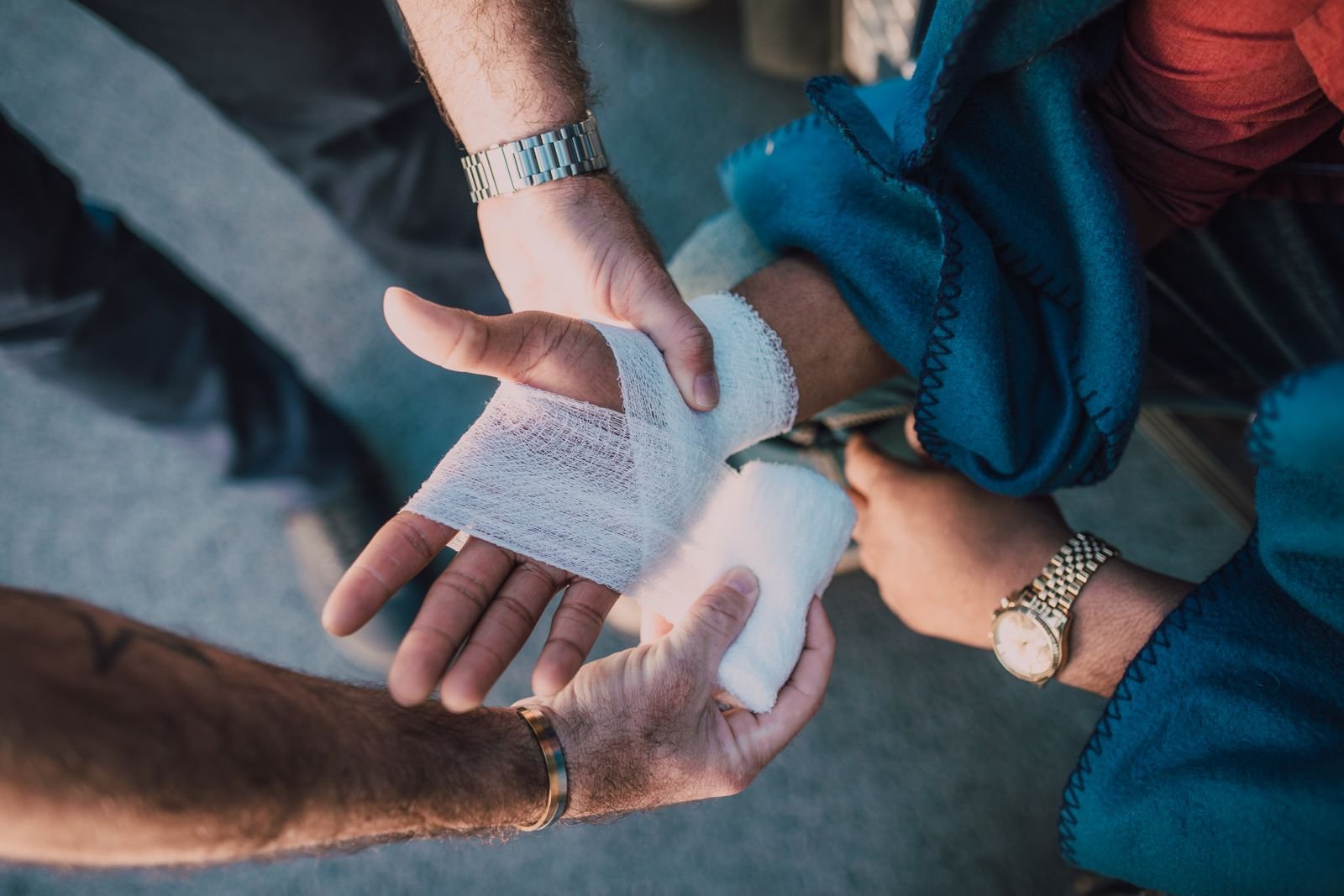
A bandage can hide a wound’s appearance without revealing what happened underneath.
A kitchen-knife nick may stop bleeding under a strip of gauze and still have gaping edges beneath it. Skin can look deceptively calm once blood is wiped away, while the cut extends through the dermis, crosses a crease, or involves tissue that helps a finger, lip, or eyelid move normally.
The useful question is not simply whether bleeding has slowed. Depth, edge separation, location, contamination, sensation, and movement all change how a wound is assessed. A shallow, clean split with edges that rest together behaves very differently from a puncture, a crushed wound, or a cut made by a dirty or broken object. Closing a wound is partly about appearance, but also about restoring alignment and reducing the chance of delayed healing or functional problems.
- Cuts over joints may reopen repeatedly because ordinary movement pulls the skin edges apart.
- Numbness or weakness beyond a cut can suggest injury to a nerve or tendon, even when the surface opening is small.
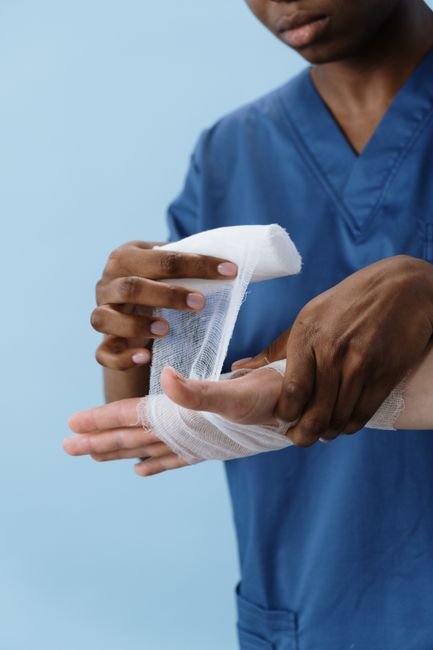
Why wound edges matter more than length
A cut does not become a stitch-worthy wound at a fixed length. A short laceration across a knuckle may pull apart each time the joint bends, while a longer, shallow cut on a low-tension area may sit neatly closed. Clinicians assess whether the edges meet and stay together without force before deciding whether stitches are needed.
Gapping is a central concern.
When skin edges are separated, the body must fill the gap with new tissue.
That distinction is central to deciding whether a bandage is enough or a wound needs professional closure.
This can slow healing and leave a wider scar, and it may require closure beyond an adhesive bandage.
Wounds whose edges roll inward or contain missing tissue may be under tension.
Depth changes the picture even when the surface opening seems modest. More concerning findings can include:
- visible yellow fat, deeper tissue, or a wound that does not appear superficial;
- bleeding that continues or resumes when pressure is released;
- reduced feeling, tingling, weakness, or difficulty moving a nearby finger, toe, or joint;
- a cut over the face, hand, joint, tendon path, or other functionally important area;
- contamination, crushing, bites, puncture-like injury, or a retained foreign material.
Closure also has a timing and infection component. Bringing contaminated tissue together can trap bacteria, whereas some wounds are cleaned, monitored, and allowed to close later or heal from the inside outward. Depending on the wound, clinicians may use sutures, staples, tissue adhesive, adhesive strips, or no primary closure at all. The method reflects tissue location, depth, tension, contamination, circulation, and the risk to underlying structures—not simply how dramatic the cut looks.
Findings that warrant prompt assessment
A cut merits more than a routine dressing when bleeding continues despite steady direct pressure, repeatedly soaks dressings, or resumes as soon as pressure is released. Bright-red, spurting blood; rapidly pooling blood; faintness; or confusion suggests a bleeding emergency rather than a question of stitches. Emergency responders distinguish this from ordinary closure decisions, including when severe bleeding may call for a tourniquet.
Deeper structures can be involved
Prompt assessment can be important when the wound exposes yellow fat, muscle, tendon, bone, or a foreign object. A gap that opens with normal movement may be under tension and less likely to remain aligned with a bandage alone.
Loss of strength, inability to fully bend or straighten a finger, numbness, tingling, or altered sensation can indicate injury beyond the skin. Pale, blue, cold, or increasingly swollen tissue below a cut may reflect impaired circulation; a ring or other constricting item can compound swelling.
Contamination changes the calculation
Bites, punctures, crush injuries, dirty wounds, and cuts involving glass, soil, or contaminated water carry concerns that closure alone cannot solve. Some contaminated wounds are assessed for cleaning, retained material, infection risk, and whether immediate closure is appropriate. Redness spreading away from the wound, worsening pain, pus, fever, or red streaking can also warrant timely clinical evaluation.
Location matters: cuts across joints, on the hand, face, genitals, or near the eye may affect movement, sensation, appearance, or delicate structures even when the opening seems narrow.
Why similar-looking cuts can need different care
A short cut can gape because it crosses the skin’s natural tension lines. A longer superficial scratch may lie flat and stay closed. Edge separation matters because parted edges may not stay aligned through movement.
Movement can pull a wound apart
Cuts over joints, knuckles, the palm, or other bending areas are repeatedly stretched, compressed, and exposed to moisture.
Friction can reopen a wound or cause poorly aligned edges to form.
Whether stitches are needed often comes down to that edge-to-edge alignment under normal movement.
Clinicians weigh the wound’s appearance at rest and during movement.
Hands and fingertips deserve closer attention
The hand is densely packed with tendons, nerves, blood vessels, and structures needed for fine control. A small wound near a finger crease, nail, or palm can therefore carry more significance than a similarly sized cut on a less complex area. Difficulty bending or straightening a finger, altered feeling, pale or cool skin, or bleeding that continues despite first controlling fingertip bleeding can indicate issues beyond a simple surface cut.
Not every hand cut requires stitches. A clean, shallow wound whose edges meet easily and whose movement and sensation remain normal may be managed differently from a deep, gaping, or function-affecting injury. The key distinction is not how dramatic it looks, but whether the tissue can stay protected, aligned, and functional as it heals.
Size alone does not decide whether a wound is closed
Length is only one detail. A long, shallow cut whose edges rest together may be managed differently from a short wound that gapes, crosses a joint, or exposes deeper tissue.
Closure is chiefly about restoring aligned edges under manageable tension while protecting function and appearance.
Small wounds can be significant when they involve a fingertip, tendon area, joint, nail bed, face, or a site with altered feeling, movement, or blood flow.
In compact anatomical areas, a few millimetres can involve structures that a surface view cannot reveal.
Some delayed, crushed, bite-related, or heavily contaminated wounds may be left open initially, cleaned and monitored, or closed later depending on clinical assessment.
Immediate closure can seal bacteria, debris, or devitalized tissue inside, increasing the risk of infection. Timing, wound mechanism, tissue condition, and location all affect the balance.
What clinicians assess before closing a cut
Closure is a sequence of judgments, not a measurement against a fixed clock. The aim is to balance cleaner healing and restored function against the risk of sealing bacteria or debris inside.
- At presentation: how the wound happened and when
A clean, sharply caused wound is assessed differently from a bite, puncture, crush injury, or cut exposed to soil or water. Time since injury matters, but no universal closure deadline applies: location, contamination, tissue condition, blood supply, and the person’s health can matter more than elapsed hours.
- Before closure: expose, irrigate, and account for what is inside
Clinicians control active bleeding with pressure and inspect the full wound after adequate anesthesia when needed. Irrigation helps remove bacteria and debris; examination may look for glass, grit, teeth fragments, or other retained material, with imaging considered when the mechanism or examination raises concern. Devitalized tissue and heavily contaminated wounds may need a different plan than immediate edge-to-edge closure.
- Before leaving: test what the cut may have injured
Movement, strength, sensation, capillary refill, and pulses can help identify tendon, nerve, or vascular involvement—especially in hands, across joints, and near the face. Tetanus immunization history is reviewed because wound type and prior vaccination affect preventive care. Diabetes, poor circulation, immune suppression, smoking, anticoagulant use, and medicines that affect healing or bleeding can also shift the closure decision and follow-up plan.
A wound may be closed with sutures, adhesive strips, tissue adhesive, staples, delayed closure, or allowed to heal open; the appropriate option depends on the complete assessment.
Closure is only one part of wound care
A cut is not simply stitched or bandaged. Clinicians first control bleeding and examine function and deeper structures, then remove debris when appropriate and decide whether the wound is clean enough and recent enough for closure.
Different ways edges may be managed
- Sutures can precisely align deeper or high-tension wounds and may be placed in layers when muscle, fascia, or deeper tissue requires support. Deep absorbable stitches can reduce strain on the skin layer.
- Staples may be considered for some straight scalp or trunk wounds, where speed and reliable edge alignment matter more than a fine cosmetic result.
- Tissue adhesive may suit selected clean, shallow, low-tension cuts with easily matched edges. It is generally less suitable for wet, hairy, mobile, or actively bleeding areas.
- Adhesive strips can support small, superficial wounds with little tension, sometimes alongside a protective dressing.
- Open healing may be chosen when contamination, tissue loss, bite-related injury, or delayed presentation makes immediate closure more likely to trap bacteria. Some wounds are reassessed later for delayed closure.
The aim is not merely a closed-looking line, but safe healing with preserved movement, circulation, and sensation.
What a bandage can—and cannot do
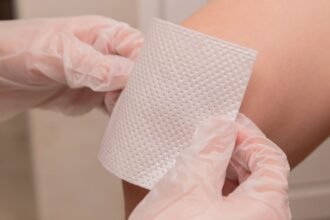
A bandage is a covering, not a repair. It can shield a cut from further dirt and absorb blood or drainage, but it does not bring apart wound edges together or restore deeper tissue such as tendon, nerve, fat, or muscle.
While assessment is being considered, a clean dressing or cloth can reduce additional contamination. Steady, direct pressure over the covering can help limit bleeding; repeatedly lifting it to check may disrupt early clotting. If water and supplies are unavailable, cleaning a cut without a sink focuses on reducing contamination rather than attempting a full wound treatment.
Useful details for a clinician include:
- when and how the injury occurred;
- what caused it, including glass, metal, bite, or dirty water exposure;
- whether anything may remain in the wound;
- changes in sensation, movement, color, or warmth; and
- bleeding that continues through a dressing.
A bandage may make a wound look contained, even when its deeper edges remain separated.
Stitches vs. Bandage: Common Questions
Does the length of a cut determine whether it needs stitches?
No. A short laceration across a knuckle may pull apart each time the joint bends, while a longer, shallow cut on a low-tension area may sit neatly closed. Clinicians assess whether the edges meet and stay together without force, not the raw length of the cut.
What signs mean a cut needs prompt professional assessment?
Bleeding that continues despite steady direct pressure or resumes when pressure is released, visible yellow fat or deeper tissue, reduced feeling or weakness nearby, a cut over a joint or the hand or face, and contamination, crushing, bites, or punctures all warrant prompt evaluation.
Can a bandage close a gaping wound?
No. A bandage is a covering, not a repair—it can shield a cut from further dirt and absorb drainage, but it does not bring wound edges together or restore deeper tissue such as tendon, nerve, fat, or muscle.
Why might a small cut still be serious?
Small wounds can be significant when they involve a fingertip, tendon area, joint, nail bed, face, or a site with altered feeling, movement, or blood flow. In compact anatomical areas, a few millimetres can involve structures a surface view cannot reveal.
Should every wound be closed as soon as possible?
Not necessarily. Some delayed, crushed, bite-related, or heavily contaminated wounds may be left open initially, cleaned and monitored, or closed later, since immediate closure can seal bacteria or debris inside and increase infection risk.
Treat the pattern, not the length
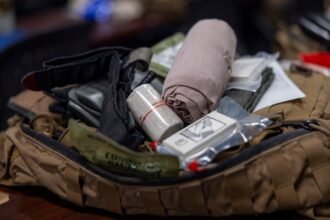
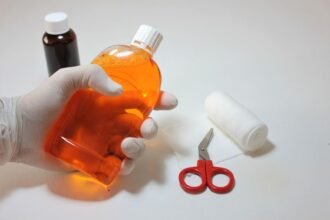
- Keep a first-aid kit stocked for bleeding control, cleaning, protection, and a record of tetanus immunization status.
A cut deserves more than a simple bandage assessment when its edges gape, deeper layers are visible, bleeding persists despite firm pressure, or dirt, saliva, rust, or other material may be driven into it. New numbness, weakness, limited movement, or changes in color or warmth raise the stakes further.
Location matters: injuries near the eye, face, hand, joint, genitals, or areas with important nerves, tendons, and blood vessels can carry consequences disproportionate to their size. A prepared kit and basic wound information make the immediate situation easier to assess and communicate.


13 Comments
A bandage can hide a lot, which is why “it stopped bleeding so it must be fine” feels like bad logic. The movement/sensation checks are a much more practical takeaway than measuring the cut with a ruler.
I’m a little confused about timing. You say time alone doesn’t decide closure, but is there still a point where someone should stop wondering about stitches and get checked because the options may change?
Not looking for a magic cutoff—just trying to understand why the “wait until morning” advice can be risky in some cases.
There is no single safe cutoff that applies to every wound, because location, contamination, tissue damage, and a person’s health all matter. But if a cut is gaping, deep, dirty, bleeding persistently, or affects movement or sensation, it is better to seek prompt assessment rather than wait to see how it looks later. Clinicians may choose different closure approaches as time passes, and some wounds are safer to clean and manage without immediate closure.
That makes sense. I made the mistake of waiting on a cut over my knuckle because it looked small when my hand was still. Once I could see it open every time I moved, I went in.
What about a scalp cut? They can bleed dramatically even when they don’t look very deep, which is terrifying at 11 p.m. with a kid involved.
Is the persistent bleeding point mainly about bleeding despite steady direct pressure, rather than just the amount of blood you initially see?
That is a good distinction. Scalp wounds can look very dramatic because the area has a rich blood supply. The concern is bleeding that continues despite firm, direct pressure held continuously, as well as a gaping wound, deep injury, contamination, or concerning symptoms after a head injury. For a child with a significant head impact, vomiting, worsening headache, unusual sleepiness, confusion, or loss of consciousness warrants prompt medical evaluation regardless of the cut’s appearance.
Been there—my son’s tiny scalp cut made the bathroom look like a crime scene. Urgent care said it was shallow, but I was glad we went because it was impossible for me to judge through all the hair and blood.
I appreciate the emphasis on contamination. People sometimes act like a dirty cut is automatically “just rinse it and slap on a Band-Aid,” but a puncture from an old nail, a bite, and a clean kitchen-knife cut clearly aren’t the same situation.
Could you say more about when adhesive strips or skin glue fit in? I know they are not meant for every wound, but people tend to treat them as a DIY version of stitches.
It seems like a low-tension, clean cut might be different from one on a palm, knee, or joint where the skin keeps moving. The phrase “closure is only one part of wound care” was probably the most helpful part of the article.
This is a useful reminder that the “how many inches?” rule is pretty misleading. If a cut on a finger is small but the edges pull apart whenever you bend it, is that the kind of thing that should be assessed the same day?
Yes—especially on a finger or across a joint, where motion repeatedly pulls on the wound. A clinician can assess whether the edges, depth, tendon/nerve function, and circulation need more than home care. New numbness, weakness, inability to fully bend or straighten the finger, or bleeding that will not stop makes it more urgent.
Glad you called out tetanus status. It’s one of those details everyone vaguely remembers after the fact: “I had a booster… sometime during the Obama administration?” 😅
The part about sensation is important and honestly easy to overlook. I would probably focus on whether it needs stitches and not think to compare feeling on both sides of a hand or finger.