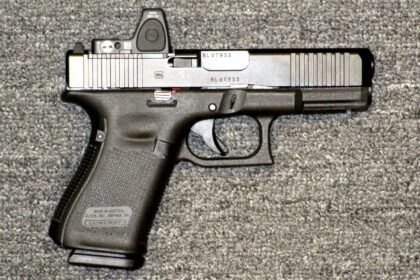
Choosing the right Glock MOS red dot comes down to verifying the full mounting stack — plate, footprint, and screws — rather than trusting a broad compatibility claim on the box. The Glock MOS cut and...

Your Everyday Carry Load Out Starts Here
Optics, safes, hearing protection, range bags and the cleaning gear that keeps a carry gun running.
Choosing the right Glock MOS red dot comes down to verifying the full mounting stack — plate, footprint, and screws — rather than trusting a broad compatibility claim on the box. The Glock MOS cut and...

The best quick-access gun safe is the one whose lock, mounting, and interior fit actually match how and where it will be used, not the one with the fastest advertised opening time. A quick-access safe...

Getting red dot screw torque right means following the exact specification for that optic, plate, and slide stack, since finger feel alone cannot tell safe clamp load from a stripped thread at this sc...
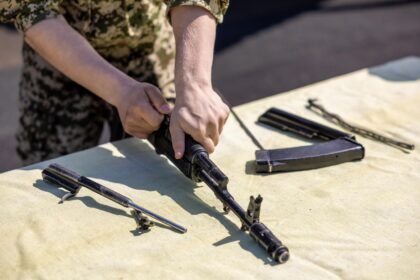
Knowing how much gun oil to use comes down to one small drop wiped into a thin, barely visible film on each moving contact point, not a wet, glossy coat across the whole action. Before applying lubric...
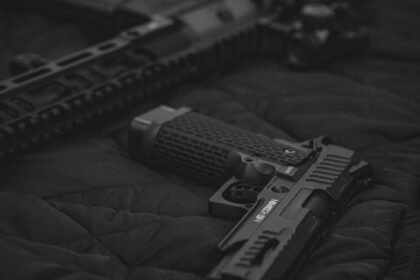
Mechanical push-button locks avoid batteries, sensors, and software. A quality Simplex-style mechanism can be highly repeatable in darkness, but its sequence takes practice and can be slower for an un...
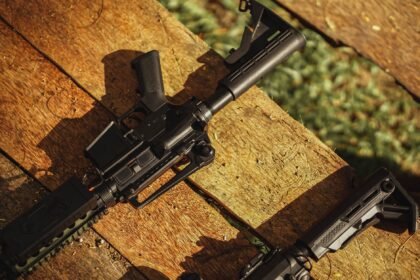
A taller optic mainly changes how the rifle meets the face and eye. The head stays a bit more upright, neck flex is reduced, and the stock may contact slightly lower on the cheek or more along the jaw...

A range bag does not need to be purpose-built. For a first trip, it only needs to do three jobs well: separate small items, protect what should not get crushed or mixed, and keep essentials easy to re...

As a starting point, most centerfire pistols and rifles hold up fine on a quick wipe-down after light use, with a standard cleaning every few hundred rounds. Rimfires and suppressed guns need a shorte...

Biometric and mechanical each make a legitimate handgun safe, but they fail in different places: one trades battery and sensor risk for speed, the other trades a touch of speed for a lock that never n...

Understanding how red-dot sights work starts with the lens, not the target: a small LED emitter reflects a dot off a coated front lens into the shooter's eye, so nothing is ever projected onto wh...