

A calmer car is built around fewer, easier-to-reach things—not more containers.
A coffee cup rolls under the seat, a charging cable catches on a bag, and last month’s receipts have migrated into every door pocket. The cabin feels cramped not because it lacks organizers, but because unassigned items keep moving.
Treat each surface as a working zone: driving essentials within reach, temporary rubbish in one contained spot, and everything else removed at the end of the trip. A slim, lidded bin can prevent wrappers from colonizing cup holders; it earns its space only if it does not block a pedal area, seat adjustment, or a frequently used pocket. Seasonal gear and bulky bags belong in the cargo area or out of the vehicle, rather than underfoot. The useful standard is simple: an item should be reachable in one motion and returned without shifting three others.
- Door pockets work best for flat, low-use items; loose bottles and cables tend to rattle.
- Empty temporary storage regularly so an organizer does not become permanent clutter.
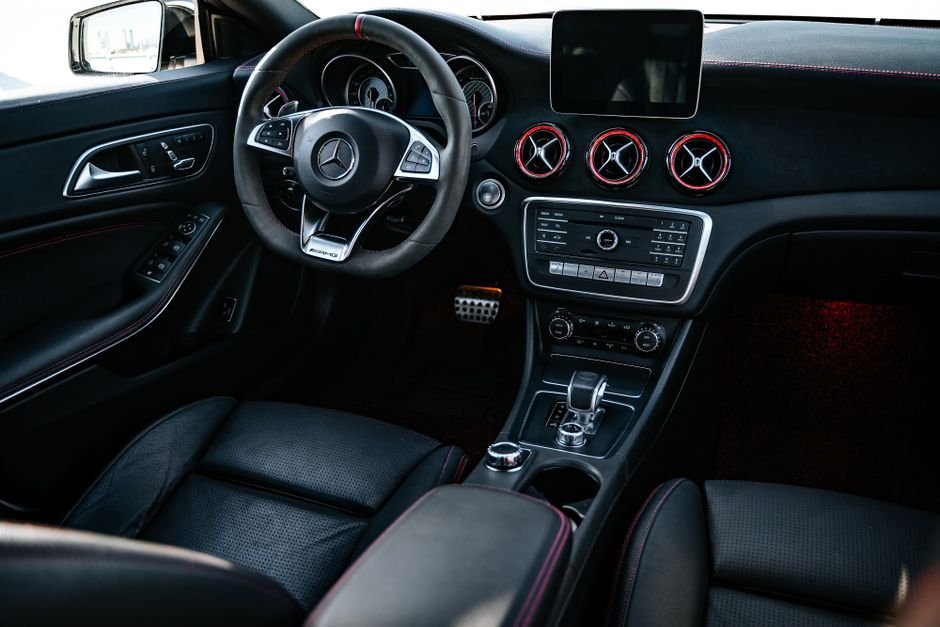

Organize for access, not storage
A well-organized cabin passes a simple test of car organization: daily essentials can be reached without searching, and emergency equipment remains secured and accessible.
For better car organization, keep high-frequency items in fixed locations.
Store documents in the glove box, a charging cable in a pocket, and sunglasses in a slim case.
Emergency gear needs a different standard.
A first-aid kit, warning device, flashlight, and seasonal supplies sit in a strapped trunk organizer.
This keeps them from becoming projectiles in sudden braking.
They should still be reachable without unloading shopping bags.
A full organizer does not prove a car is organized. Containment merely hides excess when seldom-used duplicates, old receipts, abandoned clothing, and expired supplies remain inside. Periodically remove every nonessential item; only return what has a clear use on real trips.
If an item has not supported a normal trip in recent memory and is not emergency equipment, it usually belongs at home rather than in a new pouch.
Empty the cabin before adding organizers
-
Make one complete sweep
Park in a safe place and collect everything from door pockets, seat gaps, console, glove box, under-seat areas, and the cargo floor. A single pass prevents old clutter from migrating into a new container.
-
Sort by when the item is actually used
Create small groups for every-trip items, occasional trip items, roadside or seasonal gear, paperwork, trash, and items that belong elsewhere. Frequency—not an item’s size or cost—determines its home.
-
Test every “just in case” item
Ask what specific situation calls for it, how often that situation occurs, and whether it could live at home instead. Vague hypothetical use is usually a poor reason to give cabin space to an item.
-
Keep only the current travel set
Return daily essentials to their access zones. Move occasional and emergency items to secured cargo storage only when they are relevant to the vehicle’s conditions and available space.
-
Give each remaining item a destination
Items without a defined vehicle role leave the car now. An organizer should receive a known set of items, not become a holding area for undecided possessions.
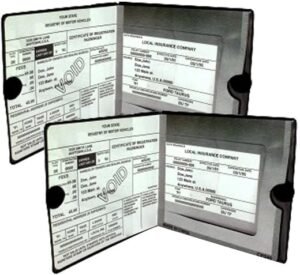
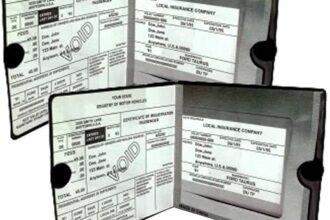
Vehicle papers are easy to lose when mixed with receipts, manuals, and loose console items. Keep only the documents needed during routine travel in a slim, labeled holder, and store records that are rarely needed in a home filing system or secure digital archive.
Requirements vary by location, ownership arrangement, and insurer. Review which documents belong in the vehicle periodically, especially after a sale, renewal, or change in coverage.
Give every item one home
Organization holds when the cabin is divided by point of use and how often an item is needed. A useful test is simple. If an item is used while seated in one place, its home stays within easy reach.
- Driver zone: Keep only driving-related essentials here: sunglasses, toll device, parking pass, and a single charging cable if it is routinely used. Nothing should interfere with pedals, steering, controls, or sightlines.
- Front passenger zone: Reserve the glove box or console for shared documents, a manual, and occasional-access items. This prevents the driver area becoming a general catchall.
- Rear-seat zone: Store items tied to regular rear passengers, such as a compact tissue holder or child travel supplies, in a secured seat-back pocket or dedicated bin.
- Door pockets: Treat these as narrow, limited-capacity spaces for a bottle, umbrella, or map—not long-term storage for loose receipts and packaging.
- Cargo area: Assign larger, infrequent, or destination-specific gear to one restrained container so it cannot roll forward.
Crucial rule: one item, one assigned home.
A charger does not need copies in every row.
Spare supplies do not belong in each door pocket.
When an item is found elsewhere, returning it to its zone immediately stops gradual migration.
Keep the driver zone clear
The area within the driver’s reach is not another storage zone; it is an operating space.
Loose objects can slide beneath pedals or become projectiles during hard braking.
Additionally, they can pull attention away when a control needs to be used.
Dashboard trays, adhesive mats, and decorations may seem harmless.
However, they can interfere with vents, obscure warning indicators, or reflect in the windshield.
The dashboard works best as a visibility surface, not a shelf.
Console and cupholder limits
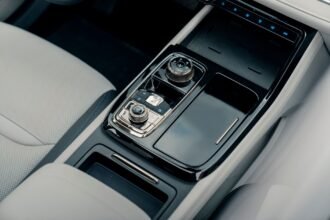
A well-managed center console holds only small items needed at a stop and keeps the gear selector, parking-brake control, and climate controls visually distinct. Avoid stacking devices, cables, receipts, and packets around these controls; an item that shifts during a turn is already too loose.
Cupholders are mainly for securing drinks. Keys, coins, and tall bottles can rattle, tip, or make a simple reach feel like a search. Seat-gap organizers also need restraint: solutions that keep belongings from falling between seats must not cover seat-belt buckles or restrict seat travel.
If retrieving an item requires looking away from the road or reaching below the seat while moving, it does not belong in the driver area.
Choose containers by job, not by empty space
- Rigid bins for protected trunk gear
A low-sided, washable bin suits bulky items that need separation, such as cleaning supplies or seasonal gear. Measure around wheel arches and hatch hardware first; an impressive-looking bin that blocks access is wasted volume.
Look forA close-fitting, wipe-clean bin with a non-slip base or tie-down points.AvoidTall open totes that tip, slide, or conceal rarely used clutter. - Soft pouches for small, related kits
Pouches compress into irregular spaces and make a defined kit easy to remove. A contrasting zipper or modest clear panel improves identification without inviting a search through every pocket.
Look forOne washable pouch per category, sized to its actual contents.AvoidDeep multi-pocket bags that turn a small kit into a miniature junk drawer. - Flat document storage for glove-box papers
Vehicle paperwork benefits from a slim, moisture-resistant holder that opens flat and keeps each card visible. It should fit without forcing the glove-box latch or crowding the owner’s manual.
Look forClear sleeves, secure closure, and a footprint matched to the glove box.AvoidLoose papers, bulky binders, or storage that requires lifting everything out. - Cargo restraints for anything with mass
A container is not a restraint. Use the vehicle’s existing anchor points, a fitted cargo net, or appropriate straps to limit movement of heavier items, while keeping release points reachable.
Look forAnchored restraint with a simple, visible release and no slack across access areas.AvoidUnsecured organizers or improvised attachments near seats, belts, or airbags.
Before loading a new organizer, open the glove box, fold the rear seats, move the front seats through their travel, and reach the spare-tire or charging access points. A storage solution earns its place only when it stays secure and leaves routine vehicle functions unobstructed.
Keep the rear seat and cargo area separate
A rear seat is a passenger zone first. When it becomes the default landing place for bags, returns, tools, and sports gear, every trip begins with reshuffling. Reserve it for people and only the items they need during the ride.
A slim, stable seat-back organizer can hold flat, lightweight essentials: a tissue pack, charging cable, map, or children’s activity pouch.
Additionally, choose one near the seat back that keeps pockets closed or shallow and does not interfere with legroom.
Bulky organizers tend to turn a clear passenger area into a hanging cabinet.
Make the cargo area do cargo work
Additionally, groceries benefit from containment rather than more storage volume.
Reusable bags, a shallow collapsible crate, or a divided bin can keep items upright.
Additionally, place it against the sidewall or rear seatback so it has fewer directions to move.
Hooks are useful only when attached to a rated, purpose-built anchor point.
Moreover, they must be used within the vehicle’s stated limits—not improvised trim, headrests, or handles.
Load dense objects low and as far forward as practical, near the rear seatback.
This reduces their leverage under braking and leaves lighter, crushable goods above them.
Keep the spare-tire access panel, emergency equipment, and cargo-area release features reachable.
A trunk organizer needs restraint of its own.
Measure its footprint against the cargo floor, then use its straps with the vehicle’s tie-down loops where available.
On carpeted floors, grippy backing may reduce creep.
Additionally, on plastic liners, a non-slip mat or a rigid crate often works better.
The organizer should be empty-able in one lift—otherwise it quietly becomes permanent clutter.


Contain the items that make a clean car relapse
A pocket is only a home when it keeps its contents contained, reachable, and harmless when wet.
Door pockets collect wrappers, melting snow, leaking bottles, and loose bags because they lack a clear cleanup boundary. Reserve them for durable, wipeable items rather than food or damp gear.
A small, removable, leak-resistant bin is usually easier to empty before waste accumulates.
Food packaging and drink residue need a container close to where passengers sit, with a lining that can be wiped. A collapsible bin also avoids occupying cabin space when it is not needed.
Damp items need a contained, washable location separated from upholstery and electronics.
A shallow waterproof tray in the cargo area can catch drips; a folded towel or removable liner makes cleanup simpler. Once dry, the item can return to its normal home or leave the vehicle.
An ice scraper needs a dedicated, secured spot that remains accessible without becoming a projectile.
A narrow trunk-side restraint or low cargo bin keeps the scraper away from pedals and seat tracks while preserving a predictable location on frosty mornings. Reusable grocery bags likewise need one restrained bundle, not several loose spares.

Make every home road-worthy
A designated spot is only useful when it holds through a hard brake, a roundabout, or a rough parking lot.
Additionally, anything loose can slide into a footwell.
It can rattle against trim, tip over, or turn a minor spill into a cabin-wide cleanup.
Additionally, use the restraint that matches the item.
- Small daily items: fit them in a lidded console bin, zip pouch, or door pocket with a grippy liner. A liner reduces movement but does not secure a heavy object.
- Bottles and drinks: use cupholders sized for the container; seal bottles before travel and avoid storing open beverages in door pockets.
- Groceries and loose cargo: place them in a low-sided crate or folding bin, then use the vehicle’s cargo hooks, net, or built-in tie-down points to keep the container from traveling.
- Heavier gear: keep it low and as far forward in the cargo area as practical, ideally against the rear seatback. Avoid stacking heavy objects above lighter ones.
Test an organizer before relying on it. Take a few normal corners and brake smoothly in an empty area. If it creeps, rattles, or tips, reduce its contents, add a proper restraint, or choose a lower, wider container. Never attach straps to seat controls, airbag areas, or trim not designed as a cargo anchor.
With the vehicle parked, push the loaded container forward, sideways, and upward. If it moves easily by hand, it is unlikely to remain orderly during an abrupt stop.
Restore the cabin after ordinary trips
-
Park first, then collect trip leftovers
With the vehicle safely parked, remove cups, wrappers, receipts, and personal items that have reached their destination.
-
Return only the essentials
Place retained daily gear back in its assigned zone; anything without a clear home leaves the cabin rather than claiming a new pocket.
-
Empty the small waste bin
A removable bin takes seconds to empty and prevents trash from migrating into door pockets, seat gaps, and cupholders.
-
Reset passenger and cargo surfaces
Fold reusable bags, contain wet or dirty items, and re-secure cargo so the next trip starts with usable seats and clear access.
-
Apply the one-in, one-out filter
Before an accessory enters the car, identify the item or function it replaces. If it adds another container without removing a problem, it does not stay.
A short reset works because it restores existing homes instead of creating a larger storage system.
A clear cabin is a maintained decision
- Fewer dedicated containers are easier to clean, inspect, and secure.
- An accessory earns space only when it replaces clutter or solves a recurring access problem.
- Resetting after routine trips prevents occasional mess from becoming permanent vehicle storage.
The durable approach is not to fit more into the car. It is to keep only road-relevant items, give each one a secure home, and restore that arrangement before clutter gains momentum.
Car Interior Organization: Common Questions
Does buying more organizers make a car more organized?
Not by itself. A full organizer does not prove a car is organized; it can just hide excess if seldom-used duplicates, old receipts, and expired supplies remain inside. It’s better to purge nonessential items first, then add only the storage that holds a known, defined set of items.
Where should emergency gear go in a car?
A first-aid kit, warning device, flashlight, and seasonal supplies work well in a strapped trunk organizer or under-floor compartment, where they won’t become projectiles during sudden braking, while still being reachable without unloading shopping bags first.
What items should never go in the driver's reach area?
Anything that isn’t a driving essential. The area within the driver’s reach is operating space, not storage: loose objects can slide beneath pedals, become projectiles during hard braking, or distract from the controls. A useful test is whether retrieving the item requires looking away from the road.
How do I keep a trunk organizer from becoming permanent clutter?
Choose one that can be emptied in a single lift, and measure its footprint against the cargo floor before securing it with the vehicle’s tie-down loops. An organizer that’s hard to empty quietly becomes a place where clutter accumulates instead of a working storage zone.
How can I tell if a loaded container will stay in place while driving?
With the vehicle parked, push the loaded container forward, sideways, and upward. If it moves easily by hand, it’s unlikely to stay put during an abrupt stop, and needs a lower, wider container or a proper anchored restraint instead.
HOTOR Car Trash Can with Lid, Leakproof, Black, 2 Pack | Car Accessories for Interior, Garbage Can with 30 Attached Trash Bags, Multipurpose Organizer and...
Features
| Brand Name | HOTOR |
| Unit Count | 2 Count |
| Manufacturer | HOTOR |
| Included Components | Car Trash Can |
| Item Type Name | Car Trash Can |
| Warranty Description | Car Trash Can |
| ASIN | B0C4GX2NYW |
| Material Type | Plastic |
| Finish Type | Car Trash Can |
| Color | Black |
| Room Type | Car Trash Can |
| Shape | Hexagonal |
| Opening Mechanism | Press-Top |
| Additional Features | Waterproof,Portable,Compact |
| Capacity | 1200 ml |
| Item Weight | 9.6 ounces |
| Item Dimensions L x W x H | 8.1"L x 3.6"W x 3.6"H |
| Recommended Uses For Product | Car Trash Can |
- WIDE APPLICATION: With a compact size of 8.1*3.6*3.6 inch, HOTOR car trash bins can be used in many areas of vehicles, such as cup holders, car door pockets, and seat back pockets. You can also set them on the desktop at home or office as a trash can or an organizer.
- EASY TO USE: With the flipping lids on HOTOR car storage organizers, you can easily put items or trash into them. Just push to open the lid and then it will close automatically. Moreover, the auto shut-off lid can effectively block odors, keeping the air fresh in the car. HOTOR car trash bins are one of the essential car gadgets for car owners.
- 30 ATTACHED TRASH BAGS: Each set of HOTOR trash cans for cars comes with 30 perfectly matching disposable trash bags. Even with a lot of waste, these durable bags are not easy to break. When the trash can is full, you can replace the used trash bag with a new bag in seconds.
- GREAT DECORATIONS: HOTOR car trash bins are made of premium ABS material that is durable and sturdy for long-term use. Although the HOTOR car trash can with cute in size, it can still show your exquisite taste with its unique diamond-shaped design. HOTOR car trash cans are the perfect decor for cars, homes, and offices.
- EASY TO CLEAN: Featuring waterproof material and a leakproof design, HOTOR car trash bins are suitable for wet waste. Besides, they are easy to clean with a smooth interior. When the trash can gets dirty, you can remove the lid, rinse the lid and body, and wipe them with dry towels.
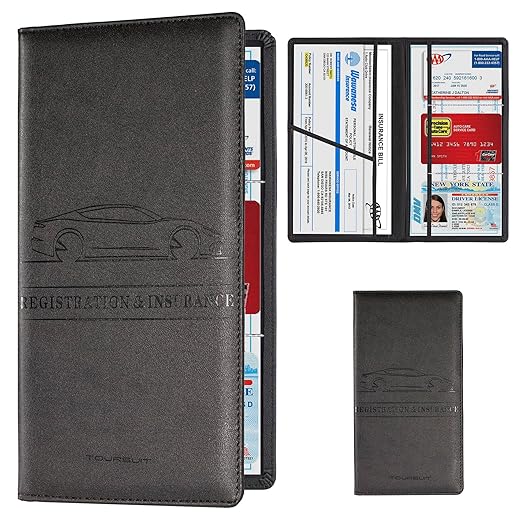
TOURSUIT Car Registration & Insurance Card Holder, Black | Vehicle License Document Organizer, Glove Box Compartment, Interior Car Accessories, For Women Men
Features
| Brand Name | TOURSUIT |
| Number of Items | 1 |
| UPC | 762983885714 |
| Number of Packs | 1 |
| Manufacturer | TOURSUIT |
| Included Components | Car Registration and Insurance Card Holder |
| Item Type Name | Car Registration and Insurance Card Holder |
| Model Number | CR01 |
| Manufacturer Part Number | CR01 |
| ASIN | B09WLTLBDT |
| Specific Uses For Product | Automobiles |
| Other Special Features of the Product | Compact, Magnetic Closure, Eco-friendly |
| Mounting Type | Door Mount |
| Number of Compartments | 6 |
| Item Dimensions D x W x H | 0.4"D x 5"W x 9.4"H |
| Item Weight | 4.6 ounces |
| Unit Count | 1 Count |
| Material Type | Faux Leather |
| Finish Types | Coated |
| Color | Black |
| Shape | Rectangular |
- 👁️Quick Accessible: Inside the car insurance and registration card holder, the clear inner material makes you easy to find documents when you open it up, you can see exactly what they are and quickly show them when asked, even no need to take the stuff out.
- 💼Document Well Organized: The car document holder keeps your car documents organized and keep them tidy and secured, which make it easy to quickly identify and reach paper or cards in the folder. The glove box organizer for car has 6 compartments to keep all your car essential auto car essentials organized.
- 🧲Hidden Magnetic Closure: The glove box document holder are built with hidden magnetic closure, which will keep your car paperwork organizer neat and tidy and ensure the certifications stay closely and and completely protective within the registration pouch.
- 💖Premium Material: The car manual holder is made from high-quality ECO-friendly PU leather material. The car insurance holders with the best sewing and crafted is durable, wear-resistant, and has a luxurious look. This material of the registration holders is durable, wear resistant and waterproof. The insurance card holder for car has a clear window so you can easily see all the documents when you open it up.
- 🌷Compact Size: With the perfect size dimensions of 5.0in x 9.4in x 0.4in, this vehicle license and registration holder for car will fit into glove compartments, sun visors, door holders, consoles, etc. The glove box organizer is precisely designed to fit all of your car documents.

HOTOR Car Trash Can, Compact Waterproof Organizer, Leak-Proof Bin, 2-Gallon | Black, Multifunctional Car Accessory with Adjustable Straps & Magnetic Snaps...
Features
| Brand Name | HOTOR |
| Unit Count | 1 Count |
| Manufacturer | HOTOR |
| UPC | 712396635147 |
| Included Components | Car Trash Can |
| Item Type Name | Car Trash Can |
| Warranty Description | Car Trash Can |
| ASIN | B07VGRVKSN |
| Recommended Uses For Product | Car Trash Can |
| Color | Black |
| Room Type | Car Trash Can |
| Shape | Rectangular |
| Opening Mechanism | Open-Top |
| Additional Features | Compact, Easy Cleaning, Leakproof, Multi-Use Storage, Portable |
| Capacity | 2 gallons |
| Item Weight | 7.8 ounces |
| Item Dimensions L x W x H | 5.5"L x 7.9"W x 10.2"H |
| Material Type | Polyester |
| Finish Type | Car Trash Can |
- ✔ADJUSTABLE STRAP & COLLAPSIBLE SHAPE – The car trash bag features an adjustable strap that allows it to be attached on both front and back headrest as well as the center console for easier access for all around. Coupled with the collapsible design, you will greatly benefit from functional convenience of this auto trash container.
- ✔MAGNETIC SNAPS: There are 4 metallic magnetic snaps inside of HOTOR car trash can for fastening the extra trash bag. Compared with traditional car trash cans, those 4 little snaps make the replacement of car trash bags easier. Simply unsnap the magnetic snaps to replace the used trash bag with a new one. Then snap shut the magnetic snaps to fix the extra trash bag. Just 2 steps and and it's all set.
- ✔DURABLE LEAKPROOF INNER LINING – This garbage can for car adopt waterproof and leakproof material, easy to clean and wash. No more worry about food spills or other stubborn stain.
- ✔MULTIPURPOSE – This car garbage bin can be used as storage bag to keep items such as cups, toys, and other accessories. Additionally, the waterproof advantage also makes it an excellent car cooler of the maximum value for money.
- ✔GREAT COMPATIBILITY – An effective solution for people with the needs of neat and organized car interior. Perfectly fits a variety of types including sedans, SUV, truckers, etc. HOTOR takes every conceivable possibility into account.



11 Comments
The five-minute reset sounds great in theory, but with two kids getting out of the car it feels like a fantasy. Is the reset meant to happen after every single trip, even a school drop-off?
How do you handle wet umbrellas or muddy soccer cleats without making the whole cargo area gross? I’ve tried plastic grocery bags, but they tear and then I forget the wet stuff is in there.
The “empty the cabin first” step is probably what I keep skipping. I buy another little organizer, fill it with random receipts and cables, then wonder why the car still looks messy. Going to try the one-pass purge before adding anything else.
A minor gripe: “one home” gets tricky for something like a charging cable. I need it at the front for navigation sometimes, but passengers use it in the back too. Buying two feels like violating the anti-duplicate-supplies rule, yet moving it constantly means it ends up under a seat.
Thank you for saying containers are not a substitute for removal. My car has become a tiny traveling junk drawer and apparently the answer is not a sixth pouch 😂
I like the distinction between access storage and emergency storage. My trunk has jumper cables, a first-aid kit, blanket, and roadside stuff, but I also keep reusable bags back there and they migrate all over the place.
Would you put the bags in the same secured trunk bin as the emergency gear, or keep them separate since they get used much more often?
Keep them separate if you can. Emergency gear benefits from a closed, secured bin that is rarely opened, while reusable bags need quick access and tend to be returned imperfectly after shopping. A washable open-top tote or a restrained soft bin near the trunk opening works well for bags, provided it cannot slide around.
Separate bag tote was a game changer for me. Mine is clipped to a cargo anchor, so I can grab a bag without digging through the roadside kit.
The suggestion to keep rear seats passenger-ready is underrated. I used to pile packages there because it was convenient, then suddenly had nowhere for an actual person to sit. Heavy things low and forward in the cargo area makes sense—also fewer surprise bowling balls at turns.
What counts as a reasonable driver-zone item? I keep sunglasses, a phone cable, parking pass, tissues, and gum in the console/cupholders. Is that already too much, or is the point just that none of it should roll around?
It is less about a strict item count and more about control and access. Those are all reasonable daily-use items if they have a secure, limited home and don’t interfere with controls, visibility, or cupholder use. A small console pouch or one designated cupholder insert can keep the cable, tissues, and gum from becoming loose clutter; the parking pass and sunglasses should be easy to reach without searching.