
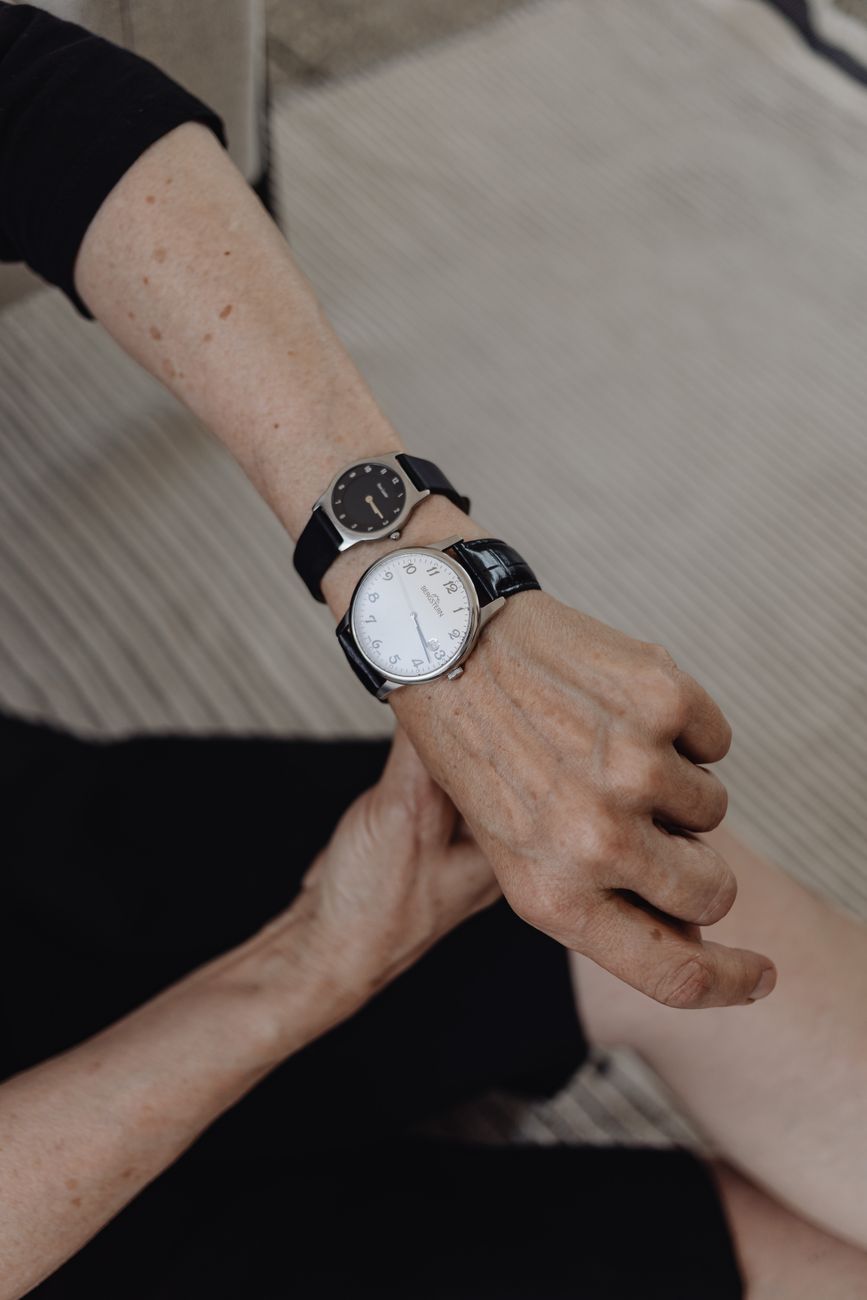
A watch can measure small on paper and still look oddly oversized in real life.
A 34mm case can still feel wrong once the lugs overhang the wrist and the head sits top-heavy. Diameter matters, but it is rarely the whole story: long lug-to-lug length, a tall case, a wide bezel, or a weighty bracelet can make a supposedly petite watch read much larger.
The watches that tend to wear smaller usually stay restrained in every direction—short curved lugs, slim cases, narrow straps, and dials that do not surround the time display with too much metal. Proportion, not just diameter, is what makes a watch look settled rather than borrowed.
- Oval cases often read smaller than round ones at similar stated widths.
Shapes that wear smaller

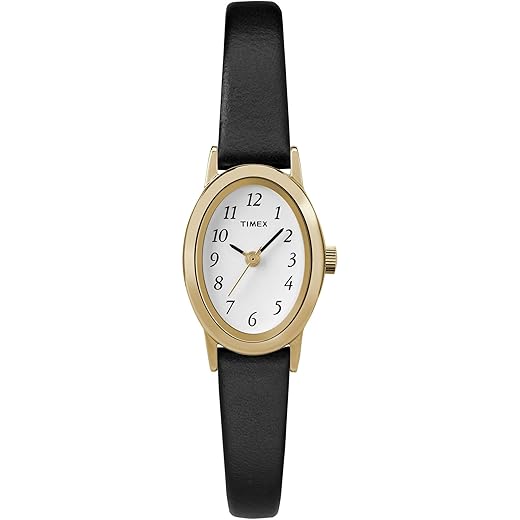

Why diameter misleads
Case diameter is a rough starting point, not the full story. A 38 mm watch with a long 47 mm lug-to-lug can dominate a small wrist, while a compact 40 mm cushion case may sit neatly. Visual size often comes from how far the case extends and how much dial is exposed.
- Lug-to-lug drives overhang risk; short, downward-curving lugs usually wear tidier.
- Thickness adds mass, especially on slab-sided cases that sit tall rather than sink into the wrist.
- Bezel width changes perception: a wide bezel reduces dial opening, while a thin bezel makes the same diameter look larger.
- End-link design matters on bracelets; rigid male end links effectively lengthen the watch beyond the case.
For smaller wrists, two watches with the same headline millimeters can have very different footprints once these details are compared side by side.
A quick sizing framework before comparing watches
-
Measure wrist circumference
Use a flexible tape at the spot where the watch will sit, snug but not tight. Circumference helps narrow case sizes, but it is only a starting point.
-
Measure the flat width on top of the wrist
With a ruler or calipers, note the straight-line width of the wrist’s upper surface. This is the clearest predictor of whether lugs will overhang.
-
Choose the visual fit style
A tucked fit looks compact, a balanced fit keeps the lugs near the edges of the wrist, and a presence-led fit uses more of the available span. Preference changes what counts as ‘small enough’ even on the same wrist.
-
Set a lug-to-lug limit
As a rule, total lug span should stay within the flat wrist width; the most forgiving fit is usually a few millimeters shorter. If end links are rigid, count them as part of the effective span.
-
Set a thickness and bracelet target
On smaller wrists, thinner cases usually sit cleaner and feel less top-heavy; roughly 8–11 mm is easy to wear, while 12–13 mm needs short lugs and good weight balance. Bracelet fit also matters: enough removable links on both sides, a short clasp, and at least one half-link can make the difference between centered and sloppy.
A compact case can still look oversized if the first links refuse to drape. Short female end links, more link articulation, and balanced removable-link placement usually help the watch wrap the wrist instead of bridging across it.
For strap swaps, measuring band fit on smaller wrists matters almost as much as the case itself.
What makes a watch read smaller
- Dial openingA smaller visible dial usually calms the watch down visually. Bezel width matters as much as case size.Look forWide bezel, darker dial, restrained markers.AvoidLarge dial opening, bright empty space, oversized numerals.
- Lug behaviorPhotos often reveal this faster than specs. Short lugs that turn down keep the case contained.Look forStubby lugs, sharp downward curve, female end links.AvoidLong straight lugs or male end links that extend the footprint.
- Apparent thicknessThickness wears better when the bulk is hidden. Mid-case shape changes the visual weight dramatically.Look forSlim mid-case, recessed caseback, modest crystal height.AvoidTall slab sides, thick rehaut, boxed crystal adding height.
- Bracelet massThe attachment can make a modest case look broad. Light taper helps the watch settle visually.Look forStrong taper, small links, compact clasp.AvoidWide flat bracelet, bulky clasp, blocky first links.
A straight-on product photo can make almost any watch look tidy. Side angles and wrist shots reveal the real tells: lug drop, mid-case height, and whether the first link articulates immediately or projects outward.
These picks were screened for how they sit and look on smaller wrists, not for headline popularity. Published dimensions were checked against traits that change perceived size once the watch is actually on wrist.
Tip-to-tip length and lug curvature mattered more than nominal diameter; long, straight lugs were marked down even at modest sizes.
Case height was judged with bezel depth, caseback bulge, and crystal profile, since the same number can wear slim or top-heavy.
Movement type entered the comparison only when it materially changed thickness, balance, or dial-to-case proportions.
Everyday models that stay balanced
The easiest everyday fits
For small wrists, the least risky daily-wear shapes tend to be field watches, compact GADA pieces, and restrained everyday sport models. The dependable range is usually 34–38 mm with lug-to-lug under roughly 44–46 mm, although strongly curved lugs can let a watch near that limit sit neatly. For readers comparing these versatile categories, EDC watch basics adds useful context.
A watch can also wear smaller than its diameter implies. Cases with short, downward lugs, a slim mid-case, and bracelets using female or short end links tuck closer to the wrist. Matte surfaces, darker dials, and narrower dial openings reduce visual spread, while long straight lugs and broad polished bezels usually make a watch read larger.
- Field models: often suit roughly 5.25–6.5 inch wrists and casual wardrobes; legibility is high, bulk is low.
- GADA watches: strong for office-to-weekend use; 36–38 mm with modest thickness and bracelet taper tends to feel the most versatile.
- Everyday sport pieces: can still fit well at 37–39 mm if the lug span stays compact and the case sides are kept slim.
Best for very small wrists
A notably petite field-style option with a 26 mm brass case, green dial, and full Arabic numerals for easy reading. INDIGLO and luminous hands improve low-light visibility, while the 12 mm nylon strap with leather trim keeps the watch light and flexible. Its scale suits very small wrists or anyone after a vintage-leaning field look.
Dressier watches that stay in proportion
Minimalist and dress-leaning watches often solve the small-wrist problem by trimming visual mass, not merely diameter. A slim case, restrained dial, and narrow bezel keep attention near the center, so even a slightly larger watch can still look composed.
What makes them wear elegantly
- Thin cases reduce side-profile bulk and slip under a cuff more cleanly.
- Short, downturned lugs stop the watch from sprawling across the wrist.
- Modest dial openings make the face read smaller than the case measurement suggests.
- Leather straps usually help more than bracelets, because they break visually at the lugs instead of extending the footprint.
Minimalist dials matter too. Sparse markers, softer contrast, and fewer complications make the watch feel calmer and less expansive. That is why a 34–36mm dress watch can appear tidier than a sport watch of the same diameter.
Oval and tonneau shapes deserve attention as well. Their lengthwise profile tends to read as jewelry-like and refined, which can flatter narrower wrists better than a broad round case.
Petite dress option
The 18mm oval case and slim 9mm genuine leather strap give this model a distinctly compact, jewelry-like presence. Its pearl-white dial with full Arabic numerals stays easy to read, while the quartz movement and mineral crystal keep the package simple and low-profile.
Sporty watches that stay compact
Sport and dive watches often miss the mark on small wrists because their functional parts add visual mass even when diameter looks reasonable. A 38–40 mm case can still read large if the watch has a narrow bezel, a tall rehaut, thick crown guards, or a heavily built water-resistance system.
A wide bezel usually helps. On dive watches especially, it shrinks the visible dial opening, so the watch reads more compact than its case measurement suggests. By contrast, a thin bezel with a broad dial can make a nominally small sports watch look unexpectedly expansive.
A deep rehaut can cut both ways. It reduces the apparent dial size, but it often comes with extra case height, which matters on narrow wrists. If the crystal sits high above that rehaut, the watch may look top-heavy even when the dial feels contained.
Crown guards are another common culprit. Broad, squared guards extend the visual width of the case and make the right side look swollen. Shorter integrated guards, or no guards at all, usually preserve cleaner proportions.
For rugged and dive models, water-resistance architecture often drives bulk more than styling does:
- thicker mid-cases support deeper ratings
- screw-down crowns add side mass
- thicker casebacks increase stand-off from the wrist
- slab-sided cases look larger than tapered ones
Among sporty options, the most balanced small-wrist choices often pair moderate depth ratings with a substantial bezel, compact guards, and a case that slopes or tucks underneath rather than stacking straight up.
Affordable watches can still look proportional
Lower-cost quartz watches are often among the slimmer options.
Quartz movements usually need less vertical space than many automatics, so compact cases can stay thin instead of top-heavy. That keeps budget-friendly compact watches that fit better firmly in play.
Fit depends more on bracelet layout than prestige.
Shorter clasps, removable links, and basic sizing tools can produce a neater wrap than a costlier bracelet with long clasp sections or stiff end links.
Many simple quartz models handle normal daily wear capably.
A modest water-resistance rating, three-hand layout, and light case can be practical without looking clumsy, though thin dressy builds still have limits.
Quick chooser
Final fit details that change everything
Borderline fits are usually decided by context. Everyday watches tend to look right when the dial stays balanced and the strap bends quickly around the wrist. Dress pieces usually benefit from slim mid-cases, low crystals, and leather instead of heavy bracelets.
Sporty models often wear smaller when the bezel is broad, crown guards stay compact, and the clasp does not overhang underneath. Value-focused options often gain from quartz thinness, honest taper, and half-links.
- Strap material: soft leather, thin rubber, and fine nylon reduce stiffness.
- Taper and clasp: strong taper and short clasps cut underside bulk.
- Crystal and dial: lower crystals and cleaner dials improve proportion without hurting legibility.
When two watches seem close on paper, the one with the softer strap, sharper taper, shorter clasp, lower crystal, and calmer dial usually looks more natural on a small wrist.






3 Comments
Maybe dumb question, but for dress watches do leather straps really make that much difference vs bracelet? I get that they drape better, but is it enough to make a watch that was borderline on steel suddenly work on a small wrist?
Also curious about oval/tonneau shapes. They look classy, but I can’t tell if they’d flatter a smaller wrist or just look extra fancy for no reason 😂
This was actually helpful because I kept obsessing over case diameter and ignoring everything else 😅
One thing I still don’t fully get: if my wrist is pretty flat from top to bottom but still small overall, should I prioritize lug span over thickness first? A lot of brands list diameter and thickness, but not always the lug-to-lug, which is kinda annoying.
Yes—if your wrist is narrow across the top surface, lug span is usually the first limit to check because it determines whether the watch overhangs or looks too long. After that, thickness matters a lot for comfort and balance, especially if the case sides are tall or the crystal sits proud.
If a brand doesn’t publish lug-to-lug, product photos from the side and on-wrist shots can help, and reviewer measurements are often more useful than the official specs. For small wrists, I’d generally rather see a slightly thicker watch with compact lugs than a thin watch with a long span.