
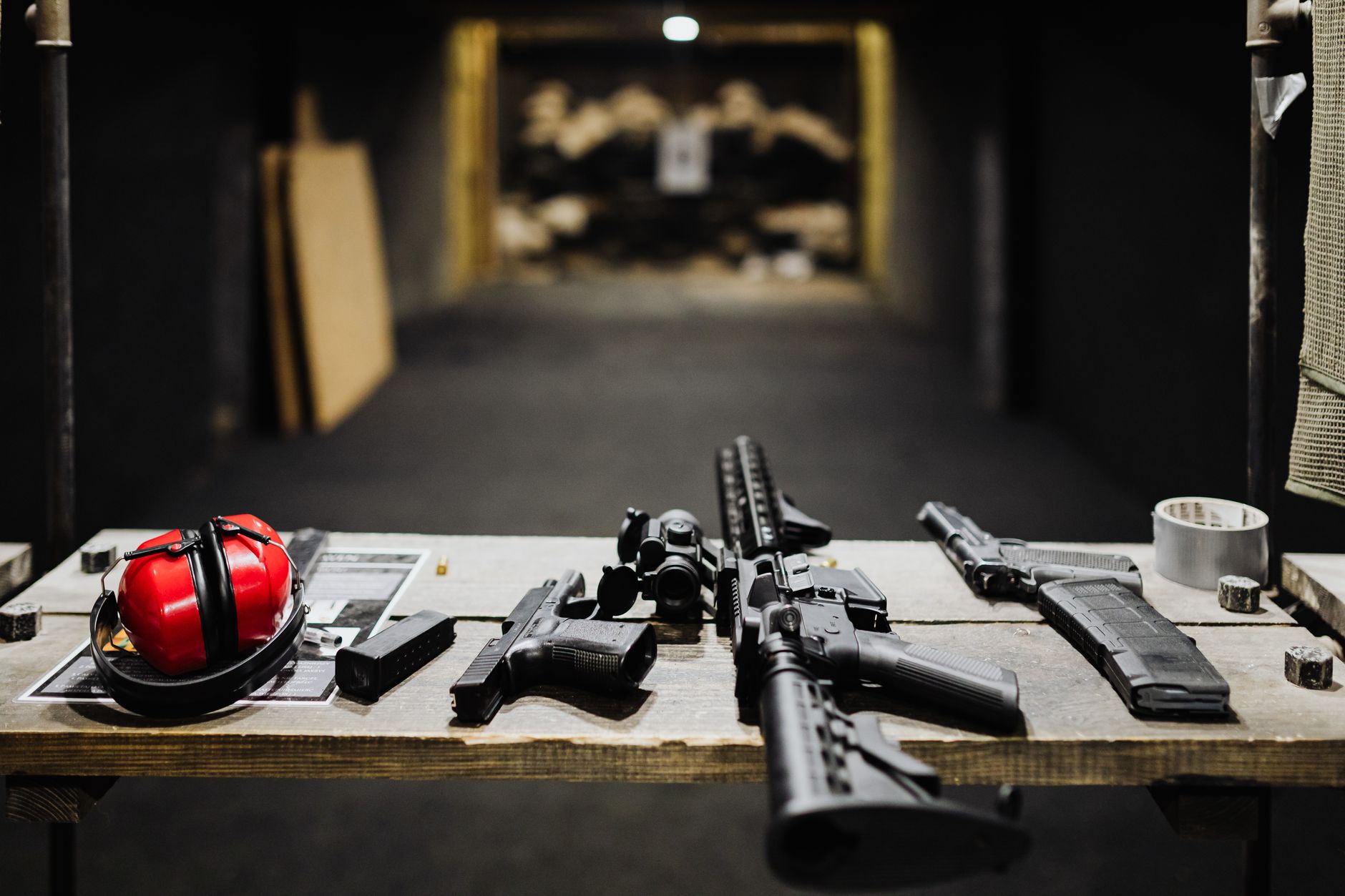
A safe cleaning setup is smaller than most starter kits suggest.
An unopened blister pack of brushes, jags, picks, mats, solvents, lubes, and mystery tools can make basic gun care look risky. In practice, damage usually comes from force, wrong fit, or unnecessary disassembly—not from lacking a deluxe kit.
For a beginner, the real baseline is modest: a bore-cleaning tool sized to the firearm, patches, a suitable solvent, a quality lubricant, and a clean work surface with light. Everything else earns its place later. Chamber flags, torque drivers, bench blocks, and specialty scrapers can help, but they are convenience items until a specific need appears.
Set up the workspace first
A beginner’s cleaning setup usually fails from the work area, not from a missing bottle or brush. Small parts roll away, dirty patches touch clean components, and weak light hides carbon, copper fouling, or excess oil.
A controlled workspace has four basics:
- Stable surface: enough room to separate the firearm, rod, patches, and parts without crowding.
- Bright light: overhead light plus a focused lamp makes residue and missed spots easier to see.
- Ventilation: moving air can reduce concentrated solvent fumes, especially from bore cleaners and aerosols.
- Residue control: a mat, tray, or disposable covering catches drips, soot, and dirty patches before they spread.
Organization prevents many first-time mistakes. A small tray for pins and screws, a clear spot for clean tools, and a separate discard area for used patches help keep clean and dirty items from mixing. That matters because grit carried back onto parts can do more harm than the fouling being removed.
Cleaning on carpet, upholstery, or a household table can hide springs, absorb solvent, and spread carbon or lead residue. Hard, wipeable surfaces contain the mess far more reliably.
A small, caliber-matched kit covers most home cleaning
-
Use one good bore tool
A one-piece coated rod or a quality pull-through handles routine cleaning better than a pile of bargain tools. Match rod length and flexibility to the firearm, especially for rifles versus handguns.
-
Buy the exact brush and jag size
The brush and jag or patch loop should match the bore exactly, not “close enough.” A wrong-size tool causes most beginner frustration and much of the avoidable wear.
-
Keep patches simple
Plain cotton patches in the right size are enough. If a patch must be forced, it is too large for that bore-tool combination.
-
Separate solvent from lubricant
One general bore solvent and one quality lubricant cover ordinary fouling and protection. Most routine home cleaning does not require a shelf full of specialty chemicals.
-
Add only a few support items
A nylon brush, cotton swabs, a microfiber cloth, and a small tray for parts usually finish the kit. That setup handles bore, chamber, bolt face, and exterior wipe-downs without turning the bench into a workshop.
Premade sets can be convenient, but only when the rod style, brush sizes, patch holders, and tips actually fit the firearms being cleaned. That is why a so-called universal kit is often less useful than a small set built around the exact calibers on hand.
A compact, well-matched kit usually cleans better, stores easier, and leaves fewer unused adapters rolling around the bench.
Rod or pull-through?
For many beginners, this is the first tool decision that causes hesitation. A cleaning rod and a pull-through can both maintain a bore, but they solve different problems. The useful question is not which one is “best,” but which one matches the gun’s usual fouling and the way cleaning is actually done.
How the two tools differ
- Pull-throughs excel at fast, routine maintenance. They are easy to pack, convenient for long rifle or shotgun barrels, and well suited to light powder residue after ordinary range sessions.
- Cleaning rods offer more control. They hold patches, brushes, jags, and mops firmly enough to deal with heavier carbon, copper, or lead fouling.
- Rods also make it easier to feel resistance in the bore, which helps when checking whether fouling is breaking loose or a patch fit is too tight.
A pull-through is often enough when cleaning happens often and fouling stays light. A rod becomes more valuable when sessions are less frequent, round counts are higher, or the firearm tends to collect stubborn deposits. That tradeoff is explained in more detail in this quick comparison of the two approaches.
Barrel length matters too. Short pistol barrels are easy to manage with a compact rod, while long barrels often feel less awkward with a pull-through. Many home kits eventually include both: one for speed, one for precision.
Why the little tools matter
Jags, loops, brushes, and picks do the real surface contact, so small sizing errors show up quickly. A patch jag that is slightly oversized can bind in the bore, scrape unevenly, and leave solvent where it is not working. An undersized brush or loose patch does the opposite: it slides through easily but skips carbon and copper instead of lifting them.
Fit matters most where metal, fouling, and corners meet. Chamber brushes need enough diameter to reach the shoulder and lug recess area without being forced; dental-style picks and nylon detail brushes need edges fine enough to clear debris without digging into finishes. The same logic explains why brush material choice matters in the bore: contact pressure and stiffness change how aggressively residue is disturbed.
A simple check helps: the tool should move with steady resistance, not sudden grabbing or wobble. In practice, a caliber-matched jag, correctly cut patches, and brushes that are replaced when bent or flattened clean faster and reduce needless friction on steel, crown, and coating surfaces.
Properly sized contact tools usually move with consistent drag. Excess force, sharp binding, or obvious looseness often signals a mismatch in tool, patch, or caliber.
Give each chemical one job
What each liquid does
Most home cleaning uses four categories. Confusion starts when one bottle claims to do all of them.
- Solvent: loosens carbon, lead, or copper fouling in the bore and chamber.
- Degreaser/cleaner: strips old oil and fouled paste from parts before fresh lubrication.
- Oil: leaves a thin film that reduces friction and corrosion on moving steel surfaces.
- Grease: stays put on sliding, high-load contact points, but only where the maker allows it.
More liquid is rarely better. A patch damp with solvent usually cleans better than a dripping bore, and a barely visible oil film is enough on most actions. Excess oil traps grit, migrates into stocks and magazines, and can pool in striker or firing-pin channels; how much oil is actually enough matters more than brand choice.
Labels deserve attention because formulations vary sharply. Some copper removers are aggressive, some aerosol degreasers can haze finishes, and some “CLP” products clean, lubricate, and protect only moderately well in each role. Before wiping frames, grips, or coated parts, confirm whether a given solvent is compatible with polymer and finish layers. When in doubt, less chemical and better technique usually produce the cleaner result.
Firing-pin or striker channels generally work best with little or no oil. Wet lubricant in enclosed channels can hold fouling and slow movement.
Match the kit to the firearm
One kit does not fit every platform
Compact handguns rarely need long rods, but they benefit from short handles, caliber-specific jags, and small chamber brushes that reach feed ramps and locking recesses without rubbing the muzzle. A 9 mm/.38 setup does not clean .45 correctly, and “close enough” patch loops usually reveal the problem fast.
Shotguns change the scale. A 12-gauge rod, mop, and chamber brush are much larger than pistol tools, and long barrels make a one-piece rod or full-length pull-through more practical than a short handgun rod. Covering both 12 and 20 gauge usually means separate brushes, mops, and jag-style tips, because the wrong gauge gives weak contact or binds.
Bolt-action rifles are where rod control starts to matter more. Longer barrels favor a coated rod matched to action length, and a bore guide for a bolt gun rod can help center the rod, protect the throat, and keep solvent out of the action. For mixed collections, buying around common calibers plus one gauge usually works better than chasing “universal” coverage.
Buy by firearm type
Once the firearm category is known, shopping gets simpler. A type-specific kit usually replaces filler adapters with the parts that actually matter: the right bore size, usable rod length, and chamber tools that fit the action.
For pistols, start with kits that cover common handgun calibers; compact rods, jags, and short-handle brushes tend to suit slide guns better than oversized field sets.
For scatterguns, shotgun kits built around field-gun bores make more sense because long mops, larger brushes, and choke-friendly tools are not afterthoughts.
Universal kits can still work, but they often trade precision for reach. Fewer, better-matched pieces usually clean faster and reduce fit-related wear.


What counts as optional
Not every bench accessory belongs on the must-buy list. Essential tools are enough to clean safely and completely:
- caliber-fit rod or pull-through, patches, and a matching brush or jag
- solvent, lubricant, good light, and clean cloths
- a nylon utility brush and cotton swabs for rails, bolt faces, and corners
Situational tools solve narrower problems: bore guides for some rifles, chamber mops, dental-style picks for packed recesses, dedicated copper removers, or torque drivers.
If normal brushing and patches stop making progress, the problem is usually hardened residue rather than a missing gadget; safe ways to deal with stubborn carbon explain the next step.
For shared indoor spaces, lower-odor solvent choices that still cut fouling can matter more than adding another tool.


- Start small A first kit can stay simple: caliber-fit bore tools, patches, solvent, lubricant, and good lighting cover most home cleaning.
- Add by need Specialty brushes, scrapers, mats, and stronger chemicals earn their place when firearm design or residue load makes basics inefficient.
- No fixed clock There is no single timetable; round count, ammunition fouling, humidity, dust, and storage length all change the interval.
Keep the first kit focused
- Fit matters more than quantity.
- Environment changes maintenance pace.
For a first purchase, the smartest approach is narrow rather than comprehensive: buy for the actual bore size and action type, then add tools only when the firearm or the mess clearly justifies them. A compact, caliber-matched kit usually cleans more safely than a large universal case full of marginal adapters.
Cleaning frequency is situational, not universal. A practical cleaning cadence after range trips depends on firing volume, ammunition residue, carry or field exposure, and whether the firearm is stored in a dry safe or sits through dust, sweat, or seasonal humidity. Storage conditions can matter as much as round count.





5 Comments
The workspace part might be the most underrated bit here.
I used to clean on the kitchen table and somehow every tiny part wanted to disappear into another dimension. Also the smell was awful. A dedicated tray + better light fixed way more than I expected.
The “set up the workspace first” section made sense, but I’m curious what a minimum home setup really looks like.
Like are we talking full bench, mat, trays, dedicated ventilation etc., or can a beginner get by with a lamp, an old towel, and opening a window? I live in an apartment, so some articles make this sound more complicated than it needs to be.
Question about the chemicals section:
If I already have a CLP, do I really need separate solvent, oil, and maybe grease? I’m not trying to build a chemistry lab in my garage.
A lot of articles make it sound like you need 14 bottles just to wipe down one handgun, and I can’t tell what’s genuinely necessary vs enthusiast overkill.
A CLP is often perfectly reasonable for a beginner, especially if you’re cleaning one commonly used handgun and not dealing with unusual fouling or long-term storage. It simplifies the process and keeps the first kit focused.
Separate products become more useful when you want a stronger cleaner for stubborn carbon, a dedicated degreaser before relubing, or grease in specific high-load contact areas. In other words, CLP is enough to start; specialized chemicals solve specific problems rather than being mandatory from day one.
That was my experience too. One CLP got me through the first year fine, then I added stuff only when I found a real reason.