
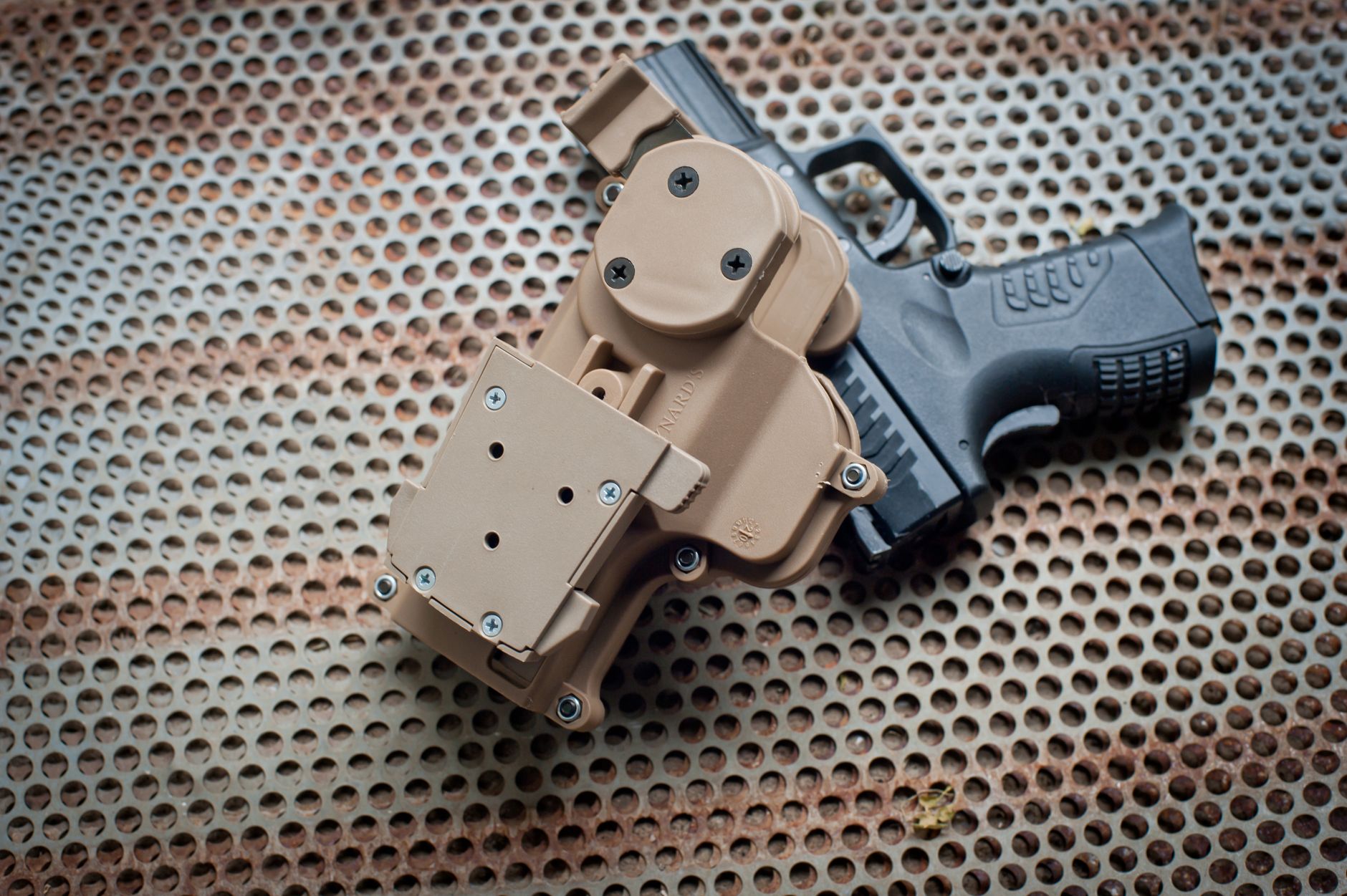
A Glock 19 can carry comfortably and stay concealed—if the holster arrives right the first time.
The familiar disappointment is a holster that prints at the grip, pinches at the beltline, or clamps so hard that the draw feels gummy. Too many IWB options promise concealment, then quietly demand heat-gun work, claw swaps, or trimmed edges before they sit flat. That is not the standard here.
The focus is on Glock 19 holsters that fit as sold: clean molding around the trigger guard, retention that feels deliberate rather than sticky, and ride geometry that tucks the compact frame without turning daily carry into a constant adjustment. NO DIY reshaping, no garage gunsmithing—just models that respect the pistol’s dimensions and the practical balance between comfort, concealment, and secure carry.
Three Glock 19 IWB fits, sorted by carry role


Mixed use, no special requirements: lean Kydex.
Red dot, appendix-first carry: lean optics-ready Kydex.
Longest wear comfort matters most: lean leather, with a little less structural rigidity.
What secure fit actually means
A secure fit means the holster works with a Glock 19 in the maker’s stated configuration, with no heat shaping, trimming, or hardware fixes needed.
The shell should lock on the trigger guard and frame consistently, holding through movement but releasing cleanly on the draw.
Ride height, cant, and claw geometry should tuck the pistol as built, rather than depending on overtightening the belt to hide it.
Optic-ready does not also mean compatible with tall sight stacks, oversized controls, or light-bearing Glock 19 holsters. Those require their own mold.
Proper fit starts with the exact pistol configuration. A holster may clear a red dot or standard-height irons yet still bind on suppressor-height sights, extended slide stops, flared magwells, or threaded-barrel geometry.
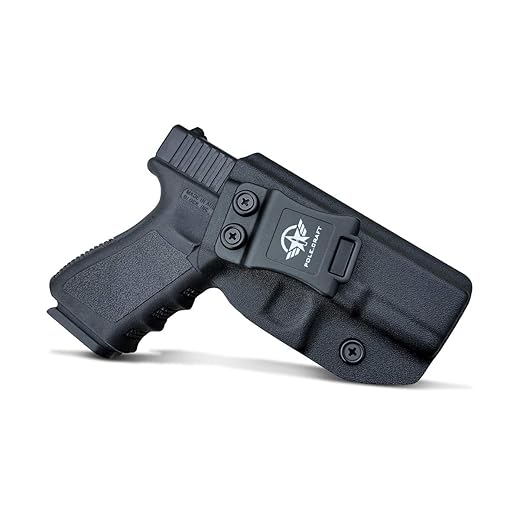
Straightforward all-around Kydex carry: POLE.CRAFT Glock 19 IWB
Affordable custom-fit Kydex for Glock 19
POLE.CRAFT’s Glock 19 IWB holster leans into the basics that matter most for daily concealed carry: a molded Kydex shell, consistent retention, and a slim profile that does not add much bulk inside the waistband. It suits Glock 19 owners who want a simple, custom-fit rig that works without chasing premium materials, modular accessories, or elaborate tuning.
- Predictable click-in retention
- Low-profile Kydex build
- Broad Glock 19-family compatibility
- Adjustable cant and retention
- Plain finish and hardware
- Limited feature depth
- Not positioned as a premium rig
POLE.CRAFT stands out as a sensible middle-ground option for Glock 19 carry: slim, secure, and uncomplicated. Retention is the main draw, with enough adjustability to fine-tune draw feel and ride angle without turning the holster into a project. It does not deliver the finish, hardware polish, or feature set of pricier designs, but for straightforward concealed carry, that restraint is part of the appeal.
Optics-ready appendix fit: FDO Industries Glock 19 IWB
Optic-ready, comfortable appendix carry
FDO Industries frames this holster around a Glock 19 wearing a slide-mounted optic, making it a more focused option than a general-purpose shell. The clean optic clearance helps keep the grip presentation and draw path consistent instead of forcing the optic to brush or snag against the holster mouth. That optic-friendly shape can add a little bulk up top, so it suits carriers who value red-dot compatibility more than the leanest possible outline.
- Clear clearance for common red-dot setups
- Adjustable retention supports a repeatable draw
- Kydex shell keeps fit crisp over time
- Optic cut can widen the upper profile
- More specialized than a plain iron-sight holster
For an optic-equipped Glock 19, this design makes practical sense: the sight channel stays clear, and the draw tends to remain more uniform from concealment. It is not automatically an upgrade for every carrier, because building around an optic usually asks for a bit more material and a slightly less trim silhouette. As a specialist IWB for red-dot use, though, it lands in a strong middle ground.
Comfort-first leather carry: Premium Leather Optic-Cut IWB Holster for Glock 19
Handcrafted full-grain leather, optic-ready slot
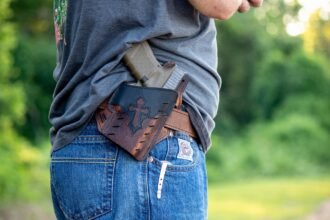
This full-grain leather IWB holster takes a different approach from the molded Kydex options. It is aimed at carriers who prioritize a softer body-side feel and a setup that can stay more forgiving through longer hours of standing, driving, or seated wear.
The optic-cut layout keeps it relevant for red-dot Glock 19 configurations, and the listed fit range covers several related Glock models. It works best as a comfort-led alternative rather than a more refined upgrade in overall holster precision.
- Softer body-side contact than hard-shell holsters
- Often more forgiving during long seated wear
- Optic cut supports many red-dot setups
- Right- and left-hand options are offered
- Break-in feel can vary by sample
- Retention usually feels less crisp than Kydex
- Reholstering tends to feel less structured
- Broad multi-model fit claims need careful matching
This leather model makes the strongest case when comfort matters more than a sharply defined draw-and-click feel. Body contact is usually gentler, but retention feedback and break-in consistency are not as predictable as a molded Kydex shell, which makes it a better fit for comfort-first carry than for those chasing maximum structure.
| Retention feel | Against body | Week-one carry | Optic fit | ||
|---|---|---|---|---|---|
|
POLE.CRAFT Carbon Fiber Kydex IWB Holster for Glock 19 Balanced Kydex | Crisp click | Firm, slick | Stable day 1 | Iron-sight lane | Check |
| Crisp, cut higher | More upper bulk | Stable day 1 | Built for dots | Check | |
| Soft friction | Warm, forgiving | Break-in helps | Dot cut, broader fit | Check |
Rigid Kydex tends to reward repeatability: clearer retention, easier one-handed reholstering, and less change from day one to day seven. Leather usually wins on skin-side comfort once it settles, but its retention feel is less sharply defined.
The FDO occupies a narrower lane: if a red dot is part of the setup, its optic-ready shape can matter more than the slight bulk penalty around the sight channel.
Carry position and adjustment
When does appendix IWB make sense?
Appendix usually conceals a Glock 19 well because the grip tucks inward and access stays consistent when seated. It can feel less forgiving on thicker pistols or for carriers who bend often.
When is strong-side IWB easier?
Strong-side often feels more natural during long walking, driving, or repeated standing and bending. It also tends to spread pressure better with leather-backed comfort priorities.
Does ride height matter more than cant?
Often, yes. Small ride-height changes affect grip exposure, muzzle comfort, and how much the butt prints under a shirt more than mild cant changes do.
Which of these holsters leans appendix-friendly?
The FDO optic-ready model fits the profile of many appendix-oriented holsters, while the POLE.CRAFT stays flexible across positions. The leather option usually feels more at home on strong-side once broken in.
A quarter-inch of ride-height shift can change concealment more than a few degrees of cant.
Lower ride: less printing, slower grip Higher ride: faster access, more grip exposure Forward cant: stronger strong-side draw angleWill taller sights always bind?
A true mismatch shows drag through the sight channel. Minor rub often eases with ride-height or cant changes.
Does an optic cut guarantee red-dot clearance?
Not always; some cuts clear common micro-dots but crowd larger housings. The FDO pattern is often cleaner here than generic shells.
Are hip hot spots proof of poor fit?
Often not. Belt tension, clip position, and body-side placement can create pressure before the holster itself is the problem.
If the pistol seats and draws cleanly, discomfort may be a setup issue; chafing often improves with better fit, not a return.
Which style fits the job?
- Standard Kydex suits simple iron-sight carry and crisp retention.
- Optic-ready Kydex leaves cleaner room for red dots and appendix use.
- Leather favors softer contact when slight break-in and less defined retention feel are acceptable.
For a plain Glock 19, standard Kydex usually gives the cleanest balance of retention, thinness, and straightforward reholstering. If the pistol wears a red dot, optic-ready Kydex typically involves fewer fit compromises. Leather can work well when body-side comfort matters most.
A stable concealed-carry setup also depends on a supportive belt, consistent ride height, and smart placement; the holster alone rarely solves printing or movement.





7 Comments
Glad you mentioned that ride height usually matters more than cant. People love to endlessly tweak cant like it’s magic, then ignore the fact that the grip is printing because the holster sits too high.
That part felt very true to real use.
For appendix with a dot, I’d pick the FDO out of these three and not think twice.
The extra bulk up top is annoying, sure, but fighting a bad optic cut is more annoying. Been there, returned that.
Appreciated that you focused on out-of-box fit instead of the usual “just grab a heat gun and make it work” advice.
For me that instantly puts the POLE.CRAFT ahead of a lot of random Amazon holsters. If I’m buying for a Glock 19, I want it to fit a Glock 19 without a weekend project.
The leather one sounds nice for comfort, but “less defined retention” always makes me nervous.
Maybe I’m too Kydex-brained at this point lol, but if I’m carrying I want that clicky certainty. Comfort is great right up until the gun shifts around more than I like.
Question on the Premium Leather option: does the break-in get meaningfully better after week one, or is it still kind of a gamble depending on the individual holster?
That’s always been my issue with leather. Some people say it molds beautifully, some say it stays kinda mushy and never gives the same consistent draw.
It really can vary more from holster to holster than molded Kydex does. In general, leather usually gets more comfortable after the first week or two, but the tradeoff is that retention feel tends to stay less sharply defined.
So if your priority is predictability and a repeatable draw stroke, Kydex is still the safer recommendation. If skin-side comfort matters most, leather can be worth it as long as you accept that compromise.
I’ve actually used both the POLE.CRAFT and the FDO. The FDO was better once I added a dot, no surprise there, but the upper shell did feel a little bulkier exactly like you said.
Without an optic, I honestly preferred the POLE.CRAFT because it disappeared a bit easier for me at strong-side. Which one did you end up choosing for regular daily carry?