A knife should disappear in the pocket and perform when the moment arrives.
Imagine a commuter reaching into a jacket: a quick box opener, a stubborn tag, or an impromptu repair. Choices multiply—blade length, opening method, lock strength—while comfort and visibility matter just as much. Legal boundaries add another axis: some places ban certain locks, blade lengths, or carry styles, and social friction can follow a large or flashy knife.
This section offers a practical framework to resolve that tension. Match intended tasks (utility cutting, self-protection is sensitive), typical carry (pocket, neck, belt), and situational constraints (local laws, workplace policies) to blade style, size, and carry system. The goal: a defensible, fit-for-purpose selection rather than a compromise.
Match tasks to knife roles
Everyday needs map naturally to knife types. The short descriptions below link common chores to the durability, blade geometry, and deployment speed that work best.
Commuter / urban
- Typical tasks: opening packages, cutting zip-ties, quick food prep, light utility work.
- Durability/maintenance: low abuse; corrosion resistance preferred; infrequent sharpening.
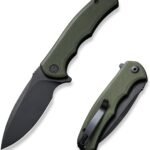
- Recommended: blade 2.5–3.5″, medium hardness, quick one-handed opening (flipper or thumbstud).
- Example: A briefcase-carryer uses a corrosion-resistant drop point to open boxes and slice fruit during lunch, favoring fast deployment and a slim profile.
Tradesperson / utility
- Typical tasks: stripping wire, cutting rope, prying, repetitive heavy slicing.
- Durability/maintenance: high abuse; easy resharpening; robust lock and thicker spine.
- Recommended: blade 3.0–3.75″, thicker stock, harder steel, dependable lock and slower but secure opening.
- Example: A technician selects a sturdy frame-lock with a chisel grind to withstand daily cutting and occasional prying.
Outdoors / day-hike
- Typical tasks: food prep, wood carving, shelter tasks, first-line emergency uses.
- Durability/maintenance: moderate abuse; corrosion resistance and edge retention important.
- Recommended: blade 3.25–4.25″, full or partial flat grind, manual folding or fixed blade, moderate opening speed.
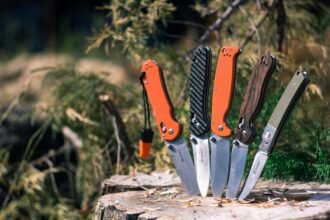
- Example: A day-hiker carries a stout folder for camp chores and basic bushcraft.
Minimalist / pocket-only
- Typical tasks: light cutting, letter opening, incidental tasks.
- Durability/maintenance: low; emphasis on weight and discretion.
- Recommended: blade 1.5–2.75″, slim profile, fast deployment, lightweight materials.
- Example: A commuter preferring minimal carry chooses a compact slipjoint or tiny liner-lock that disappears in the pocket.
Folders versus small fixed blades
Practical tradeoffs
Every EDC choice balances three axes: concealment, structural strength, and deployment speed. Small folders (slipjoints and locking folders) conceal well and tuck into pockets; small fixed blades require a sheath and are harder to hide but avoid folding weak points. For raw strength, fixed blades lead, followed by robust lock types (frame/liner/axis), with slipjoints lowest.
- Concealment: slipjoints and compact liners/frames are easiest to conceal.
- Strength and hard use: fixed blades > frame/liner locks > axis/RCB locks > slipjoints.
- Deployment speed: ball-bearing/axis/flipper systems are fastest; thumbstuds and slipjoints are slower.
Brand lens and selection tips
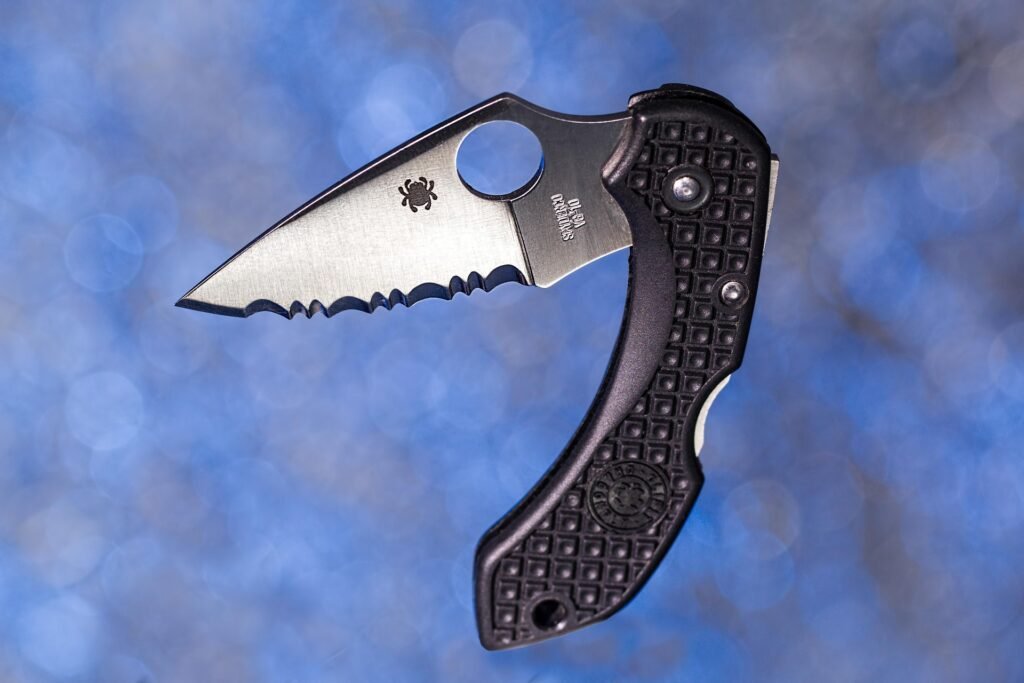
Brands place these features differently: many Benchmade models emphasize axis locks and fast action; Spyderco often prioritizes accessible deployment and ergonomic cuts. For a focused comparison, consult the brand comparison between Benchmade and Spyderco to see how features map to real models.
Quick checklist: pick a locking folder for strength with concealment, a slipjoint for workplace-friendliness, or a small fixed blade when maximum toughness and simplicity are required.
Blade shapes, edge grinds and when serrations help
- Drop point
A drop point has a convex spine that slopes gently to the tip, providing a strong point and generous belly for controlled slicing; ideal for general everyday tasks and food prep.
- Clip point
A clip point features a clipped or concave spine creating a finer tip for piercing and detail work, though tip strength is reduced; prized for precision and tactical roles.
- Tanto
Tanto geometry has a straight primary edge meeting a secondary, reinforced point, concentrating force for punctures and hard materials; limited belly reduces slicing efficiency.
- Sheepsfoot
Sheepsfoot blades flatten the tip into a low, rounded profile with a long straight edge, excelling at safe push cuts and minimizing accidental pierce — common in rescue and utility knives.
- Grinds and serrations
Flat grinds offer efficient slicing and easy resharpening; hollow grinds create razor edges for fine cuts but trade edge strength; convex grinds sacrifice some initial sharpness for exceptional durability. Serrations bite through rope, cardboard and coated webbing where a plain edge stalls, but they blunt differently; for step-by-step maintenance see the detailed serrated sharpening guide.
Steel choices and everyday tradeoffs
Different blade steels make themselves known in day-to-day use through four practical traits: corrosion resistance, edge retention, toughness, and required upkeep. Changes in any one area usually cost something in another.
- Corrosion resistance: stainless alloys resist staining and reduce cleaning frequency, but the highest-corrosion steels often sacrifice edge life.
- Edge retention: harder, high-carbon alloys hold a keen edge longer; they feel ‘sharp for weeks’ but are harder to sharpen in the field.
- Toughness: very tough steels resist chipping and bending under impact but commonly wear faster at the edge.
- Upkeep: softer or high-toughness steels need more frequent honing; premium stainless needs less rust control but still benefits from drying and light oiling.
S30V is a common example: it leans toward high edge retention with reasonable corrosion resistance and takes more effort to sharpen. For a deeper look at S30V’s corrosion behavior, see the detailed explainer on S30V corrosion.
Handle materials, grip geometry, and pocket clips
Handle material and grip geometry set the baseline for comfortable, safe control. Dense, textured scales (G‑10, micarta, FRN) provide traction in wet or dirty conditions; metal or carbon-fiber handles feel slim but benefit from textured inserts or chamfering to avoid slip points. Skeletonized handles reduce weight but change balance and where pressure is felt.
Contouring and intentional geometry matter more than material alone. A defined choil, thumb ramp, and purposeful jimping create positive stops and prevent forward slips; rounded transitions between scales and liners eliminate hot spots on long tasks. Test for edge relief and fingertip contact during common grips.
Clip position changes draw speed, concealment, and how the knife sits in a pocket. Typical choices and trade-offs:
- Tip-up: fastest access, common for dominant‑hand draw.
- Tip-down: lower profile when holstered but slower to present.
- Deep-carry: minimal printing; may be harder to extract quickly.
Frequent pocket problems include lint, awkward angle, and the pocket-clip digging into the thigh; detailed fixes appear in the pocket‑clip digging troubleshooting guide. For non‑standard clips or damaged hardware, see reputable suppliers for replacement clips and parts.
Final check: prioritize a handle shape that locks the index finger and thumb into position, pick a clip position that matches the dominant draw and pocket type, and prefer textured contact surfaces for everyday control.
If a clip or angle causes discomfort, reposition or swap the clip before changing knives. Small adjustments — flipping clip side, raising or lowering the mount, or replacing with a deep‑carry clip — often fixes printing and digging issues without losing access.
Locks and opening mechanisms
Folders rely on two functions: how the blade opens and what holds it open. Each common lock balances speed, safety, and service needs.
- Lockback: a spine rocker that locks the tang. Reliable under heavy load; slower to release with one hand and can wear the locking notch over many cycles. Maintenance: keep the spine pivot clean and inspect the notch for peening.
- Liner / frame lock: fast, secure single‑hand deployment. Vulnerable to lateral forces or grit that prevents full engagement. Maintenance: clean pivots and liner face; avoid bending the liner.
- Axis (spring‑bar) lock: excellent for ambidextrous, rapid one‑hand opening and positive lock engagement. Failure modes are spring fatigue or debris in the bar—lubricate and replace springs when worn.
- Compression lock: similar to axis for speed and safety; resists accidental disengagement. Keep the locking area free of lint and grit.
- Slipjoint: no lock—lightweight and legal-friendly but not safe for heavy prying; rely on correct technique.
For recommended models optimized for single‑handed use, see the curated list of one‑hand opening EDC knives.
Common Legal & Situational Carry Questions
What blade-length limits typically apply?
Blade-length limits vary widely by country, state, and municipality — some set numeric maximums, others ban certain designs regardless of length. For jurisdiction-specific details and common examples, consult the detailed blade-length FAQ. Local statutes and case law determine enforcement and exceptions.
Are knives allowed in public places like parks, transit, and airports?
Many public venues impose explicit prohibitions: airports and secure transit areas nearly always ban knives; schools, courthouses, and government buildings commonly prohibit them as well. Municipal ordinances and venue policies can be stricter than regional law, so behavior that is lawful on the street can still be prohibited in specific locations.
How do workplace rules affect carrying an EDC knife?
Employers can set workplace safety policies that prohibit knives on the premises or limit allowable types for job duties. Industrial settings often require specific retention or secured storage; failure to follow employer policy can lead to disciplinary action independent of criminal liability.
Does carrying open versus concealed change legal exposure?
Some laws treat openly carried knives differently from concealed ones, with concealed-carry bans applying at a shorter blade length or broader category. However, open carry can still trigger public-safety concerns or trespass rules in private spaces, so the legal distinction depends on local statute and context.
How does carry method—pocket clip, sheath, neck carry—matter?
Retention, visibility, and accessibility affect both legality and practical risk: pocketed folders with clips are often seen as EDC tools, while loose fixed blades in a sheath may be treated as weapons. Law enforcement and courts may consider how the knife is carried when assessing intent or compliance with statutes.
Decision checklist: profile to purchase
-
Confirm the carry profile
Select which of the four carry roles best matches daily tasks (light utility, heavy work, discreet urban carry, outdoors). This anchors blade length, strength, and deployment needs.
-
Choose folder or fixed blade
Pick a folder for concealment and quick deployment, or a fixed blade for sustained heavy use and simple maintenance.
-
Select blade shape, grind and steel
Match shape and grind to common cuts; choose steel balancing edge retention, toughness and corrosion resistance for the likely environment.
-
Check ergonomics, lock and pocket setup
Confirm comfortable grip geometry, reliable lock type, and a clip position that suits preferred carry and handedness.
-
Buy-test and final checks
Inspect fit-and-finish, test opening/locking action, and verify blade length meets local restrictions before purchase.
Maintenance basics and next steps
Routine care
Keep the edge functional with light honing after noticeable dulling—three to five strokes on a fine ceramic rod or honing steel at the knife’s working angle restores keenness. Clean and dry blades after wet use; lubricate pivot pins and lock interfaces lightly to prevent play.
When to hone, reprofile, or repair chips
- Small burrs or micro-chips: remove with progressive stones or a strop; honing will often restore performance quickly.
- Large chips or a rolled edge: a controlled reprofile on coarse stones is required to restore geometry; this removes material and changes the bevel, so plan accordingly.
- Deep, irregular chips: consider a professional repair if preservation of blade shape matters; otherwise a full reprofile is the practical choice. For a stepwise guide, consult the instructions on how to remove chips from a knife edge.
Next steps and recommended reads
For troubleshooting or further options, consult these focused guides:
- Diagnose and stop folding-knife rattles
- Reliable budget EDC knives under $50
- Compact fixed-blade EDC picks for hikes and camping
- Best knives for left-handed or ambidextrous use
These resources provide practical troubleshooting, buying alternatives, and specialised options to finalize selection and upkeep.
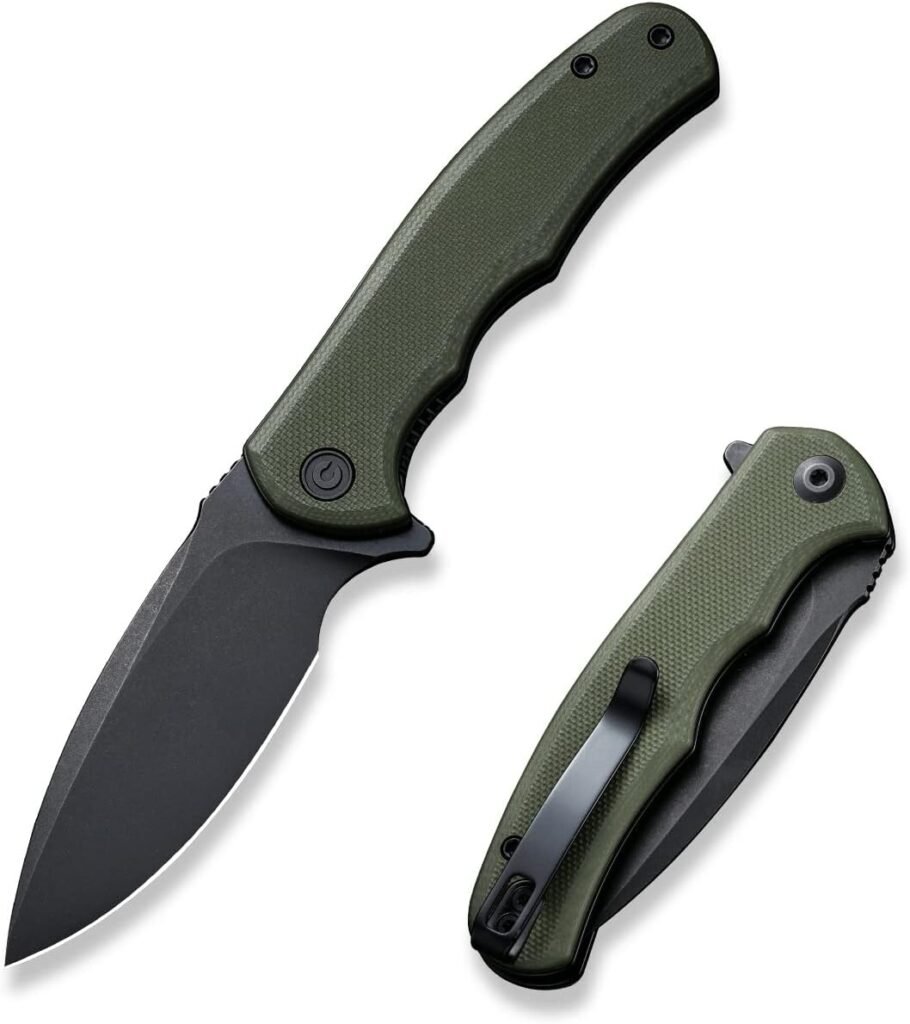
Final alignment: task, geometry, materials
- Match primary tasks and situational limits to knife type, blade geometry, and steel.
- Hands‑on testing (carry, deployment, sharpening) reveals tradeoffs that specs hide.
- Verify local laws and venue rules; community and official references clarify edge cases.
Choosing reliably stems from aligning primary use and situational limits with knife type, blade geometry, and steel — that combination determines real‑world performance and maintenance needs.
Practical testing (carry feel, opening/locking, sharpening trials) and inspecting edge geometry in hand reveals tradeoffs that specs alone hide. Confirming local restrictions and venue policies keeps a chosen knife usable. When role, ergonomics, and materials align, the result is a dependable EDC choice—hands‑on evaluation and legality checks complete the selection.