

A high rating means little if the cushion is leaking air.
At the firing line, the telltale problem is a cup that rides up behind the jaw, leaves a gap around eyeglass arms, or slides forward every time a child looks down. That leak can matter more than the number printed on the box: earmuff ratings are measured under controlled conditions with the cushions seated correctly.
The first filter is a continuous, low-pressure seal around both ears. The headband needs enough adjustment range to sit centered over the crown, while the cups fully cover the ear without pressing the jaw hinge. “Youth” is not a fit standard, and an adult slim muff can still be too wide. Check the seal after a few head turns; hair, caps, and eyewear can all break it.
- Cup fully encloses the outer ear
- Band stays centered during head turns
- No visible cushion gap at temple or jaw


Find the real fit failure
A youth model can be too loose in one way and too tight in another. Before comparing ratings, look at where the seal fails: above the ear, behind the jaw, or at the crown. That pattern usually identifies the component at fault.
When the headband is the issue
Insufficient adjustment range shows up as cups sitting too low, a band that arches above the head, or sliders already at their shortest setting. A shorter, more deeply curved yoke can bring the cups into the right vertical position. But band length alone does not guarantee a workable seal.
When the earcups are the issue
A cup may reach the ear yet still be wrong for it. Smaller or shallower cushions can press on the outer ear; cups that are too large may extend onto the jaw or neck, where movement opens a leak. Check that the entire pinna sits inside the cushion opening and that the pad rests on relatively flat skin around it.
When clamping force is the issue
Excessive clamp causes hot spots, jaw pressure, or a child repeatedly lifting the muffs off between shots. Too little force lets the pads drift when the head turns. The useful target is steady, even contact—not the strongest squeeze. Thick, compliant cushions can improve seal comfort, while glasses temples, hair, hood seams, and a stock pressed into the cup can defeat even a well-sized headband.
Run a movement-and-position seal check
-
Set the baseline seal
With eyewear off, center the headband over the crown and seat each cushion evenly around the ear. The cup should not rest on the ear, hair, hat brim, hoodie seam, or the arms of glasses.
-
Check for immediate warning signs
Look for a visible cushion gap, a lower cup riding on the jaw hinge, one cup sitting higher than the other, or a headband already at its shortest adjustment. Any of these can become a leak when the child moves.
-
Add normal range gear
Put on the eyewear intended for shooting, then repeat the check. Thick temple arms commonly create a narrow channel through the cushion; slim, straight arms tend to disturb the seal less.
-
Move through shooting positions
Under close adult supervision and away from live firing, have the child look down, turn side to side, tuck the chin, and assume the intended standing, bench, or prone setup. Watch whether a cup lifts at the rear, climbs onto the ear, or shifts when the cheek meets the stock.
-
Listen and reassess
A seal that changes during movement may produce a sudden change in the sound of rubbing hands, speech, or nearby activity. Re-seat the cups once; if the gap or migration returns, the protector’s geometry or adjustment range is the limiting factor.
Conduct fit checks with unloaded equipment or a non-firing setup; confirm fit again after adding hats, eyewear, or communication accessories.
Read NRR as a comparison
The Noise Reduction Rating (NRR) is a laboratory-derived comparison number, not a promise of identical performance at every firing line. It helps compare passive attenuation between models, but how much NRR is enough for a new shooter depends on the shooting context as much as the label.
Indoor lanes add reflected sound; short-barrel centerfires produce a different impulse than a low-powered rifle outdoors. A cup with a high NRR can lose much of its practical advantage when glasses lift the cushion, a cheek weld shifts the cup, or a smaller head cannot maintain headband tension.
Electronic circuitry does not raise a protector’s passive NRR. Its value is situational awareness, while the cushion seal, cup depth, and stable fit determine the attenuation available when a shot occurs.
A slightly lower-rated model that keeps a continuous seal through movement can outperform a higher-rated model that shifts or leaks.
Choose the protection they will keep on
Passive muffs are the simplest option: no batteries, no controls, and usually fewer distractions. A well-fitting pair can be especially practical for short sessions, provided the cups stay centered and the headband maintains even pressure.
Electronic muffs add low-level sound amplification and impulse shutoff, which can make instructions and range commands easier to hear. Their extra electronics do not improve a poor seal, however; compare electronic and passive options for younger shooters by cup fit and stability first, then by features. Battery doors, volume knobs, and bulk can also create more opportunities for fidgeting.
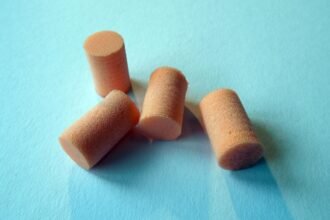
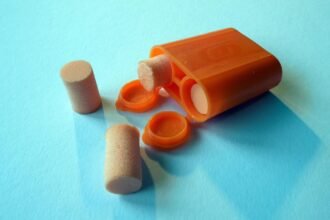
Correctly inserted foam plugs sit in the ear canal, not merely at its entrance. They can be compact under a helmet or slim muffs, but insertion technique, small ear canals, and repeated removal make consistent use harder for some children.
For louder or indoor firing lines, plugs worn under stable muffs provide two barriers. The practical winner remains the setup the child can wear continuously, without cup migration, discomfort, or frequent readjustment.
Compare the dimensions that decide fit
- Adjustment and cup geometryRecord the shortest headband setting, not merely the advertised age range. Shallow or narrow cups can lift at the jaw even when the band appears small enough.Look forLow minimum setting and cups that fully clear the ear.Avoid“Youth” labeling with no fit-range or cup-depth detail.
- Cushions, pivots, and weightSoft, resilient cushions and freely aligning pivots help maintain an even seal around smaller jaws. Low mass reduces the tendency for cups to creep upward during movement.Look forReplaceable cushions, smooth pivots, and stable balance.AvoidStiff pads, binding yokes, or top-heavy electronics.
- Rating and operating detailsCompare NRR within similar designs, then inspect volume controls, shutoff behavior, battery access, and whether controls can be operated with gloves. Electronic features matter only when the seal remains intact.Look forClear controls and uncomplicated battery changes.AvoidA higher rating used to excuse poor fit or fussy operation.
- Trial termsA return window matters because indoor wear cannot prove a shooting seal. Keep packaging intact and confirm whether fitted cushions or opened batteries affect eligibility.Look forPlain, documented return conditions.AvoidUnclear exclusions for opened protective equipment.
A smaller-profile adult muff sometimes provides a lower minimum adjustment, deeper cups, or more compliant cushions than a youth-branded alternative. It earns consideration only after a full seal check: the cushions stay centered through head turns, eyewear, and shooting positions, with no jawline gap or upward cup migration.
The label is a starting point; the stable seal is the deciding evidence.
Accessories and shooting position can break the seal
Accessories and shooting position can break the seal
A muff that fits in a mirror can leak once glasses, hair, or a hat enter the picture. Thick eyewear temples create a channel beneath the cushion; braids, ponytails, and loose hair can do the same. Bulky cap seams, hood edges, and hat buttons also prevent the pad from lying evenly against the head.
Low-profile cups sit closer to the head and usually interfere less with a rifle or shotgun stock. That can preserve a consistent cheek weld for youth who regularly shoot long guns, especially from prone or bench positions. The trade-off is less internal depth, which can make some ears contact the liner or reduce comfort during long sessions.
Deeper cups often provide more ear clearance and cushion volume, but may touch the stock or shift during a firm mount. They tend to suit pistol-focused sessions and long-gun setups with generous stock clearance. Fit checks are most revealing when performed with the child’s normal glasses, hair arrangement, hat, and shooting position—not as a standalone try-on.
| Best match | Cup profile | Stated rating | Power | Main compromise | ||
|---|---|---|---|---|---|---|
|
ProCase Kids Short crown-to-ear | Very short head | Youth-sized | NRR 21 dB* | Passive | Lower isolation | Check fit |
|
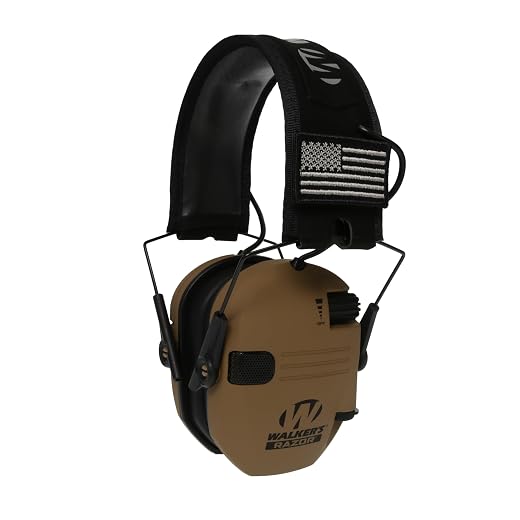
Razor Slim Stock clearance | Rifle stock | Extra slim | NRR 23 dB | Replaceable batteries | Adult headband | Check fit |
|
Razor Recharge Long sessions | Communication | Slim electronic | NRR 21 dB | USB-C rechargeable | 21 dB indoors | Check fit |
For a very short crown-to-ear span
The youth-oriented ProCase is the clearest starting point when adult muffs bottom out before the cushions reach the ear centers. Its adjustable headband, padded pressure-diffusing band, and soft cups are designed around smaller heads rather than merely reduced cup thickness. The listed protection claim is NRR 21 dB (the title also cites SNR 27 dB—these are different systems and not interchangeable).
It is passive, with no batteries or ambient-sound function. That simplicity helps for a child who dislikes controls, but it also means speech and range commands remain muffled. The compromise is isolation: 21 dB is modest for loud indoor firing lines, where maintaining an unbroken seal and considering compatible added protection matters most.
For stock clearance and awareness
Razor Slim’s extra-slim cups reduce interference with a rifle or shotgun stock—often the decisive problem once a smaller wearer can physically get a muff onto the head. Two high-gain microphones amplify safe ambient sound, while loud impulses are limited; the recessed external knob makes volume changes less likely to be bumped.
The commonly stated NRR is 23 dB. Its padded metal wire-frame band is durable, but it remains an adult-format muff: published evidence does not establish its minimum crown adjustment. Check whether the cups sit over, not above, the ears at the shortest setting. It uses replaceable batteries, and electronic function adds both awareness and another failure point.
For communication over long sessions
This Razor variant pairs a slim electronic profile with a stated 21 dB NRR, a recessed volume control, and a comfort headband. Its 300 mAh internal battery is rated for up to 80 hours; USB-C charging and an LED level indicator remove the need to carry disposable cells. That arrangement suits repeated sessions where amplified conversation and commands are useful.
The compromise is not fit-proofing. It is still listed as an adult product, and the available information does not specify its minimum adjustment range, so a short crown-to-ear distance can still leave the cups riding high. Its 21 dB rating also makes it less compelling as a stand-alone choice on particularly reverberant indoor lanes.
Add layers only after the muff fits
A correctly fitted muff is the starting point. Doubling up—foam plugs under muffs—can add useful protection for sustained indoor firing, muzzle brakes, short barrels, or busy firing lines where reflected sound raises the overall exposure.
That extra layer does not rescue a muff that rides up, pinches painfully, or loses its cushion seal when the head turns or meets the stock. A displaced outer cup can still leave the ear vulnerable to side leakage and can make the wearer remove the whole setup. Correct the headband range, cup placement, eyewear interference, or clamp-force problem first.
For ear protection suited to indoor ranges, low-profile muffs over properly inserted plugs are often easier to keep sealed around a cheek weld than bulky cups. The plug must sit fully in the ear canal; a plug protruding far outside the ear can push the muff cushion out of position.
Use the same movement-and-position check with both layers in place. If the combined setup causes pain, cup migration, or poor communication, it is not a dependable upgrade.
The strongest practical combination is a stable muff seal plus correctly inserted plugs. If either layer changes position during shooting, reassess the fit rather than relying on the second layer.
Make fit verification a routine, not a one-time purchase
- A muff that stays sealed during ordinary range movement is more valuable than a higher-rated model that gets shifted or removed.
- Repeat the check after growth spurts, cushion replacement, or changes in glasses, hairstyle, hats, and firearm setup.
Start by naming the failure: cups that sit too low, cushions that leak around glasses, excessive clamp force, or a headband that cannot hold position. Then test the candidate with the child’s usual eyewear, hair arrangement, hat if relevant, and unloaded shooting posture. A few head turns, looking up and down, and cheek-weld motions quickly show whether the cushions stay evenly compressed.
Keep the protection only if it remains comfortable enough to wear for the full session and maintains a consistent seal without repeated readjustment. Recheck that result as the child grows and whenever cushions flatten, headbands loosen, or accessories change; a formerly good fit can quietly become unreliable.





2 Comments
I like the advice to prioritize what they will actually keep on. My daughter dislikes the pressure of passive muffs but pays attention better with electronic ones because she can hear instructions.
Is it reasonable to choose the electronic option with a slightly lower NRR if it seals better and she won’t keep taking it off?
Does hair actually matter that much? My kid has thick curly hair and refuses to tie it back for anything, including apparently basic safety lol. I can see hats being a problem, but I wasn’t sure about hair around the cushion.