

Carry often fails at 3 p.m., not in the gun shop.
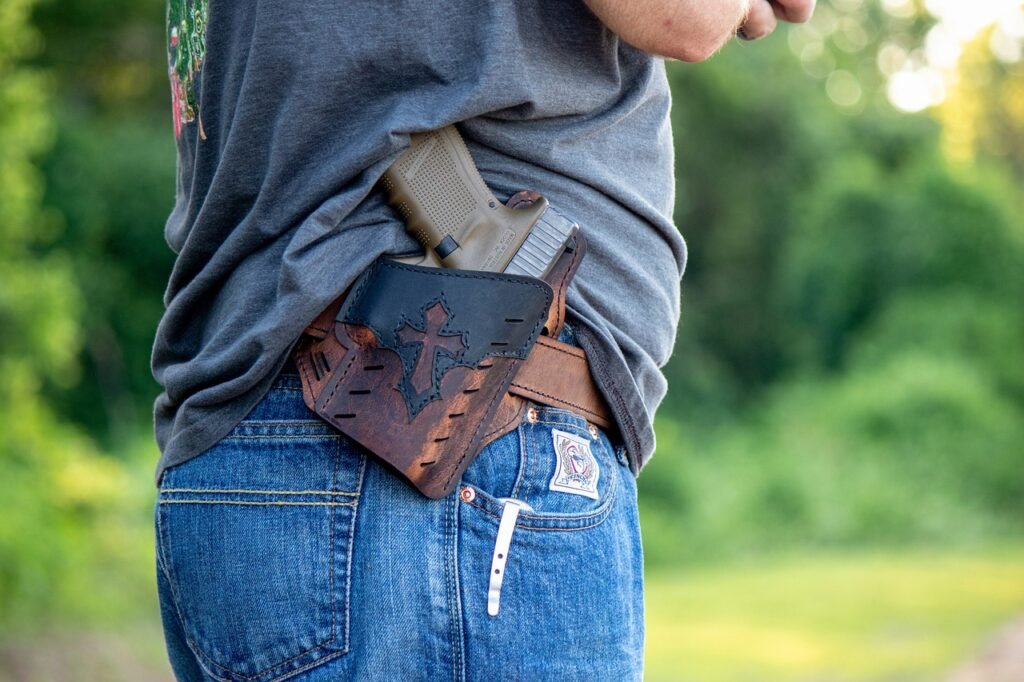
A solid pistol and holster can still become uncarryable by lunch: the belt rolls, the grip prints, the muzzle pinches in a chair, the holster walks with every bend.
That is not lack of discipline. It is a mismatch between daily clothing and the unsolved mechanics of support, tension, and concealment.


Start with the problem, not the accessory
Accessories make more sense when treated as problem-solvers, not a shopping list. Most issues fall into three buckets: weight support, position control, and friction management.
The first bucket is foundational. If the gun shifts, sags, or prints because the waistband cannot hold consistent tension, add-ons rarely fix it. A purpose-built belt or other support upgrade changes how the entire setup rides.
The second bucket is stability. A claw, wedge, or similar spacer can rotate the grip inward or keep the holster from rolling outward. These are often useful when concealment is close but inconsistent across standing, sitting, and bending.
The third bucket is comfort against sweat and fabric drag. Here, smaller items can help:
- Sweat guards reduce direct skin contact
- Undershirts cut chafing and absorb moisture
- Clip pads or backing layers soften hard edges
A simple rule helps separate priorities:
- Fix support problems first
- Tune placement second
- Add comfort extras last
A real carry belt usually comes next
After the holster, the belt is usually the first upgrade that changes day-to-day carry in a noticeable way. A good holster cannot stay in the same place if the platform underneath it bends, rolls, or loosens as the day goes on. Repeatable grip access, stable draw angle, and consistent concealment usually begin with belt support rather than add-on accessories.
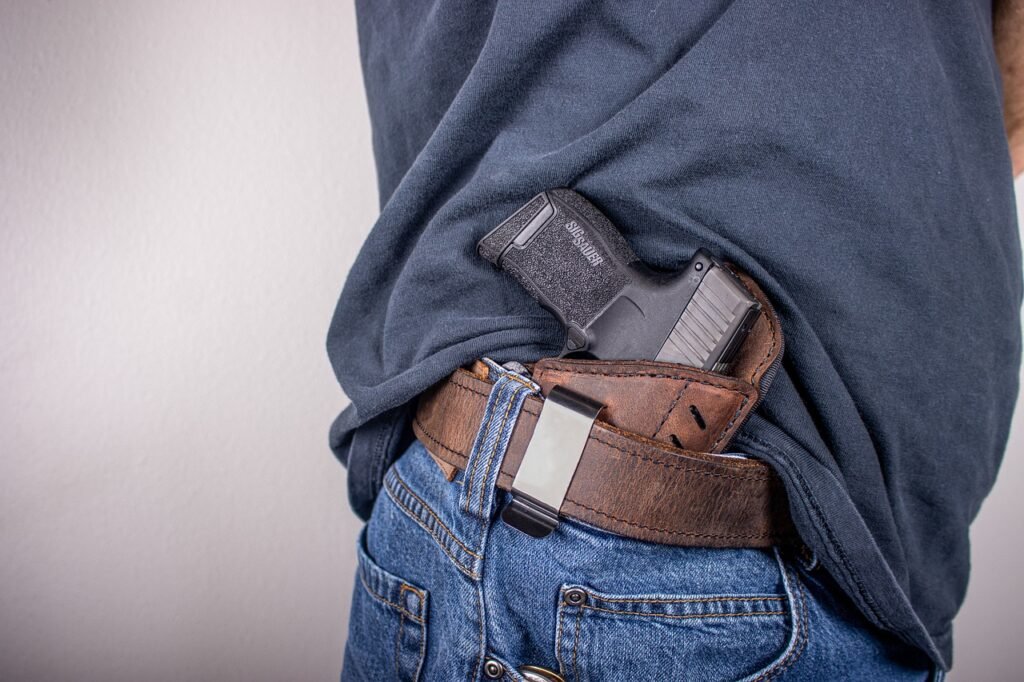
Most ordinary belts are built to hold up pants, not a concentrated, off-center load. A pistol, loaded magazine, and holster create torque on one section of the waistline, especially in AIWB and strong-side carry. That is why a soft belt may feel acceptable at first, then slowly let the gun-side sag, the holster rotate, or the grip start printing after sitting, walking, and standing back up. For a deeper look, what a purpose-built carry belt changes in daily use explains the mechanics well.
Common failure signs are easy to miss because they look like “holster problems”:
- the belt edge rolls over behind the clip
- the pants need frequent hitching on the gun side
- the grip leans outward by midday
- the setup feels secure only when overtightened
- pressure points form because tightness is replacing structure
A better belt does not need to feel like a weightlifting belt. It simply needs enough vertical stiffness to resist sag, enough torsional stability to reduce twisting, and enough adjustability to fine-tune tension across different clothing and seated positions.
If concealment changes noticeably during normal movement, the belt is often failing before the holster is. Drift, rollover, hotspots, and constant readjustment usually point to inadequate support or poor adjustment steps, not just a bad holster shell.
Good budget ratchet option
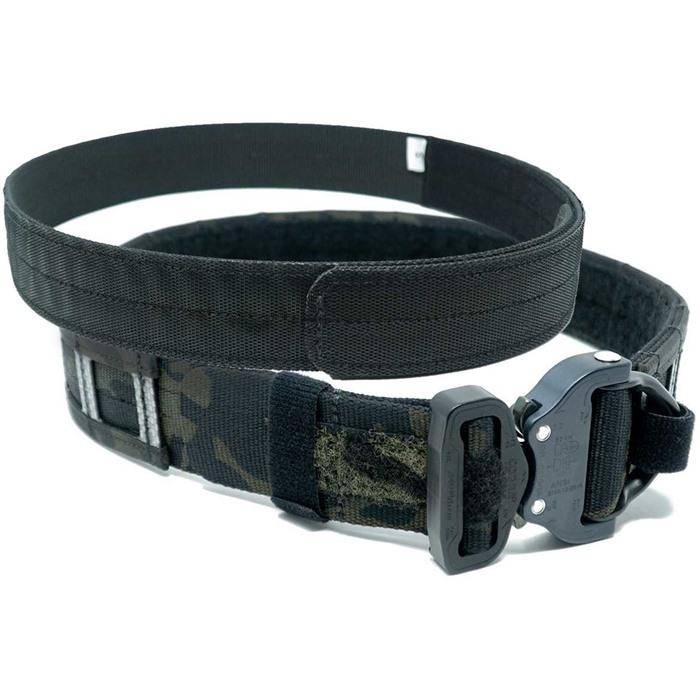
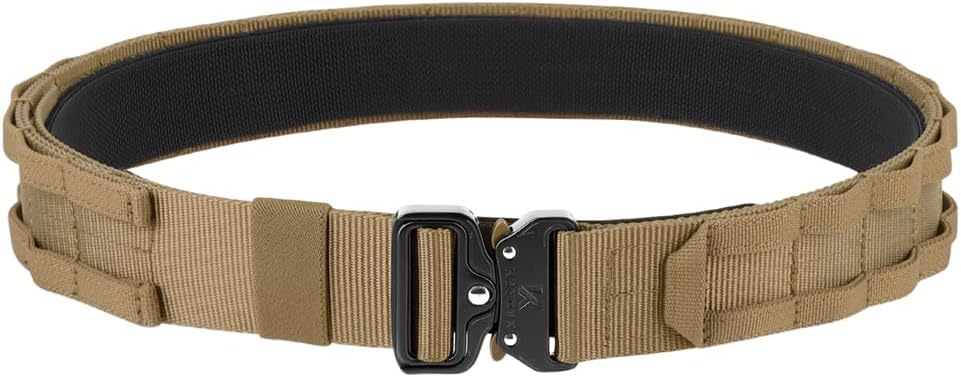
This 1.5-inch nylon belt uses double-layer 1000D webbing with a reinforced core, which matters because stiffness is what limits sag and holster tilt. Its 1/4-inch ratchet adjustment offers finer tension control than traditional hole spacing, making it easier to tighten just enough for AIWB, IWB, or OWB carry without jumping from too loose to too tight.
Fine-tuning the last bit of movement
Stabilizers earn their keep only after the basics are mostly right. If the belt still sags, the holster collapses, or concealment is poor because of bad geometry, small add-ons usually only disguise the problem.
Useful refinements tend to control movement, not create support:
- Belt keepers that lock belt and waistband together can reduce the slow side-to-side drift that shows up while walking or sitting.
- Stronger clips or loops add bite and resist rolling off the belt edge.
- Wider loop spacing spreads weight and cuts down on pivoting.
- Small waistband tweaks—rise, seam stiffness, or clearing a belt loop from the attachment point—often reduce pressure and improve repeatability.
The pattern is consistent: these parts tighten a system that is already close. They rarely rescue a weak belt, a poor holster match, or an attachment layout that fights the body’s shape.
Settle belt support, holster position, and attachment height first. Then test stabilizers one at a time so the real improvement is easy to identify.
Soft goods can decide whether carry lasts all day
Clothing can make or break tolerance
A stable belt and holster can still feel miserable after hours if the clothing layer against the body traps heat, holds sweat, or rubs sharp edges. Undershirts, base layers, and alternate carry garments often determine whether the setup stays on-body through commuting, sitting, and summer weather.
A thin moisture-wicking layer can help in three ways:
- reduce skin abrasion from grip texture and hardware
- keep sweat off the pistol and holster
- smooth printing by letting the outer shirt drape more naturally
Compression tops and purpose-built carry shirts trade some draw speed and flexibility for comfort and concealment when a belt setup is harder to dress around. They can also spread weight differently, which matters with gym clothes, light shorts, or hot-weather clothing. The downside is familiar: retention, access angle, and reholstering are rarely as clean as a dedicated belt-mounted holster.
The useful test is simple: if a setup is technically secure but gets removed halfway through the day, soft goods are the missing accessory.
Best for hot-weather layering
A polyester-spandex compression tank with breathable mesh and moisture-wicking fabric. Its close fit can reduce rubbing and sweat transfer while adding concealment under light shirts. Best viewed as a clothing-system solution, not a full replacement for a strong belt-and-holster setup.
Fix geometry before adding more gear
Printing, pinching, and “the muzzle digs in” are often geometry problems, not gear shortages. Small changes at the holster can rotate the grip inward, spread pressure, or remove a sharp edge from the body-facing side.
Match the complaint to the part
- Grip prints through a shirt: a claw or wing uses belt tension to lever the grip inward.
- Muzzle pressure at appendix: a wedge or foam pad can tip the muzzle slightly out and the grip in, usually reducing both printing and poke.
- Hotspot near the clip or belt line: replacement clips can change ride height, cant, and how tightly the holster pulls in.
- Chafing from the body side: sweat-guard shape matters. Too tall can rub the ribs; too short can expose sharp edges or controls.
A useful pattern is to change one variable at a time. More claw can hide the grip but may increase belt-line pressure. More wedge can improve comfort but may thicken the package if overdone. Even clip spacing can matter: a wider, more stable mount often prints less because the holster rolls less during movement.
A few millimeters of ride-height change or a thinner foam pad can matter more than a larger wardrobe adjustment. Micro-adjustments often beat wholesale replacement.
Off-body carry is a different system
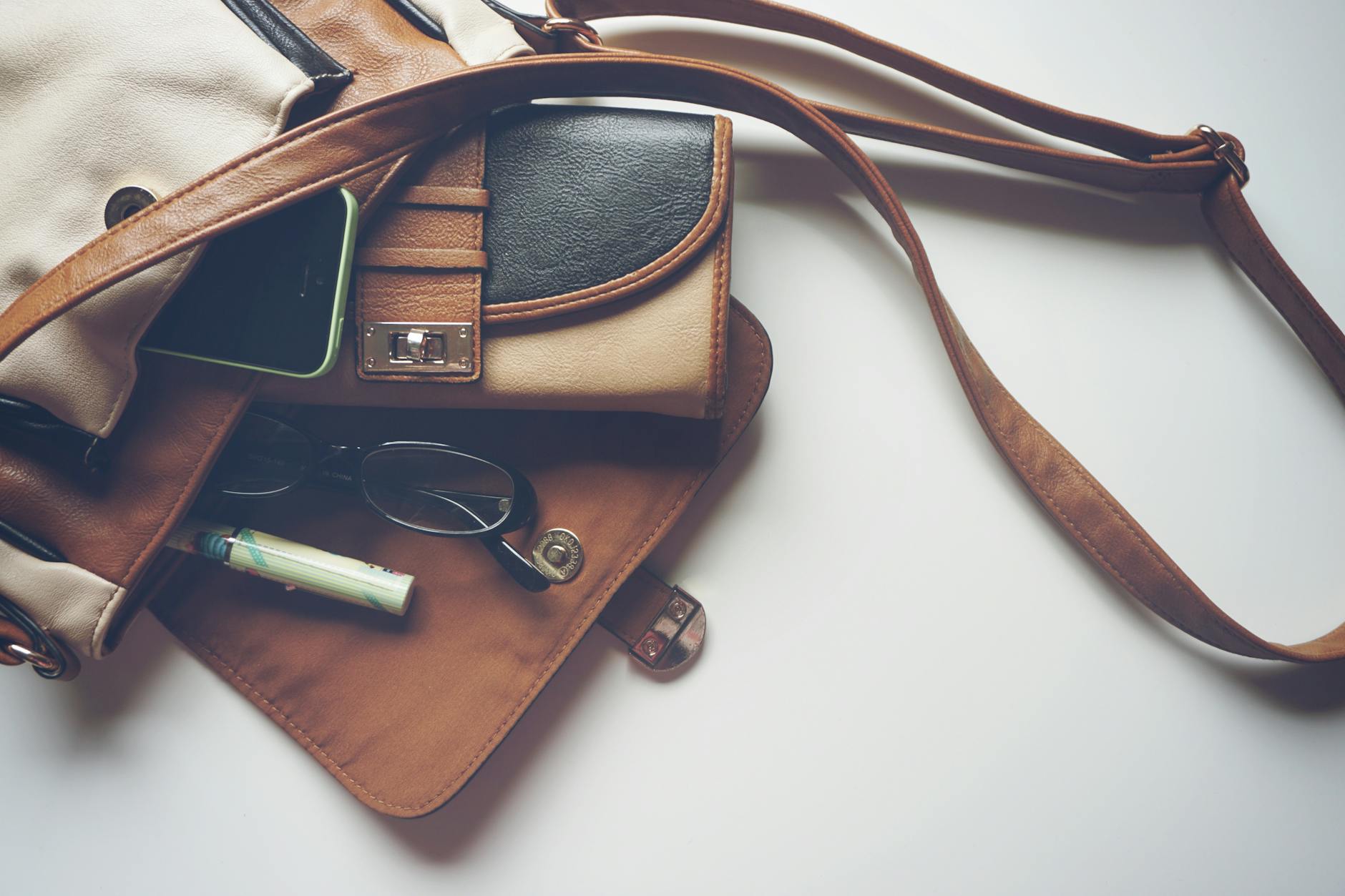
Off-body carry is not just another accessory purchase. It gives up the biggest advantage of an on-body holster: the firearm stays attached in the same place, under the same tension, through normal movement.
A workable bag setup needs three non-negotiables:
- Dedicated retention, not a loose main compartment
- Repeatable orientation, so the grip sits the same way every time
- Controlled access, through a separate opening that can be found and cleared quickly
The hidden cost is attention. A bag can be set in a cart, hung on a chair, left in a vehicle, or rotated out of reach during a struggle. That makes off-body carry less about storage capacity and more about constant control.
It can suit routines where a crossbody bag stays on the body almost continuously. It is a poor match for habits that involve regularly setting a bag down at desks, booths, gym floors, or passenger seats.
Best for purpose-built off-body carry
A low-profile sling with a holster-compatible compartment, expandable paneling to reduce printing, and 900D ripstop polyester inside. Lockable KAM zippers, a padded quick-release strap, and an optional third-point stability strap address the two big off-body problems: bag shift and inconsistent access.


Temporary storage is part of the system
Errands change the problem. A restricted stop, long drive, or workout can force a short move from body to vehicle, and that is where casual habits start. A pistol dropped into a console or glove box is easy to forget, easy to expose at the next stop, and unlikely to stay oriented the same way twice.
Treat that interruption as part of the carry setup. Vehicle storage routines matter most when the transfer is brief and repeated.
- Use a dedicated, fixed storage method instead of a loose compartment.
- Keep the store-and-retrieve sequence consistent.
- Return the handgun to normal carry as soon as the interruption ends, rather than letting the vehicle become the default location.
Most sloppy storage starts as just for this errand. Repetition turns a shortcut into the normal routine.
Extra parts often treat symptoms, not causes. Printing blamed on a missing wedge may actually come from a flimsy belt, poor ride height, or a grip that sits too far from the body. Discomfort blamed on holster design may come from waistband tension, garment cut, or simple placement.
Each added piece increases thickness, complexity, and variables. That can mean more bulk, more readjustment, and money spent solving the wrong issue. The cleanest setups usually come from accurate diagnosis, not accessory accumulation.
Match the symptom
-
Sag or readjustment
Belt support first.
-
Shift after support
Then add a stabilizer.
-
Prints or presses
Tune geometry.
-
Sweat or rub
Add soft goods.
-
Bag or vehicle
Use a separate system.
Most setups need support, then stability, then comfort. Extra gear matters only when the earlier layer already works.





5 Comments
I’m still confused about the difference between a stabilizer and a wedge/claw.
The article makes it sound like stabilizers handle movement, while wedges/claws handle geometry/printing, but in real life don’t they kinda overlap? Like if a wedge changes the angle, wouldn’t that also reduce movement a little bit?
Not trying to be argumentative lol, just trying to understand what I should troubleshoot first before buying more stuff.
That’s a fair question, and yes, there is some overlap in effect. A wedge or claw can incidentally reduce a bit of movement because it’s changing how the holster meets the body, but its primary job is geometry: rotating the grip, changing pressure points, or reducing a print hotspot.
A stabilizer’s main purpose is to control drift, roll, or pivot after the basic belt-and-holster setup is already working reasonably well. So the troubleshooting order is still useful: if the whole setup is sagging or shifting, address support first. If support is solid but there’s still a small, annoying amount of movement, then a stabilizer makes more sense.
That was my experience too. I threw a wedge on thinking it would “lock everything down” and it mostly just changed where it poked me 😅
Once I fixed the belt, the wedge actually started making sense.
Maybe dumb question, but are base layers really that big a deal?
I always assumed undershirts were just a comfort preference, but you make it sound like they can be the difference between carrying for 2 hours vs all day. If that’s true, I may have been overcomplicating this whole thing and blaming the holster for my own sweaty existence 😂
The off-body section should probably be required reading for people who think tossing it in a normal backpack is “basically the same thing.” It really isn’t.
I do wish you had gone a little deeper on temporary vehicle storage though, because that’s where a lot of people get sloppy fast.