
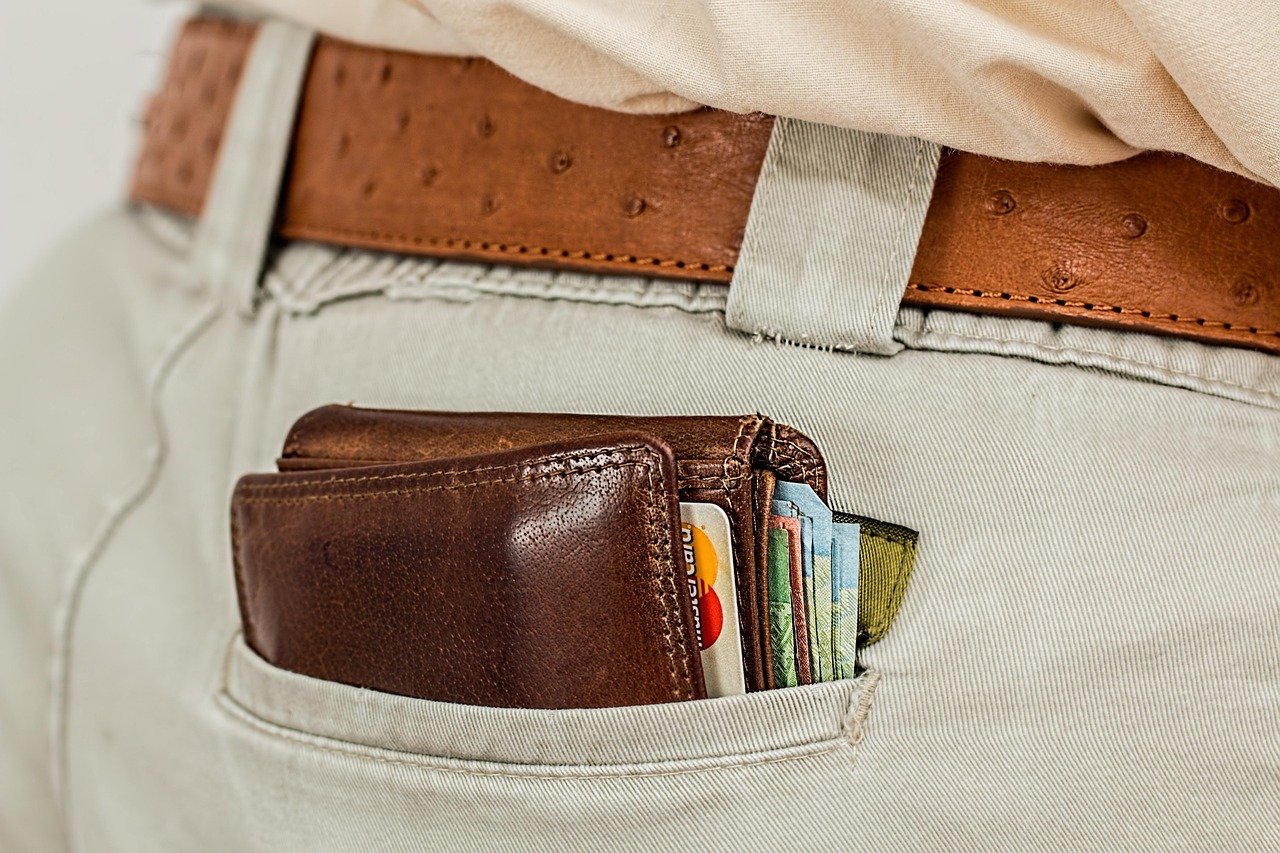
Minor back pain often has a very unglamorous cause.
Same jeans, same desk chair, same commute: by Thursday, a small hot spot on one side of the low back or hip starts to show up. That kind of ache rarely feels important enough to justify buying different trousers or rethinking an entire wardrobe.
Often, the cause is simpler: a rear-pocket load changes how the pelvis meets the seat. Even a slim wallet can behave like a hard wedge once stacked cards and seat contours compress it into one-sided pressure for hours. That asymmetry can make the back or hip feel subtly off. For many people, the useful fix is mechanical and habit-based—what stays in the pocket during sitting, how long the posture lasts, and how often pressure gets reset—not fashion-driven.
How a wallet changes the seat
A rear-pocket wallet works like a small shim under one side of the pelvis. That does not usually create a dramatic shift, but it can slightly raise one sitting bone and change how body weight spreads across the hips, lower back, and upper leg during sitting.
The main factor is rarely the wardrobe itself. Thickness, rigidity, edge shape, seat contour, and time seated usually matter more than whether the trousers are casual or formal. A bulky wallet lifts more; a stiff wallet yields less; hard corners can create concentrated pressure instead of broad support.
Seat design can magnify the effect. On a flat kitchen chair, the change may be mild. In a contoured office chair or car seat, the wallet can sit higher in the pocket recess, which may increase the tilt and keep one side loaded longer.
Time often turns a small offset into a noticeable problem. A few minutes may do little, but long drives or repeated desk sessions can maintain the same uneven pressure pattern. Over time, that can contribute to stiffness or a dull, hard-to-place ache rather than a sharp, obvious pain.
Bulk usually affects lift more than fabric choice.
Hard edges tend to create more localized pressure than rounded profiles.
Contoured seats often amplify the imbalance compared with flat chairs.
Check the wallet before replacing it
-
Empty everything onto a table
A surprising share of discomfort comes from cargo, not the carrier: old receipts, duplicate cards, loose coins, spare keys, and membership tags add thickness in layers that compress poorly when seated.
-
Rebuild with only current essentials
Load only the cards and cash used weekly, then stack them in the order they naturally sit. If the wallet closes under tension or forms a rounded “brick,” overfilling is likely the main issue rather than the wallet category.
-
Inspect the shell and edges
Look for stretched leather, bowed panels, broken stitching, and corners that have gone hard or sharp. A worn wallet spreads wider, shifts less predictably in the pocket, and can feel worse than a slimmer design in the same shape.
-
Check pocket footprint, not just thickness
Measure the loaded wallet against the back-pocket opening and seat contact area. A broad wallet can create more pressure than a slightly thicker compact one because it covers more of the sitting surface.
-
Test whether wear is the culprit
If the wallet stays bulky even after slimming down, material fatigue may be locking in the shape. That is often when guides on keeping leather wallets from stretching out become more relevant than shopping for a different style.
Use the pockets already there
Moving the wallet often changes more than changing trousers. Most wardrobes already provide several carry spots, each with a different trade-off between seated comfort, quick access, security, and visible outline.
- Front pocket: often the biggest comfort improvement while sitting because it stops the pelvis from resting on a raised edge. Access stays fast, but thicker wallets can crowd a phone or keys and may print through slimmer fabric.
- Thigh or side pocket: gives bulk more room than a rear pocket, though the extra mass can swing while walking and look obvious in light materials.
- Chest or inner jacket pocket: removes seat pressure entirely and keeps the wallet easy to reach when standing. The downside is seasonal use, plus fabric pull or bounce if the wallet is heavy.
- Bag already in use: avoids pocket pressure and visible bulge, but access slows and the wallet is no longer body-carried. For people already carrying one, a lighter commuter backpack setup can reduce the urge to load every small item into trouser pockets.
A useful comparison is simple: note comfort after a short seated stretch, then check reach, concealment, and how much bulk shows.
Make sitting part of the solution
-
Clear the back pocket before contact
The first few seconds matter. Moving the wallet before body weight settles can prevent the small seat tilt that builds at a desk, in the car, or at a restaurant booth.
-
Give the wallet one temporary home
A tray, cup holder, jacket pocket, or the same bag sleeve reduces friction. The habit tends to stick when the wallet always lands in one predictable place.
-
Tie the check to repeat moments
Calendar blocks, seat-belt clicks, and menus arriving can act as cues. Timing usually works better than waiting for discomfort to announce itself.
-
Re-center after removing it
Once the pocket is empty, sitting fully back with even contact on both sides can help the pelvis settle more symmetrically.
-
Return it only when standing up
Putting it back during the rise keeps the seated setup consistent and avoids reintroducing pressure halfway through a session.
A thinner wallet can help, but behavior changes often show up sooner. Shortening the time spent sitting on the wallet—and using the same temporary spot every time—removes the trigger with less trial and error.
When shape matters more than size
A wallet can be light and still sit badly. The usual giveaway is a hard ridge, lopsided thickness, or stacked corners that remain noticeable even after receipts and spare cards are removed. In that case, the problem is often the wallet’s geometry rather than simple overstuffing.
What slimmer formats change
Different designs alter contact with the seat in specific ways:
- Bifold: broad footprint, but a clear center hinge can create one raised line
- Trifold: shorter overall, yet often thicker at the folded edge
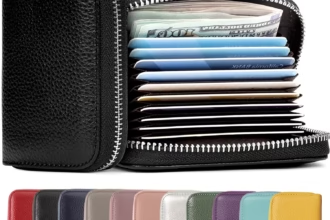
- Card sleeve: removes the hinge and usually lowers peak thickness
- Money clip hybrid: keeps cash flatter, though the clip can become a pressure point
The main comfort gain usually comes from reducing peak thickness, not chasing the smallest-looking wallet. A thinner rectangle tends to distribute force more evenly than a compact shape with one dense edge.
Trade-offs worth noticing
- Sleeves can help seated comfort, but often limit cash and quick sorting.
- Slim bifolds preserve familiar organization, though the fold ridge remains.
- Clip-based carry cuts bulk, but can feel firmer against the body.
A better format is simply the one that creates fewer pressure hotspots during normal carry.
The small habits that bring the pressure back
Initial relief often disappears when spare cards, receipts, and coins slowly refill the empty space.
Wallet bulk usually returns by drift, not by design. Unused slots tend to get repopulated, and peak thickness climbs before the change is obvious.
Pressure can reappear in a front pocket, side pocket, or bag if dense items stack at one edge or load one side.
The issue is uneven pressure, not just pocket location. Hard corners, key bundles, and asymmetrical bag carry can recreate the same imbalance in a different place.
Metal shells, duplicate sleeves, and insert cards can add stiffness faster than they add practical benefit.
Comfort is shaped by edges and rigidity as much as thickness. Even concerns about RFID protection can lead to unnecessary layers that make the wallet harder and less forgiving when seated.
How fast can a carry change show up?
Sometimes within a few seated sessions. Improvement usually follows less tilt and less edge pressure, not a dramatic overnight change.
Is thinner always more comfortable?
Not necessarily. A soft thicker wallet can irritate less than a hard ridge, dense edge, or stacked corner.
When is it no longer mainly a wallet issue?
If discomfort appears while standing, walking, or with an empty back pocket, the wallet becomes a weaker explanation. That is the point to separate carry experiments from medical assessment.
A simple test
A practical one-week trial can stay simple: day 1, remove unused cards; days 2-4, keep the wallet out before every sit; days 5-7, note whether a front pocket, side pocket, or bag reduces pressure fastest.
If symptoms persist, spread, or appear when no wallet pressure is present, the pattern points beyond carry setup. Pocket changes can reduce a common trigger; diagnosis belongs to a qualified clinician.



5 Comments
Not gonna lie, front-pocket carry still feels awkward to me. More comfortable when sitting, yes, but access is slower and in some pants it makes the pocket look lumpy anyway.
The useful part of this article was the comparison of side/front/bag carry instead of acting like there’s one perfect answer. I ended up using a jacket chest pocket when I’m out and a bag when I’m commuting, and that’s been better than forcing one method all the time.
The “wallet as a shim” explanation was the first thing that made this make sense to me. I kept blaming my car seat and even switched office chairs, but the ache only showed up on days when my overstuffed bi-fold was in the back pocket.
I did your seven-day carry test and moved the wallet to a front pocket for most of the week. Not magic, but the end-of-day soreness dropped a lot. Biggest surprise was how much junk was in there — old receipts, loyalty cards, random business cards from like 2019 😅
That pattern is really common. People often assume the chair is the main issue, but a small, dense object can create enough unevenness to matter when you sit on it for hours.
The seven-day test tends to work well because it separates the habit from the guesswork. And yes, wallet bulk is often more about contents than the wallet itself.
Same here. I thought my driver seat was “bad for my back” and it turned out I was basically sitting on a brick full of store cards. Once I cleaned it out, huge difference.
This was helpful, but I wish more people would admit that sometimes it’s not *just* the wallet. I removed mine from the back pocket and still had some pain because I was sitting way too long without moving.
The article does mention posture duration and the line between pocket-pressure stuff vs symptoms that need a real medical look, which I appreciated. Too many posts online make it sound like emptying three receipts will cure everything lol.