
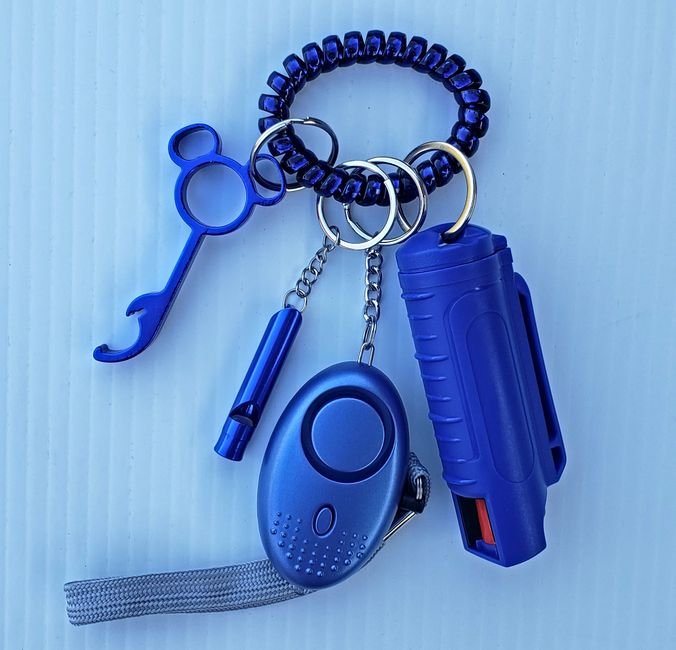
A split-second choice at 2 a.m. on a dark street.
Running alone after dusk, carrying a late-night commute, or feeling unsafe at work creates acute triggers: the impulse to carry a deterrent.
Permissibility hinges on product details (type, size, delivery method) and the context of use — self-defence versus assault. That makes the choice a risk-management calculation: it requires assessing personal exposure, likelihood of lawful use, storage and access risks, and potential civil or criminal consequences.
- Frequency and timing of exposure (e.g., night shifts)
- Secure storage and access controls to prevent misuse
- Training and clear intent can affect legal interpretation
What regulators mean by "pepper spray"
- Oleoresin capsicum (OC)
A concentrated extract of chili peppers composed mainly of capsaicinoids; when aerosolized it produces the burning, inflammatory response associated with “pepper spray.”
- Different from other irritants
Unlike synthetic lachrymators such as CS or CN, OC is plant-derived and acts through capsaicinoids rather than the electrophilic mechanisms of many industrial irritants.
- Formulation and concentration
Regulators examine percentage of capsaicinoids and the solvent or carrier; oil-based, gel, or foam variants alter dispersal and persistence, affecting classification.
- Delivery mechanism
Handheld aerosol sprays and pump bottles are treated differently from projectile or explosive delivery (pepper balls, grenades, pyrotechnic canisters) because kinetic or explosive dispersal raises separate safety and weapons concerns.
- How it works
OC activates pain receptors (TRPV1) in eyes, nose, throat and lungs, producing burning, tearing, coughing and temporary visual impairment; effects are typically transient but can be severe in some cases.
Core statutory themes
Key statutory themes
California treats pepper spray as conditionally permissible: statutes and regulations allow civilian possession and sale in many circumstances but attach limits that control who may have it, what form it takes, and how it may be used. Use that causes injury or is deployed for an unlawful purpose can produce criminal charges and civil liability.
Regulatory levers commonly used in statutes and ordinances:
- Age and sale restrictions. Laws often limit retail sale or possession by minors and authorize penalties for unlawful transfer.
- Device type and delivery. Rules distinguish handheld aerosols, gels, or foams from projectiles, cartridges, or other delivery systems; certain delivery mechanisms are explicitly restricted.
- Composition and concentration. Statutes target particular chemical agents and may cap formulations for civilian sale (regulators focus on public-safety risk, not medical detail).
- Quantity, size, and packaging. Limits on container capacity, labeling, and retail packaging appear in codes and local rules.
- Location-specific prohibitions. Schools, government buildings, and restricted-transport contexts frequently have separate bans.
Modifications and “weaponized” forms are routinely singled out. Converting an OC product into a projectile, mounting it on a firearm or vehicle, disguising it, or creating remote/automatic dispersal systems typically moves the item into categories of restricted or prohibited weapons under multiple statutes. Enforcement and penalties vary with intent and harm; statutory language and local ordinances determine practical legality.
Modifying a retail pepper spray device or attaching it to a firearm, vehicle, or remote sprayer can change its legal status. Such changes commonly trigger harsher statutory restrictions and different criminal classifications—not merely a different sales rule.
Who and where possession is restricted
Even where California permits pepper spray, possession or carrying can still be limited for certain people and in specific places. Common restrictions include:
- Minors. Many jurisdictions limit sales to and possession by minors; age-related limits often apply.
- Correctional facilities. State prisons, county jails, juvenile detention centers and their grounds typically prohibit personal defensive sprays.
- Schools and school grounds. K–12 campuses and many college facilities restrict weapons, including chemical sprays.
- Courthouses and courtrooms. Local courts frequently bar pepper spray inside courthouses or impose courtroom-specific bans.
- Federal transportation zones. Aircraft, secure areas of airports, and TSA-regulated spaces are subject to federal prohibitions.
- Federal buildings and lands. Federal courthouses, some national parks, and other federal properties may prohibit possession.
- Individuals under court orders. Restraining or protective orders can expressly forbid a named person from possessing defensive sprays.
- Private property and employers. Property owners and employers may set their own bans or policies.
Federal law, TSA rules, or a specific court order can override state permissibility; where federal prohibitions apply, possession remains unlawful regardless of state rules.
Federal prohibitions (for example, aircraft/TSA rules and federal buildings) and court orders supersede state allowances. Presence of such federal rules or specific court restrictions makes possession illegal even if state law would otherwise allow it.
Choosing pepper spray: delivery, safety, labeling, and size
- Delivery system and patternDelivery method determines accuracy, range, and bystander risk. Narrow streams and gels deliver effect to a target with less drift, while wide-angle fogs or aerosols increase unintended exposure and regulatory concern.Look forNarrow, direct stream or gel for accuracy and limited drift.AvoidFog or broad aerosol patterns that can affect bystanders.
- Built-in safety featuresMechanical safeties, twist caps, and holsters reduce accidental discharge and support safer storage. Absence of locks or exposed triggers raises practical risks and may factor into civil-liability assessments.Look forA reliable safety lock plus a secure holster or sheath.AvoidExposed triggers or no locking mechanism.
- Labeling, composition and marketingClear labels listing active ingredient (OC/oleoresin capsicum) and manufacturer help demonstrate legitimate self‑defense intent. Products advertised with additives, projectiles, or ambiguous chemical names attract regulatory scrutiny.Look forTransparent ingredient labeling and manufacturer contact details.AvoidVague composition claims or marketing that suggests weaponization.
- Size, capacity and delivery formStates limit amounts and certain delivery forms; compact single-canister designs are less likely to cross legal thresholds. Multi‑shot launchers, large-capacity units, or devices combining projectiles often trigger prohibition or stricter enforcement.Look forCompact, single-canister formats within typical quantity limits.AvoidLarge-capacity, multi-shot, or projectile-integrated devices.
Consequences of misuse
Misusing pepper spray can trigger both criminal prosecution and civil lawsuits. Outcomes hinge less on the device itself and more on why, how, and what evidence supports competing versions of events.
Criminal charges
Prosecutors may pursue offenses such as assault or other weapon-related charges when use is judged offensive or disproportionate. Key factors include the presence of physical injury, the vulnerability of the victim (children, elderly, disabled), the location (schools, airplanes), prior threats, and whether lawful defenses—like a reasonable belief of imminent harm—were available and proportionate.
Civil claims and damages
Victims commonly advance claims for battery, negligence, or intentional infliction of emotional distress. Civil outcomes focus on harm and fault; even where criminal charges are not filed, civil liability and monetary damages remain possible.
how evidence shapes outcomes
Courts and juries weigh evidence heavily. Important items often include:
- Video and witness testimony showing the sequence of events
- Photographs and medical reports documenting injuries
- Device labeling, size, and residue analysis
- Statements, prior incidents, and credibility factors
Ultimately, proportionality and reasonable belief are central. Strong, contemporaneous evidence tends to decide disputed incidents more than post hoc explanations.
Video, witnesses, and medical records often determine whether use is lawful or liable. Preserved contemporaneous evidence typically outweighs later claims or denials.
Clear documentation supports defensive explanations. Conflicting or absent evidence increases uncertainty and legal risk.Practical steps to reduce legal and safety risk when carrying
-
Verify labeling and expiration
Confirm the device shows manufacturer, active ingredient and concentration, net quantity, batch or serial number, and a clear expiration date. Prefer sealed, tamper-evident packaging and retain the product insert or manual as proof of specifications.
-
Confirm legal eligibility and limits
Compare the device against state and local restrictions on size, feature set (for example, propellants or projectiles), and prohibited modifications. Note age limits, carriage prohibitions for specific locations, and any agency-level overrides that may apply.
-
Store and transport securely
Keep the device locked or otherwise inaccessible to children and unauthorized persons, and separate from firearms or other weapons. Use the product safety lock during transport and follow applicable rules for vehicles, public transit, and workplaces.
-
Train with inert or trainer devices
Practice handling, deployment motions, and activating any safety mechanisms using inert trainers to build muscle memory without exposure risk. Include scenario drills for safe retreat, decontamination procedures, and avoiding cross-contamination.
-
Document any deployment
Record time, location, circumstance, witnesses, and photos of the scene and device; preserve the device intact as potential evidence. Seek prompt professional assessment if exposure or injury occurs and retain documentation of any medical or legal contacts.
Keep purchase receipts and the product label; review local regulations periodically for changes.
Quick legal answers
Is pepper spray legal to carry in California?
California permits possession of ordinary pepper spray for self‑defense under state law but imposes limits on device type, concentration, and quantity; devices designed as weapons or disguised as other objects are commonly prohibited. Local ordinances or federal rules can further restrict carry in specific places.
Are there age or sale restrictions?
State law and many local jurisdictions restrict sales and possession by minors, and retailers commonly require age verification; city or county rules may add further prohibitions or licensing requirements.
Can people with criminal convictions possess pepper spray?
Certain criminal convictions can disqualify a person from legally possessing chemical sprays under state or federal statutes, and case law may affect enforcement in particular circumstances. Consultation of current statutes and federal rules is necessary because criminal‑status restrictions vary.
Is it legal to bring pepper spray on planes, federal property, or schools?
Federal regulations generally prohibit carrying chemical aerosols onboard aircraft and restrict them in federal buildings, while public schools and many transit systems ban possession on premises. Local rules and institutional policies often control access more tightly than state law.
Are there limits on strength, formulation, or delivery method?
California regulates composition, concentration ranges, and delivery mechanisms, and forbids weaponized projectiles and mixtures intended for offensive uses; manufacturers and shippers are also subject to federal hazardous‑materials controls which affect sale and transport.
Quick compliance checklist
- Product checks: confirm label, allowed formulation, intact safety cap, and readable expiration.
- Quantity & size: carry only the small, consumer-allowed container types.
- Venue rules: verify restrictions for airports, courthouses, schools, public transit, and employer/venue policies before entering.
A short, scannable checklist can reduce legal and safety risk when carrying pepper spray. Check product labeling and expiry, respect venue and employer rules, store units securely away from minors, and train with inert trainers or supervised classes. If deployment occurs, document date/time, location, witnesses, photos, and any official reports to preserve evidence and clarify context.





4 Comments
Good overview. Quick question: how strictly do officers enforce the quantity limit? The article says “small quantities face less scrutiny” but what’s small in practice — like the common 2 oz keychain canisters?
Appreciate the checklist for training with inert devices. I wish there were more links to certified training providers though — the ones I found online seem sketchy.
Has anyone here taken one of those beginner classes and can recommend a reputable provider in the Bay Area?
Good breakdown of device types — I didn’t realize projectiles or weaponized additions are treated differently. That makes me reconsider my old pepper-ball launcher.
The section on consequences of misuse is useful but a little vague. If someone follows the checklist, documents deployment, and there were witnesses, does that usually protect you from civil suits? I’m asking because the article mentions proportionality and available evidence, but not how that plays out in real cases.
Also: what about use against a persistent shoplifter who isn’t violent — could that still be seen as excessive?