
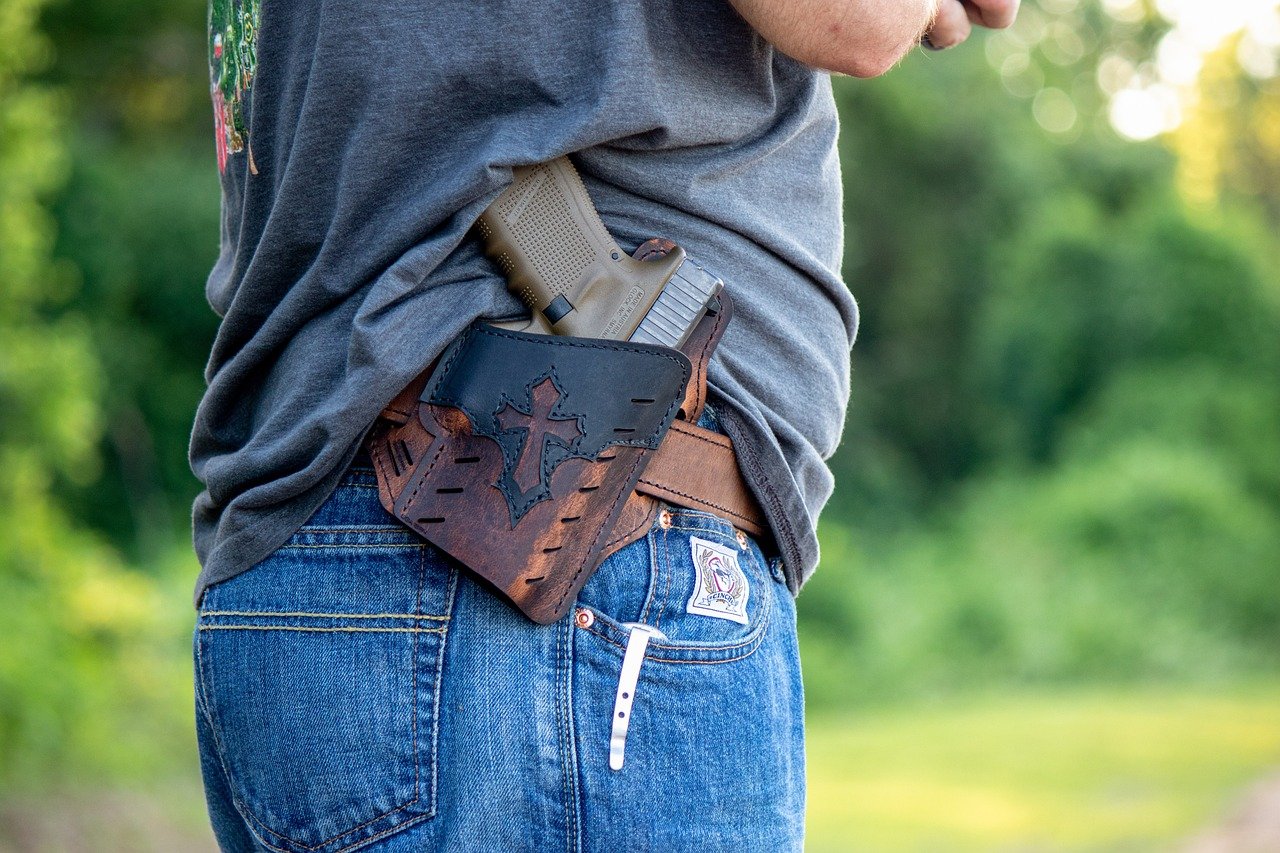
A sweat shield earns its space only when it fixes a specific body-side problem.
An appendix holster can conceal exceptionally well while leaving the rear of the slide, hammer area, or optic edge pressed against bare abdomen all day. That contact is not automatically a defect: a compact pistol’s geometry, ride height, cant, and the carrier’s movement may already keep hard edges clear. Adding a tall leather or polymer barrier in that case can introduce bulk, trap heat, or interfere with establishing a full firing grip.
A shield becomes meaningful when it blocks the actual irritant—for example, a sharp rear sight rubbing during seated movement, a slide corner chafing through thin clothing, or persistent sweat reaching the firearm’s body-side surfaces. Its upper edge needs to stay below the path of the thumb and web of the hand during the draw, and its stiffness must resist folding into the trigger-guard area. More material is not inherently more comfortable; correctly placed material is.
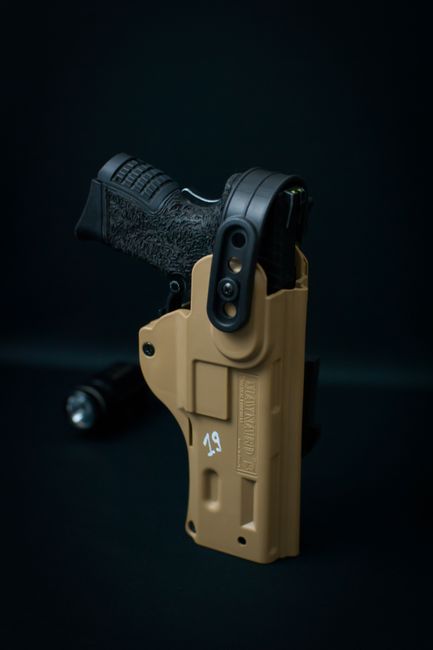
What a Sweat Shield Actually Does
Sweat shield (body guard)
A sweat shield is the holster material that rises on the body side between the handgun and the wearer. It can reduce direct contact with the slide, rear sight, and sharp edges while spreading pressure over a slightly broader area.
Not a moisture seal
It limits skin contact; it does not enclose the firearm or make the holster waterproof. Perspiration can still reach exposed metal, openings around the slide, and hardware, particularly during sustained heat or movement.
Low-cut shield
A low design ends below or near the lower edge of the slide. It offers modest separation with minimal interference around the firing grip, but leaves more of the pistol and controls close to clothing and skin.
Mid-height shield
A mid-height guard covers much of the slide’s body-facing side while stopping below the grip area. This is often the practical middle ground when contact reduction matters but an unobstructed draw remains important.
Full-height shield
A full-height extension reaches toward the rear of the frame, sometimes behind the beavertail. It provides the greatest body-side coverage, yet poor shaping can press into the grip or complicate establishing a consistent firing grip.
Why shape matters more than height
A holster sweat shields approach works by moving the body-contact line from the pistol’s metal or polymer. This shift places the contact area on a broad leather or synthetic panel. That panel keeps sharp or textured features from rubbing the same spot. It works only if the panel holds its shape.
A tall, floppy shield may fold around the slide and recreate the very pressure it was meant to reduce. In practice, a shape that doesn’t hold its form undermines comfort and protection. Choose a stiffer, well-supported panel to maintain contact and avoid pocketing air.
The features that create hot spots
The need for a barrier depends less on pistol size than on what projects toward the wearer:
- Sharp rear slide corners and aggressive serrations can abrade skin, especially when the holster shifts during sitting or bending.
- Tall iron sights, particularly squared rear sights, may catch or concentrate pressure at the shield’s upper edge.
- A hammer spur on an external-hammer pistol can poke through a soft shield or snag its edge during the draw.
- Slide-mounted optics add a wide, angular contact surface; a shield may keep the optic housing and its corners off the body, but needs clearance so it does not press against the optic.
Contour matters as much as coverage. A shield that follows the slide closely distributes pressure; one that stands nearly vertical can create a hard ridge. Firm construction, burnished or rolled edges, and a smoothly radiused top corner generally matter more than adding another inch of material. The useful design is the lowest, stiffest contour that blocks the specific feature causing discomfort without entering the grip path.
When the extra coverage earns its place
A holster sweat shields justify their added material when the holster rests against bare skin for hours. Summer heat, high humidity, physical work, or long periods seated in clothing that traps perspiration increase the need. The shields provide a layer between skin and metal surfaces, reducing irritation and friction over time.
The practical benefit is usually not keeping the pistol dry. It prevents a damp, moving interface from turning rear-slide edges, serrations, sights, or hammer areas into hot spots. In practice, holster sweat shields enhance wearing comfort during long shifts or summer trips.
Appendix and strong-side contact differ
Appendix carry commonly concentrates pressure at the top rear of the slide as the abdomen folds during sitting or bending. A modest, well-contoured shield can keep that edge from repeatedly catching skin, but excessive height may crowd the firing-hand thumb or interfere with establishing a full grip before the draw.
At strong-side IWB positions, especially around 3 to 5 o’clock, the holster is more likely to rub along the hip, lower back, or flank as the wearer walks and twists. Here, a shield with a rounded, stable upper edge can be particularly useful when a slide corner or exposed hammer rides directly against the body. The same considerations explain why many carriers use sweat shields to reduce IWB rubbing rather than simply selecting the tallest available design.
A shield can make the holster feel less abrasive, which may help the rig stay in its intended position instead of being subtly shifted to escape discomfort. It cannot correct a poor belt interface, unsuitable cant, a holster that collapses or rotates, or a gun-and-body combination with broader pressure problems. If discomfort persists despite a properly shaped shield, the contact point—not shield height alone—usually deserves closer attention.
More Leather or Kydex Is Not Always More Protection
Extra height only helps where the body actually contacts a sharp, abrasive, or moisture-exposed part of the firearm.
A rounded striker-fired slide, worn behind a substantial undershirt or waistband, may gain little from material extending above the rear of the slide.
It can reduce direct skin contact, but it can also hold sweat against the firearm if moisture cannot evaporate or the holster is left damp.
Salt and moisture can remain around the slide, rear sights, fasteners, and holster hardware. Routine drying, cleaning, and inspection still determine corrosion resistance.
A tall or overly stiff shield can crowd the firing-hand thumb, interfere with a safety or hammer, or flex inward during reholstering.
The problem is most noticeable on pistols with manual safeties, exposed hammers, prominent rear controls, or an optic close to the holster mouth.
Material above the belt line can alter the holster’s profile and create a ridge under thin clothing.
Appendix and strong-side carry react differently to added bulk; body shape, belt tension, and garment fabric decide whether that ridge prints.
Fit Is a Safety Requirement
A body-side extension must remain outside every functional space. It cannot bow into the trigger guard, interfere with the grip, or contact controls such as the magazine release or slide stop. It also needs to leave a consistent path for the sights, optic, and slide during both the draw and return to the holster.
Check the exact setup
Fit is specific to the complete firearm, not merely its model name. Barrel length, rail shape, optic, weapon light, compensator, grip panels, and even a different slide variant can alter where a shield sits and how much it flexes.
An unloaded compatibility check, performed with the firearm verified unloaded, can expose problems that are easy to miss on a belt: a leather shield folding toward the trigger guard, a thin Kydex tab deflecting under pressure, or an edge catching an optic or rear sight. The grip should remain fully available without the shield forcing a changed hand position.
The maker’s stated configuration is the starting boundary. A holster listed for a similar pistol or an unlisted accessory combination may retain the firearm differently, regardless of how close the fit appears. Ongoing sweat-shield and retention-screw maintenance also matters because loosened hardware can change clearance over time.
A shield that intrudes only when belt pressure is applied is still an interference concern. Unacceptable signs include contact with the trigger area, blocked access to a full firing grip, snagging during reholstering, or retention that changes as the shield bends.
Accessories and controls need clearance
An optic needs clearance around its housing and mounting screws; a shield that merely rises behind it can rub the optic, steer the draw, or flex into the slide. The useful shape is usually a relieved, rigid contour that preserves a clean grip path rather than a continuous wall.
Exposed hammers, manual safeties, and decockers deserve the same attention. Leather can migrate around a hammer spur or safety lever as it softens, while poorly placed Kydex can press a control during movement or interfere with a full firing grip. A shield should cover the body-facing contact point without becoming part of the control system.
Lights change retention geometry
With a weapon-mounted light, retention commonly indexes on the light body, trigger-guard region, or both—not simply on the pistol’s frame. That changes where the holster needs stiffness, relief, and adjustment range. Sweat shields on holsters for light-equipped pistols therefore need a configuration-specific cut: extra material behind the slide cannot compensate for a channel that contacts switches, lenses, or mounting hardware.
A sound fit check confirms that the pistol seats fully and draws without snagging. It remains retained through ordinary movement with the exact optic, light, and control configuration installed.
Choose the shield from the body inward
- Start with the first contact pointMap the part that actually meets skin in the carry position: rear slide serrations, hammer area, optic housing, grip tang, or leather edge. A shield only needs to rise past that contact point with a small margin; it need not cover the entire rear of the firearm.Look forA contour that clears the real pressure point without entering the firing-hand path.AvoidBuying maximum height to solve contact that occurs lower or elsewhere.
- Match height to material behaviorKydex tends to hold its shape, so a tall wing can remain near the hand and clothing even when unloaded. Leather can conform more comfortably, but a broad or damp shield may curl, soften, or retain moisture against the body.Look forA firm, burnished edge and enough structure to stay clear of the grip.AvoidThin leather that rolls inward or rigid Kydex that creates a new hot spot.
- Test the seated routine, not just standing comfortSitting changes belt angle, compresses the holster into the torso, and can bring a tall shield into the draw path. The relevant check is whether the firing hand reaches a complete grip without shifting the holster or folding the shield.Look forStable clips, a repeatable full grip, and a shield that stays outside the hand’s path.AvoidA design that feels comfortable upright but crowds the hand when seated or driving.
- Account for clothing and climateA tucked shirt, thin summer fabric, and high humidity expose different compromises than a cover garment in dry weather. Added coverage can reduce direct contact, yet extra material can print, trap perspiration, or snag fabric during reholstering.Look forCoverage that remains discreet under the garments and conditions used most often.AvoidJudging concealment only with one outfit or moisture control only in a cool, dry setting.
Holster Sweat Shields: Common Questions
What does a holster sweat shield actually do?
A sweat shield is the holster material that rises on the body side between the handgun and the wearer. It can reduce direct contact with the slide, rear sight, and sharp edges while spreading pressure over a slightly broader area—but it limits skin contact rather than sealing out moisture entirely.
Does a taller shield always mean more protection?
No. Extra height only helps where the body actually contacts a sharp, abrasive, or moisture-exposed part of the firearm. A rounded striker-fired slide worn behind a substantial undershirt or waistband may gain little from material extending above the rear of the slide.
Can a sweat shield interfere with the draw?
Yes. A tall or overly stiff shield can crowd the firing-hand thumb, interfere with a safety or hammer, or flex inward during reholstering—most noticeable on pistols with manual safeties, exposed hammers, prominent rear controls, or an optic close to the holster mouth.
Does a sweat shield prevent corrosion on the firearm?
Not by itself. It can reduce direct skin contact, but it can also hold sweat against the firearm if moisture cannot evaporate or the holster is left damp. Routine drying, cleaning, and inspection still determine corrosion resistance.
How should someone check whether a shield fits their exact setup?
An unloaded compatibility check can expose problems easy to miss on a belt: a leather shield folding toward the trigger guard, a thin Kydex tab deflecting under pressure, or an edge catching an optic or rear sight. The grip should remain fully available without the shield forcing a changed hand position.
Let Movement Decide
- A lower, well-contoured shield often solves the problem more cleanly than a tall panel.
- Retention and a clear firing grip remain more important than maximum body separation.
The useful question is not whether a sweat shield looks protective, but whether it prevents specific body contact without changing the draw, reholstering path, or holster retention. A shield that clears the slide yet crowds the grip has traded one problem for another.
Evaluation is most revealing during ordinary standing, sitting, bending, driving, and garment movement. The least intrusive contour that keeps recurring hot spots, abrasion, and skin contact under control is generally the more functional design.
A holster can appear neatly covered while a sight corner, rear slide edge, or hammer still reaches the body during a bend or seated posture. Conversely, a modest relief may be sufficient when its edge is stiff, smooth, and placed at the actual pressure point.



6 Comments
Good distinction between a shield and something that is actually waterproof. I see people describe a tall piece of Kydex as “sweat protection,” but if it traps moisture against the gun after a hot day, that seems like the opposite result.
Exactly. A shield can reduce direct skin contact and abrasion, but it does not seal the firearm off from humidity or perspiration. Drying and cleaning after carry still matter, especially with leather or a close-fitting garment holding moisture in place.
The movement-testing advice should be printed on every holster package. Standing in front of a mirror tells you almost nothing about what happens getting into a car, tying a shoe, or sitting through lunch.
I found out the hard way that a high shield was fine standing but nudged my grip enough while seated to make my draw inconsistent. Not dangerous in the moment, but definitely not something I wanted to “train around.”
That is precisely the kind of issue static fit checks miss. A holster can appear clear at rest but flex, shift, or change its relationship to the grip when the belt line compresses while seated. If access or the holstering path becomes inconsistent, changing the shield contour or height is usually a better answer than trying to adapt around the interference.
Does leather behave differently here over time? A leather shield that starts stiff can soften and curl toward the grip, right? That seems like a fit/safety issue rather than just a comfort issue.
I carry in a humid area and usually have direct skin contact in summer. The article makes sense, but I wish more makers gave actual measurements and photos showing where their mid versus full shields end. Those labels seem pretty meaningless between brands.